
Instant warmth for St. Louis County's raw January nights.
With average winter lows near 25°F and a solid winter heating season, St. Louis County sees real cold—just not the six-month deep freeze of Minneapolis or Madison. Gas heat delivers instant, even warmth without the wood pile, and I'll connect you with a local dealer who can size the right unit for your home.
Every Project Starts From One of These Five Situations
Suburban comfort, dialed in at the switch.
St. Louis County wraps around the city of St. Louis in a patchwork of nearly 90 separate municipalities—Clayton, Kirkwood, Webster Groves, Florissant, University City, Chesterfield, Ballwin, and dozens more, each with its own permitting office and housing character. Zone 4A winters here are real but moderate: average lows around 25°F, occasional single-digit cold snaps, and a heating season that runs roughly October through April. That's a meaningfully lighter load than northern cities like Minneapolis or Madison, but still enough to make a working fireplace more than decoration.
A lot of the county's older housing stock—the brick bungalows of Kirkwood, the postwar ranches of Florissant, the classic homes lining Webster Groves—came with a masonry wood-burning fireplace as standard equipment. Most of those chimneys go unused today, less because of climate and more because splitting and storing cordwood doesn't fit a quarter-acre suburban lot. That's exactly why gas has become the default upgrade path here: Spire's natural gas network covers most of the county, existing gas lines from a furnace or water heater make new runs simple, and a direct-vent insert turns a cold, drafty masonry box into real, on-demand heat with the flip of a switch.
Three steps. No salesperson until you're ready.
Tell us about your project
Your zip code, your situation, and the fuel you're leaning toward—or let the answers point you to one.
See what's actually available
The brands dealers within 100 miles genuinely carry—real options, never a catalog mirage.
Get your dealer & Project Guide
A trusted local dealer, plus the free Project Guide & Parts List that names every component of the job.
Frequently Asked Questions
How much does a gas fireplace installation cost in St. Louis County?
Costs vary with the project. Converting an existing masonry fireplace to a direct-vent gas insert—using the chimney you already have with a stainless liner—typically runs on the lower-to-middle end of the market, especially in homes that already have a gas line nearby from a furnace or water heater. A new built-in gas fireplace for a remodel or an addition in newer subdivisions like Chesterfield or Wildwood, where framing and venting have to be built from scratch, sits higher. Because St. Louis County is split across dozens of municipalities, permitting timelines and fees can shift depending on whether you're in unincorporated county land or an incorporated city like Kirkwood or Clayton—a local dealer who works across the metro will know the difference and quote accordingly.
Can I convert my existing wood fireplace to gas?
Yes, and it's one of the most common projects in the county's older neighborhoods. Homes in Webster Groves, Kirkwood, and University City frequently have a masonry fireplace original to the house that's gone unused for years—often because splitting and stacking cordwood doesn't fit a smaller suburban lot, even with plenty of local oak, hickory, and walnut available regionally. A direct-vent gas insert reuses your existing masonry opening and chimney with a liner, so you keep the look of the original fireplace while gaining real, thermostatic heat. Homes already on Spire's gas network are the simplest conversions since a line is often already close by.
Do I need natural gas, or is propane an option in St. Louis County?
Most of St. Louis County sits within Spire's natural gas service territory, so if your home already has gas appliances—a furnace, water heater, or range—adding a fireplace is usually a straightforward tie-in. Propane comes into play mainly in the county's more rural fringes or in newer developments still waiting on gas main extensions. Either fuel works with most modern fireplace models; your installer sets the orifice and regulator for whichever you have.
Will my gas fireplace work during a power outage?
Most modern gas fireplaces will, which matters in a county that sees its share of spring severe weather and outages. Units with IPI (intermittent pilot ignition) run on battery backup and light on demand even with the power out—just remember to keep fresh batteries in the unit. Valor takes a different approach: their fireplaces generate their own electricity through the pilot's thermocouple, so there's no battery to forget at all. If losing heat during a spring storm outage is a real concern for your household, ask your local dealer specifically about ignition type when comparing units.
What's the difference between a gas fireplace, gas insert, and gas stove?
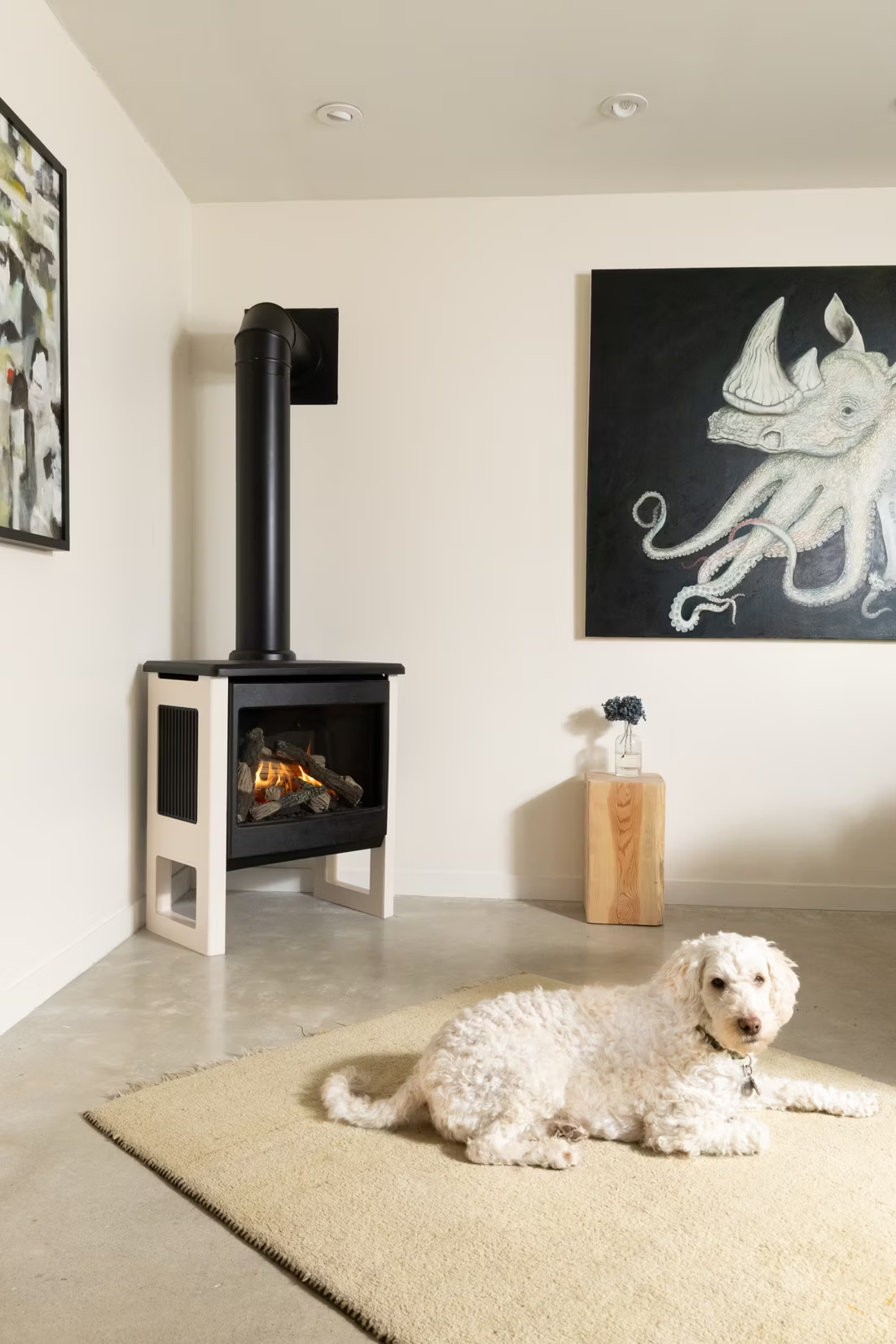
A gas fireplace is a fully built-in unit, framed into a wall—the right call for new construction or a remodel that doesn't already have a fireplace opening. A gas insert is built to drop into an existing masonry fireplace, which describes a huge share of the older housing stock across Kirkwood, Webster Groves, and Florissant. A gas stove is a freestanding unit that sits out on the floor like a classic wood stove but runs on gas—a good fit for a room without any existing chimney or fireplace opening. For most St. Louis County homeowners with a fireplace already in the house, an insert is the simplest and most common answer.
Do I need a permit to install a gas fireplace in St. Louis County?
Almost certainly, though exactly who issues it depends on where you live. St. Louis County is made up of close to 90 separate municipalities, and each incorporated city—Clayton, Kirkwood, Chesterfield, and others—runs its own building department with its own permit process, while unincorporated areas go through the county. Gas line work also requires a licensed gas-fitter. A dealer who regularly installs across the metro will already know which office to file with in your particular municipality, which saves real time compared to sorting it out yourself.
What's the difference between vented and vent-free gas fireplaces?
Vented gas fireplaces (direct-vent or B-vent) pull combustion air from outside and exhaust it back outside through sealed venting—the cleanest, most universally code-compliant option. Vent-free (ventless) fireplaces burn directly into the room without external venting; they're legal in Missouri but come with strict room-sizing rules and oxygen-depletion sensors, since combustion byproducts stay indoors. With no air quality restrictions on the books in St. Louis County, both options are on the table, but direct-vent units remain the more common recommendation for full-time heating use since they don't ask you to trade off indoor air quality for efficiency.
How often should my gas fireplace be serviced?
Plan on an annual inspection, ideally in early fall before the county's first real cold snap. A technician checks the burner, pilot assembly, venting, and gas connections, and cleans the glass and interior—a much lighter lift than chimney sweeping for a wood-burning unit, but just as important for safety. Gas service providers working across the St. Louis metro typically charge in the $150–$250 range for a standard annual visit.
Should I consider wood instead of gas in St. Louis County?
For most homeowners here, realistically no—not because winters are too mild, but because wood heat doesn't fit well into how the county is built. Dense suburban lots leave little room for stacked cordwood, most municipalities don't make it easy to add a new solid-fuel appliance, and there's no working cutting-permit or public-land firewood culture the way there is in more rural, forested counties. Regional hardwoods like oak, hickory, walnut, and maple are plentiful, but they mostly show up as furniture and flooring, not firewood stacks. If you've got an existing masonry wood fireplace, the far more common local move is converting it to a gas insert rather than adding new wood-burning equipment—you keep the fireplace, lose the ash and chimney upkeep, and gain heat you can turn on with a switch.
Why is a fireplace insert so efficient?
An insert does two things: it seals the chimney completely, so you stop losing air you already paid to heat, and it radiates warmth into the room through the firebox and glass. Most add a heat-exchange fan that pulls cool room air underneath, wraps it around the hot firebox, and pushes it back out warm. Your home is more efficient before you've even lit the first fire.
Why is my open fireplace making my house colder?
Open fireplaces suck—literally. As the fire burns, it consumes air your furnace already paid to heat and pulls it out through the chimney, so the house is actually colder after the fire goes out than before you lit it. An insert fixes this: it seals the chimney, puts fixed glass across the front, and turns that hole in your house into a real heat source.
Can I install a fireplace myself?
If you're putting a fire in your house on purpose, it's best to work with an expert. Unless you're genuinely experienced in framing, gas line, vent pipe, and the national code on clearances to combustibles, have a professional do it—and ideally the same company that sells you the fireplace, so warranty, service, and liability all live under one roof.
Does a fireplace add value to my home?
On average, a fireplace adds back to the home about the same amount you spent installing it. Add the monthly savings from heating the rooms you actually use instead of the whole house—often hundreds of dollars a year—and the value case is strong before you even count what a fire does for how your family uses the room.
Stove and Fireplace Dealers in St. Louis County
Listings include WhyFire partner dealers, dealers we have verified as authorized for the brands we recommend, and established local businesses that carry hearth products. Every listing shows which one it is. The ones marked Preferred run on WhyFire's software, so they can show you real pricing and book your appointment right here. No manufacturer pays for placement. How we verify dealers →
Savvy Surroundings
Forshaws
Gas Appliance Service LLC
Villa Lighting Supply
Fireplace And Grill Center
Fireside Hearth & Grill Center
English Sweep
Summer Classics By Forshaw
Arnold Stove & Fireplace Center
Brighthouse Living
Hearthside Grill & Fireplace
C Bennett Building Supply
Find your gas fireplace in St. Louis County.
Tell me about your home—masonry fireplace, new build, gas already on-site or not—and I'll match you with a trusted local dealer and send over a free Project Guide & Parts List: the exact parts, vent kit included, for your gas fireplace project in St. Louis County.
Find Your Fireplace →