
Bring Effortless Warmth to Your Ladue Home.
Clean, on-demand gas heat built for Ladue's stately older homes and new custom builds alike. Find the right unit and connect with a trusted local dealer.
Every Project Starts From One of These Five Situations
Comfort that fits Ladue's stately homes.
Ladue sits in the St. Louis metro at just 562 feet of elevation, with a climate zone 4A profile and a moderate winter heating season—a meaningfully milder winter than places like Minneapolis or Madison, where residents rack up nearly double the heating load. Winter lows here average around 25°F, which means most Ladue homes don't need a wood-burning primary heat source, but they absolutely benefit from a fireplace that adds instant, reliable warmth on the cold snaps and ice-storm nights that do come through.
Many of Ladue's homes date to the mid-20th century and earlier, with existing masonry fireplaces that were designed for looks more than heat output—prime candidates for a gas insert conversion. Newer construction and recent remodels on Ladue's larger lots increasingly favor built-in linear gas fireplaces as a centerpiece for great rooms and primary suites. Natural gas service through Spire (the regional utility serving the St. Louis area) reaches essentially all of Ladue, so fuel access isn't a constraint—the decision usually comes down to which unit, which venting path, and which local dealer can execute the install to the standard a Ladue home deserves.
Three steps. No salesperson until you're ready.
Tell us about your project
Your zip code, your situation, and the fuel you're leaning toward—or let the answers point you to one.
See what's actually available
The brands dealers within 100 miles genuinely carry—real options, never a catalog mirage.
Get your dealer & Project Guide
A trusted local dealer, plus the free Project Guide & Parts List that names every component of the job.
Frequently Asked Questions
How much does a gas fireplace installation cost in Ladue?
Installed cost for a gas fireplace or insert in the Ladue area typically runs $5,500 to $12,000, with the wide range driven by unit size, venting complexity, and finish work. A straightforward direct-vent insert into an existing masonry fireplace with gas already run to the room sits toward the lower end. Ladue's larger great rooms and custom remodels often call for oversized linear or see-through units with custom surrounds, which can push a project to $15,000 or more once masonry and millwork are involved. A local hearth dealer will give you a firm number after seeing the room and the existing chimney or framing.
Can I convert my existing wood fireplace to gas?
Yes, and it's a common project in a community like Ladue where many homes have handsome older masonry fireplaces that were never great heat producers. A gas insert typically slides into the existing firebox and vents through a stainless liner run up the original chimney, preserving the mantel and surround you already have. Expect $5,000 to $9,500 depending on the insert and whether new gas line needs to be run from the meter to the hearth—homes already plumbed for a gas range or water heater are usually on the lower end.
Do I need natural gas, or would propane make more sense?
Nearly every home in Ladue has access to natural gas through Spire, so propane is rarely necessary here—unlike more rural parts of St. Louis County. If your home already runs gas appliances, tapping into that line for a fireplace is generally a simple addition for a licensed installer. The main exception would be a detached structure, pool house, or outdoor living area set back far enough from the gas main that a small propane tank is more practical than trenching a new line.
Will my gas fireplace work if the power goes out?
Most modern gas fireplaces will, provided they use an IPI (intermittent pilot ignition) system with battery backup—a detail worth confirming before you buy. St. Louis-area ice storms occasionally knock out power for Union Electric (Ameren Missouri) customers for a day or more, and a battery-backed unit will keep lighting on demand throughout. Valor fireplaces take it a step further: their pilot assembly generates its own electricity through the thermocouple, so there's no battery to remember or replace. Ask your dealer specifically about the ignition system on any model you're considering.
What's the difference between a gas fireplace, gas insert, and gas stove?
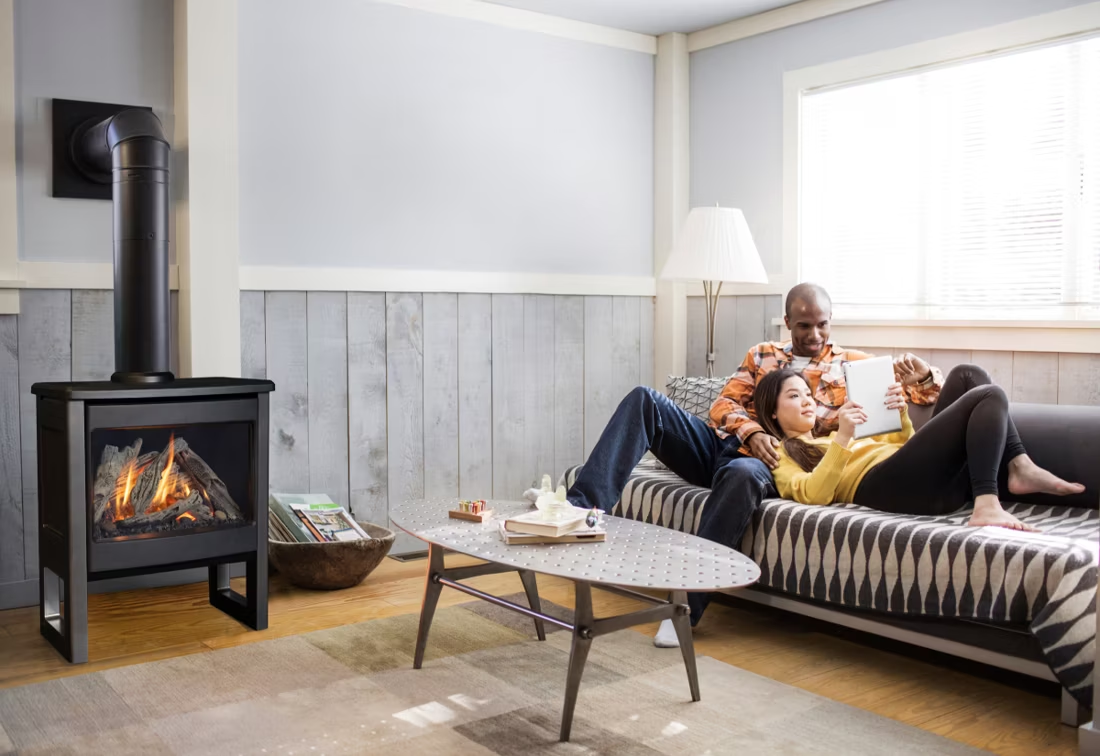
A gas fireplace is a fully built-in unit installed into new framing—the standard choice for new construction or a full remodel, and popular in Ladue's newer custom builds. A gas insert drops into an existing masonry firebox and uses the existing chimney as its vent path, which suits the many older Ladue homes with original fireplaces. A gas stove is a freestanding cast-iron or steel unit that sits on the floor, offering a more rustic look with the convenience of gas—a less common choice here but occasionally used in sunrooms or additions.
Do I need a permit to install a gas fireplace in Ladue?
Yes. The City of Ladue maintains its own building department separate from St. Louis County, and gas fireplace installations require both a building permit and sign-off on the gas line work by a licensed installer. Ladue is also known for its architectural review process on exterior changes, so if your project involves a new chimney chase or exterior vent termination visible from the street, factor in a bit more lead time. Established local hearth dealers who regularly work in Ladue know this process well and typically handle the permitting for you.
Should I choose a vented or vent-free gas fireplace?
Vented (direct-vent) units draw combustion air from outside and exhaust it back outside through a sealed pipe—they're the standard, code-friendly choice and what most Ladue installers recommend by default. Vent-free units burn without exterior venting and release some water vapor and combustion byproducts into the room; Missouri permits them, but they come with strict room-size and ventilation requirements. Given the size of most Ladue great rooms and the value homeowners here place on real heat output and clean-looking installations, direct-vent is by far the more common choice, though a local dealer can walk you through both.
How often does a gas fireplace need servicing?
Plan on an annual inspection, ideally in early fall before the unit sees regular use. A qualified technician checks the burner, pilot assembly, venting, and gas connections, and cleans the glass and interior—a service that typically runs $150 to $250 in the St. Louis area. It's a quick appointment compared to wood chimney sweeping, but skipping it is the most common reason a gas fireplace starts sooting the glass or short-cycling on the pilot.
Gas vs. wood—which makes more sense for a Ladue home?
Ladue's wooded lots are full of mature oak, hickory, walnut, and maple, and a wood-burning insert or stove can be a genuine option if you like tending a fire and have access to seasoned local wood—often through a tree service or arborist rather than a public cutting permit, since there's no national forest land nearby. But with winter lows only averaging around 25°F and a moderate winter heating season overall, most Ladue households don't need wood as a primary heat source. Gas wins for most homeowners here on convenience, consistent heat with no ash or creosote, and a cleaner look that suits a formal living space—which is why it's the far more common choice in this community.
What's the difference between an insert and a zero-clearance fireplace?
An insert is a fireplace that slides into a pre-existing wood-burning fireplace—if you don't have one, there's nothing to insert it into. A zero-clearance fireplace is built into a framed wall, which makes it the answer for remodels and new construction. Simple test: existing masonry fireplace means insert; blank or framed wall means zero-clearance.
Why is my open fireplace making my house colder?
Open fireplaces suck—literally. As the fire burns, it consumes air your furnace already paid to heat and pulls it out through the chimney, so the house is actually colder after the fire goes out than before you lit it. An insert fixes this: it seals the chimney, puts fixed glass across the front, and turns that hole in your house into a real heat source.
Can a fireplace actually lower my heating bill?
Yes—by creating a comfort zone. A furnace heats every square foot of the house just to warm the one room you're in; a gas fireplace on low burns roughly a sixth of the gas a typical furnace does. Set the furnace around 55–60 degrees as a baseline, then heat the rooms your family actually uses. Families who heat this way commonly save $20–$60 a month.
How much should I budget for a fireplace?
For an average home—covering the fireplace, the vent pipe, and basic installation—a budget between $3,900 and $5,500 gives you a lot of options across wood, gas, and pellet. By the time you add finish work, gas line, and electrical, the average complete installation lands between $5,000 and $12,000 all-in. In a remodel or new build, a good rule is to put about 2.5% of the total project cost toward the fireplace.
Nearby Dealers
Hearth shops serving Ladue and the surrounding area. Every listing shows whether it is a WhyFire partner, a dealer we have verified as authorized for the brands we recommend, or a local business carrying hearth products. No manufacturer pays for placement. How we verify dealers →
Savvy Surroundings
Forshaws
Gas Appliance Service LLC
Fireplace And Grill Center
Fireside Hearth & Grill Center
English Sweep
Villa Lighting Supply
Summer Classics By Forshaw
Arnold Stove & Fireplace Center
Brighthouse Living
C Bennett Building Supply
Hearthside Grill & Fireplace
Find your gas fireplace in Ladue.
Tell us a bit about your home and we'll put together a free Project Guide & Parts List—the right gas fireplace or insert, the exact parts including venting, and a trusted local dealer to install it.
Find Your Fireplace →