
Reliable gas heat for Northwoods homes, no wood pile required.
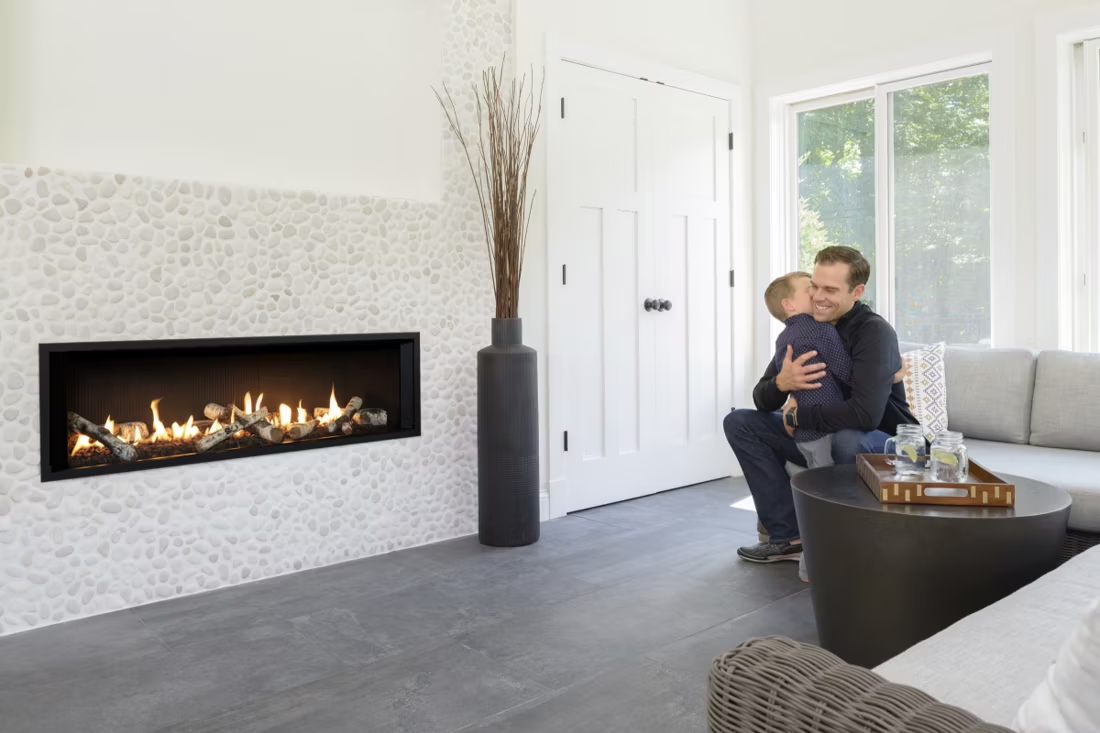
Northwoods sits on small inner-ring lots outside St. Louis where a woodpile isn't practical. Gas delivers real heat at the flip of a switch, and I'll match you with a trusted local dealer who can install it right.
Every Project Starts From One of These Five Situations
Gas fits how Northwoods actually lives.
Northwoods is a compact, close-knit community of about 3,700 people in St. Louis County, built mostly on tight residential lots with brick bungalows and duplexes from the mid-20th century. At 608 feet elevation and climate zone 4A, winters here are real but moderate—average lows sit around 25°F and the area sees a heating season well under half as demanding as what a genuinely cold-climate city like Madison, WI faces. Still, that's four to five months a year where supplemental heat matters, especially in older homes with drafty single-pane windows.
With lot sizes this small, there's little room for a woodpile, let alone the storage and seasoning that cordwood demands—which is part of why wood-burning appliances are rare to nonexistent here. Natural gas service through Spire Missouri reaches most of the St. Louis metro area including Northwoods, so a direct-vent gas fireplace or insert is usually the most practical upgrade: no ash, no smoke, no fuel deliveries, and heat that comes on the moment you need it. For homes without a gas line, Union Electric (Ameren Missouri) service at roughly 12.56 cents per kWh makes an electric fireplace a reasonable fallback for supplemental warmth.
Three steps. No salesperson until you're ready.
Tell us about your project
Your zip code, your situation, and the fuel you're leaning toward—or let the answers point you to one.
See what's actually available
The brands dealers within 100 miles genuinely carry—real options, never a catalog mirage.
Get your dealer & Project Guide
A trusted local dealer, plus the free Project Guide & Parts List that names every component of the job.
Frequently Asked Questions
How much does a gas fireplace installation cost in Northwoods?
For a typical Northwoods home, expect somewhere in the range of $3,800 to $9,500. A direct-vent gas insert dropped into an existing masonry fireplace—common in the neighborhood's older brick bungalows—usually lands on the lower end, especially if a gas line already serves the house. A new built-in gas fireplace in a room without existing venting, or a home that needs a fresh gas line run from the street, pushes toward the higher end. A local dealer can give you a firm number after seeing your specific chimney or wall setup.
Can I convert my existing wood-burning fireplace to gas?
Yes, and it's one of the more common projects for this part of St. Louis County. Many Northwoods homes still have the original brick fireplace from when the house was built, and most of those units see little to no use today. A gas insert typically drops into that opening, uses a stainless liner run through your existing chimney for venting, and connects to a gas line—either an existing one or a new short run from your meter. Conversions like this usually run $4,000 to $8,500 depending on the insert and whether new gas piping is needed.
Is natural gas available in Northwoods, or will I need propane?
Most homes in Northwoods and the surrounding St. Louis County suburbs are already served by natural gas through Spire Missouri, so if your house has a gas water heater, furnace, or range, adding a gas fireplace is usually a straightforward tap into existing service. Propane is a fallback for the rare property without a gas main nearby, but given how built-out this part of St. Louis County is, most local installers rarely need to spec a propane tank here.
Will my gas fireplace still work if the power goes out?
Most direct-vent gas fireplaces with intermittent pilot ignition (IPI) run on a small battery backup that kicks in automatically during an outage, so the unit still lights and runs on demand. Valor fireplaces take a slightly different approach—their pilot assembly generates its own electricity through the thermocouple, so there's no battery to remember or replace. For Northwoods, where ice storms occasionally take down power in the area for a day or two, either setup gives you a heat source that doesn't depend on the grid staying up.
What's the difference between a gas fireplace, insert, and stove?
A gas insert is built to slide into an existing masonry fireplace opening—the natural fit for Northwoods' older brick homes with a fireplace that's currently just decorative. A built-in gas fireplace is framed into a wall from scratch, which makes more sense for a home addition or a room that never had a fireplace. A gas stove is a freestanding cabinet-style unit that vents through a wall or existing chimney without needing a full fireplace opening—a good option for a smaller room or a home without any existing masonry. Most Northwoods projects end up being insert conversions simply because the housing stock already has the fireplace opening to work with.
Do I need a permit to install a gas fireplace in Northwoods?
Yes—gas appliance installations require both a building permit and sign-off on the gas line work, which has to be done by a licensed gas-fitter. Given the size of Northwoods, most residential permitting in this pocket of St. Louis County runs through the St. Louis County Building Division rather than a dedicated city building department. A local hearth dealer who's installed here before will typically pull the permit and coordinate the gas line and inspection as part of the job, so you're not chasing down separate trades yourself.
Should I get a vented or vent-free gas fireplace?
Vented (direct-vent) units pull combustion air from outside and exhaust it back outside through sealed venting—they're the standard recommendation almost everywhere, including here. Vent-free units burn gas directly into the room and are legal in Missouri under specific room-size and ventilation rules, but they release some moisture and combustion byproducts indoors. Given how tight some of the older Northwoods homes are on square footage, I'd steer most homeowners toward a direct-vent unit—it gives you full heat output without adding humidity or air-quality tradeoffs to a smaller living space.
How often does a gas fireplace need to be serviced?
Plan on an annual inspection, ideally in early fall before you start using it for the season. A technician checks the burner, pilot assembly, gas connections, and venting, and cleans the glass and interior—a quick job that typically runs $150 to $250 in the St. Louis metro area. It's a much lighter lift than wood-stove chimney sweeping, but skipping it is still the most common cause of pilot and ignition problems down the line.
Gas or electric fireplace—which makes more sense for a Northwoods home?
With Union Electric (Ameren Missouri) residential rates around 12.56 cents per kWh, an electric fireplace is cheap to install (often under $1,000, sometimes just a matter of plugging in a unit) but delivers modest, mostly cosmetic heat—fine for a bedroom or den that just needs to take the chill off. A gas fireplace costs more upfront but puts out genuine heat output, can offset furnace use during the coldest stretch of winter, and still works in a power outage with a battery-backup or self-powered pilot. For a primary living space in Northwoods' four-to-five-month heating season, gas is usually the better long-term investment; electric works well as a low-cost supplement in a secondary room.
Can I put a TV above my fireplace?
Yes—with an asterisk. Fireplaces are hot and TVs don't like heat. Either put a mantel between them to deflect rising warmth, or choose a fireplace with heat-management technology that creates a cool zone on the wall above—the wall stays around 125 degrees, barely warm, while the room still gets full heat. If you like clean lines and don't want a mantel, heat management is the answer.
Why is my open fireplace making my house colder?
Open fireplaces suck—literally. As the fire burns, it consumes air your furnace already paid to heat and pulls it out through the chimney, so the house is actually colder after the fire goes out than before you lit it. An insert fixes this: it seals the chimney, puts fixed glass across the front, and turns that hole in your house into a real heat source.
Can I install a fireplace myself?
If you're putting a fire in your house on purpose, it's best to work with an expert. Unless you're genuinely experienced in framing, gas line, vent pipe, and the national code on clearances to combustibles, have a professional do it—and ideally the same company that sells you the fireplace, so warranty, service, and liability all live under one roof.
Can a fireplace actually lower my heating bill?
Yes—by creating a comfort zone. A furnace heats every square foot of the house just to warm the one room you're in; a gas fireplace on low burns roughly a sixth of the gas a typical furnace does. Set the furnace around 55–60 degrees as a baseline, then heat the rooms your family actually uses. Families who heat this way commonly save $20–$60 a month.
Nearby Dealers
Hearth shops serving Northwoods and the surrounding area. Every listing shows whether it is a WhyFire partner, a dealer we have verified as authorized for the brands we recommend, or a local business carrying hearth products. No manufacturer pays for placement. How we verify dealers →
Villa Lighting Supply
Savvy Surroundings
Forshaws
Gas Appliance Service LLC
Fireside Hearth & Grill Center
Fireplace And Grill Center
English Sweep
Summer Classics By Forshaw
Arnold Stove & Fireplace Center
Brighthouse Living
Hearthside Grill & Fireplace
Bel-O Fireplaces & More
Find your gas fireplace in Northwoods.
Tell me a bit about your home and I'll send you a free Project Guide & Parts List—the exact parts, vent kit, and a trusted local dealer matched to your Northwoods gas fireplace project.
Find Your Fireplace →