
Real Fire, Flip of a Switch, in Frontenac.
Clean, on-demand heat for Frontenac's brick colonials and newer builds near Plaza Frontenac—matched to a trusted local dealer who pulls the permit and sizes the venting correctly.
Every Project Starts From One of These Five Situations
Frontenac's older masonry hearths were built for wood—most homeowners today choose gas.
Frontenac sits at 640 feet in St. Louis County, with a winter heating season on the milder side of moderate and winter lows that average in the low 20s—real cold, but nowhere near the extremes of Minneapolis or Duluth to the north. Most of the city's housing stock dates to the 1950s through 1970s, with brick colonials built around a traditional open masonry fireplace, plus a newer wave of custom builds near Plaza Frontenac. Those original wood fireboxes were rarely efficient and left a lot of ash and draft behind, which is why gas has become the default upgrade for homeowners here.
Natural gas service reaches essentially all of Frontenac through Spire, the regional utility serving St. Louis County, so most homes already have a gas line to the water heater or furnace that can be extended to a fireplace. Electric fireplaces are the other realistic option here, running on Union Electric Co (Ameren Missouri) power at roughly 12.6 cents per kWh. Wood-burning and pellet stoves are essentially non-factors in Frontenac—there's no nearby cutting-permit land, lots tend to be tight, and the city's residential character doesn't lend itself to woodpiles or chimney smoke—so gas and electric are where nearly all local installations happen.
Three steps. No salesperson until you're ready.
Tell us about your project
Your zip code, your situation, and the fuel you're leaning toward—or let the answers point you to one.
See what's actually available
The brands dealers within 100 miles genuinely carry—real options, never a catalog mirage.
Get your dealer & Project Guide
A trusted local dealer, plus the free Project Guide & Parts List that names every component of the job.
Frequently Asked Questions
How much does a gas fireplace installation cost in Frontenac?
For a St. Louis County home like the ones common in Frontenac, a direct-vent gas insert into an existing masonry fireplace typically runs $4,000 to $8,000, with the gas line already in place holding costs to the lower end. A new built-in gas fireplace for a remodel or addition—with framing, venting, and a fresh gas line run from the meter—usually lands higher, often $7,000 to $12,000 depending on the run length and finish work. A local dealer will give you a firm number after seeing your existing chimney or framing in person.
Can I convert my existing wood fireplace to gas?
Yes, and it's one of the most common projects in Frontenac given how many homes here still have an original 1950s or 1960s masonry firebox. A gas insert with a stainless steel liner run up the existing flue is the standard approach—it keeps the look of the original brick surround while eliminating ash, drafts, and the need to ever load wood. Since Spire natural gas already reaches nearly every home in the city, most conversions just need a gas line tapped off an existing appliance line rather than a long new run, which keeps costs down.
Do I need natural gas, or is propane an option in Frontenac?
Almost every home in Frontenac has access to natural gas through Spire, so propane is rarely necessary here—unlike more rural parts of St. Louis County where propane tanks are still common. If your home already runs a gas furnace, water heater, or range, extending a line to a fireplace location is usually straightforward for a licensed gas-fitter. Propane remains an option for detached structures or outbuildings without an existing gas connection, but for the main house, natural gas is the default.
Will my gas fireplace work during a power outage?
Most modern gas fireplaces will, which matters in St. Louis County given how ice storms have knocked out power across the region in recent winters. Units with IPI (intermittent pilot ignition) run on a battery backup that kicks in the moment power drops, so the fireplace lights on demand just like normal. Valor units go a step further—their pilot's thermocouple generates its own electricity, so there's no battery to remember at all. If backup heat during an outage is a priority for your Frontenac home, ask your local dealer which ignition system a given model uses before you buy.
Gas fireplace, insert, or gas stove—which fits my home?
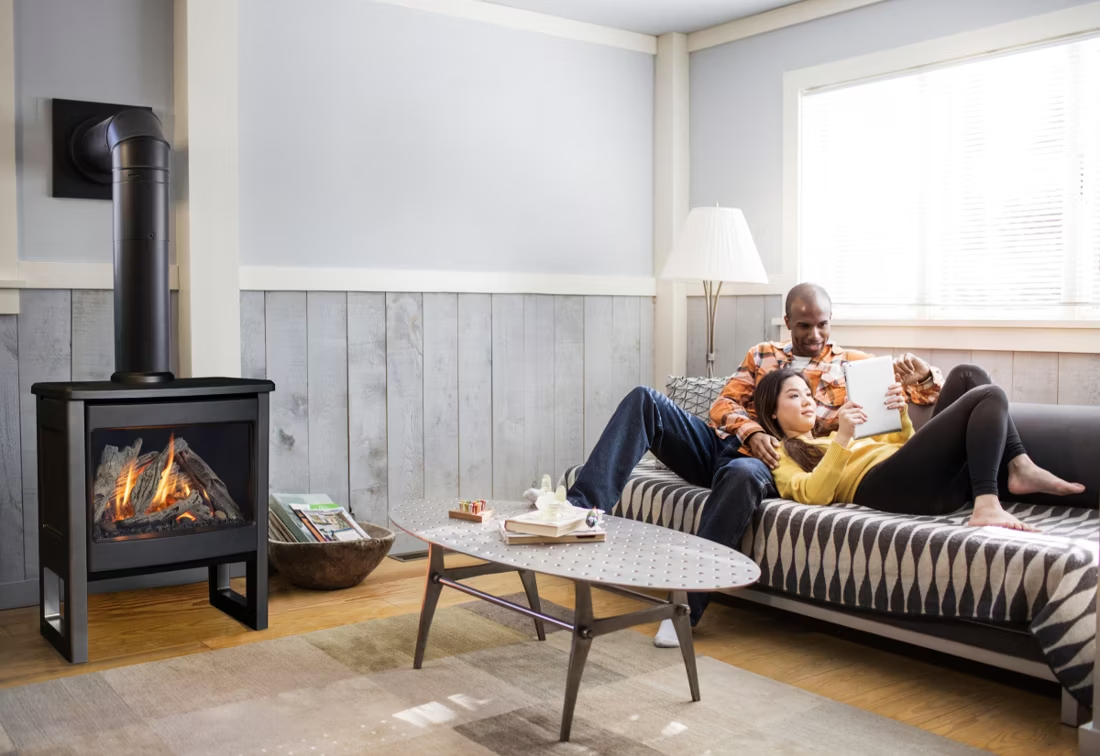
A gas insert slides into an existing masonry firebox and is the natural fit for Frontenac's older brick colonials that already have a chimney. A built-in gas fireplace is framed into a wall from scratch, which is more common in the newer custom homes going up near Plaza Frontenac or in additions. A freestanding gas stove sits on the floor like a wood stove but runs on gas—a less common choice here, but sometimes used in a sunroom or finished basement where there's no existing chimney to work with. A local dealer can walk your specific space and tell you which category applies.
Do I need a permit to install a gas fireplace in Frontenac?
Yes. The City of Frontenac's building department requires a permit for gas fireplace installations, and the gas line portion of the work must be done by a licensed gas-fitter and inspected separately from the general building permit. Most established hearth dealers in the area handle this coordination as part of the installation, pulling both permits and scheduling the inspections so you aren't managing multiple trades and two different city sign-offs on your own.
Vented vs. vent-free gas fireplaces—what's allowed in Frontenac?
Vented (direct-vent) gas fireplaces draw combustion air from outside and exhaust exhaust gases back outside through sealed piping—they're the standard, code-compliant choice everywhere, including Frontenac. Vent-free units are legal in Missouri under specific room-size and oxygen-depletion-sensor requirements, but given Frontenac's tighter, well-insulated homes and the city's active architectural review process for exterior changes, most homeowners here end up choosing a direct-vent unit anyway—it avoids indoor air quality tradeoffs and simplifies the permitting conversation. Ask your dealer to walk through both if you're weighing the choice for a specific room.
How often should my gas fireplace be serviced?
Plan on an annual inspection, ideally before the first cold snap each fall. A technician checks the burner, pilot assembly, gas connections, and venting, and cleans the glass and interior—a much lighter job than chimney sweeping but still important, especially for units that see daily use through a typical Frontenac winter. Local gas appliance service providers generally charge $125 to $200 for a standard annual visit.
Should I consider a wood-burning fireplace instead of gas in Frontenac?
For most Frontenac homeowners, no. There's no nearby public land with cutting permits the way there is in more rural parts of Missouri, lot sizes in the city don't leave much room for stacked firewood, and there's little cultural reliance on wood as primary heat here the way there is in colder, more rural regions. A handful of homeowners keep an existing masonry fireplace burning wood occasionally for atmosphere, but nearly all new installations and conversions in Frontenac go to gas, with electric fireplaces as the other realistic option for rooms without gas access.
Why is my open fireplace making my house colder?
Open fireplaces suck—literally. As the fire burns, it consumes air your furnace already paid to heat and pulls it out through the chimney, so the house is actually colder after the fire goes out than before you lit it. An insert fixes this: it seals the chimney, puts fixed glass across the front, and turns that hole in your house into a real heat source.
What's the difference between an insert and a zero-clearance fireplace?
An insert is a fireplace that slides into a pre-existing wood-burning fireplace—if you don't have one, there's nothing to insert it into. A zero-clearance fireplace is built into a framed wall, which makes it the answer for remodels and new construction. Simple test: existing masonry fireplace means insert; blank or framed wall means zero-clearance.
Can a fireplace actually lower my heating bill?
Yes—by creating a comfort zone. A furnace heats every square foot of the house just to warm the one room you're in; a gas fireplace on low burns roughly a sixth of the gas a typical furnace does. Set the furnace around 55–60 degrees as a baseline, then heat the rooms your family actually uses. Families who heat this way commonly save $20–$60 a month.
What is an in-home preview and do I need one?
It's a visit where a hearth professional measures your space, confirms the model you picked actually works in your home, and walks the specs—framing, gas line, venting, finish work—before anything is ordered. Some details you just can't know until you see the house. Never make a down payment without one; it's the single most-skipped step that burns buyers.
Nearby Dealers
Hearth shops serving Frontenac and the surrounding area. Every listing shows whether it is a WhyFire partner, a dealer we have verified as authorized for the brands we recommend, or a local business carrying hearth products. No manufacturer pays for placement. How we verify dealers →
Forshaws
Savvy Surroundings
Fireplace And Grill Center
Fireside Hearth & Grill Center
Gas Appliance Service LLC
English Sweep
Summer Classics By Forshaw
Villa Lighting Supply
Brighthouse Living
Arnold Stove & Fireplace Center
C Bennett Building Supply
Find your gas fireplace in Frontenac.
Tell us about your home and your existing fireplace or firebox, and we'll match you with a trusted local Frontenac-area dealer plus a free Project Guide & Parts List—the exact parts, including the vent kit, for your project.
Find Your Fireplace →