
Instant Warmth for Dellwood's Cold Snaps.
Clean, reliable gas heat for Dellwood's brick ranches and colonials—no wood splitting required. Find the right fireplace, insert, or stove, and connect with a trusted local dealer.
Every Project Starts From One of These Five Situations
Convenient heat for St. Louis County winters.
Dellwood sits in St. Louis County at just 514 feet above sea level, a stone's throw from the Missouri and Mississippi river confluence. Winters here are milder than the Upper Midwest—average lows hover around 24°F and the region sees a solid stretch of heating season each year—but St. Louis is no stranger to sudden arctic blasts that push temperatures well below zero for a few days each January, the same cold snaps that hit Chicago and Minneapolis. For homeowners who don't want to stack cordwood or manage a damper, a gas fireplace delivers that instant, radiant warmth without the extra chore.
Spire Missouri (formerly Laclede Gas) serves natural gas throughout most of Dellwood and greater St. Louis County, so adding a gas fireplace to a home that already runs a furnace or water heater on gas is typically a straightforward tie-in. Dellwood's housing stock—largely brick ranches and mid-century colonials built with existing masonry fireplaces—makes it a strong candidate for gas insert conversions that keep the exterior look while swapping out smoke and ash for a flip-of-a-switch flame. And unlike parts of the country under winter wood-smoke advisories, the St. Louis region has no air quality non-attainment restrictions on hearth appliances, so the choice between gas and wood here comes down to convenience, not regulation.
Three steps. No salesperson until you're ready.
Tell us about your project
Your zip code, your situation, and the fuel you're leaning toward—or let the answers point you to one.
See what's actually available
The brands dealers within 100 miles genuinely carry—real options, never a catalog mirage.
Get your dealer & Project Guide
A trusted local dealer, plus the free Project Guide & Parts List that names every component of the job.
Frequently Asked Questions
How much does a gas fireplace installation cost in Dellwood?
Most gas fireplace installations in Dellwood run $3,800 to $9,500, depending on whether you're installing a direct-vent insert into an existing masonry fireplace or a new built-in unit that requires framing and a fresh gas line. Homes already on Spire Missouri's natural gas service with a line near the fireplace location sit at the lower end; installations that need a new gas line run from the meter, or venting through an exterior brick wall, land toward the higher end. A local hearth dealer will give you a firm number after seeing the space.
Can I convert my existing wood fireplace to gas?
Yes, and it's a common project in Dellwood's older brick homes. A gas insert typically slides into your existing masonry firebox, using a stainless liner run through your current chimney, so the exterior of your home doesn't change. Costs usually land between $4,000 and $8,500 depending on the insert and whether new gas piping is needed to reach the firebox. It's a popular upgrade for owners of the mid-century ranches and colonials common throughout this part of St. Louis County who want to keep the mantel and hearth but skip the ash and creosote.
Do I need natural gas service, or can I use propane?
Spire Missouri provides natural gas to most of Dellwood and the surrounding St. Louis County suburbs, so the large majority of local installations run on natural gas. Propane is really only a consideration for the rare property outside Spire's service footprint or for a detached structure like a garage or outbuilding where running a new gas line isn't practical. Most gas fireplace models can be set up for either fuel—your installer just swaps the orifice and regulator to match.
Will my gas fireplace still work if the power goes out?
In most cases, yes. Gas fireplaces with IPI (intermittent pilot ignition) run on a small battery backup that keeps them working even when Union Electric (Ameren Missouri) service drops during an ice storm or summer thunderstorm outage—both fairly common in this part of Missouri. Valor fireplaces go a step further: their pilot assembly generates its own electricity through the thermocouple, so there's no battery to remember at all. Worth asking your local dealer which ignition system a model uses if outage backup matters to you.
What's the difference between a gas fireplace, gas insert, and gas stove?
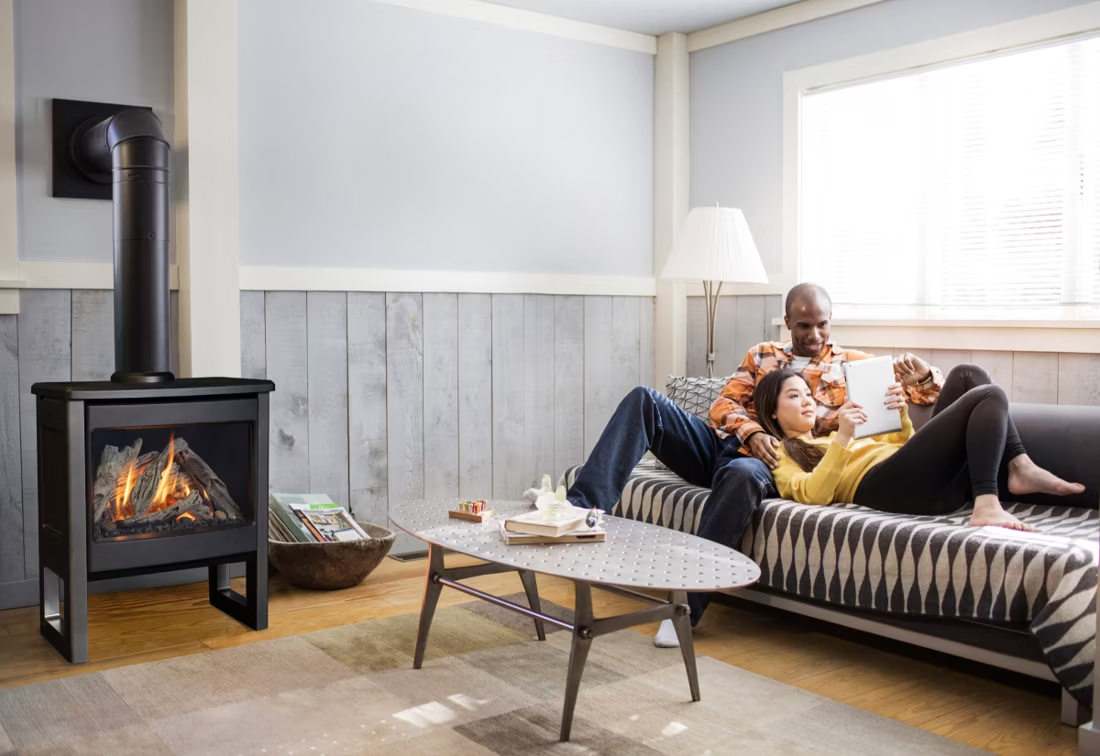
A gas fireplace is a fully built-in unit set into framing—the right call for new construction or a room without an existing chimney. A gas insert is built to drop into an existing masonry firebox, which describes a lot of the homes in Dellwood built in the 1950s and 60s. A gas stove is a freestanding cabinet unit, often chosen for a room addition or a home without a fireplace at all. For most Dellwood homeowners with an existing brick fireplace they want to modernize, an insert is the simplest and most common path.
Do I need a permit to install a gas fireplace in Dellwood?
Yes. Gas fireplace installations require a building permit and a separate gas line permit through St. Louis County's Department of Public Works (or the City of Dellwood, depending on the scope of work), and the gas piping itself has to be run or modified by a licensed gas fitter. Most local hearth dealers coordinate all of this as part of the installation, so you're not stuck managing separate inspections for the framing, the venting, and the gas line.
What's the difference between vented and vent-free gas fireplaces?
Vented (direct-vent) units draw combustion air from outside and exhaust it back outside through a sealed pipe—they're the standard choice and produce genuine, sustained heat. Vent-free units burn without any outside venting at all, releasing a small amount of water vapor and combustion byproducts into the room, so Missouri limits their use based on room volume and requires an oxygen depletion sensor. For most Dellwood installations, direct-vent is the more practical and more commonly recommended option, especially for a primary living space where the fireplace runs for hours at a time.
How often should a gas fireplace be serviced?
Plan on an annual inspection, ideally before the first cold snap in November. A technician checks the burner, pilot assembly, venting, and gas connections, and cleans the glass and interior—a lighter job than chimney sweeping but just as important for safety and efficiency. Local hearth service providers in the St. Louis area typically charge somewhere in the $125 to $200 range for a standard annual visit.
Gas vs. wood—which makes more sense for a Dellwood home?
Missouri hardwoods—oak, hickory, walnut, and maple—are all locally available and burn well, and a wood-burning fireplace or insert gives you real heat output and works without electricity if the power goes out. But it also means hauling and stacking wood, cleaning ash, and scheduling an annual chimney sweep. Gas skips all of that: flip a switch, get instant heat, and there's no smoke or soot to manage. Since Dellwood has no air quality restrictions on either fuel, the decision usually comes down to whether you want the hands-on ritual of a wood fire or the convenience of gas for daily use—many households end up choosing gas for the main living area and keeping wood, if at all, for a secondary space.
Why is my open fireplace making my house colder?
Open fireplaces suck—literally. As the fire burns, it consumes air your furnace already paid to heat and pulls it out through the chimney, so the house is actually colder after the fire goes out than before you lit it. An insert fixes this: it seals the chimney, puts fixed glass across the front, and turns that hole in your house into a real heat source.
Why is a fireplace insert so efficient?
An insert does two things: it seals the chimney completely, so you stop losing air you already paid to heat, and it radiates warmth into the room through the firebox and glass. Most add a heat-exchange fan that pulls cool room air underneath, wraps it around the hot firebox, and pushes it back out warm. Your home is more efficient before you've even lit the first fire.
What is an in-home preview and do I need one?
It's a visit where a hearth professional measures your space, confirms the model you picked actually works in your home, and walks the specs—framing, gas line, venting, finish work—before anything is ordered. Some details you just can't know until you see the house. Never make a down payment without one; it's the single most-skipped step that burns buyers.
Can I install a fireplace myself?
If you're putting a fire in your house on purpose, it's best to work with an expert. Unless you're genuinely experienced in framing, gas line, vent pipe, and the national code on clearances to combustibles, have a professional do it—and ideally the same company that sells you the fireplace, so warranty, service, and liability all live under one roof.
Nearby Dealers
Hearth shops serving Dellwood and the surrounding area. Every listing shows whether it is a WhyFire partner, a dealer we have verified as authorized for the brands we recommend, or a local business carrying hearth products. No manufacturer pays for placement. How we verify dealers →
Gas Appliance Service LLC
Villa Lighting Supply
Savvy Surroundings
Forshaws
Fireside Hearth & Grill Center
Fireplace And Grill Center
English Sweep
Summer Classics By Forshaw
Brighthouse Living
Arnold Stove & Fireplace Center
Bel-O Fireplaces & More
Hearthside Grill & Fireplace
Find your gas fireplace in Dellwood.
Tell us about your home and we'll put together a free Project Guide & Parts List—the right gas fireplace, insert, or stove for your space, the vent kit it needs, and a trusted local Dellwood-area dealer to install it.
Find Your Fireplace →