
Warm Up Fast, Without the Firewood.
For Ballwin's suburban lots and St. Louis winters, gas delivers instant, clean heat with none of the stacking, splitting, or hauling. Find the right unit and get matched with a trusted local dealer.
Every Project Starts From One of These Five Situations
The convenient choice for St. Louis suburbs.
Ballwin sits in Climate Zone 4A at about 621 feet in elevation, with a winter heating season on the milder end of moderate and average winter lows around 22°F. That's a real Midwest winter—cold enough to run a fireplace nightly from December through February—but nowhere near the sustained deep-freeze conditions of Fargo or Minneapolis, where whole-home wood-heat culture takes root. In West County subdivisions with quarter-acre lots and HOA covenants, there's little of the firewood-cutting infrastructure or storage space that makes wood practical, which is a big part of why gas has become the default upgrade for homeowners here.
Natural gas service through Spire Missouri covers essentially all of Ballwin, so most homes already have a gas line running to the furnace or water heater—extending it to a fireplace is usually a straightforward add-on rather than a new utility connection. Electric service comes from Union Electric (Ameren Missouri) at roughly 12.56 cents per kWh, which matters if you're comparing a gas unit's standing pilot or blower draw against an electric fireplace's full-wattage draw. Either way, a properly sized direct-vent gas fireplace gives Ballwin homeowners instant zone heat for the den or basement rec room, a backup heat source that can run without grid power, and none of the ash, creosote, or chimney maintenance that comes with a wood-burning setup.
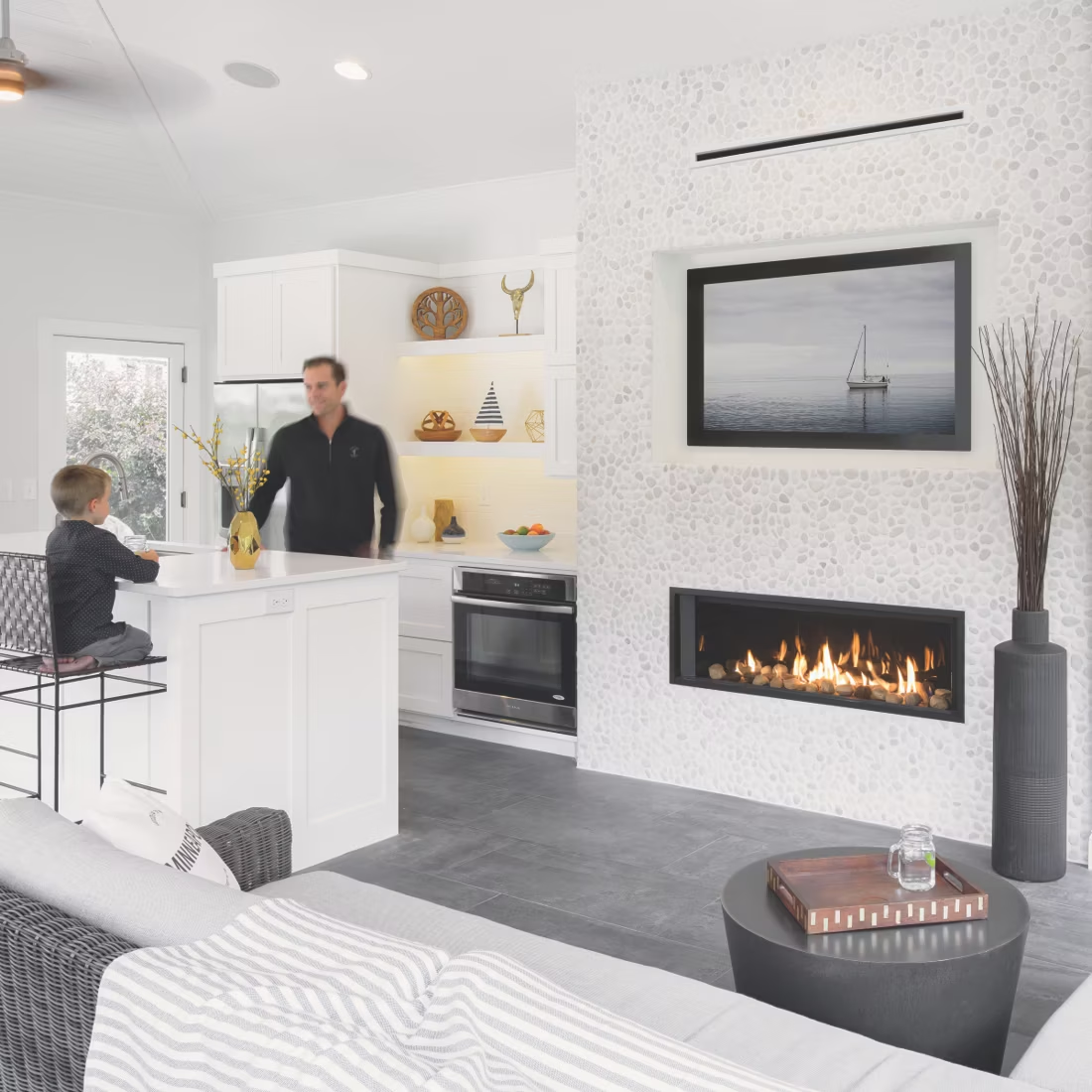
Three steps. No salesperson until you're ready.
Tell us about your project
Your zip code, your situation, and the fuel you're leaning toward—or let the answers point you to one.
See what's actually available
The brands dealers within 100 miles genuinely carry—real options, never a catalog mirage.
Get your dealer & Project Guide
A trusted local dealer, plus the free Project Guide & Parts List that names every component of the job.
Frequently Asked Questions
How much does a gas fireplace installation cost in Ballwin?
Most gas fireplace installations in the Ballwin area run somewhere between $4,000 and $9,500, depending on the unit and the venting path. A direct-vent gas insert going into an existing masonry fireplace with a gas line already nearby tends to land on the lower end. A new built-in gas fireplace for a basement remodel or a home addition—where the installer has to frame the cavity, run a fresh gas line, and vent through an exterior wall—sits at the higher end. Homes on the outer edges of the 63021 and 63024 zips that are slightly farther from an existing gas tap can see costs creep up if a longer line run is needed. A local hearth dealer will give you a firm number after seeing the space.
Can I convert my existing wood fireplace to gas?
Yes, and it's one of the more common projects in Ballwin's older ranch and split-level homes built in the 1960s through 1980s, many of which still have their original open masonry fireplace. A gas insert typically drops into that firebox and uses a stainless liner run up the existing chimney, so you keep the same mantel and surround while gaining real heat output and a glass front you can actually stand in front of. Conversions in this area usually run $4,000 to $8,000, with the lower end applying to homes where the gas line already reaches that wall from a nearby water heater or furnace run.
Do I need natural gas to install a gas fireplace, or can I use propane?
Natural gas through Spire Missouri covers Ballwin thoroughly, so the overwhelming majority of installations here run on natural gas rather than propane—if your home already has gas heat, cooking, or water heating, a fireplace is just another appliance on the same line. Propane is really only a consideration for a handful of properties on the fringes of the service area or for anyone building a detached structure like a pool house or shop that isn't tied into the home's gas meter. Most gas fireplace models can be configured for either fuel, but for a typical Ballwin subdivision home, natural gas is the practical answer.
Will my gas fireplace work during a power outage?
Most modern gas fireplaces will, which matters in this part of St. Louis County when ice storms or summer derechos knock out Ameren Missouri power for a day or more. Units with intermittent pilot ignition (IPI) run on a small battery backup that kicks in the moment the power drops, so the fireplace lights normally off the switch or remote. Valor's lineup takes a different approach—the pilot's thermocouple generates its own electricity, so there are no batteries to check or replace, ever. If backup heat during an outage is a priority for your household, ask your local dealer about the ignition system before you settle on a model.
What's the difference between a gas fireplace, gas insert, and gas stove?
A gas fireplace is a fully built-in unit framed into a wall—the right call for a basement remodel or new construction where there's no existing hearth. A gas insert is built to slide into an existing masonry firebox, which describes a lot of the original fireplaces in Ballwin's older neighborhoods off Clayton Road and Manchester Road. A gas stove is freestanding, sitting on its own hearth pad, and works well in a room without any existing fireplace opening. For most Ballwin homeowners looking to upgrade a fireplace they already have, an insert is the straightforward fit; a bare wall or unfinished basement usually points toward a built-in fireplace or freestanding stove instead.
Do I need a permit to install a gas fireplace in Ballwin?
Yes. The City of Ballwin's Building Division requires a permit for gas fireplace installations, and the gas line work itself has to be done or signed off by a licensed gas-fitter. If your property falls into an unincorporated pocket of one of the 63011 or 63022 zip codes, St. Louis County's Department of Public Works handles the permit instead. In practice, a certified hearth dealer coordinates the permit, the gas line hookup, and the final inspection as one package, so you're not stuck managing separate trades yourself.
What's the difference between vented and vent-free gas fireplaces?
Vented (direct-vent) fireplaces pull combustion air from outside and exhaust the byproducts back outside through a sealed pipe—they're the cleanest and most universally code-compliant option. Vent-free units burn directly into the room air and are legal in Missouri, but they come with strict room-size minimums and oxygen depletion sensors, and they release some water vapor and combustion byproducts into your living space. For a well-insulated Ballwin home, direct-vent units are the more common recommendation from local dealers—they put out real heat, don't affect indoor air quality, and don't carry the same operating restrictions. Vent-free can make sense in a room where running venting to an exterior wall just isn't feasible, but it's worth discussing both options with a local installer.
How often should my gas fireplace be serviced?
Plan on an annual inspection, ideally in early fall before you start running it regularly. A technician checks the burner, pilot assembly, venting, and gas connections, and cleans the glass and interior—a much smaller job than a wood chimney sweep, but just as important for safety and efficiency. St. Louis-area hearth and HVAC companies that service gas appliances typically charge $150 to $250 for this visit, and it's usually the same technician who can also address any glass discoloration or ignition issues that show up over the season.
Gas vs. wood—which is right for my Ballwin home?
For most homes in Ballwin, gas is the practical answer. This is a suburban St. Louis County community of established subdivisions and smaller lots—there's no nearby national forest cutting program, no local firewood permit system, and many HOAs restrict outdoor wood storage, so new wood stove installations are genuinely uncommon here even though local oak, hickory, and walnut would burn well if you had a source. Older homes with an existing masonry fireplace can still burn wood occasionally without issue, but for anyone installing a new appliance, gas offers the instant on-off convenience, cleaner operation, and lower maintenance that fits how most Ballwin households actually use a fireplace—as a supplemental heat source and gathering spot rather than a primary heating system.
What's the difference between an insert and a zero-clearance fireplace?
An insert is a fireplace that slides into a pre-existing wood-burning fireplace—if you don't have one, there's nothing to insert it into. A zero-clearance fireplace is built into a framed wall, which makes it the answer for remodels and new construction. Simple test: existing masonry fireplace means insert; blank or framed wall means zero-clearance.
Why is a fireplace insert so efficient?
An insert does two things: it seals the chimney completely, so you stop losing air you already paid to heat, and it radiates warmth into the room through the firebox and glass. Most add a heat-exchange fan that pulls cool room air underneath, wraps it around the hot firebox, and pushes it back out warm. Your home is more efficient before you've even lit the first fire.
What is an in-home preview and do I need one?
It's a visit where a hearth professional measures your space, confirms the model you picked actually works in your home, and walks the specs—framing, gas line, venting, finish work—before anything is ordered. Some details you just can't know until you see the house. Never make a down payment without one; it's the single most-skipped step that burns buyers.
Can I install a fireplace myself?
If you're putting a fire in your house on purpose, it's best to work with an expert. Unless you're genuinely experienced in framing, gas line, vent pipe, and the national code on clearances to combustibles, have a professional do it—and ideally the same company that sells you the fireplace, so warranty, service, and liability all live under one roof.
Nearby Dealers
Hearth shops serving Ballwin and the surrounding area. Every listing shows whether it is a WhyFire partner, a dealer we have verified as authorized for the brands we recommend, or a local business carrying hearth products. No manufacturer pays for placement. How we verify dealers →
Summer Classics By Forshaw
Fireside Hearth & Grill Center
Fireplace And Grill Center
English Sweep
Brighthouse Living
Forshaws
Savvy Surroundings
Gas Appliance Service LLC
Arnold Stove & Fireplace Center
Villa Lighting Supply
C Bennett Building Supply
Find your gas fireplace in Ballwin.
Tell us about your home and we'll put together a free Project Guide & Parts List—the right gas fireplace or insert, the exact venting components, and a trusted local Ballwin-area dealer to install it.
Find Your Fireplace →