
Gas heat that lights with the flip of a switch in Fenton.
No wood to haul, no ash to clean up—just reliable warmth for Meramec River valley winters. Find the right gas unit and connect with a trusted local dealer.
Every Project Starts From One of These Five Situations
Convenient heat for St. Louis County winters.
Fenton sits along the Meramec River at about 426 feet elevation, in a mixed-humid climate zone (4A) with a solid winter heating season and winter lows averaging around 22°F. That's a real heating season, but a milder one than you'd find in Minneapolis or Fargo—Fenton homes need dependable heat for a few cold months rather than a full arctic siege. Plenty of older homes here still have wood-burning fireplaces built for local oak, hickory, walnut, or maple, and a growing number of owners are converting those fireboxes to gas for the convenience.
Spire Missouri provides natural gas service throughout most of Fenton and greater St. Louis County, and if your home already has a gas water heater or furnace, adding a fireplace is usually a simple tie-in. Union Electric (Ameren Missouri) serves the area's electric needs at roughly 12.56 cents per kWh, which matters if you're comparing a gas unit's standing pilot or blower draw against other options. Fenton doesn't have the winter air-quality advisories that some Western cities deal with, so the appeal of gas here is almost entirely about convenience: instant flame, consistent heat, and none of the wood-hauling or ash cleanup that comes with a traditional fireplace.
Three steps. No salesperson until you're ready.
Tell us about your project
Your zip code, your situation, and the fuel you're leaning toward—or let the answers point you to one.
See what's actually available
The brands dealers within 100 miles genuinely carry—real options, never a catalog mirage.
Get your dealer & Project Guide
A trusted local dealer, plus the free Project Guide & Parts List that names every component of the job.
Frequently Asked Questions
How much does a gas fireplace installation cost in Fenton?
Most gas fireplace and insert installations in the Fenton area run somewhere between $4,000 and $9,500, depending on the unit, the venting path, and whether new gas line work is needed. A direct-vent insert going into an existing masonry fireplace with a gas line already nearby tends to land on the lower end. A new built-in gas fireplace for a remodel or addition—with framing, venting, and a fresh gas line run from the meter—sits toward the higher end. A local dealer will give you a firm number after seeing your fireplace or the space in person.
Can I convert my existing wood fireplace to gas?
Yes, and it's one of the most common projects for older Fenton homes near the Meramec River, many of which have masonry fireplaces originally built to burn local oak or hickory. A gas insert typically slides into that existing firebox, using a stainless liner run up the current chimney as the vent path. Expect somewhere in the $4,000 to $8,000 range depending on the insert and whether gas service already reaches that part of the house. The conversion keeps the look of your original fireplace while giving you instant, thermostat-controlled heat.
Do I need natural gas to install a gas fireplace, or can I use propane?
Either works. Spire Missouri supplies natural gas to most of Fenton, so if your home already has a gas furnace, water heater, or range, adding a fireplace is usually straightforward. For homes on the edges of St. Louis County where gas mains don't reach, propane is a common alternative, run off either an existing tank or a new one installed by a local propane supplier. Most gas fireplace models can be set up for either fuel—your installer adjusts the orifice and regulator accordingly.
Will my gas fireplace work during a power outage?
Most modern gas fireplaces will. Units with IPI (intermittent pilot ignition) carry a battery backup—usually a set of AA batteries—that keeps the fireplace lighting on demand even when the grid is down, which matters during the ice storms that occasionally hit the St. Louis region. Valor units go a step further: their pilot generates its own electricity through the thermocouple, so there's no battery to remember at all. Ask your local retailer which ignition system a given model uses before you buy.
What's the difference between a gas fireplace, gas insert, and gas stove?
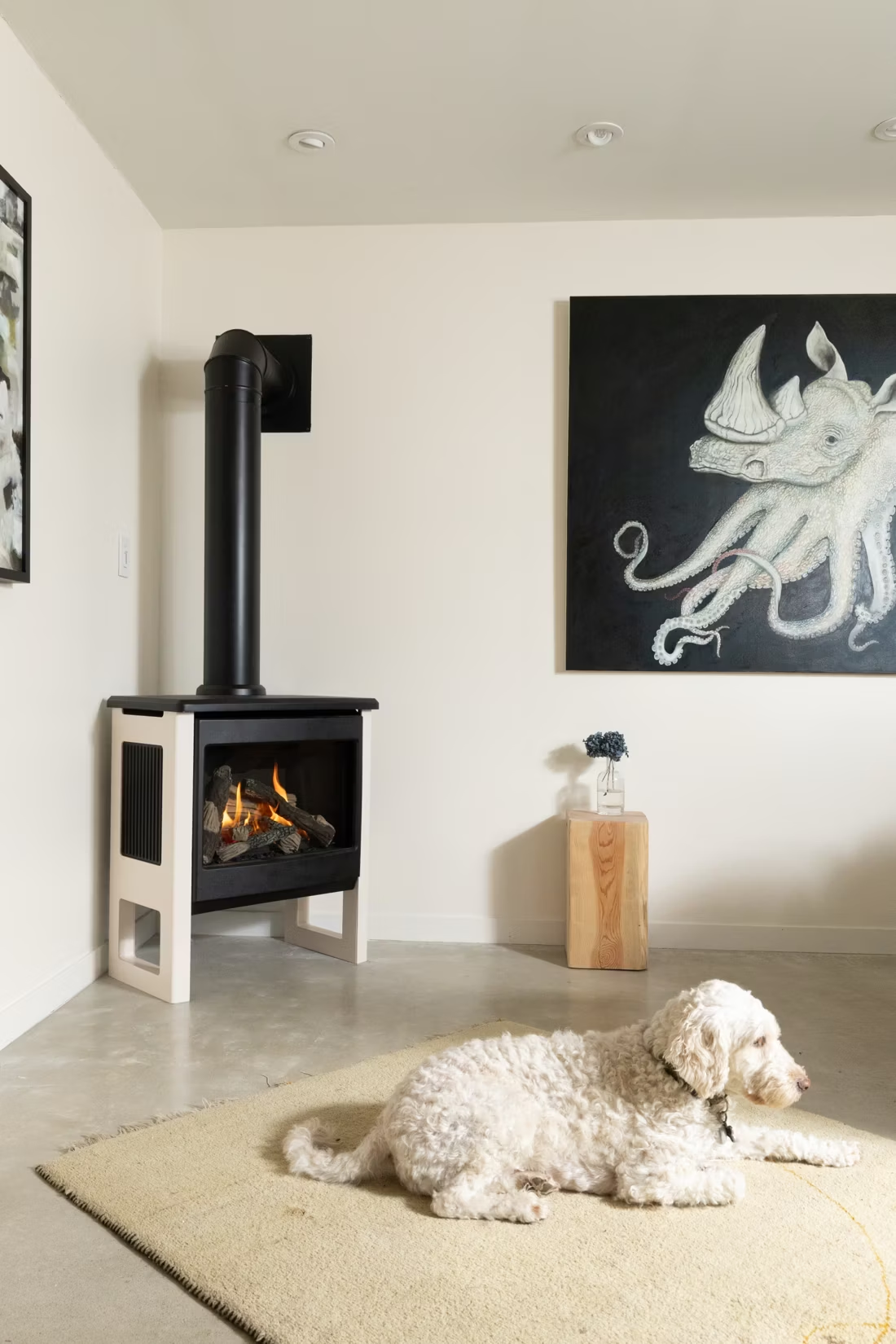
A gas fireplace is a fully built-in unit framed into a wall—typically chosen for new construction or a larger remodel. A gas insert is sized to slide into an existing masonry firebox, which is common in Fenton's older housing stock along the river. A gas stove is a freestanding cabinet-style unit that sits on the floor like a traditional wood stove but runs on gas. If you've already got a fireplace you want to upgrade, an insert is usually the right call; if you're building or adding a room, a built-in fireplace or freestanding stove makes more sense.
Do I need a permit to install a gas fireplace in Fenton?
Yes—new gas fireplace installations require a building permit through the City of Fenton, and any new gas line work needs a licensed gas-fitter and associated permit as well. Most established hearth dealers coordinate this for you as part of the install, so you're not left managing separate trades and inspections on your own.
What's the difference between vented and vent-free gas fireplaces?
Vented (direct-vent) gas fireplaces pull combustion air from outside and exhaust the exhaust gases back outside through a sealed vent—they're the cleanest, safest option and the standard choice for most Fenton installations. Vent-free units burn fuel directly into the room without exterior venting; they're legal in Missouri but come with strict room-size and ventilation requirements, and they release some combustion byproducts indoors. Since Fenton doesn't have the wintertime air-quality restrictions some cities do, the decision here comes down to homeowner preference—most local dealers steer first-time buyers toward direct-vent for the cleaner indoor air.
How often should my gas fireplace be serviced?
Plan on an annual inspection, ideally before the first cold snap each fall. A technician checks the burner, pilot or ignition system, venting, and gas connections, and cleans the glass and interior. It's a quicker visit than a wood chimney sweep—usually $125 to $200 in the St. Louis area—but it's the main thing keeping a gas unit running safely and efficiently year after year.
Gas vs. wood—which is right for my home?
Wood has real appeal in Fenton—oak and hickory are plentiful locally, burn hot and long, and a wood stove keeps working even if the power goes out. But wood also means hauling, stacking, ash cleanup, and chimney maintenance. Gas trades that authenticity for instant on-off heat, no smoke, and a cleaner-looking installation, which is why it's become the default choice for primary living spaces in newer Fenton homes. If you already have a masonry fireplace built for wood, you don't have to choose absolutely—a lot of local homeowners convert one fireplace to gas for daily convenience and keep a wood stove elsewhere for backup heat.
What's the difference between an insert and a zero-clearance fireplace?
An insert is a fireplace that slides into a pre-existing wood-burning fireplace—if you don't have one, there's nothing to insert it into. A zero-clearance fireplace is built into a framed wall, which makes it the answer for remodels and new construction. Simple test: existing masonry fireplace means insert; blank or framed wall means zero-clearance.
What do I measure to size a fireplace insert?
Four numbers tell you what fits: the front width, the front height, the back width, and the overall depth of your existing fireplace opening. Grab a tape measure, jot those down, and snap a photo of the wall—those two things do more to move your project forward than anything else you can do today.
Can a fireplace actually lower my heating bill?
Yes—by creating a comfort zone. A furnace heats every square foot of the house just to warm the one room you're in; a gas fireplace on low burns roughly a sixth of the gas a typical furnace does. Set the furnace around 55–60 degrees as a baseline, then heat the rooms your family actually uses. Families who heat this way commonly save $20–$60 a month.
What is an in-home preview and do I need one?
It's a visit where a hearth professional measures your space, confirms the model you picked actually works in your home, and walks the specs—framing, gas line, venting, finish work—before anything is ordered. Some details you just can't know until you see the house. Never make a down payment without one; it's the single most-skipped step that burns buyers.
Nearby Dealers
Hearth shops serving Fenton and the surrounding area. Every listing shows whether it is a WhyFire partner, a dealer we have verified as authorized for the brands we recommend, or a local business carrying hearth products. No manufacturer pays for placement. How we verify dealers →
English Sweep
Fireplace And Grill Center
Fireside Hearth & Grill Center
Arnold Stove & Fireplace Center
Forshaws
Savvy Surroundings
Summer Classics By Forshaw
Gas Appliance Service LLC
Villa Lighting Supply
Brighthouse Living
Find your gas fireplace in Fenton.
Tell us about your home and we'll match you with the right gas fireplace, insert, or stove—plus a free Project Guide & Parts List and a trusted local Fenton-area dealer to install it.
Find Your Fireplace →