
Warm, Reliable Heat for Oakville's River-Valley Winters.
Clean, instant gas heat built for South St. Louis County living. Find the right fireplace or insert and connect with a trusted local dealer.
Every Project Starts From One of These Five Situations
The practical default for a river-valley suburb.
Oakville sits along the Mississippi River in unincorporated St. Louis County, at just 577 feet of elevation, in climate zone 4A. Winters here bring an average low around 22°F and a moderately long heating season—real cold, but nowhere near what homeowners deal with in Minneapolis, MN, where the heating season stretches much longer and colder. Oakville's housing stock is largely mid-century and later—ranches, split-levels, and finished basements built from the 1960s through the 1980s, many with an existing masonry fireplace that was never built to carry the heating load of a whole house.
Because Oakville is a dense, established subdivision community rather than a rural or forested county, natural gas service through Spire (formerly Laclede Gas) reaches most homes here, and gas has become the practical choice for supplemental and even primary zone heat. Wood cutting permits and public forest land simply aren't part of the local picture the way they are farther south in the Ozarks, and most residential lots aren't set up for firewood storage or seasoning. A gas fireplace or insert delivers heat at the flip of a switch, works with the gas line most homes already have, and doesn't ask anything of a homeowner beyond an annual service call.
Three steps. No salesperson until you're ready.
Tell us about your project
Your zip code, your situation, and the fuel you're leaning toward—or let the answers point you to one.
See what's actually available
The brands dealers within 100 miles genuinely carry—real options, never a catalog mirage.
Get your dealer & Project Guide
A trusted local dealer, plus the free Project Guide & Parts List that names every component of the job.
Frequently Asked Questions
How much does a gas fireplace installation cost in Oakville?
For homes already on Spire's gas distribution network—which covers most of Oakville and St. Louis County—a direct-vent gas insert into an existing masonry fireplace typically runs $3,500 to $7,000, with the range driven mostly by unit tier and whether the flue needs a stainless steel liner. A new built-in gas fireplace for a finished basement or room addition, common in Oakville's split-level and ranch-style homes, runs closer to $6,000 to $11,000 once framing, venting, and a fresh gas line are factored in. Homes needing a new gas service tap from Spire will sit at the higher end. A local dealer will size the job and give a firm number after an in-home visit.
Can I convert my existing wood fireplace to gas?
Yes, and it's one of the most common projects in Oakville, where many homes built from the 1960s through the 1980s still have their original brick masonry fireplace. A gas insert typically drops into that existing firebox, using a stainless liner run up the current chimney, so you keep the look of the fireplace while gaining real, controllable heat output. Cost usually runs $3,800 to $6,500 depending on the insert and whether gas line work is needed to reach the hearth. Homes already plumbed for gas—a water heater or furnace running on Spire service—tend to land on the lower end.
Do I need natural gas to install a gas fireplace, or can I use propane?
Most Oakville homes fall within Spire's natural gas distribution area, so if you already have a gas water heater, range, or furnace, adding a fireplace is usually a straightforward tie-in to your existing line. Propane is uncommon in Oakville itself but shows up in pockets closer to the St. Louis County line where gas distribution doesn't reach. Either fuel works with most fireplace models—your installer sets the orifice and regulator for whichever you're running—but propane requires either an existing tank or a new tank setup through a local propane supplier.
Will my gas fireplace work during a power outage?
Most modern gas fireplaces will, with the right ignition system. Units with IPI (intermittent pilot ignition) run on a battery backup that kicks in automatically if power from Union Electric (Ameren Missouri) drops—which does happen locally during ice storms and severe thunderstorms rolling up the Mississippi Valley. The fireplace lights and operates normally off the batteries until service is restored; just remember to keep fresh ones in the unit. Valor fireplaces skip batteries entirely, generating their own electricity through the pilot's thermocouple. Ask your dealer which ignition system a given model uses before you decide.
What's the difference between a gas fireplace, gas insert, and gas stove?
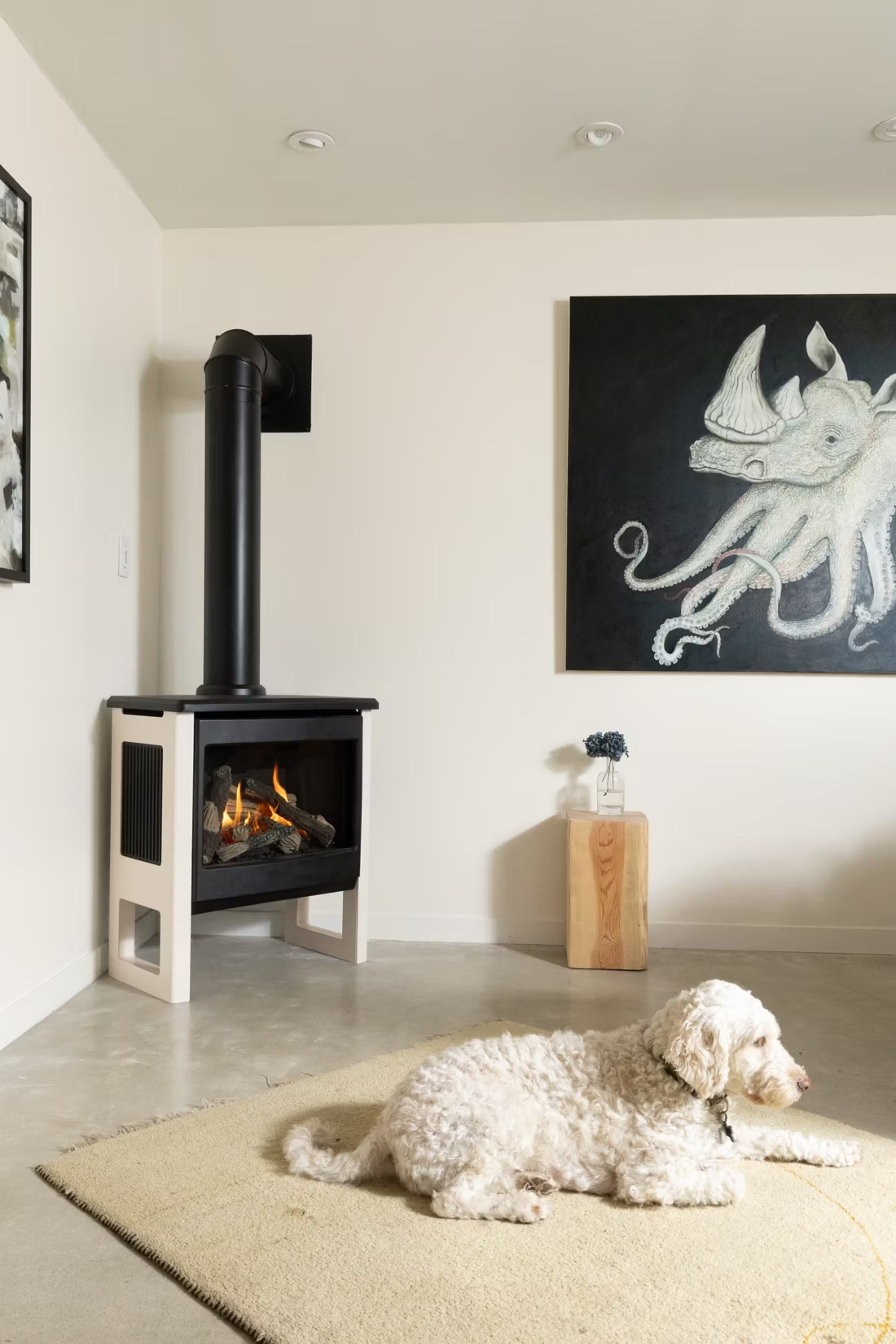
A gas fireplace is a fully built-in unit framed into a wall—the right call for a finished basement or new room where there's no existing masonry opening. A gas insert is sized to slide into an existing fireplace, sealing it up and venting through the current chimney with a liner, which is why it's the most common choice in Oakville's older ranch and split-level homes. A gas stove is a freestanding unit that sits on the floor like a wood stove but runs on gas—a good option for a room without any fireplace at all where you don't want to frame in a full built-in unit.
Do I need a permit to install a gas fireplace in Oakville?
Yes. Oakville is unincorporated, so building and gas permitting run through the St. Louis County Department of Public Works rather than a separate city building office. New gas fireplace installs typically need both a building permit and a gas line permit, and the gas work itself has to be done by a licensed plumber or gas-fitter. Most established hearth dealers in the St. Louis area coordinate all of this as part of the install, so you're not left managing separate trades and inspections yourself.
What's the difference between vented and vent-free gas fireplaces?
Vented gas fireplaces—direct-vent or B-vent—pull combustion air from outside and exhaust it back outside through a sealed system, which keeps combustion byproducts out of the living space entirely. Vent-free units burn gas directly into the room without external venting; Missouri permits them, but they come with strict room-size and ventilation requirements, plus an oxygen depletion sensor as a safety cutoff. For Oakville's mostly enclosed basement and family-room installs, direct-vent units are the more common recommendation locally—they don't add any moisture or combustion byproducts to a finished space, which matters in a below-grade room.
How often should my gas fireplace be serviced?
Plan on an annual inspection, ideally before the first cold snap in late fall. A certified technician checks the burner, pilot assembly, venting, and gas connections, and cleans the glass and interior—a much shorter visit than a wood chimney sweep, but just as important for safe operation. Local hearth and appliance service providers in the St. Louis area typically charge $125 to $200 for this visit, and it's the kind of maintenance that's easy to put off precisely because gas units run so reliably without it.
Why don't more Oakville homes use wood or pellet stoves instead of gas?
It comes down to geography and lot layout more than preference. Oakville sits in a dense, established St. Louis County subdivision, not near public forest land, so there's no local cutting-permit system the way there is farther south in the Ozarks, and most residential lots aren't set up for stacking and seasoning firewood. Pellet stoves face a similar gap—regional pellet producers like Lignetics and Indeck Energy Services supply the broader Midwest, but local hearth dealers rarely stock pellet units here because demand is thin. Some older Oakville homes still have a working masonry fireplace that gets used occasionally with oak, hickory, or walnut cordwood for ambiance, but as a primary or supplemental heat source, gas is the practical and far more common choice in this suburb.
Why is a fireplace insert so efficient?
An insert does two things: it seals the chimney completely, so you stop losing air you already paid to heat, and it radiates warmth into the room through the firebox and glass. Most add a heat-exchange fan that pulls cool room air underneath, wraps it around the hot firebox, and pushes it back out warm. Your home is more efficient before you've even lit the first fire.
What does it take to replace an existing fireplace?
Fireplaces are like icebergs—bigger behind the wall than in front of it. Replacement means removing the surrounding tile or stone (the finish material laps onto the fireplace face), pulling the old unit, setting the new one in the same enclosure, and re-finishing the wall. A hearth professional can determine what's behind your wall without demolition during an in-home preview.
How much should I budget for a fireplace?
For an average home—covering the fireplace, the vent pipe, and basic installation—a budget between $3,900 and $5,500 gives you a lot of options across wood, gas, and pellet. By the time you add finish work, gas line, and electrical, the average complete installation lands between $5,000 and $12,000 all-in. In a remodel or new build, a good rule is to put about 2.5% of the total project cost toward the fireplace.
Can I install a fireplace myself?
If you're putting a fire in your house on purpose, it's best to work with an expert. Unless you're genuinely experienced in framing, gas line, vent pipe, and the national code on clearances to combustibles, have a professional do it—and ideally the same company that sells you the fireplace, so warranty, service, and liability all live under one roof.
Nearby Dealers
Hearth shops serving Oakville and the surrounding area. Every listing shows whether it is a WhyFire partner, a dealer we have verified as authorized for the brands we recommend, or a local business carrying hearth products. No manufacturer pays for placement. How we verify dealers →
Arnold Stove & Fireplace Center
English Sweep
Villa Lighting Supply
Savvy Surroundings
Fireplace And Grill Center
Fireside Hearth & Grill Center
Forshaws
Summer Classics By Forshaw
Hearthside Grill & Fireplace
Gas Appliance Service LLC
Hearth & Home Service & Construction
Brighthouse Living
Bel-O Fireplaces & More
Find your gas fireplace in Oakville.
Tell us a bit about your home and we'll put together a free Project Guide & Parts List for your Oakville gas fireplace or insert project, plus a match with a trusted local dealer who can install it right.
Find Your Fireplace →