
Warm Up Rock Hill Without Splitting a Single Log.
Instant, even heat for Rock Hill's brick bungalows and ranches—no cordwood, no ash, no waiting for a fire to catch. Find the right unit and get matched with a trusted local dealer.
Every Project Starts From One of These Five Situations
Reliable heat for St. Louis County's older housing stock.
Rock Hill sits at about 541 feet in the inner ring of St. Louis County, a few miles west of the city line. Winters here are moderate by Midwest standards—average lows around 25°F and a heating season noticeably shorter and milder than what a Madison, WI household deals with each winter. That milder profile is exactly why gas performs so well here: homeowners want reliable shoulder-season heat and the ability to warm a single room fast, not a wood-burning setup built for months of sub-zero cold.
Much of Rock Hill's housing stock dates to the mid-20th century—brick bungalows, cape cods, and post-war ranches, many with an existing masonry fireplace that was never particularly efficient to begin with. Natural gas service runs throughout this part of St. Louis County via Spire, the regional gas utility, making a direct-vent gas insert or built-in a straightforward retrofit for most of these homes. The payoff is heat at the flip of a switch, no chimney sweeping, and—with the right ignition system—a fireplace that still works when an ice storm knocks out power from Union Electric (Ameren Missouri).
Three steps. No salesperson until you're ready.
Tell us about your project
Your zip code, your situation, and the fuel you're leaning toward—or let the answers point you to one.
See what's actually available
The brands dealers within 100 miles genuinely carry—real options, never a catalog mirage.
Get your dealer & Project Guide
A trusted local dealer, plus the free Project Guide & Parts List that names every component of the job.
Frequently Asked Questions
How much does a gas fireplace installation cost in Rock Hill?
For a home already served by Spire's gas lines, a direct-vent gas insert into an existing masonry fireplace typically runs $3,500 to $7,500, depending on the unit and whether a stainless liner and new gas line stub are needed. A new built-in gas fireplace for a remodel or addition—with framing, venting through an exterior wall, and a full gas line run—usually lands higher, in the $6,000 to $10,000 range. Homes without existing gas service will need a line extension from the street, which adds cost and is worth pricing separately with a local installer before committing to a unit.
Can I convert my existing fireplace to gas in one of Rock Hill's older brick homes?
Yes, and it's one of the most common projects for this housing stock. Rock Hill's brick bungalows and post-war ranches often have a masonry fireplace that draws poorly and loses more heat up the flue than it produces. A gas insert with a stainless steel liner run through the existing chimney solves both problems—you keep the original fireplace opening and mantel, but gain a sealed, efficient heat source. Because the chimney already exists, this conversion is usually less invasive (and less expensive) than a new built-in unit, and most local hearth dealers can complete it in a day once the gas line is confirmed.
Do I need natural gas service, or is propane an option in Rock Hill?
Most of Rock Hill and the surrounding St. Louis County suburbs are served by Spire's natural gas distribution lines, so if your home already has gas for a water heater, furnace, or range, adding a gas fireplace is typically a matter of tapping into existing service. Propane is rarely necessary this close to the city core—it tends to be reserved for more rural pockets of St. Louis County without gas mains. If your street genuinely lacks a gas line, a local installer can quote the cost of a line extension versus a small propane tank setup, but for most Rock Hill addresses natural gas is the simpler path.
Will my gas fireplace still work if the power goes out?
It depends on the ignition system. Standing pilot units work with zero electricity. Units with intermittent pilot ignition (IPI) rely on a small battery backup that kicks in automatically when Union Electric (Ameren Missouri) power drops—common during the ice storms that periodically hit St. Louis County—but only if the batteries are fresh. Valor fireplaces take a different approach: their pilot assembly generates its own electricity via a thermocouple, so there's never a battery to check. If backup heat during an outage matters to you, mention that priority to your local dealer before choosing a model—not every direct-vent fireplace handles it the same way.
What's the difference between a gas fireplace, gas insert, and gas stove?
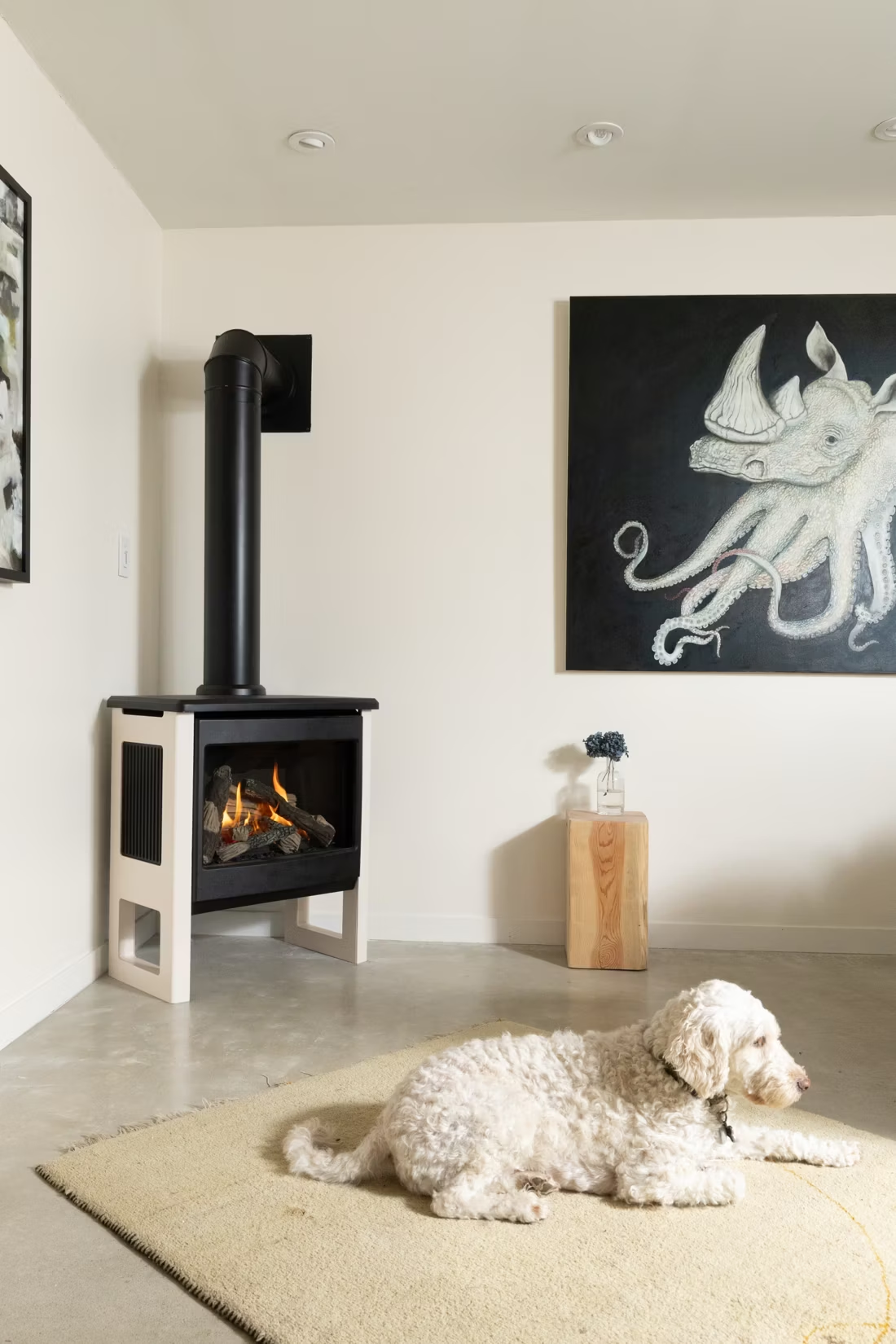
A gas fireplace is a fully built-in unit framed into a wall—the right choice for a remodel or a room without an existing hearth. A gas insert slides into an existing masonry fireplace opening and uses the existing chimney (fitted with a liner) as its vent path, which fits Rock Hill's stock of older brick homes particularly well. A gas stove is a freestanding cast-iron or steel unit that sits on a hearth pad, similar in footprint to a wood stove but running on gas—a good option for a room with no chimney and no interest in framing one in. Most Rock Hill homeowners upgrading an existing fireplace go with an insert; new construction or additions usually call for a built-in.
Do I need a permit to install a gas fireplace in Rock Hill?
Yes. As a small municipality, Rock Hill relies on St. Louis County's Department of Public Works for building permit review and inspection, and gas line work additionally requires sign-off from a licensed gas-fitter. In practice, most local hearth retailers coordinate all of this as part of the installation—pulling the building permit, scheduling the gas inspection, and handling the venting inspection—so you're not left juggling separate trades and separate county paperwork.
What's the difference between vented and vent-free gas fireplaces?
Vented (direct-vent) gas fireplaces draw combustion air from outside and exhaust exhaust gases back outside through a sealed pipe—they're the cleanest option and produce real, substantial heat. Vent-free units burn gas directly into the room with no outside venting; they're legal in Missouri and can be attractive for a room without an easy venting path, but they release some water vapor and combustion byproducts indoors and require careful sizing to the room's square footage. For most Rock Hill homes, especially older ones where indoor air quality and moisture in older wall cavities are already a consideration, direct-vent units are the more common and more broadly recommended choice. A local dealer can walk through both if venting is a constraint in your specific room.
How often should a gas fireplace be serviced?
Plan on an annual inspection, ideally before the start of heating season each fall. A certified technician checks the burner, pilot assembly, venting, and gas connections, and cleans the glass and interior—a much shorter visit than a wood chimney sweep, but not one to skip, since a fireplace that sits idle all summer can develop pilot or igniter issues by the time you need it in December. Local gas appliance service providers in the St. Louis area typically charge $150 to $250 for this annual visit.
Gas vs. wood—which makes more sense for a Rock Hill home?
Rock Hill has no local air quality restrictions on wood burning, and the region has good access to oak, hickory, walnut, and maple firewood, so wood remains a genuinely viable option here—it produces strong heat, works without electricity, and appeals to homeowners who want the ritual of a real fire. Gas wins on convenience: instant on-off operation, no wood handling, no ash, and more even heat output for a home used daily rather than occasionally. Given Rock Hill's moderate winters and largely renovated inner-ring housing stock, most homeowners upgrading an existing fireplace lean toward gas for everyday use, while a smaller number keep a wood-burning setup at a second property or for the atmosphere alone. A local dealer can walk through both given your specific fireplace and how you plan to use it.
Is my gas fireplace wasting gas?
If it was installed more than 15 years ago, probably. Older gas fireplaces keep a standing pilot light burning all the time, and that little flame can cost a couple hundred dollars a year. Newer models use pilot-on-demand ignition—the pilot lights only when you use the fireplace and goes out when you turn it off.
What's the difference between an insert and a zero-clearance fireplace?
An insert is a fireplace that slides into a pre-existing wood-burning fireplace—if you don't have one, there's nothing to insert it into. A zero-clearance fireplace is built into a framed wall, which makes it the answer for remodels and new construction. Simple test: existing masonry fireplace means insert; blank or framed wall means zero-clearance.
How much should I budget for a fireplace?
For an average home—covering the fireplace, the vent pipe, and basic installation—a budget between $3,900 and $5,500 gives you a lot of options across wood, gas, and pellet. By the time you add finish work, gas line, and electrical, the average complete installation lands between $5,000 and $12,000 all-in. In a remodel or new build, a good rule is to put about 2.5% of the total project cost toward the fireplace.
What is an in-home preview and do I need one?
It's a visit where a hearth professional measures your space, confirms the model you picked actually works in your home, and walks the specs—framing, gas line, venting, finish work—before anything is ordered. Some details you just can't know until you see the house. Never make a down payment without one; it's the single most-skipped step that burns buyers.
Nearby Dealers
Hearth shops serving Rock Hill and the surrounding area. Every listing shows whether it is a WhyFire partner, a dealer we have verified as authorized for the brands we recommend, or a local business carrying hearth products. No manufacturer pays for placement. How we verify dealers →
Savvy Surroundings
Forshaws
English Sweep
Fireplace And Grill Center
Fireside Hearth & Grill Center
Gas Appliance Service LLC
Villa Lighting Supply
Arnold Stove & Fireplace Center
Summer Classics By Forshaw
Brighthouse Living
Hearthside Grill & Fireplace
C Bennett Building Supply
Bel-O Fireplaces & More
Find your gas fireplace in Rock Hill.
Tell us about your home and your existing fireplace, and we'll put together a free Project Guide & Parts List—the exact parts, including the vent kit, and a trusted local dealer to install it.
Find Your Fireplace →