
Warm up Pagedale winters with instant gas heat.
Reliable, flip-a-switch warmth for St. Louis County's coldest months. Find the right gas fireplace or insert and get matched with a trusted local dealer.
Every Project Starts From One of These Five Situations
Steady heat that fits a compact St. Louis suburb.
Pagedale is a small, densely built inner-ring suburb of St. Louis—about 2,600 residents packed into narrow lots with bungalows and rowhouses close to their neighbors. At 582 feet elevation in climate zone 4A, winters here average a low of 25°F, adding up to a real, solid heating season each year. That's genuine cold-weather heating demand, though nowhere near what a place like Buffalo, NY sees with its much longer, far harsher winters—Pagedale needs consistent supplemental warmth, not a stove built to run around the clock at sub-zero temps.
Spire (formerly Laclede Gas) serves natural gas throughout most of the St. Louis metro, including Pagedale, and most homes here are already piped for a furnace or water heater—which makes adding a gas fireplace a straightforward tie-in rather than a new-utility project. For the rare property without gas access, Union Electric (Ameren Missouri) service makes an electric fireplace a simple alternative. With no local air quality restrictions or burn-ban ordinances on the books, gas gives Pagedale homeowners clean, on-demand heat without wood storage, ash cleanup, or the tight side-yard clearances that make wood-burning appliances impractical on many of the city's small lots.
Three steps. No salesperson until you're ready.
Tell us about your project
Your zip code, your situation, and the fuel you're leaning toward—or let the answers point you to one.
See what's actually available
The brands dealers within 100 miles genuinely carry—real options, never a catalog mirage.
Get your dealer & Project Guide
A trusted local dealer, plus the free Project Guide & Parts List that names every component of the job.
Frequently Asked Questions
How much does a gas fireplace installation cost in Pagedale?
In the St. Louis area, including Pagedale, a typical gas fireplace or insert installation runs roughly $3,000 to $8,500. A direct-vent insert dropped into an existing masonry fireplace with gas already run to the room sits toward the lower end. A new built-in gas fireplace requiring framing, a fresh gas line, and through-wall venting—common in Pagedale's older bungalow-style homes that weren't originally plumbed for a hearth appliance—lands toward the higher end. A local dealer will give you a firm number after seeing the room.
Can I convert my existing wood fireplace to gas?
Yes, and it's one of the more common projects for Pagedale's older housing stock, much of which was built with a traditional masonry fireplace burning oak or hickory. A gas insert typically slides into that existing firebox with a stainless liner run up the chimney, so you keep the mantel and surround you already have. Since Spire gas service already reaches most of the city, the main added cost is usually a short gas line extension from an existing appliance rather than a full new utility tie-in.
Do I need natural gas, or should I plan on propane?
Most Pagedale homes fall within Spire's natural gas service territory, so if your home already has gas heat, a water heater, or a gas range, extending a line to a fireplace is usually simple. Propane is rarely necessary here—it's more common on larger rural St. Louis County lots outside city gas mains. If you're unsure whether your specific address is served, a local installer can confirm during the initial site visit before recommending fuel type.
Will my gas fireplace still work if the power goes out?
Most gas fireplaces with IPI (intermittent pilot ignition) run on a small battery backup that automatically takes over when power drops, so the unit still lights on demand. This matters in Pagedale—winter ice storms occasionally knock out Union Electric (Ameren Missouri) service for hours or longer, and a gas fireplace with battery backup keeps a room warm through the outage. Valor units go a step further, generating their own power from the pilot's thermocouple with no batteries required at all. Ask your dealer about the ignition system on any model you're considering.
What's the difference between a gas fireplace, insert, and stove?
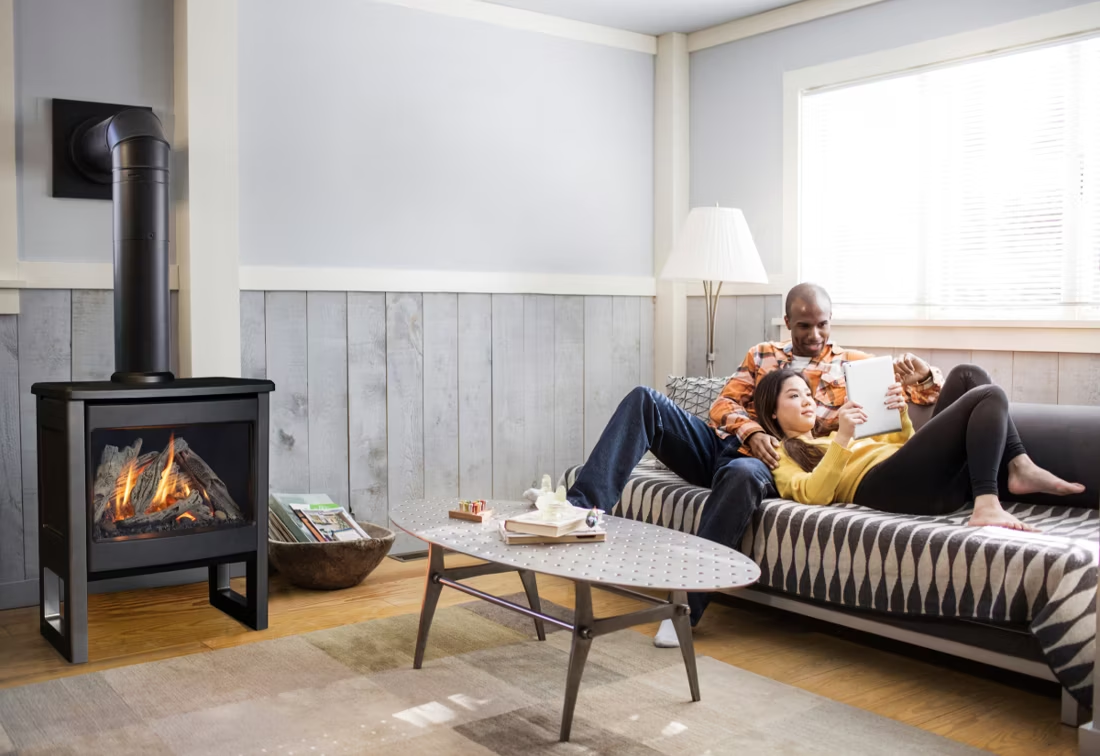
A gas fireplace is a fully built-in unit framed into a wall—the right choice for a remodel or a room without an existing hearth. A gas insert slides into an existing masonry firebox, which fits many of Pagedale's older homes that already have a chimney but no working fire. A gas stove is freestanding, sitting on the floor on its own hearth pad, and works well in smaller rooms or homes without any existing fireplace opening. Most Pagedale projects are inserts, simply because so much of the housing stock already has a masonry fireplace in place.
Do I need a permit to install a gas fireplace in Pagedale?
Yes—a new gas fireplace or insert typically requires both a building permit and a gas line permit, coordinated through the City of Pagedale or St. Louis County depending on your address. The gas line connection has to be handled by a licensed gas-fitter, which is one reason to work with an established hearth dealer rather than a general handyman—they coordinate the gas work, venting, and inspection sign-off as one job instead of leaving you to manage separate trades.
Vented vs. vent-free gas fireplaces—what should I choose?
Vented (direct-vent) gas fireplaces pull combustion air from outside and exhaust exhaust gases back outside through sealed venting—they're the most common choice and deliver real, consistent heat. Vent-free units burn without external venting and release some combustion byproducts into the room; Missouri permits them with size and ventilation restrictions, but they're a poorer fit for smaller, tightly built Pagedale homes where indoor air quality matters more per square foot. Most local dealers steer first-time buyers toward direct-vent units for exactly that reason, though they can walk you through both.
How often should a gas fireplace be serviced?
Plan on an annual inspection, ideally in early fall before the heating season ramps up. A technician checks the burner, pilot assembly, venting, and gas connections, and cleans the glass and interior—a much quicker visit than a wood chimney sweep, typically $150 to $250 in the St. Louis area. Skipping this is the most common reason gas fireplaces develop pilot or ignition problems mid-winter.
Gas vs. wood or pellet—why isn't wood more common in Pagedale?
Wood and pellet stoves are genuinely uncommon in Pagedale—the city's narrow lots, close-set homes, and limited storage space make cordwood stacking and hopper deliveries impractical for most properties, and few installers here stock wood-burning equipment as a result. Where local hardwoods like oak, hickory, walnut, and maple do show up, it's usually in an existing decorative fireplace rather than a primary heat source. Gas is the practical choice for the vast majority of Pagedale homes: no fuel storage, no ash, and heat that starts with a switch—which is why it's the default recommendation from nearly every local dealer.
Why is a fireplace insert so efficient?
An insert does two things: it seals the chimney completely, so you stop losing air you already paid to heat, and it radiates warmth into the room through the firebox and glass. Most add a heat-exchange fan that pulls cool room air underneath, wraps it around the hot firebox, and pushes it back out warm. Your home is more efficient before you've even lit the first fire.
Is my gas fireplace wasting gas?
If it was installed more than 15 years ago, probably. Older gas fireplaces keep a standing pilot light burning all the time, and that little flame can cost a couple hundred dollars a year. Newer models use pilot-on-demand ignition—the pilot lights only when you use the fireplace and goes out when you turn it off.
How much should I budget for a fireplace?
For an average home—covering the fireplace, the vent pipe, and basic installation—a budget between $3,900 and $5,500 gives you a lot of options across wood, gas, and pellet. By the time you add finish work, gas line, and electrical, the average complete installation lands between $5,000 and $12,000 all-in. In a remodel or new build, a good rule is to put about 2.5% of the total project cost toward the fireplace.
Does a fireplace add value to my home?
On average, a fireplace adds back to the home about the same amount you spent installing it. Add the monthly savings from heating the rooms you actually use instead of the whole house—often hundreds of dollars a year—and the value case is strong before you even count what a fire does for how your family uses the room.
Nearby Dealers
Hearth shops serving Pagedale and the surrounding area. Every listing shows whether it is a WhyFire partner, a dealer we have verified as authorized for the brands we recommend, or a local business carrying hearth products. No manufacturer pays for placement. How we verify dealers →
Savvy Surroundings
Forshaws
Villa Lighting Supply
Gas Appliance Service LLC
Fireplace And Grill Center
Fireside Hearth & Grill Center
English Sweep
Summer Classics By Forshaw
Arnold Stove & Fireplace Center
Brighthouse Living
Hearthside Grill & Fireplace
Bel-O Fireplaces & More
Find your gas fireplace in Pagedale.
Tell us a bit about your home and we'll match you with a trusted local dealer and send over a free Project Guide & Parts List for your gas fireplace, insert, or stove—including the exact vent kit your installation needs.
Find Your Fireplace →