
Instant heat for St. Louis County's cold snaps.
Castle Point winters bring nights averaging 24°F and a winter heating season that runs from about October through April. Find the right gas fireplace or insert, and connect with a trusted local dealer who can install it correctly.
Every Project Starts From One of These Five Situations
Clean heat without a wood supply chain.
Castle Point sits in unincorporated St. Louis County at about 480 feet elevation, in climate zone 4A, where winter lows average 24°F and the area sees a solid winter heating season that runs from about October through April—noticeably milder than true cold-climate cities like Duluth, MN or Fargo, ND, but still cold enough that a supplemental or primary heat source matters most nights from November through March. Air quality in the area carries no special burn restrictions, but Castle Point's dense residential lots, common throughout this part of St. Louis County, leave little room for cordwood storage or a woodlot to cut from—even though oak, hickory, walnut, and maple grow throughout the wider region. That combination is a big part of why gas has become the standard fireplace fuel here rather than wood or pellet.
Castle Point homes are almost universally served by natural gas through the regional utility, Spire, which makes a direct-vent gas fireplace or insert a straightforward retrofit for the ranch-style and bungalow homes common throughout this stretch of St. Louis County. A gas fireplace lights instantly, doesn't require the venting effort of an open masonry fireplace, and—with the right ignition system—can keep running through a winter ice storm even if Union Electric Co. power is out. For homeowners weighing options, gas offers the cleanest, lowest-maintenance path to real heat in a neighborhood where firewood simply isn't part of daily life.
Three steps. No salesperson until you're ready.
Tell us about your project
Your zip code, your situation, and the fuel you're leaning toward—or let the answers point you to one.
See what's actually available
The brands dealers within 100 miles genuinely carry—real options, never a catalog mirage.
Get your dealer & Project Guide
A trusted local dealer, plus the free Project Guide & Parts List that names every component of the job.
Frequently Asked Questions
How much does a gas fireplace installation cost in Castle Point?
Most gas fireplace and insert installations in Castle Point run somewhere between $3,500 and $9,000, with the spread driven mostly by venting complexity. Converting an existing masonry fireplace to a direct-vent gas insert—common in this area's older brick ranch homes—tends to land on the lower end when a gas line is already nearby. New direct-vent gas fireplaces built into a wall, or installations that require running a new gas line from the meter, push toward the higher end. A local dealer can give you a firm number after seeing your existing chimney or wall cavity and the distance to your gas meter.
Can I convert my existing wood-burning fireplace to gas?
Yes, and it's one of the most common upgrades in Castle Point's older housing stock. Many homes here were built with a traditional masonry fireplace designed to burn oak or hickory, but a dense residential lot with no woodlot access makes wood-burning impractical for most owners today. A gas insert slides into that existing masonry opening, uses a stainless liner run through your current chimney, and gives you real heat at the flip of a switch instead of a wood supply you'd have to source and store. Most conversions in this area run $4,000 to $8,000 depending on whether a new gas line needs to be run to the fireplace.
Do I need natural gas service, or can I use propane?
Nearly every home in Castle Point already has natural gas service through Spire, so most gas fireplace installs simply tap into the existing line—no tank, no delivery schedule, no propane supplier to manage. Propane is available for households outside natural gas service areas, but in this part of St. Louis County that's the exception rather than the rule. If you're not sure whether your home is on natural gas, check your utility bill or ask your installer to confirm before you commit to a unit.
Will a gas fireplace still work if the power goes out?
Most will, depending on the ignition system. Units with intermittent pilot ignition (IPI) run on AA batteries that kick in automatically when Union Electric Co. power drops, so the fireplace lights and operates normally through an outage. Some manufacturers, including Valor, use a pilot-generated electrical system that needs no batteries at all. That matters in this region—St. Louis County sees occasional winter ice storms that can knock out power for a day or more, and a gas fireplace with reliable battery or self-powered ignition is one of the few heat sources that keeps working when the grid doesn't.
What's the difference between a gas fireplace, insert, and stove?
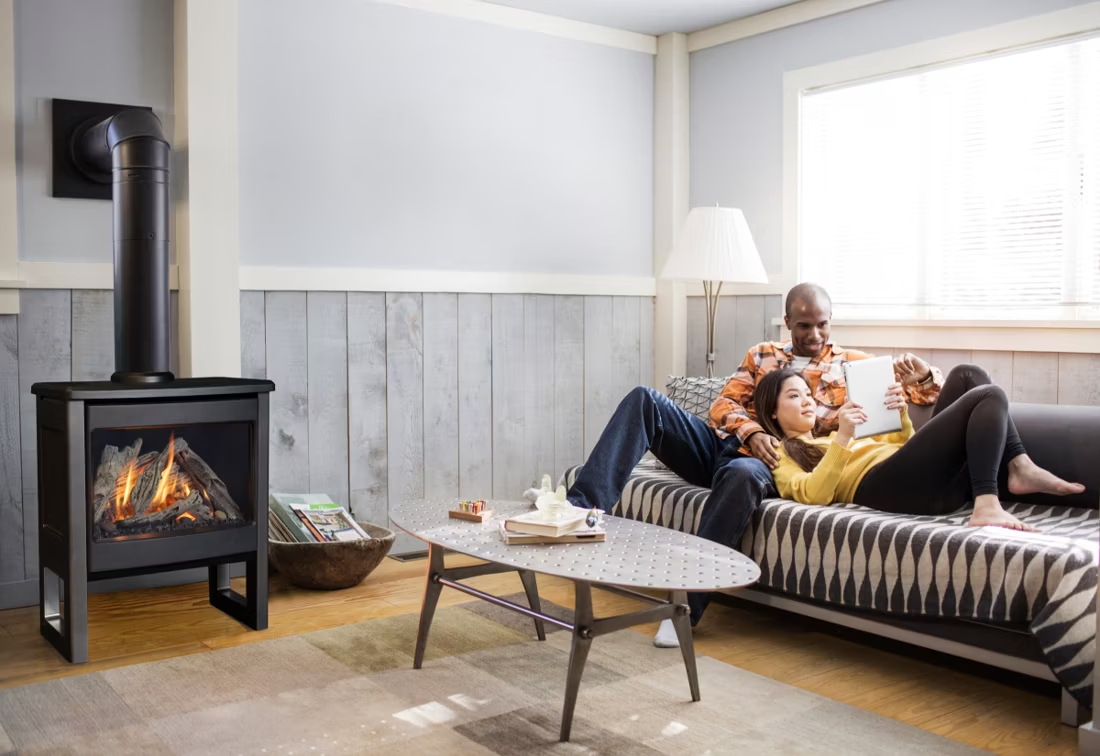
A gas fireplace is a built-in unit framed into a wall, typically used in new construction or a full remodel. A gas insert is built to slide into an existing masonry fireplace opening—the more common project in Castle Point's older brick homes, since it reuses the chimney you already have. A gas stove is a freestanding cabinet-style unit that sits on the floor, useful in rooms without an existing fireplace or chimney. For most homes here with an existing masonry hearth, an insert is the simplest and most cost-effective path.
Do I need a permit to install a gas fireplace in Castle Point?
Yes. Castle Point is unincorporated, so building and gas line permits go through the St. Louis County Department of Public Works rather than a city office. Any new gas line run or modification also requires work by a licensed gas-fitter or plumber. Most hearth dealers in the area handle the permitting and inspection scheduling as part of the installation, which is one reason it's worth using a dealer who works in St. Louis County regularly rather than an out-of-area installer unfamiliar with the county's process.
Should I choose a vented or vent-free gas fireplace?
Vented (direct-vent) gas fireplaces draw combustion air from outside and exhaust it back outside through a sealed pipe—they're the standard, code-compliant choice and deliver real, sustained heat output. Vent-free units burn without any exterior venting and release some combustion byproducts into the room; they're legal in Missouri but come with strict room-size and ventilation requirements. For Castle Point homes, direct-vent units are by far the more common and more recommended option—they heat a room effectively without any tradeoff on indoor air quality, which matters in a smaller home where the fireplace may run for hours at a time.
How often does a gas fireplace need to be serviced?
Plan on an annual inspection, ideally in early fall before you start using it regularly for the winter. A technician checks the burner, pilot assembly, venting, and any electronic ignition components, and cleans the glass and interior. This is a much smaller job than wood-stove chimney sweeping—most St. Louis-area service providers charge $125 to $200 for a standard annual visit—but skipping it for several years is one of the most common causes of pilot and ignition failures local dealers see.
Gas vs. electric fireplace—which makes more sense for my home?
Gas delivers significantly more heat output and can genuinely warm a room on a cold Castle Point night, plus it can run through a power outage with the right ignition system. Electric fireplaces plug into a standard outlet, need no venting or gas line at all, and cost far less to install—typically a few hundred dollars versus several thousand for gas. At Union Electric Co.'s residential rate of about $0.126 per kWh, running an electric unit is inexpensive for occasional ambiance but isn't a substitute for real heat on the coldest nights. For a primary or serious supplemental heat source, gas is the better fit here; for a low-cost accent in a bedroom or basement, electric works well.
Is my gas fireplace wasting gas?
If it was installed more than 15 years ago, probably. Older gas fireplaces keep a standing pilot light burning all the time, and that little flame can cost a couple hundred dollars a year. Newer models use pilot-on-demand ignition—the pilot lights only when you use the fireplace and goes out when you turn it off.
Why is my open fireplace making my house colder?
Open fireplaces suck—literally. As the fire burns, it consumes air your furnace already paid to heat and pulls it out through the chimney, so the house is actually colder after the fire goes out than before you lit it. An insert fixes this: it seals the chimney, puts fixed glass across the front, and turns that hole in your house into a real heat source.
How much should I budget for a fireplace?
For an average home—covering the fireplace, the vent pipe, and basic installation—a budget between $3,900 and $5,500 gives you a lot of options across wood, gas, and pellet. By the time you add finish work, gas line, and electrical, the average complete installation lands between $5,000 and $12,000 all-in. In a remodel or new build, a good rule is to put about 2.5% of the total project cost toward the fireplace.
Can a fireplace actually lower my heating bill?
Yes—by creating a comfort zone. A furnace heats every square foot of the house just to warm the one room you're in; a gas fireplace on low burns roughly a sixth of the gas a typical furnace does. Set the furnace around 55–60 degrees as a baseline, then heat the rooms your family actually uses. Families who heat this way commonly save $20–$60 a month.
Nearby Dealers
Hearth shops serving Castle Point and the surrounding area. Every listing shows whether it is a WhyFire partner, a dealer we have verified as authorized for the brands we recommend, or a local business carrying hearth products. No manufacturer pays for placement. How we verify dealers →
Villa Lighting Supply
Gas Appliance Service LLC
Savvy Surroundings
Forshaws
Fireside Hearth & Grill Center
Fireplace And Grill Center
English Sweep
Summer Classics By Forshaw
Bel-O Fireplaces & More
Brighthouse Living
Hearthside Grill & Fireplace
Arnold Stove & Fireplace Center
Suhre'S Gas Co.
Find your gas fireplace in Castle Point.
Tell us about your home and we'll match you with a trusted local dealer and send a free Project Guide & Parts List—the exact parts, vent kit, and recommended installer for your Castle Point gas fireplace project.
Find Your Fireplace →