
Warm Up Riverview Winters at the Flip of a Switch.
Clean, direct-vent gas heat for a small St. Louis County village where humid winters and older homes make instant warmth worth having. Find the right unit and connect with a trusted local dealer.
Every Project Starts From One of These Five Situations
Convenient heat for a small river-bottom village.
Riverview sits on the Mississippi River bluffs in north St. Louis County, a village of under 3,000 people at just 534 feet of elevation. Winters here aren't Duluth-cold—average lows sit around 25°F and the region adds up to a moderate winter heating season overall—but the Missouri River Valley's humidity makes damp, raw cold snaps feel worse than the thermometer suggests, and ice storms are a regular winter hazard in the St. Louis metro.
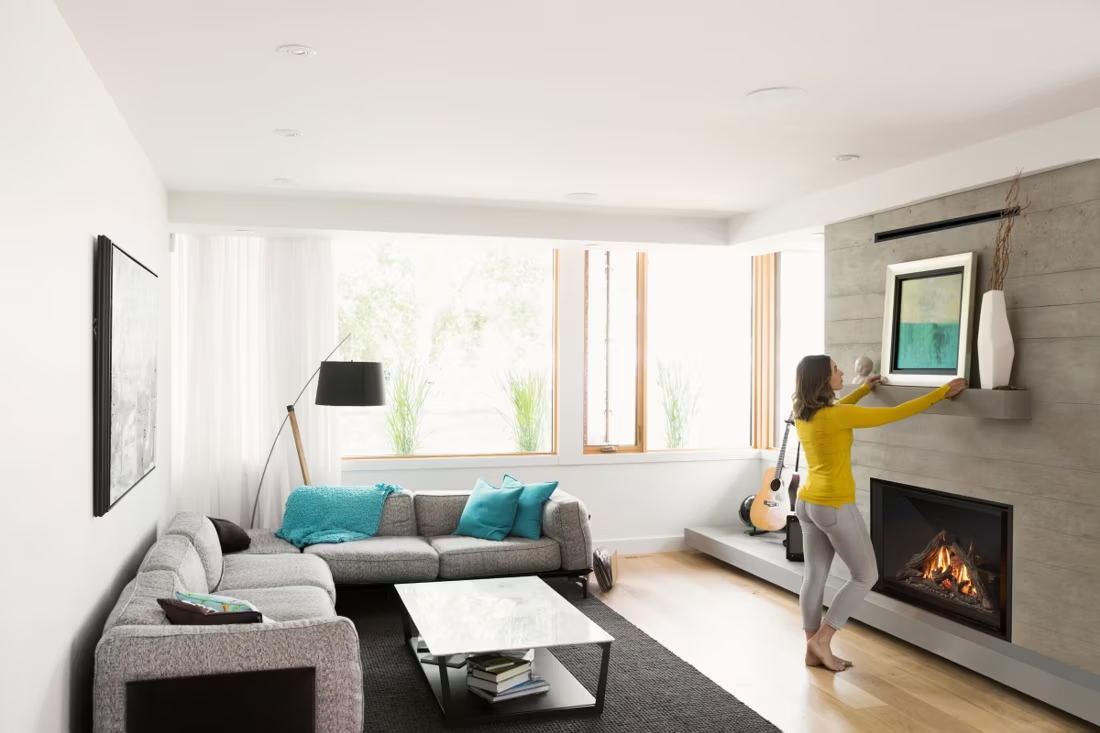
Most homes in Riverview are modest, older houses on tight residential lots, many built with a masonry fireplace that's rarely used for anything more than the occasional fire. Natural gas service is common throughout this part of St. Louis County, which makes a direct-vent gas insert or fireplace an easy retrofit—no wood storage, no chimney sweeping, and heat that comes on with a switch or remote the moment the power's still up but the furnace can't quite keep pace.
Three steps. No salesperson until you're ready.
Tell us about your project
Your zip code, your situation, and the fuel you're leaning toward—or let the answers point you to one.
See what's actually available
The brands dealers within 100 miles genuinely carry—real options, never a catalog mirage.
Get your dealer & Project Guide
A trusted local dealer, plus the free Project Guide & Parts List that names every component of the job.
Frequently Asked Questions
How much does a gas fireplace installation cost in Riverview?
Most gas fireplace projects in Riverview run between roughly $3,500 and $9,000. A direct-vent gas insert dropped into an existing masonry fireplace—common in Riverview's older bungalows and ranch homes—tends toward the lower end, especially if a gas line already serves the house. New construction, a built-in gas fireplace in a room without an existing chimney, or a home needing a fresh gas line run from the meter will push toward the higher end. A local hearth dealer can give you a firm number after seeing your chimney and gas service.
Can I convert my existing wood fireplace to gas?
Yes, and it's a common project in a village like Riverview where many homes still have their original masonry fireplace. A gas insert with a stainless liner run up your existing flue is the standard approach, typically landing in the $4,000 to $8,500 range depending on the insert and whether new gas piping is needed. It keeps the look of your fireplace while giving you real, controllable heat instead of an open hearth that mostly pulls warm air out of the house.
Do I need natural gas, or can I use propane?
Natural gas service reaches most homes in this part of St. Louis County, so the majority of Riverview installations run on natural gas rather than propane. If your street or block isn't on the gas main, propane is a workable backup—most direct-vent fireplaces and inserts can be configured for either fuel with the correct orifice, but propane means budgeting for a tank as well as the unit itself. Your installer will confirm what's available at your address before recommending a unit.
Will my gas fireplace still work if the power goes out?
Most will, with the right ignition system. Units with intermittent pilot ignition (IPI) run on a small battery backup that keeps the fireplace operable even when the grid is down—a real consideration in St. Louis County, where winter ice storms occasionally take out power for a day or more. Standing-pilot models work regardless of electricity since there's no igniter to power. If backup heat during outages matters to you, ask your dealer specifically about the ignition type before you buy.
What's the difference between a gas fireplace, insert, and stove?
A gas fireplace is a built-in unit installed into a framed wall opening—the right choice for new construction or a room without an existing chimney. A gas insert is sized to slide into an existing masonry firebox, which describes most of the older fireplaces found in Riverview's houses. A gas stove is a freestanding cabinet-style unit that sits on the floor and vents through a wall or chimney chase, useful in smaller rooms or homes without a fireplace opening at all. For most Riverview homeowners with an old brick fireplace they never use, an insert is the natural fit.
Do I need a permit to install a gas fireplace in Riverview?
Yes. Gas fireplace installations require a building permit and gas-line inspection, and in a village the size of Riverview that permitting typically routes through St. Louis County's building and gas-fitting inspectors rather than a dedicated city building department. A licensed installer handles the gas connection and will pull the necessary permits as part of the job, so you shouldn't need to coordinate the county paperwork yourself.
Vented vs. vent-free gas fireplaces—what should I know?
Vented (direct-vent) units draw combustion air from outside and exhaust it back outside through sealed piping—they're the safer, more universally recommended choice and the standard for most installations. Vent-free units burn gas directly into the living space and are legal in Missouri, but they come with strict room-size and oxygen-sensor requirements and release some combustion byproducts indoors. For Riverview's smaller, older homes, a direct-vent insert is usually the better call—it delivers real heat without any indoor air quality trade-offs. A local dealer can walk you through both if you want to compare.
How often should a gas fireplace be serviced?
Plan on an annual inspection, ideally in early fall before the fireplace sees regular use. A technician checks the burner, pilot or ignition system, venting, and gas connections, and cleans the glass and interior. This runs roughly $125 to $200 in the St. Louis area and is a much shorter visit than a wood chimney sweep, but skipping it is how minor issues—a dirty flame sensor, a cracked gasket—turn into bigger repairs.
Why gas instead of wood for a Riverview home?
Wood-burning stoves and fireplaces are genuinely uncommon in Riverview—the village's tight residential lots and small older lots aren't well suited to firewood storage or wood-stove clearances, and there's no local wood-cutting infrastructure the way there is in more rural parts of Missouri. Oak, hickory, and walnut firewood is easy enough to source from regional suppliers if you inherited a working wood fireplace with your house, but most homeowners here choose gas for the practical reasons: no wood to stack, no ash, no annual chimney sweep, and heat that starts with a remote instead of kindling.
Why is a fireplace insert so efficient?
An insert does two things: it seals the chimney completely, so you stop losing air you already paid to heat, and it radiates warmth into the room through the firebox and glass. Most add a heat-exchange fan that pulls cool room air underneath, wraps it around the hot firebox, and pushes it back out warm. Your home is more efficient before you've even lit the first fire.
Are new gas fireplaces really better than old ones?
Two ways, and they're both big. Looks: modern gas fireplaces are realistic enough that it's hard to believe they aren't burning wood. Cost: old units burn a standing pilot year-round (roughly $200 a year), while new ones use pilot-on-demand ignition and modern burners. Add remote controls and thermostat operation, and the day-to-day experience isn't close.
Does a fireplace add value to my home?
On average, a fireplace adds back to the home about the same amount you spent installing it. Add the monthly savings from heating the rooms you actually use instead of the whole house—often hundreds of dollars a year—and the value case is strong before you even count what a fire does for how your family uses the room.
Can a fireplace actually lower my heating bill?
Yes—by creating a comfort zone. A furnace heats every square foot of the house just to warm the one room you're in; a gas fireplace on low burns roughly a sixth of the gas a typical furnace does. Set the furnace around 55–60 degrees as a baseline, then heat the rooms your family actually uses. Families who heat this way commonly save $20–$60 a month.
Nearby Dealers
Hearth shops serving Riverview and the surrounding area. Every listing shows whether it is a WhyFire partner, a dealer we have verified as authorized for the brands we recommend, or a local business carrying hearth products. No manufacturer pays for placement. How we verify dealers →
Villa Lighting Supply
Savvy Surroundings
Gas Appliance Service LLC
Forshaws
Fireside Hearth & Grill Center
Fireplace And Grill Center
English Sweep
Bel-O Fireplaces & More
Hearthside Grill & Fireplace
Suhre'S Gas Co.
Summer Classics By Forshaw
Arnold Stove & Fireplace Center
Brighthouse Living
Find your gas fireplace in Riverview.
Tell us a bit about your home and we'll put together a free Project Guide & Parts List for your gas fireplace or insert—including the vent kit—and match you with a trusted local dealer in the St. Louis area.
Find Your Fireplace →