
Instant heat, no ash, no hassle—built for Kirkwood winters.
Clean, on-demand heat for Kirkwood's older brick homes and newer additions alike. Find the right gas fireplace or insert, and get matched with a trusted local dealer.
Every Project Starts From One of These Five Situations
Steady heat without the woodshed.
Kirkwood sits in climate zone 4A, a St. Louis suburb where winter lows average around 25°F and the season adds up to a solidly cold winter with a moderate-length heating season—enough cold to matter, but nowhere near what you'd get in Duluth or Fargo. That's the range where gas fireplaces do their best work: real, sustained heat for the genuinely cold stretches of December through February, without asking anyone to tend a fire all winter.
Much of Kirkwood's housing stock dates to before 1960—brick bungalows and colonials built with masonry fireplaces that were never especially efficient. On small suburban lots shaded by mature oak, hickory, and walnut canopy, there's little practical access to cut wood and no permit office to speak of, which is part of why wood heat has faded here while gas has taken its place. Natural gas service reaches most of Kirkwood through the regional utility known today as Spire, and Ameren Missouri (Union Electric Co.) supplies the electricity—at a residential rate around 12.56 cents per kWh—that runs a direct-vent unit's blower and ignition system. The result is a fireplace that lights in seconds, heats a room fast, and never needs splitting, stacking, or hauling.
Three steps. No salesperson until you're ready.
Tell us about your project
Your zip code, your situation, and the fuel you're leaning toward—or let the answers point you to one.
See what's actually available
The brands dealers within 100 miles genuinely carry—real options, never a catalog mirage.
Get your dealer & Project Guide
A trusted local dealer, plus the free Project Guide & Parts List that names every component of the job.
Frequently Asked Questions
How much does a gas fireplace installation cost in Kirkwood?
Most Kirkwood gas fireplace projects run between $4,000 and $10,000. A direct-vent insert dropped into an existing masonry fireplace—common in Kirkwood's older bungalows and colonials—with a stainless liner and a nearby gas line sits toward the lower end. New construction, a great-room addition, or any project requiring a longer gas line run or new venting through an exterior wall pushes toward the higher end. A local dealer will give you a firm number after seeing your existing chimney or framing in person.
Can I convert my Kirkwood home's existing wood fireplace to gas?
Yes, and it's one of the most common projects in a city like Kirkwood where so many homes still have their original 1920s-1950s masonry fireboxes. A gas insert typically slides into that opening and vents through the existing chimney using a stainless liner, which keeps the exterior look of the fireplace intact while dramatically improving heat output and eliminating ash and creosote. Homes already on natural gas service are usually the simplest conversions since no new fuel line has to be run from the street.
Is natural gas available throughout Kirkwood, or will I need propane?
Natural gas service reaches the large majority of homes within Kirkwood city limits through Spire, the regional gas utility for the St. Louis area. If you're on a larger lot near the edges of town or in an unincorporated pocket of St. Louis County without gas mains nearby, propane is the standard fallback, supplied by a local propane company with either an above-ground or buried tank. Most gas fireplace models can be set up for either fuel—your installer just configures the correct orifice and regulator.
Will my gas fireplace still work if the power goes out?
For most models, yes. St. Louis-area storms—spring severe weather and the occasional summer derecho—can knock out power for hours or days, and a gas fireplace with intermittent pilot ignition (IPI) keeps working through a battery backup, usually a few AA batteries tucked inside the unit. It lights on demand off those batteries until utility power returns. Valor fireplaces take a different approach: their pilot's thermocouple generates its own electricity, so there's no battery to remember at all. Worth asking about specifically if outage-proof heat matters to you.
What's the difference between a gas fireplace, insert, and gas stove?
A gas fireplace is a fully built-in unit framed into a wall—the right fit for new construction or a great-room addition. A gas insert is built to drop into an existing masonry firebox, which describes a lot of Kirkwood's older housing stock, converting a drafty open hearth into a sealed, efficient heat source. A gas stove is a freestanding cabinet-style unit that can sit almost anywhere with the right clearances, useful in a room without an existing fireplace at all. For most Kirkwood remodels, the insert is the natural fit; additions and new builds usually call for a built-in.
Do I need a permit to install a gas fireplace in Kirkwood?
Yes—a building permit through the City of Kirkwood is required for a new gas fireplace or insert installation, and any new or modified gas line requires a licensed gas-fitter as part of that permit. Most established hearth dealers pull these permits as part of the job and coordinate the gas line and venting inspections together, which is one of the real advantages of working with a certified local installer instead of a handyman.
Vented vs. vent-free gas fireplaces—what should Kirkwood homeowners know?
Vented, direct-vent gas fireplaces draw combustion air from outside and exhaust it back outside through a sealed pipe—they're the standard recommendation almost everywhere, Kirkwood included, and produce real, substantial heat. Vent-free units burn directly into the room air; Missouri permits them, but they come with strict room-size and ventilation requirements and aren't a great fit for a tightly sealed, well-insulated remodel. Kirkwood has no air-quality non-attainment designation, so there's no regulatory barrier either way—it comes down to a straightforward safety and comfort tradeoff a local dealer can walk you through.
How often should a gas fireplace be serviced in Kirkwood?
Plan on an annual inspection, ideally in early fall before the first cold snap. A technician checks the burner, pilot assembly, venting, and gas connections, and cleans the glass and firebox interior. It's a lighter lift than chimney sweeping for a wood-burning unit, typically $150 to $250, but skipping it is how minor issues—a sooting burner, a weak igniter—turn into a no-heat call in January.
Gas vs. electric fireplace—which fits my Kirkwood home better?
Gas delivers real, substantial heat output and can genuinely warm a room during Kirkwood's coldest stretches, but it needs a gas line (or propane tank) and venting. Electric fireplaces need only a standard outlet, install almost anywhere with zero venting, and run efficiently off Ameren Missouri's grid at around 12.56 cents per kWh—a good match for a condo, a finished basement, or a room where running gas line isn't practical. For a detached Kirkwood home that needs to hold heat through a genuinely cold January night, gas is usually the better primary choice; for supplemental ambiance or a space without gas access, electric holds up well.
Why is my open fireplace making my house colder?
Open fireplaces suck—literally. As the fire burns, it consumes air your furnace already paid to heat and pulls it out through the chimney, so the house is actually colder after the fire goes out than before you lit it. An insert fixes this: it seals the chimney, puts fixed glass across the front, and turns that hole in your house into a real heat source.
Can I put a TV above my fireplace?
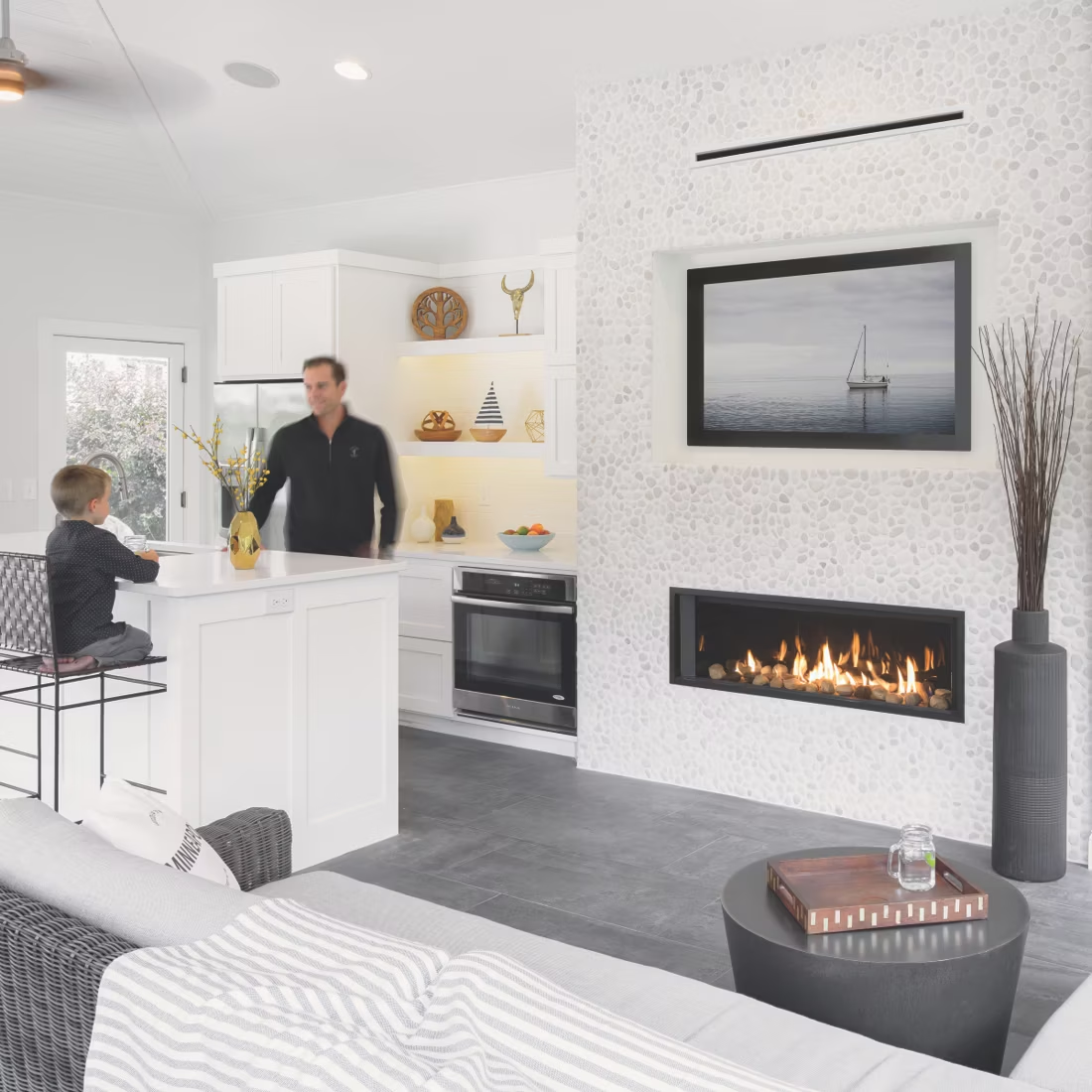
Yes—with an asterisk. Fireplaces are hot and TVs don't like heat. Either put a mantel between them to deflect rising warmth, or choose a fireplace with heat-management technology that creates a cool zone on the wall above—the wall stays around 125 degrees, barely warm, while the room still gets full heat. If you like clean lines and don't want a mantel, heat management is the answer.
Does a fireplace add value to my home?
On average, a fireplace adds back to the home about the same amount you spent installing it. Add the monthly savings from heating the rooms you actually use instead of the whole house—often hundreds of dollars a year—and the value case is strong before you even count what a fire does for how your family uses the room.
How much should I budget for a fireplace?
For an average home—covering the fireplace, the vent pipe, and basic installation—a budget between $3,900 and $5,500 gives you a lot of options across wood, gas, and pellet. By the time you add finish work, gas line, and electrical, the average complete installation lands between $5,000 and $12,000 all-in. In a remodel or new build, a good rule is to put about 2.5% of the total project cost toward the fireplace.
Nearby Dealers
Hearth shops serving Kirkwood and the surrounding area. Every listing shows whether it is a WhyFire partner, a dealer we have verified as authorized for the brands we recommend, or a local business carrying hearth products. No manufacturer pays for placement. How we verify dealers →
English Sweep
Savvy Surroundings
Forshaws
Fireplace And Grill Center
Fireside Hearth & Grill Center
Gas Appliance Service LLC
Summer Classics By Forshaw
Arnold Stove & Fireplace Center
Villa Lighting Supply
Brighthouse Living
C Bennett Building Supply
Hearthside Grill & Fireplace
Find your gas fireplace in Kirkwood.
Tell us about your home and we'll match you with the right gas fireplace or insert, plus a free Project Guide & Parts List—the exact parts, vent kit, and a trusted local Kirkwood-area dealer to install it.
Find Your Fireplace →