
Instant Heat, Right-Sized for St. Ann.
St. Ann's brick bungalows and ranch homes were built for central heat and a gas line already in the wall. Find the right fireplace or insert and get matched with a trusted local dealer.
Every Project Starts From One of These Five Situations
Steady warmth without the woodpile hassle.
St. Ann sits in the inner ring of St. Louis County at just under 600 feet elevation, with average winter lows around 24°F and a moderate winter heating season by Midwest standards, well short of the long, hard winters a city like Minneapolis or Fargo deals with each year. On St. Ann's tight residential lots, wood cutting permits and stacked cordwood aren't really part of the picture the way they are in more rural parts of Missouri, which is a big part of why gas has become the default choice for supplemental and zone heating here.
Natural gas service through Spire (the regional utility serving most of St. Louis County) reaches the large majority of St. Ann's post-war housing stock, and Union Electric (Ameren Missouri) handles the grid at roughly 12.6 cents per kWh. That combination makes a direct-vent gas fireplace or insert an easy add for these homes—instant heat at the flip of a switch or remote, no chimney maintenance, and a good complement to central HVAC on the shoulder-season days when running the furnace for the whole house doesn't make sense.
Three steps. No salesperson until you're ready.
Tell us about your project
Your zip code, your situation, and the fuel you're leaning toward—or let the answers point you to one.
See what's actually available
The brands dealers within 100 miles genuinely carry—real options, never a catalog mirage.
Get your dealer & Project Guide
A trusted local dealer, plus the free Project Guide & Parts List that names every component of the job.
Frequently Asked Questions
How much does a gas fireplace installation cost in St. Ann?
Most gas fireplace or insert installations in St. Ann run somewhere between $3,500 and $9,000, with the spread driven mostly by whether a gas line already runs near the install location. St. Ann's housing stock is dominated by 1940s–1960s brick bungalows and ranches, many of which were plumbed for gas water heaters and furnaces decades ago—running a branch line to a living room or basement fireplace location is often a modest add-on rather than a full new install. Homes needing a longer gas line run, new framing for a built-in unit, or masonry chimney liner work for a fireplace conversion land toward the higher end. A local dealer will give you a firm number after seeing the space.
Can I convert my existing wood fireplace to gas?
Yes, and it's a common project on St. Ann's older masonry-fireplace homes. A gas insert typically slides into the existing firebox, running a stainless liner up the current chimney for venting, which keeps the exterior look of the fireplace intact. Costs generally run $3,800 to $8,500 depending on the insert and whether the home already has a nearby gas line from Spire. Given how few residents in St. Ann season their own firewood—oak, hickory, walnut, and maple are the common regional species, but they're mostly sourced from suppliers rather than cut on-site—most homeowners converting an old wood-burning fireplace are doing it for convenience, not because the wood side has become impractical to maintain.
Do I need natural gas to install a gas fireplace, or can I use propane?
Natural gas through Spire reaches the great majority of homes in St. Ann, so most installations here simply tap into existing service. Propane is available as a backup option, but it's uncommon within St. Ann's city limits—you'd mainly see it in outlying parts of St. Louis County that fall outside Spire's distribution lines. If your home already runs a gas water heater, furnace, or range, adding a fireplace on the same line is usually the simpler and cheaper path; your dealer can confirm line capacity before finalizing a quote.
Will my gas fireplace work during a power outage?
Most direct-vent gas fireplaces with intermittent pilot ignition (IPI) include a battery backup that keeps the unit lighting on demand even when Union Electric service drops during an ice storm or summer thunderstorm outage—both of which happen in the St. Louis metro most winters and springs. The battery only powers the ignition and control board, not a blower, so heat output during an outage will be lower than normal but the fireplace still runs. Some manufacturers, including Valor, use a self-powered thermocouple system that generates its own electricity from the pilot flame and needs no batteries at all. Worth asking your local dealer which ignition system a given model uses if outage backup matters to you.
What's the difference between a gas fireplace, gas insert, and gas stove?
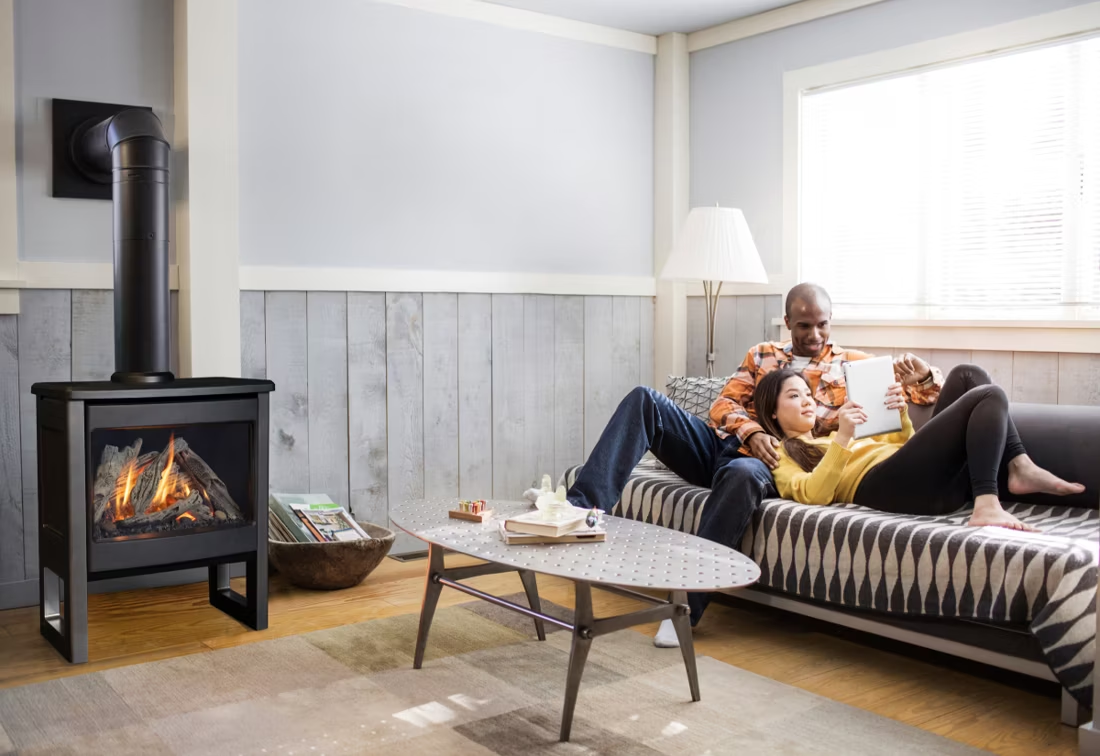
A gas fireplace is a fully framed-in unit, typically chosen for new construction or a remodel where there's no existing masonry opening. A gas insert is built to slide into an existing wood-burning fireplace, which is the more common scenario in St. Ann's older brick homes with an original masonry firebox. A gas stove is a freestanding cabinet-style unit that can go against nearly any wall with the right clearances, useful in ranch homes without an existing fireplace at all. For most St. Ann homeowners upgrading an existing hearth, the insert is the straightforward choice; for a finished basement or an addition with no chimney, a freestanding stove is often simpler to vent.
Do I need a permit to install a gas fireplace in St. Ann?
Yes—the City of St. Ann's Building and Code Enforcement Department requires a permit for gas fireplace installations, and any new or extended gas line needs to be run by a licensed gas-fitter and inspected before it's covered up. Most established hearth dealers in the St. Louis metro handle this paperwork as part of the installation, coordinating the gas line work, venting, and inspection so you're not managing separate trades yourself.
What's the difference between vented and vent-free gas fireplaces?
Vented (direct-vent) gas fireplaces pull combustion air from outside and exhaust the byproducts back outside through a sealed pipe—they're the standard, code-friendly choice and what most St. Ann installers recommend by default. Vent-free units burn gas directly into the room without external venting; Missouri permits them, but they come with strict room-volume requirements and an oxygen depletion sensor, and they release some moisture and combustion byproducts into the living space. For St. Ann's smaller ranch and bungalow floor plans, a vented direct-vent insert or fireplace is usually the better fit for both air quality and heat output—ask your dealer to walk through both if you're weighing the tradeoff.
How often should my gas fireplace be serviced?
Plan on an annual inspection, ideally in early fall before the unit gets regular winter use. A technician checks the burner, pilot assembly, venting, and any gas connections, and cleans the glass and interior components. This is a much lighter service than wood chimney sweeping, but it matters for safety and keeps the warranty intact on most units. Local gas appliance service providers in the St. Louis area typically charge $125 to $225 for this visit.
Should I consider a wood-burning fireplace instead of gas?
For most St. Ann homes, probably not as a primary option. St. Ann's tight residential lots and inner-ring St. Louis County location mean there's no local cutting-permit infrastructure or nearby forestland the way there is in more rural parts of the state, so sourcing and storing firewood is a real inconvenience rather than a natural fit. Regional species like oak, hickory, walnut, and maple are available from delivered-firewood suppliers, but most homeowners here choose wood only for a specific aesthetic reason on a home with an existing masonry fireplace. Gas remains the far more practical choice for reliable, low-maintenance heat in this part of the metro.
Why is a fireplace insert so efficient?
An insert does two things: it seals the chimney completely, so you stop losing air you already paid to heat, and it radiates warmth into the room through the firebox and glass. Most add a heat-exchange fan that pulls cool room air underneath, wraps it around the hot firebox, and pushes it back out warm. Your home is more efficient before you've even lit the first fire.
Can I put a TV above my fireplace?
Yes—with an asterisk. Fireplaces are hot and TVs don't like heat. Either put a mantel between them to deflect rising warmth, or choose a fireplace with heat-management technology that creates a cool zone on the wall above—the wall stays around 125 degrees, barely warm, while the room still gets full heat. If you like clean lines and don't want a mantel, heat management is the answer.
Does a fireplace add value to my home?
On average, a fireplace adds back to the home about the same amount you spent installing it. Add the monthly savings from heating the rooms you actually use instead of the whole house—often hundreds of dollars a year—and the value case is strong before you even count what a fire does for how your family uses the room.
How much should I budget for a fireplace?
For an average home—covering the fireplace, the vent pipe, and basic installation—a budget between $3,900 and $5,500 gives you a lot of options across wood, gas, and pellet. By the time you add finish work, gas line, and electrical, the average complete installation lands between $5,000 and $12,000 all-in. In a remodel or new build, a good rule is to put about 2.5% of the total project cost toward the fireplace.
Nearby Dealers
Hearth shops serving St. Ann and the surrounding area. Every listing shows whether it is a WhyFire partner, a dealer we have verified as authorized for the brands we recommend, or a local business carrying hearth products. No manufacturer pays for placement. How we verify dealers →
Gas Appliance Service LLC
Forshaws
Savvy Surroundings
Fireside Hearth & Grill Center
Fireplace And Grill Center
Villa Lighting Supply
English Sweep
Summer Classics By Forshaw
Brighthouse Living
Arnold Stove & Fireplace Center
C Bennett Building Supply
Find your gas fireplace in St. Ann.
Tell us about your home and we'll put together a free Project Guide & Parts List—the right gas fireplace or insert, the exact parts including your vent kit, and a trusted local St. Louis-area dealer to install it.
Find Your Fireplace →