
Fireplace ambiance for Oahu homes that never need the heat.
With virtually no need for winter heating and winter lows that rarely dip below 66°F, Honolulu County homes don't need a heat source—but a real flame effect still matters. Find the right electric unit and connect with a trusted local dealer from Kapolei to Kailua.
Every Project Starts From One of These Five Situations
Ambiance, not heat, drives the electric fireplace market here.
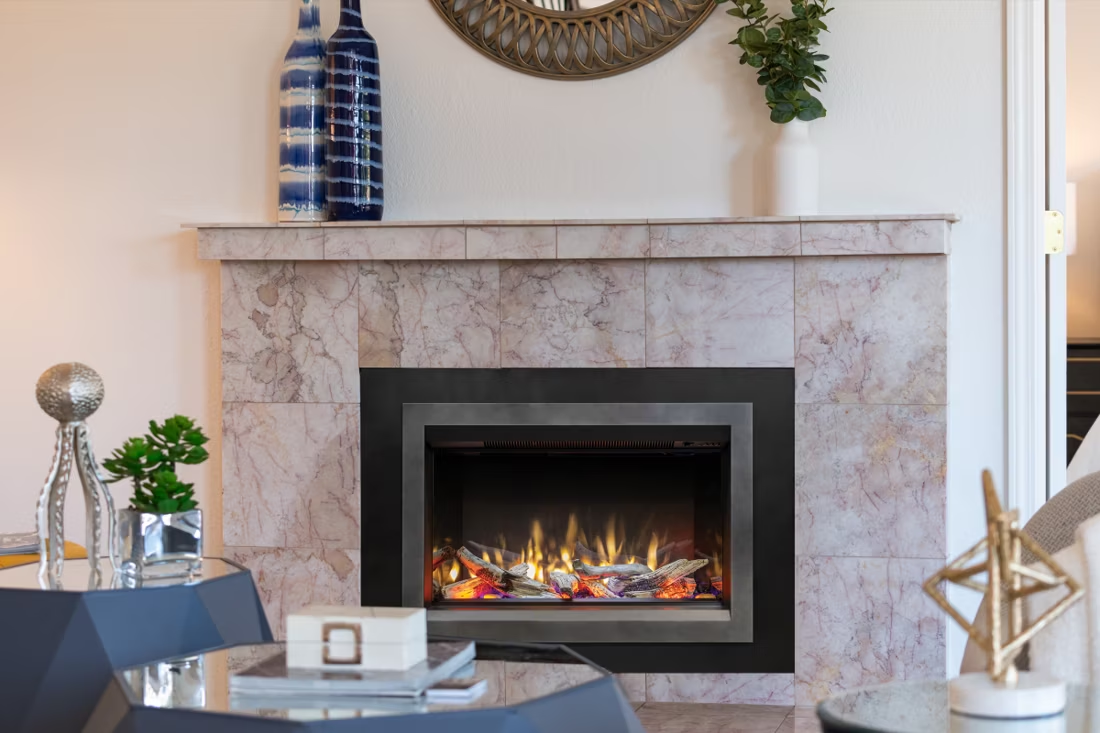
Honolulu County sits in climate zone 1A with essentially no need for winter heating—no Oahu home, from Kailua to Ewa Beach, is designed around a heating load. Wood stoves and pellet appliances are essentially nonexistent here for good reason: there's simply no cold to burn against, and species like ohia and koa stay in the lumber yard, not the woodpile. Electric is the exception. Because an electric fireplace produces a controllable flame effect without combustion, venting, or a chimney, it's one of the only fireplace categories that makes sense across an island of over a million residents where the thermometer almost never demands supplemental heat.
The bigger driver is where people live. A large share of Honolulu County's population is in mid- and high-rise condo towers—Kakaako, Ala Moana, Waikiki—where fire codes and HOA rules generally prohibit any open-flame appliance. Electric units, being flameless and ventless, are frequently the only fireplace option a building will approve. For built-in, hardwired installations, the Honolulu Department of Planning and Permitting typically requires an electrical permit; simple plug-in freestanding or mantel units usually don't. And because Hawaiian Electric (HECO) rates run among the highest in the country, most owners run their unit in flame-only mode for the visual effect and rarely switch on the heater—which, given average winter lows in the mid-60s, they don't need anyway.
Three steps. No salesperson until you're ready.
Tell us about your project
Your zip code, your situation, and the fuel you're leaning toward—or let the answers point you to one.
See what's actually available
The brands dealers within 100 miles genuinely carry—real options, never a catalog mirage.
Get your dealer & Project Guide
A trusted local dealer, plus the free Project Guide & Parts List that names every component of the job.
Frequently Asked Questions
How much does an electric fireplace installation cost in Honolulu County?
Plug-in freestanding and mantel-style electric fireplaces run $400 to $900 installed, since there's no venting or gas line involved—often just a dedicated outlet and a mounting bracket. Built-in wall-recessed or linear units, common in condo remodels and newer single-family homes, run closer to $1,200 to $2,500 once an electrician runs a dedicated circuit and any drywall or framing work is done. Because there's no chimney, flue, or combustion venting to size, electric installs in Honolulu County are consistently the least expensive fireplace category available.
Do I need a permit to install an electric fireplace in Honolulu?
It depends on the unit. A plug-in freestanding or tabletop electric fireplace generally doesn't require a permit—it's treated like any other appliance you plug into an existing outlet. A built-in, hardwired unit recessed into a wall or wired to its own circuit typically requires an electrical permit through the Honolulu Department of Planning and Permitting. If you're in a condo tower, check your association's rules first—many buildings that prohibit gas or wood fireplaces outright still require sign-off on any built-in electrical modification to a unit's wall.
Does an electric fireplace actually provide useful heat in Honolulu?
Most units include a small resistive heater rated for a single room, but with Honolulu County's average winter low sitting around 66°F and virtually no need for heating all year, the heat function goes mostly unused. It's a nice option for the rare cool, breezy evening or for homes up in the Tantalus and Mānoa foothills where nights run a few degrees cooler than the coastal flats—and for interiors kept cold by air conditioning, a little radiant warmth near the seating area can feel good even in a tropical climate. But the primary draw here is the flame visual, not BTUs.
Why are electric fireplaces sometimes the only option allowed in my condo?
Many Honolulu County high-rises—think Kakaako, Ala Moana, and Waikiki towers—restrict or outright prohibit open-flame appliances under fire code and HOA rules, which rules out wood and often gas units for individual residences. Electric fireplaces don't burn fuel and don't vent combustion byproducts, so they typically fall outside those restrictions and clear building review more easily. If you live in a multi-family building, confirm with your association before buying, but in practice electric is usually the path of least resistance for adding fireplace ambiance to a condo unit.
What's the difference between an electric insert, a wall-mounted unit, and a mantel package?
An electric insert is sized to slide into an existing masonry or zero-clearance firebox—useful for the small number of older plantation-era Honolulu homes that have a decorative fireplace shell but no working chimney. A wall-mounted or linear electric fireplace is recessed into a wall cavity or surface-mounted, which is the most common choice in condo remodels and new single-family builds. A mantel package pairs a freestanding or recessed unit with a surrounding mantel and hearth for a more traditional look. For most Oahu homeowners without an existing firebox, a wall-mounted linear unit is the simplest and most flexible option.
How much does it cost to run an electric fireplace on Oahu?
Running the flame effect alone—LED lights with no heater engaged—costs only a few cents an hour regardless of HECO's rates, since the lighting draws minimal wattage. Switching on the heater is a different story: Hawaiian Electric's residential rates are among the highest in the nation, so running a 1,500-watt heater for several hours can add real cost to a bill. Because Honolulu County's climate almost never requires supplemental heat, most local owners leave the heater off entirely and enjoy the fire visual at minimal cost.
Electric vs. gas—which fireplace makes more sense in Honolulu County?
Gas fireplaces are available on Oahu through propane and Hawaii Gas utility service, and they do offer a more authentic flame with real heat output for the rare cool evening. But gas installation requires a gas line, venting considerations, and in many condo towers runs into the same open-flame restrictions that limit wood units. Electric skips all of that—no gas line, no venting, no combustion byproducts—which is why it's the more common choice in multi-family buildings and for homeowners who want fireplace ambiance without the infrastructure. If you already have gas service and live in a standalone home, gas is worth considering for its heat output; for everyone else, electric is usually the simpler and less expensive path.
Do electric fireplaces hold up in Honolulu's humidity and salt air?
Oahu's marine environment and year-round humidity can accelerate corrosion on exposed metal components, so it's worth asking your local dealer about units with sealed electronics and corrosion-resistant housings, especially for installations near the coast in areas like Kailua, Waikiki, or the Windward side. Indoor placement away from direct salt air exposure minimizes the issue for most homes, and a reputable local installer will know which models perform best in Honolulu County's specific climate zone.
Where can I find a local installer for an electric fireplace in Honolulu County?
Trusted hearth and electrical retailers serve Honolulu, Pearl City, Kailua, Kapolei, and the surrounding areas, and most can handle everything from a simple plug-in unit to a hardwired built-in requiring DPP permitting. Because sizing, wall structure, and condo association rules vary so much across the island—a Kakaako high-rise unit is a different project than a single-family home in Kaneohe—it's worth getting a local pro to walk through your specific space rather than guessing from a big-box display model.
Do electric fireplaces actually produce heat?
Yes—most put out around 4,800–5,000 BTUs from a standard outlet, which comfortably warms a bedroom, office, or den as a comfort-zone heater. What they won't do is carry a whole house the way wood, gas, or pellet can. Think of electric as ambiance-first with honest supplemental heat: flames on with no heat in July, flames plus warmth in January.
Can I put a TV above my fireplace?
Yes—with an asterisk. Fireplaces are hot and TVs don't like heat. Either put a mantel between them to deflect rising warmth, or choose a fireplace with heat-management technology that creates a cool zone on the wall above—the wall stays around 125 degrees, barely warm, while the room still gets full heat. If you like clean lines and don't want a mantel, heat management is the answer.
How much should I budget for a fireplace?
For an average home—covering the fireplace, the vent pipe, and basic installation—a budget between $3,900 and $5,500 gives you a lot of options across wood, gas, and pellet. By the time you add finish work, gas line, and electrical, the average complete installation lands between $5,000 and $12,000 all-in. In a remodel or new build, a good rule is to put about 2.5% of the total project cost toward the fireplace.
Does a fireplace add value to my home?
On average, a fireplace adds back to the home about the same amount you spent installing it. Add the monthly savings from heating the rooms you actually use instead of the whole house—often hundreds of dollars a year—and the value case is strong before you even count what a fire does for how your family uses the room.
Stove and Fireplace Dealers in Honolulu County
Listings include WhyFire partner dealers, dealers we have verified as authorized for the brands we recommend, and established local businesses that carry hearth products. Every listing shows which one it is. The ones marked Preferred run on WhyFire's software, so they can show you real pricing and book your appointment right here. No manufacturer pays for placement. How we verify dealers →
Island Pool And Supply
Find your electric fireplace in Honolulu County.
Tell us a bit about your home or condo and we'll match you with a trusted local dealer and send over your free Project Guide & Parts List—the exact unit, mounting approach, and electrical requirements for your space.
Find Your Fireplace →