
The Warmth of Fire, None of the Heat You Don't Need.
With winter lows averaging 66°F and almost no heating season to speak of, Kaneohe homes want the glow of a fire, not a furnace. Find the right electric unit and connect with a trusted local dealer.
Every Project Starts From One of These Five Situations
Fire for the look, not the furnace.
Kaneohe sits on the windward side of Oʻahu at the base of the Koʻolau Range, where trade winds and Kaneohe Bay keep the climate mild and humid year-round—classified as zone 1A, the same hot-humid category as Miami. With an average winter low of 66°F and essentially no real heating season to speak of, there's no real cold to fight. Wood stoves and pellet stoves are essentially nonexistent here; the eucalyptus, ohia, and koa that grow on the windward side are prized by local woodworkers for furniture and carving, not firewood.
Electric fireplaces fill a genuinely useful niche in this climate: they deliver real flame-effect ambiance without a chimney, gas line, or combustion byproducts—which matters in a place where most homes and condos were never built with venting in mind. Hawaiian Electric's residential rate runs roughly $0.4287 per kWh, among the highest in the country, so most Kaneohe owners run their units for the visual effect and occasional cool, rainy evening rather than as a primary heat source. Used that way, the electric bill impact stays modest even at island power rates.
Three steps. No salesperson until you're ready.
Tell us about your project
Your zip code, your situation, and the fuel you're leaning toward—or let the answers point you to one.
See what's actually available
The brands dealers within 100 miles genuinely carry—real options, never a catalog mirage.
Get your dealer & Project Guide
A trusted local dealer, plus the free Project Guide & Parts List that names every component of the job.
Frequently Asked Questions
How much does an electric fireplace cost to install in Kaneohe?
Plug-in electric fireplace inserts and freestanding units that use a standard 120V outlet typically run $300 to $900 installed, since there's no chimney, venting, or gas line to run—most of the cost is the unit itself plus a mantel or surround if you want one built. Hardwired built-in wall units with a linear or larger heating element usually land between $1,500 and $3,500 once an electrician sets a dedicated circuit, which is common in newer Kaneohe construction near Kamehameha Highway. Local dealers can walk through both paths during an in-home look at your wall and outlet situation.
Do I need a permit for an electric fireplace in Kaneohe?
A plug-in unit that draws from an existing outlet generally doesn't require a permit. A hardwired, built-in electric fireplace—one tied into a dedicated circuit or requiring new wiring—falls under electrical work regulated by the City and County of Honolulu Department of Planning and Permitting (DPP), and most electricians pull that permit as part of the job. Because there's no combustion and no venting involved, electric is by far the lowest-friction fuel option from a permitting standpoint in Kaneohe.
Will an electric fireplace actually heat my home in Kaneohe?
Not in the way a furnace would, and that's by design. With Kaneohe's winter lows averaging around 66°F and next to no heating season at all, homes here don't need whole-house heat—most units are sized to warm a single room during a cool, rainy trade-wind evening or a rare Kona low. Think of the heating element as a bonus feature on top of the flame-effect ambiance, not the reason you're buying the unit. If you want noticeable spot heat for one room, look for a model with a 1,500-watt heater rating and a thermostat, which most mid-range units include.
Electric vs. gas fireplace—which makes more sense on windward Oʻahu?
Gas is a real option in Kaneohe—Hawaii Gas (The Gas Company) supplies utility gas to parts of Oʻahu, and propane is available island-wide as an alternative—and it gives you a more substantial flame and real heat output. But gas installs mean venting or gas line work, plus ongoing fuel cost. Electric skips both: no venting, no gas plumbing, and installation that a licensed electrician can usually finish in a day. For a primary living-room focal point where you want authentic flame behavior, gas is worth considering; for a bedroom, lanai-adjacent room, or condo where venting isn't practical, electric is usually the simpler answer.
What about wood or pellet stoves—are those an option here?
Realistically, no. Wood and pellet heating appliances are essentially not installed in Kaneohe—there's no cold season to justify them, no local cutting-permit infrastructure, and no meaningful market for stove-grade firewood or bagged pellets on Oʻahu. The eucalyptus, ohia, and koa found around the Koʻolau foothills are valuable hardwoods used for furniture and craft work, not fuel. A small number of homeowners with decorative interests choose a wood-look electric stove instead, which gives the aesthetic of a wood-burner without needing anything to burn.
How much does it cost to run an electric fireplace with Hawaiian Electric rates?
Hawaiian Electric's residential rate runs around $0.4287 per kWh, one of the higher rates in the country, so it's worth being deliberate about how you use the unit. A 1,500-watt heater running on high for a few hours in the evening costs roughly $0.60 to $0.65 per hour of heater use; running the flame effect alone with the heater off uses only a few watts and costs pennies. Most Kaneohe owners get the best of both—ambiance most nights, heat only when a rainy or breezy evening actually calls for it—which keeps the electric bill impact minor.
What types of electric fireplaces work best for Kaneohe homes?
Wall-mounted linear units are popular in Kaneohe's newer townhomes and condos near Kaneohe Bay, since they mount flush and don't require floor space or masonry. Insert-style units work well for older plantation-era homes that have an existing (often unused) fireplace opening—the insert drops in without any venting changes. Freestanding stove-style electric units suit anyone who wants a movable, plug-in option, particularly in rentals where permanent installation isn't allowed. A local dealer can match the format to your wall, HOA rules if applicable, and outlet access.
Are electric fireplaces a good fit for condos and rentals in Kaneohe?
Yes—this is where electric has a clear advantage over every other fuel. Because there's no venting, no gas line, and often no permanent wiring required for a plug-in unit, electric fireplaces are one of the few heating appliances that renters and condo owners in Kaneohe's many townhome communities can install without triggering HOA or landlord restrictions that typically apply to combustion appliances. Always confirm with an HOA before any wall-mounted or hardwired install, but plug-in freestanding units are almost always fair game.
How realistic does the flame look on a modern electric fireplace?
Modern LED flame technology has improved considerably—mid-range and higher units use layered LED panels or a mist-based water vapor effect to produce a flame that reads as real from across a room, with adjustable color, brightness, and flame speed. It won't fool you up close the way a wood fire does, but for the ambiance-first use case that's common in Kaneohe's warm climate, most owners find the visual trade-off well worth skipping the chimney, smoke, and heat load that a real fire would bring to an already-warm home. Local dealers typically have working display units so you can compare flame quality in person before deciding.
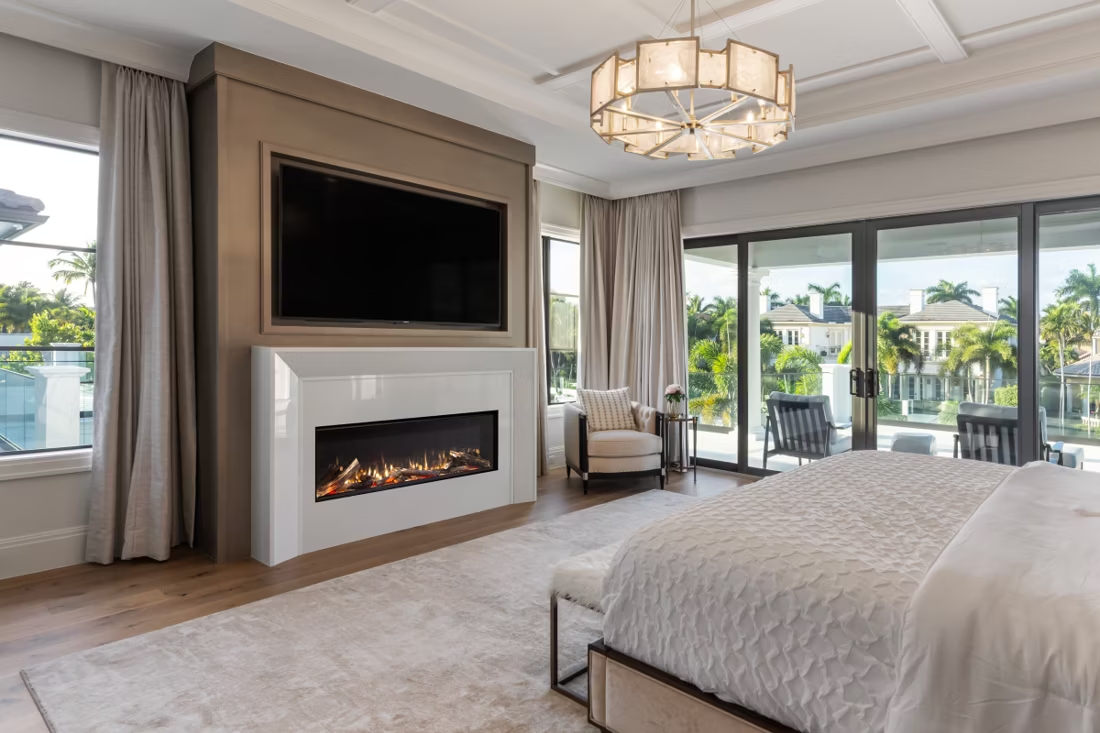
Can I put a TV above my fireplace?
Yes—with an asterisk. Fireplaces are hot and TVs don't like heat. Either put a mantel between them to deflect rising warmth, or choose a fireplace with heat-management technology that creates a cool zone on the wall above—the wall stays around 125 degrees, barely warm, while the room still gets full heat. If you like clean lines and don't want a mantel, heat management is the answer.
Does an electric fireplace need a vent or chimney?
No—that's its superpower. An electric fireplace needs a wall and an outlet, period. No vent pipe, no gas line, no clearances to design around, which is why it works in bedrooms, offices, apartments, and walls where venting a gas or wood unit would be impractical or impossible. Installation is typically the simplest and least expensive of any fireplace type.
Can a fireplace actually lower my heating bill?
Yes—by creating a comfort zone. A furnace heats every square foot of the house just to warm the one room you're in; a gas fireplace on low burns roughly a sixth of the gas a typical furnace does. Set the furnace around 55–60 degrees as a baseline, then heat the rooms your family actually uses. Families who heat this way commonly save $20–$60 a month.
Does a fireplace add value to my home?
On average, a fireplace adds back to the home about the same amount you spent installing it. Add the monthly savings from heating the rooms you actually use instead of the whole house—often hundreds of dollars a year—and the value case is strong before you even count what a fire does for how your family uses the room.
Nearby Dealers
Hearth shops serving Kaneohe and the surrounding area. Every listing shows whether it is a WhyFire partner, a dealer we have verified as authorized for the brands we recommend, or a local business carrying hearth products. No manufacturer pays for placement. How we verify dealers →
Island Pool And Supply
Electric Service in Kaneohe
An electric fireplace's heater draws about 1,500 watts—pennies per hour at local rates.
Hawaiian Electric Co Inc
Find your electric fireplace in Kaneohe.
Tell us a bit about your home and we'll put together a free Project Guide & Parts List for your Kaneohe electric fireplace project—matched with a trusted local dealer who can install it right.
Find Your Fireplace →