
Ambiance year-round, zero furnace required.
Nanakuli never needs a heat source—but the glow of a fireplace still sells a room. Find the right electric unit for a Waianae Coast home and connect with a trusted local dealer.
Every Project Starts From One of These Five Situations
A fireplace, minus the furnace you'll never need.
Nanakuli sits at 85 feet of elevation on Oahu's Waianae Coast, in climate zone 1A, where the average winter low hovers around 59°F and the area has essentially no winter heating season at all—a rounding error compared to a place like Duluth, MN, where a single January week can demand more heating than Nanakuli sees in a decade. There's no functional need for supplemental heat here, which is exactly why electric fireplaces are the fuel of choice when homeowners want the look and feel of a hearth: a focal point, a flame effect, a glow in the evening, with none of the venting, gas lines, or chimney work the climate simply doesn't justify.
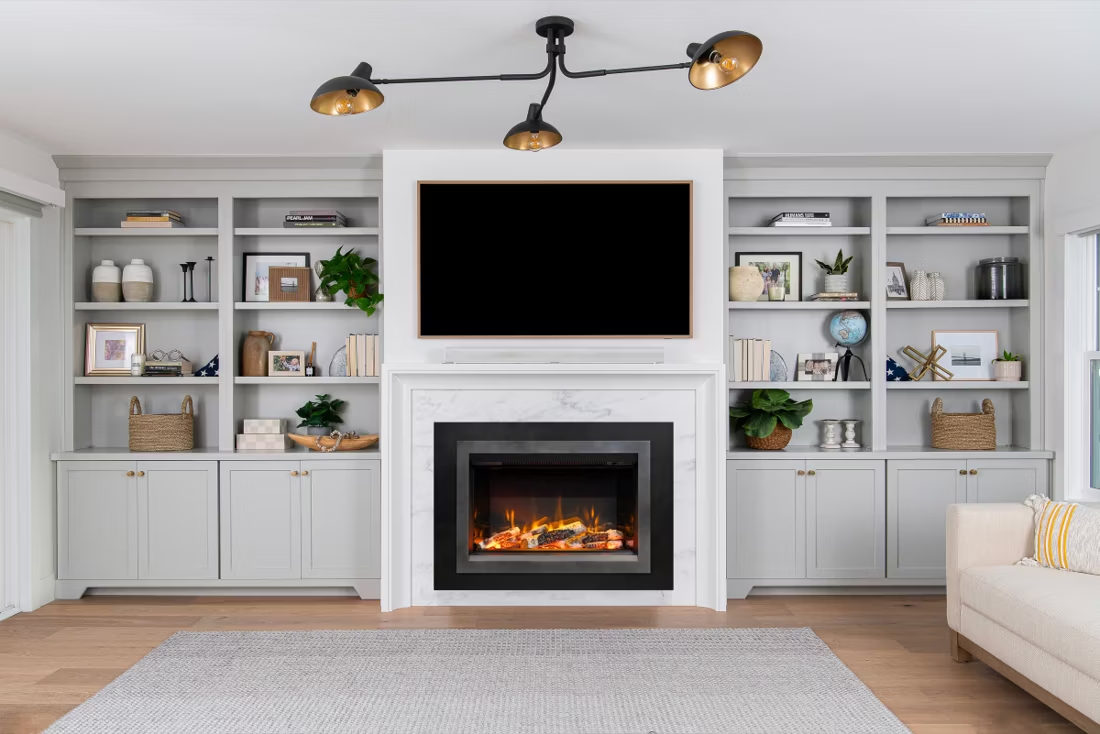
Because most Nanakuli homes are slab-on-grade with no chimney and often no gas service, an electric unit is usually the only realistic hearth option that doesn't involve major construction—it plugs into a standard outlet or, for a built-in, a dedicated circuit an electrician can add in an afternoon. The one number worth knowing before you buy: Hawaiian Electric's residential rate runs $0.4287 per kWh, among the highest in the country, so most owners here run their unit in flame-only mode for ambiance and save the 1,500-watt heater function for the rare evening a trade-wind squall actually cools things down.
Three steps. No salesperson until you're ready.
Tell us about your project
Your zip code, your situation, and the fuel you're leaning toward—or let the answers point you to one.
See what's actually available
The brands dealers within 100 miles genuinely carry—real options, never a catalog mirage.
Get your dealer & Project Guide
A trusted local dealer, plus the free Project Guide & Parts List that names every component of the job.
Frequently Asked Questions
How much does an electric fireplace cost to install in Nanakuli?
A plug-in freestanding or wall-mounted electric fireplace runs $150 to $600 installed, since there's no wiring change needed beyond an existing outlet—this covers the large majority of installs in Nanakuli's apartments, condos, and single-wall homes. A recessed or built-in electric fireplace, framed into a wall with a dedicated 20-amp circuit, typically lands between $1,200 and $3,000 once an electrician is involved. There's no chimney, venting, or gas line to price in, which is the main reason electric costs so much less here than gas or wood installs on the mainland.
Do I need a permit to install an electric fireplace in Nanakuli?
Usually not. The City and County of Honolulu Department of Planning and Permitting doesn't require a permit for a plug-in electric fireplace, since there's no structural, venting, or gas work involved. If you're having a built-in or recessed unit wired into a new dedicated circuit, an electrical permit through DPP is typically required—most licensed electricians pull this as a routine part of the job. Renters in Nanakuli's condos and multi-family buildings should also check with their building management or HOA before mounting anything into a shared wall.
Will an electric fireplace actually heat my home in Nanakuli?
Most electric fireplaces include a built-in heater, usually rated around 1,500 watts, capable of warming a single room by a few degrees. But given Nanakuli's average winter low of 59°F and essentially no winter heating season to speak of, almost nobody here buys one to actually heat the house—it's bought for the flame effect and the focal point it gives a living room or bedroom. Running the heater at Hawaiian Electric's $0.4287/kWh rate costs roughly 64 cents an hour, which is fine for an occasional cool evening but not something anyone runs as a daily heat source.
What type of electric fireplace fits Nanakuli's homes best?
Slab-on-grade and single-wall construction—common throughout Nanakuli and the Waianae Coast—means most homes don't have a masonry fireplace to insert into, so wall-mounted and freestanding electric units are the most popular choice. For homes that do have an old, unused wood-burning shell (uncommon here but not unheard of in older plantation-era houses), an electric insert can slide into that opening and give you the visual of a working fireplace without touching the chimney. Recessed built-ins are popular in newer construction and condo remodels where a clean, flush wall feature is the goal.
How much does it cost to run an electric fireplace on Hawaiian Electric rates?
At Hawaiian Electric Co Inc's residential rate of $0.4287 per kWh—roughly triple the mainland average—running a typical 1,500-watt heater setting costs about 64 cents per hour. Running the unit on flame-effect-only mode, which most LED units support, draws closer to 20-50 watts and costs a fraction of a cent per hour. Given the rate and the climate, most Nanakuli owners default to flame-only for daily ambiance and treat the heat function as an occasional extra rather than a running expense.
Do coastal humidity and salt air affect electric fireplaces near the Waianae Coast?
Salt air and humidity can accelerate corrosion on any appliance with exposed metal components, and homes closer to Nanakuli Beach Park and Farrington Highway see more of it than homes set back toward the Waianae mountains. Look for units with sealed electronics and stainless or coated internal hardware, and avoid installing a unit directly against an exterior wall with poor ventilation behind it. This is a good question to ask a local dealer directly—they'll know which manufacturers hold up best in Oahu's coastal microclimates versus units meant for drier mainland markets.
Why don't people burn wood in Nanakuli?
Wood-burning fireplaces and stoves are essentially absent here, and for good reason—with almost no winter heating season and lows rarely dipping below the high 50s, there's no heating need a wood fire would solve. Local species like eucalyptus, ohia, and koa exist on the island, but koa in particular is far more valuable as furniture and carving wood than firewood, and none of them see meaningful use as a residential fuel source. A handful of homeowners with an older masonry fireplace might use one occasionally for atmosphere, but it's a novelty here, not a heating strategy the way it is in cold-climate states.
Electric vs. gas fireplace—which makes more sense in Nanakuli?
Gas fireplaces in Hawaii typically run on propane or Hawaii Gas's synthetic gas service rather than piped natural gas, and they involve tank setup or a gas-line permit plus venting work—real cost and complexity for a fuel source Nanakuli's climate doesn't require for heat. Electric fireplaces skip all of that: no tank, no venting, no gas permit, and a fraction of the install cost. Gas still has a following for its more realistic flame and higher heat output, but for most Nanakuli households buying primarily for ambiance, electric is the simpler and cheaper path to the same visual effect.
Can renters in Nanakuli's apartments and condos install an electric fireplace?
Yes, in most cases—a freestanding or wall-mounted plug-in electric fireplace requires no permanent alteration and can typically be removed at move-out without any patch work, which makes it one of the few hearth options renters along the Waianae Coast can actually use. Building management or HOA rules may still restrict wall-mounted units or anything requiring anchors into shared walls, so it's worth checking your lease or association rules before buying. A local dealer can also point you toward freestanding models built specifically for rental-friendly installs.
Can I put a TV above my fireplace?
Yes—with an asterisk. Fireplaces are hot and TVs don't like heat. Either put a mantel between them to deflect rising warmth, or choose a fireplace with heat-management technology that creates a cool zone on the wall above—the wall stays around 125 degrees, barely warm, while the room still gets full heat. If you like clean lines and don't want a mantel, heat management is the answer.
Do electric fireplaces actually produce heat?
Yes—most put out around 4,800–5,000 BTUs from a standard outlet, which comfortably warms a bedroom, office, or den as a comfort-zone heater. What they won't do is carry a whole house the way wood, gas, or pellet can. Think of electric as ambiance-first with honest supplemental heat: flames on with no heat in July, flames plus warmth in January.
Can I install a fireplace myself?
If you're putting a fire in your house on purpose, it's best to work with an expert. Unless you're genuinely experienced in framing, gas line, vent pipe, and the national code on clearances to combustibles, have a professional do it—and ideally the same company that sells you the fireplace, so warranty, service, and liability all live under one roof.
How much should I budget for a fireplace?
For an average home—covering the fireplace, the vent pipe, and basic installation—a budget between $3,900 and $5,500 gives you a lot of options across wood, gas, and pellet. By the time you add finish work, gas line, and electrical, the average complete installation lands between $5,000 and $12,000 all-in. In a remodel or new build, a good rule is to put about 2.5% of the total project cost toward the fireplace.
Nearby Dealers
Hearth shops serving Nanakuli and the surrounding area. Every listing shows whether it is a WhyFire partner, a dealer we have verified as authorized for the brands we recommend, or a local business carrying hearth products. No manufacturer pays for placement. How we verify dealers →
Island Pool And Supply
Island Pool And Spa Supply
Electric Service in Nanakuli
An electric fireplace's heater draws about 1,500 watts—pennies per hour at local rates.
Hawaiian Electric Co Inc
Find your electric fireplace in Nanakuli.
Tell us a bit about your home and we'll put together your free Project Guide & Parts List—the right electric fireplace, the exact parts, and a trusted local Oahu dealer to install it.
Find Your Fireplace →