
Ambiance Without the Heat Load.
Maunawili almost never needs heat—average winter lows sit around 66°F. An electric fireplace here is about the flame, the focal wall, and the feel of a hearth. Get matched with a local dealer who can show you what actually works.
Every Project Starts From One of These Five Situations
A fireplace for the look, not the heat.
Tucked in a windward valley below the Koʻolau range at about 180 feet elevation, Maunawili has essentially no winter heating season in an average year. There's no cold season to plan around—winter lows hover near 66°F, and the trade-wind showers that roll through the valley cool things off for an evening at most, not a season. Wood heat is essentially absent here (even though eucalyptus, ohia, and koa carry real cultural weight on Oahu), and pellet stoves don't have a market either. Electric is different: it's a standard choice, but for reasons that have nothing to do with heating load.
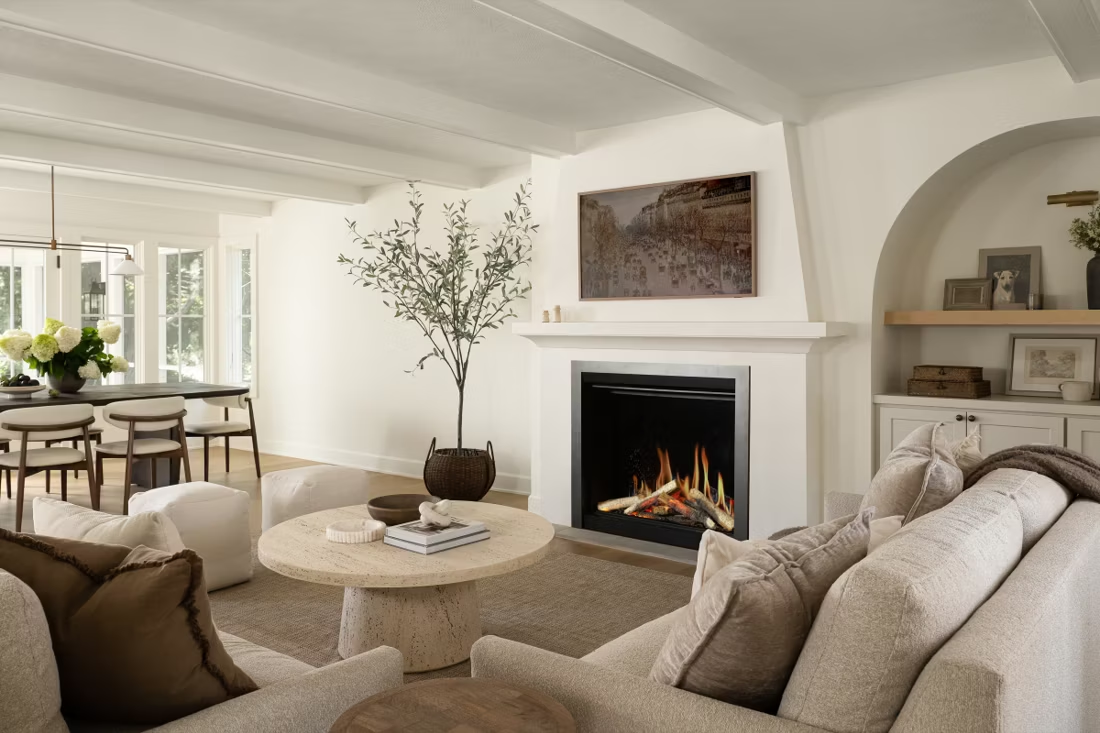
Homeowners in Maunawili install electric fireplaces for the same reason people elsewhere buy a piece of art for the living room wall—flame ambiance, a design anchor for a media wall, a warm glow on a rainy Koʻolau evening. Hawaiian Electric serves the area, and at roughly $0.4287 per kWh, Oahu carries one of the highest residential electricity rates in the country. That number matters more here than the climate does: it shapes which units make sense, how they're used, and why most owners run the flame effect on its own rather than the built-in heater. A trusted local dealer can walk you through models that deliver a convincing fire without turning your power bill into the main event.
Three steps. No salesperson until you're ready.
Tell us about your project
Your zip code, your situation, and the fuel you're leaning toward—or let the answers point you to one.
See what's actually available
The brands dealers within 100 miles genuinely carry—real options, never a catalog mirage.
Get your dealer & Project Guide
A trusted local dealer, plus the free Project Guide & Parts List that names every component of the job.
Frequently Asked Questions
How much does an electric fireplace cost to install in Maunawili?
Plug-in electric inserts and freestanding units are the simplest path—no electrician required if there's a nearby outlet, and units typically run $300 to $1,500 installed. Built-in wall-mount or linear units that need a dedicated 120V or 240V circuit run higher, often $800 to $3,000 once an electrician cuts in a new circuit behind drywall or into a media wall. Because there's no venting, gas line, or chimney to account for, electric is consistently the least expensive fireplace category to install in Maunawili—the cost driver is almost always the electrical work, not the unit itself.
Why would I install a fireplace in a climate that never gets cold?
Most Maunawili buyers aren't chasing warmth—they're chasing the look and feel of a hearth. A realistic flame effect (some models, like Dimplex's Opti-myst line, use a mist-and-LED technique that reads as genuine fire) adds a focal point to a living room or media wall without any real heating need to justify it. It also solves a real problem for condos, rentals, and homes where a gas line or masonry chimney isn't practical. On the rare cool, damp evening after a trade-wind shower, running the heater for twenty minutes is a nice bonus—it's just not the reason people buy one here.
What types of electric fireplaces are available for Maunawili homes?
The three common formats are wall-mount linear units (thin profile, mounted like a large TV, popular for media walls), fireplace inserts (sized to slot into an existing framed opening or built-in cabinetry), and freestanding stoves or mantel packages (a plug-in unit with a surrounding mantel for a more traditional look). Given how rarely the heat function gets used here, many Maunawili homeowners prioritize flame realism and screen size over BTU output when comparing models—a local dealer can show you the difference in person rather than off a spec sheet.
Does an electric fireplace add much to my power bill?
It depends entirely on whether you run the heater. The flame effect alone typically draws 50 to 150 watts—at Hawaiian Electric's residential rate of about $0.4287 per kWh, that's a few cents an hour, easily affordable to run daily. The supplemental heater, by contrast, usually draws 1,200 to 1,500 watts, and at Oahu's rate that adds up fast if used regularly—which is exactly why most Maunawili owners leave the heater off and just enjoy the flame. If you're comparing models, ask whether the heater can be disabled independently of the flame effect; most quality units allow this.
Do I need a permit for an electric fireplace in Maunawili?
A plug-in unit that uses an existing outlet doesn't require a permit. A built-in unit that needs a new dedicated circuit run through a wall does require an electrical permit, issued through the City and County of Honolulu Department of Planning and Permitting, and the circuit work should be done by a licensed electrician regardless of permit status. Most local dealers coordinate with an electrician as part of the installation, so this is typically handled for you rather than something you manage separately.
How does electric compare to gas for a Maunawili home?
Gas is the more heat-capable option—Hawaii Gas supplies synthetic natural gas and propane across Oahu, and a gas fireplace or insert can genuinely warm a room if you ever want that. Electric wins on installation simplicity (no gas line, no venting, no combustion byproducts) and on flexibility—it can go anywhere there's power, including interior walls with no outside access. For most Maunawili living rooms where the goal is ambiance rather than heat output, electric is the lower-cost, lower-hassle choice; gas makes more sense if you want a fireplace that could also genuinely take the chill off during an unusually cool, rainy stretch.
What brands or models work well for Maunawili's climate?
Since heat output isn't the priority, flame realism and build quality matter more than BTU ratings. Dimplex's Opti-myst series is popular locally for its water-vapor flame effect, which looks more convincing than standard LED units. Touchstone and Napoleon also make well-regarded linear wall-mount units at a range of price points. A trusted local dealer can show you the flame effect running in a showroom before you commit—worth doing, since realism varies a lot between models in ways spec sheets don't capture.
How long does an electric fireplace installation take in Maunawili?
A plug-in unit can be placed and running the same day. A built-in wall-mount or insert requiring a new circuit typically takes half a day to a full day once an electrician is scheduled, plus any time for drywall patching or media wall framing if the unit is being recessed. Compared to gas or wood projects, electric is by far the fastest path from decision to installed fireplace—one more reason it's a common choice for Maunawili renovations and rentals alike.
Is an electric fireplace worth it if I'll rarely use the heat function?
For most homes in Maunawili, yes—the value isn't in the heat, it's in the design. A well-chosen electric fireplace functions as a permanent design feature: always available, no fuel to buy, no venting to maintain, and a flame effect you can run on a whim without planning around weather. If you're weighing whether to spend more for a model with a stronger heater, it's usually not necessary here—put the budget instead toward better flame technology and screen size, which is what you'll actually notice day to day.
Can I put a TV above my fireplace?
Yes—with an asterisk. Fireplaces are hot and TVs don't like heat. Either put a mantel between them to deflect rising warmth, or choose a fireplace with heat-management technology that creates a cool zone on the wall above—the wall stays around 125 degrees, barely warm, while the room still gets full heat. If you like clean lines and don't want a mantel, heat management is the answer.
Does an electric fireplace need a vent or chimney?
No—that's its superpower. An electric fireplace needs a wall and an outlet, period. No vent pipe, no gas line, no clearances to design around, which is why it works in bedrooms, offices, apartments, and walls where venting a gas or wood unit would be impractical or impossible. Installation is typically the simplest and least expensive of any fireplace type.
Does a fireplace add value to my home?
On average, a fireplace adds back to the home about the same amount you spent installing it. Add the monthly savings from heating the rooms you actually use instead of the whole house—often hundreds of dollars a year—and the value case is strong before you even count what a fire does for how your family uses the room.
Can I install a fireplace myself?
If you're putting a fire in your house on purpose, it's best to work with an expert. Unless you're genuinely experienced in framing, gas line, vent pipe, and the national code on clearances to combustibles, have a professional do it—and ideally the same company that sells you the fireplace, so warranty, service, and liability all live under one roof.
Nearby Dealers
Hearth shops serving Maunawili and the surrounding area. Every listing shows whether it is a WhyFire partner, a dealer we have verified as authorized for the brands we recommend, or a local business carrying hearth products. No manufacturer pays for placement. How we verify dealers →
Island Pool And Supply
Hawaii Fireplace – Wailuku
Electric Service in Maunawili
An electric fireplace's heater draws about 1,500 watts—pennies per hour at local rates.
Hawaiian Electric Co Inc
Find your electric fireplace in Maunawili.
Tell us a bit about your space and we'll match you with a trusted local dealer and send over a free Project Guide & Parts List—the exact fireplace, mounting, and electrical parts for your Maunawili home.
Find Your Fireplace →