
The Warmth of a Fire, None of the Hawaii Heat.
Mililani Town rarely needs supplemental heat—winter lows average 61°F. Electric fireplaces here are about the look and glow of a fire, installed simply and safely. Find the right unit and connect with a trusted local dealer.
Every Project Starts From One of These Five Situations
A fireplace for ambiance, not survival.
Mililani Town sits at 626 feet in central Oahu, high enough that trade winds keep evenings noticeably cooler than the coast—but with essentially no need for heat all year, this isn't a place that needs a heat source to get through winter. Compare that to a place like Duluth, MN, which has a long, brutal heating season stretching most of the year, and it's clear why nobody in Mililani is sizing a fireplace to survive a cold snap. Here, a fireplace is a design feature: a focal point in the living room, a warm visual anchor during the rare 60-degree night, and increasingly a standard upgrade in newer Mililani builds and remodels.
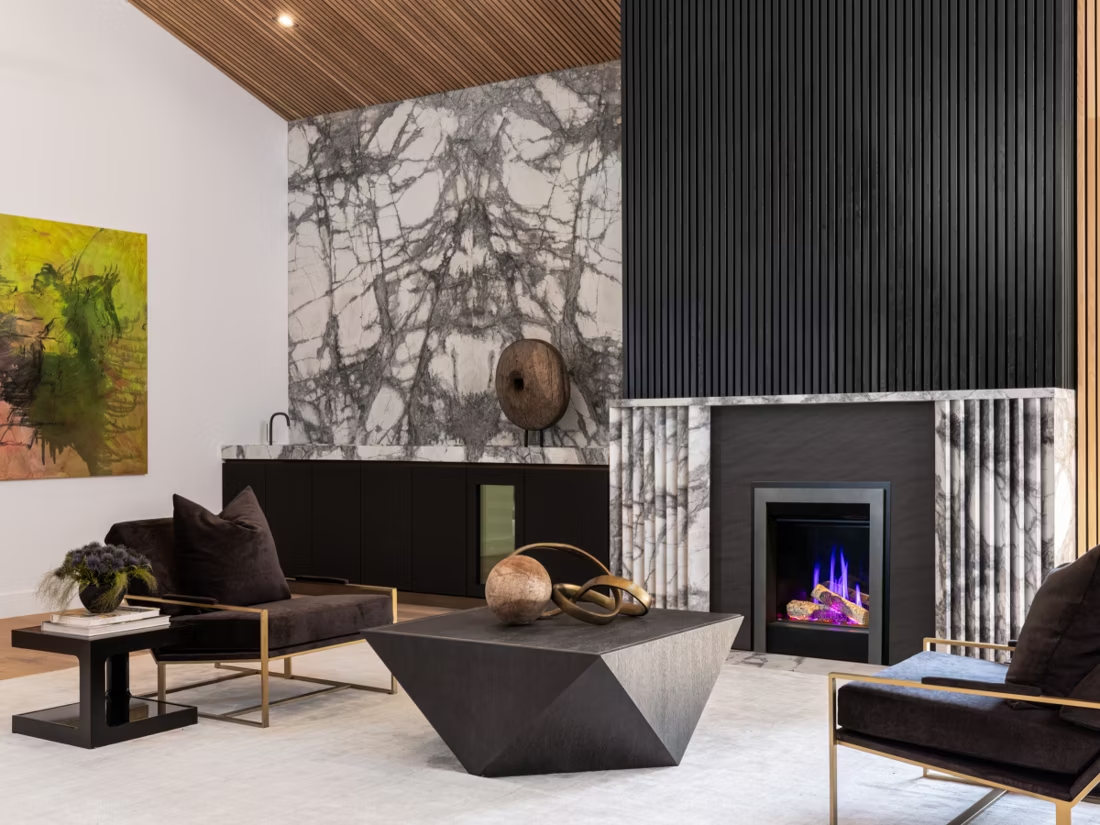
Electric is by far the most practical hearth option in this climate. There's no chimney, no gas line, no combustion byproducts, and none of the wood smoke or creosote concerns that come with wood-burning appliances in wetter climates. Most installs just need a dedicated circuit—straightforward work for a licensed electrician. The one local wrinkle worth knowing: Hawaiian Electric Co. residential rates run around $0.43/kWh, among the highest in the country, so it's worth choosing a unit with an LED-only mode that skips the heater function entirely when you just want the visual effect without running up the bill.
Three steps. No salesperson until you're ready.
Tell us about your project
Your zip code, your situation, and the fuel you're leaning toward—or let the answers point you to one.
See what's actually available
The brands dealers within 100 miles genuinely carry—real options, never a catalog mirage.
Get your dealer & Project Guide
A trusted local dealer, plus the free Project Guide & Parts List that names every component of the job.
Frequently Asked Questions
How much does an electric fireplace installation cost in Mililani Town?
Plug-in electric inserts and freestanding units that just need a standard outlet typically run $300 to $1,500 installed, including mounting. Built-in linear electric fireplaces with a custom surround or wall recess run $2,000 to $5,000, with most of that going toward carpentry and running a dedicated 120V or 240V circuit. Because there's no venting or gas line to route, electric installs in Mililani Town are usually the fastest and least invasive hearth project available—often a one-day job compared to the multi-day work a gas or wood install can require elsewhere.
Do I actually need an electric fireplace for heat in Mililani Town?
Realistically, no. With winter lows averaging 61°F and essentially no need for heat all year, Mililani Town homes don't have a heating load to speak of. Most homeowners here buy an electric fireplace for the visual effect—the flame display, the focal point in a living room, the resale appeal—and use the heater function only occasionally, if ever, on a cooler trade-wind evening. This is different from mainland-climate buyers who are sizing a unit to actually warm a room; here it's almost entirely an aesthetic purchase, and that should shape which features actually matter to you when comparing models.
Do I need a permit to install an electric fireplace in Mililani Town?
A simple plug-in unit on an existing outlet doesn't require a permit. A built-in unit that needs a new dedicated circuit does require an electrical permit through the City & County of Honolulu Department of Planning and Permitting, and the wiring work itself needs to be done by a licensed electrician. There's no chimney, gas line, or venting review involved—the entire permitting process for electric is far simpler than what wood or gas installations require, which is one reason electric has become the default hearth choice on Oahu.
Why is electric so much more common than gas or wood in Mililani Town?
Piped natural gas infrastructure is limited on Oahu, and propane, while available, is mostly used for cooking and water heating rather than hearth appliances. Wood stoves are essentially nonexistent in Hawaii residential construction—there's no cutting-permit culture, no cold-weather heating need, and local species like koa, ohia, and eucalyptus are valued far more as lumber than firewood. Between the climate, the fuel infrastructure, and the simplicity of installation, electric is the practical default for anyone in Mililani Town who wants a fireplace at all.
What will an electric fireplace cost to run given Hawaiian Electric's rates?
Hawaiian Electric's residential rate runs around $0.43/kWh, which is roughly three times the national average, so running the heater function on a 1,500-watt unit for several hours a night adds up faster than it would on the mainland. The good news is most Mililani Town owners run their unit in flame-only mode, which typically draws under 100 watts—pennies an hour. When shopping, ask your local dealer to point out models with a true LED-only setting so you're not paying heater-level rates just to enjoy the visual effect on a warm evening.
What electric fireplace models hold up best in Hawaii's humidity?
Oahu's trade-wind humidity and salt air (especially for homes closer to the coast, though Mililani's inland elevation helps some) can be tougher on electronics and metal trim than a dry mainland climate. Look for units with sealed electrical components and powder-coated or stainless hardware rather than untreated steel. Brands like Dimplex, Napoleon, and Touchstone all offer linear electric models commonly stocked by Oahu hearth dealers, and a local installer can tell you which specific finishes have held up well in central Oahu's climate versus which have shown corrosion issues over a few years.
Should I get a built-in electric fireplace or a freestanding/insert unit?
A built-in linear electric fireplace recessed into a wall or custom cabinetry gives the cleanest, most architectural look and is what most Mililani Town remodels and new builds are trending toward. A freestanding electric stove or a plug-in insert into an existing mantel opening is a lower-cost, no-construction option that works well for renters or anyone who wants the effect without cutting into drywall. Since neither option needs venting, the decision in Mililani Town really comes down to budget and how much you want the fireplace to look like a permanent architectural feature versus a piece of furniture.
Are electric fireplaces safe for homes with kids or pets?
Electric fireplaces are generally considered the safest hearth option for households with kids or pets—there's no real flame, no glass surface that gets dangerously hot the way a wood or gas unit's does, and no combustion byproducts to worry about. Most models use LED technology to simulate flame and stay cool to the touch or close to it. That safety profile, combined with the lack of venting or gas line risk, is also why some condo and HOA associations in the Mililani area that restrict wood or gas units still allow electric fireplaces without issue—though it's worth double-checking your specific HOA's rules before you buy.
Electric vs. gas vs. wood—which makes sense in Mililani Town?
For nearly every Mililani Town home, electric is the clear answer. Wood requires a heating need and fuel infrastructure that just don't exist here—there's no cold season to burn through and no local firewood culture the way there is in a cold-climate market. Gas is possible if you already have propane service, but the infrastructure and installation complexity (running gas lines, venting) rarely make sense for a climate with essentially no need for heat all year. Electric skips all of that: no venting, no fuel supply chain, minimal installation, and it delivers exactly what most buyers here actually want—the look of a fire without needing the heat.
Can I put a TV above my fireplace?
Yes—with an asterisk. Fireplaces are hot and TVs don't like heat. Either put a mantel between them to deflect rising warmth, or choose a fireplace with heat-management technology that creates a cool zone on the wall above—the wall stays around 125 degrees, barely warm, while the room still gets full heat. If you like clean lines and don't want a mantel, heat management is the answer.
Do electric fireplaces actually produce heat?
Yes—most put out around 4,800–5,000 BTUs from a standard outlet, which comfortably warms a bedroom, office, or den as a comfort-zone heater. What they won't do is carry a whole house the way wood, gas, or pellet can. Think of electric as ambiance-first with honest supplemental heat: flames on with no heat in July, flames plus warmth in January.
Can a fireplace actually lower my heating bill?
Yes—by creating a comfort zone. A furnace heats every square foot of the house just to warm the one room you're in; a gas fireplace on low burns roughly a sixth of the gas a typical furnace does. Set the furnace around 55–60 degrees as a baseline, then heat the rooms your family actually uses. Families who heat this way commonly save $20–$60 a month.
How much should I budget for a fireplace?
For an average home—covering the fireplace, the vent pipe, and basic installation—a budget between $3,900 and $5,500 gives you a lot of options across wood, gas, and pellet. By the time you add finish work, gas line, and electrical, the average complete installation lands between $5,000 and $12,000 all-in. In a remodel or new build, a good rule is to put about 2.5% of the total project cost toward the fireplace.
Nearby Dealers
Hearth shops serving Mililani Town and the surrounding area. Every listing shows whether it is a WhyFire partner, a dealer we have verified as authorized for the brands we recommend, or a local business carrying hearth products. No manufacturer pays for placement. How we verify dealers →
Island Pool And Supply
Electric Service in Mililani Town
An electric fireplace's heater draws about 1,500 watts—pennies per hour at local rates.
Hawaiian Electric Co Inc
Find your electric fireplace in Mililani Town.
Tell us a bit about your space and we'll match you with the right electric fireplace or insert, plus a free Project Guide & Parts List with the exact parts for your install and a recommended local Mililani Town dealer.
Find Your Fireplace →