
Ambient warmth, island style, no heating required.
With winter lows averaging 65°F, East Kapolei doesn't need heat—but a lot of homeowners still want the look of a fire. Find the right electric unit and connect with a trusted local dealer.
Every Project Starts From One of These Five Situations
Warmth isn't the point here—ambiance is.
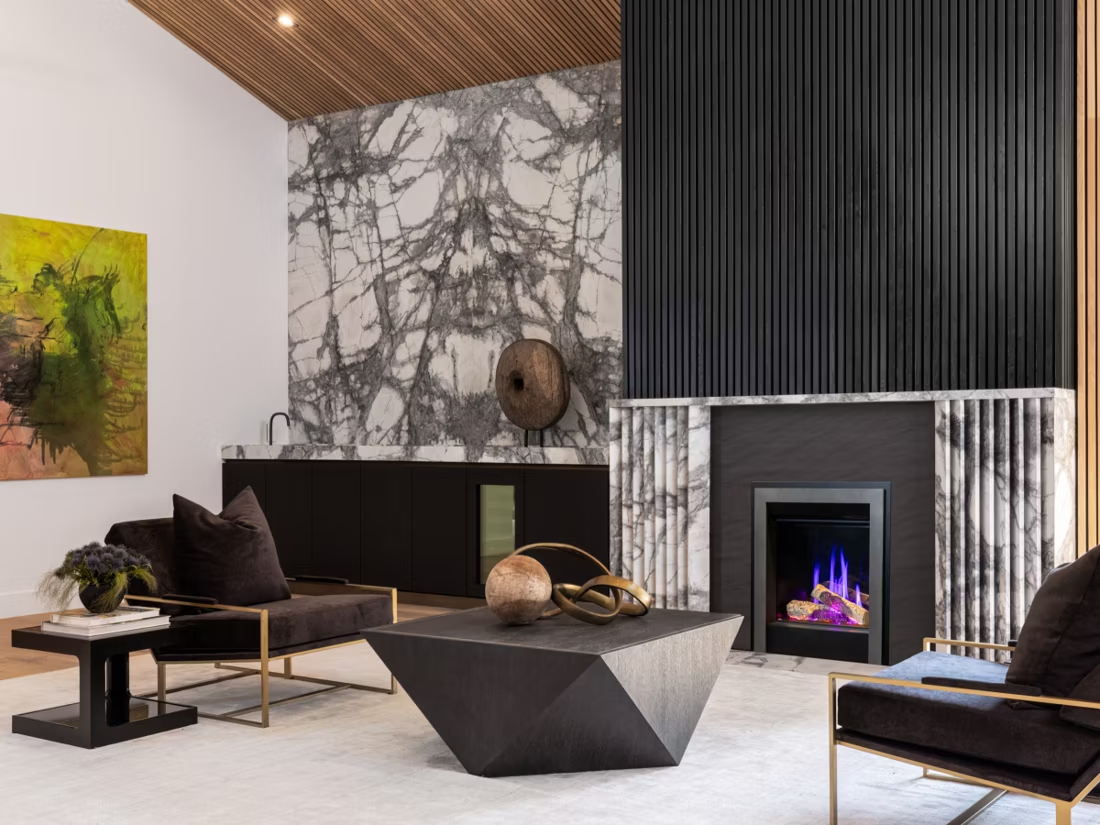
East Kapolei sits at 127 feet elevation in climate zone 1A, with essentially no heating season on the books and winter lows that average 65°F. Compare that to a place like Duluth, Minnesota, where homeowners are stacking cordwood to get through a long, brutal winter—there's simply no functional heating need here. That reality shapes what an electric fireplace is actually for in this market: it's a visual and design feature, not a backup heat source.
East Kapolei's newer master-planned neighborhoods and condo developments are a natural fit for electric units, since most don't have an existing chimney or gas line, and Hawaiian Electric Co. is the sole utility serving the area at a residential rate around $0.4287/kWh—among the highest in the country. That rate matters less than you'd think for this fuel choice, though: an electric fireplace run mostly in flame-only mode (LED effect, no heater engaged) draws only 30–100 watts, a fraction of what the optional heat-strip setting uses. Local dealers can walk you through models built for exactly this use case—good-looking flame, minimal draw, heat available but rarely needed.
Three steps. No salesperson until you're ready.
Tell us about your project
Your zip code, your situation, and the fuel you're leaning toward—or let the answers point you to one.
See what's actually available
The brands dealers within 100 miles genuinely carry—real options, never a catalog mirage.
Get your dealer & Project Guide
A trusted local dealer, plus the free Project Guide & Parts List that names every component of the job.
Frequently Asked Questions
How much does an electric fireplace installation cost in East Kapolei?
A plug-in electric insert or freestanding electric stove that uses an existing wall outlet typically runs $300 to $1,000 installed, since there's no venting, gas line, or chimney work involved. A built-in wall-mounted unit or a linear electric fireplace that requires a dedicated 120V or 240V circuit runs higher—usually $800 to $2,500—once an electrician is brought in to run the circuit. Because East Kapolei has a lot of newer single-family homes and townhomes without existing fireplaces, most installs here are new builds into a framed wall niche rather than conversions of an old masonry hearth.
Does an electric fireplace even make sense in a climate this warm?
Honestly, not for heat. East Kapolei has essentially no heating season and winter lows stay around 65°F, so no fireplace fuel here is doing real heating work the way it would in a cold-climate home. What electric fireplaces are used for locally is the visual centerpiece—a realistic flame effect in a living room, primary bedroom, or lanai-adjacent space—with the heater function mostly left off or used only on the rare cooler evening. If you want a working flame appearance with none of the venting requirements gas or wood would demand, electric is the practical choice here.
Do I need a permit to install an electric fireplace in East Kapolei?
A plug-in unit that uses an existing outlet generally doesn't require a permit. If your installer needs to run a new dedicated circuit or do any wiring inside a wall for a built-in unit, that electrical work typically falls under the City and County of Honolulu Department of Planning and Permitting (DPP), and a licensed electrician should pull the permit as part of the job. Local dealers who install regularly in East Kapolei and the broader Ewa/Kapolei area are familiar with DPP's process and usually handle this for you.
How much will an electric fireplace add to my Hawaiian Electric bill?
Hawaiian Electric's residential rate in this area runs around $0.4287/kWh, which is high compared to the mainland—but the math still works out favorably for electric fireplaces because most owners run them in ambiance mode (flame effect only, heater off), which draws roughly 30-100 watts, similar to a couple of light bulbs. Even running that a few hours a night, you're looking at a few dollars a month. If you do turn on the heat-boost feature (typically 1,500 watts), that setting costs meaningfully more per hour to run—but given East Kapolei's climate, most owners rarely need it.
What's the best type of electric fireplace for a condo versus a single-family home?
For condos and townhomes in East Kapolei's newer developments, a wall-mounted linear electric fireplace or a recessed electric insert built into existing millwork is the most common choice—it doesn't require any structural or venting changes, which matters in HOA-governed buildings. For single-family homes, a built-in electric fireplace framed into a living room wall, or a freestanding electric stove styled to look like a wood stove, gives more design flexibility. Brands like Dimplex, Napoleon, and Touchstone all make models suited to either scenario—a local dealer can match the unit to your wall configuration and electrical setup.
What's the difference between an electric fireplace, electric insert, and electric stove?
An electric fireplace is typically a built-in unit set into a wall or media console, designed to look like a finished, framed-in fireplace. An electric insert is sized to slide into an existing fireplace opening—less common in East Kapolei since most homes here were never built with a wood or gas fireplace to convert. An electric stove is a freestanding unit styled like a traditional wood stove, useful if you want a defined focal point without any wall modification. All three run on standard household power and produce the same flame-effect technology; the choice mostly comes down to your wall layout and design preference.
Should I get gas instead of electric?
Gas is available as an option in East Kapolei and gives you a real flame burning actual fuel, along with genuine (if modest, given the climate) heat output. But gas requires venting or a vent-free setup, a gas line or propane tank, and periodic professional servicing. Electric requires none of that—no combustion, no venting, no gas line, and virtually no maintenance. For a climate where heat output isn't the real objective, most East Kapolei homeowners lean electric for the simplicity; those who specifically want the crackle and authenticity of real flame sometimes choose gas instead. A local dealer can show you both side by side.
How much heat will an electric fireplace actually put out?
Most electric fireplaces with the heat function engaged put out around 4,000-5,000 BTUs (roughly a 1,500-watt heater), enough to warm a single room by a few degrees. In East Kapolei, where outdoor lows rarely drop below the mid-60s, that's more than sufficient for the handful of cooler mornings in winter—but don't expect it to function as a primary heat source the way it might in a colder-climate home. Most local buyers run the unit for the flame effect and treat the heat setting as an occasional bonus.
What kind of maintenance does an electric fireplace need?
Very little. There's no chimney to sweep, no gas line to service, and no combustion byproducts to worry about. Maintenance is mostly limited to occasionally dusting the unit, cleaning the glass front, and replacing the LED flame bulbs every several years of daily use (most units use long-life LEDs rated for 20,000+ hours). This low-maintenance profile is one of the bigger draws for East Kapolei buyers who want the visual warmth of a fireplace without the upkeep that wood or gas systems require.
Can I put a TV above my fireplace?
Yes—with an asterisk. Fireplaces are hot and TVs don't like heat. Either put a mantel between them to deflect rising warmth, or choose a fireplace with heat-management technology that creates a cool zone on the wall above—the wall stays around 125 degrees, barely warm, while the room still gets full heat. If you like clean lines and don't want a mantel, heat management is the answer.
Does an electric fireplace need a vent or chimney?
No—that's its superpower. An electric fireplace needs a wall and an outlet, period. No vent pipe, no gas line, no clearances to design around, which is why it works in bedrooms, offices, apartments, and walls where venting a gas or wood unit would be impractical or impossible. Installation is typically the simplest and least expensive of any fireplace type.
Can a fireplace actually lower my heating bill?
Yes—by creating a comfort zone. A furnace heats every square foot of the house just to warm the one room you're in; a gas fireplace on low burns roughly a sixth of the gas a typical furnace does. Set the furnace around 55–60 degrees as a baseline, then heat the rooms your family actually uses. Families who heat this way commonly save $20–$60 a month.
What is an in-home preview and do I need one?
It's a visit where a hearth professional measures your space, confirms the model you picked actually works in your home, and walks the specs—framing, gas line, venting, finish work—before anything is ordered. Some details you just can't know until you see the house. Never make a down payment without one; it's the single most-skipped step that burns buyers.
Nearby Dealers
Hearth shops serving East Kapolei and the surrounding area. Every listing shows whether it is a WhyFire partner, a dealer we have verified as authorized for the brands we recommend, or a local business carrying hearth products. No manufacturer pays for placement. How we verify dealers →
Island Pool And Supply
Electric Service in East Kapolei
An electric fireplace's heater draws about 1,500 watts—pennies per hour at local rates.
Hawaiian Electric Co Inc
Find your electric fireplace in East Kapolei.
Tell us a bit about your space and we'll match you with the right electric fireplace, insert, or stove—and connect you with a trusted local dealer who can pull permits and size the electrical work correctly.
Find Your Fireplace →