
Ambiance Without the Vent, the Chimney, or the Wait.
At sea level on Joint Base Pearl Harbor-Hickam, there's no real heating season—just the want for a warm-looking focal point. An electric fireplace delivers that without touching your walls, your lease, or your gas line.
Every Project Starts From One of These Five Situations
The one fireplace fuel that actually fits a 9-foot elevation, 62°F winter.
Hickam Housing sits at 9 feet above sea level on Joint Base Pearl Harbor-Hickam, where the average winter low is 62°F and there's essentially no heating season to speak of—for comparison, a place like Duluth, MN endures a long, brutal winter heating season. There is, functionally, no heating season here. Wood species like eucalyptus, ohia, and koa grow all over Oahu, but they're prized locally for furniture and carving, not cordwood, and pellet stoves have no real foothold in a climate that never demands sustained indoor heat. Electric is the fuel that actually matches how people here use a fireplace: as a visual centerpiece, not a survival appliance.
Most of Hickam Housing is privatized military family housing, which means residents are renters working within lease terms set by base property management—not homeowners free to cut into a wall for a gas line or masonry chimney. An electric fireplace sidesteps all of that. A freestanding or wall-mount unit plugs into a standard outlet, requires no venting, and can move with you at your next PCS. Hawaiian Electric's residential rate runs about $0.4287 per kWh, among the highest in the country, so most owners here run the flame effect on its own for ambiance and skip the heater function almost entirely.
Three steps. No salesperson until you're ready.
Tell us about your project
Your zip code, your situation, and the fuel you're leaning toward—or let the answers point you to one.
See what's actually available
The brands dealers within 100 miles genuinely carry—real options, never a catalog mirage.
Get your dealer & Project Guide
A trusted local dealer, plus the free Project Guide & Parts List that names every component of the job.
Frequently Asked Questions
How much does an electric fireplace installation cost in Hickam Housing?
A compact plug-in electric fireplace or stove—the kind that needs nothing more than a 120V outlet—typically runs $150 to $500 for the unit itself, with no installation cost beyond setting it in place. A built-in wall-mount unit or an electric insert dropped into an existing mantel surround runs higher, generally $800 to $2,500 installed, mostly driven by any electrical or carpentry work to frame it in. Because there's no venting, no gas line, and usually no permitting involved, electric is consistently the least expensive fireplace fuel to install in this climate.
Do I need a permit to install an electric fireplace in base housing or elsewhere in Honolulu?
For a plug-in, freestanding unit, no—it's an appliance, not a fixed structure, so it doesn't trigger a building permit. If you're a Hickam Housing resident, the more relevant approval is your property management office, since even a wall-mounted unit that requires drilling or a dedicated circuit should be cleared with them first given lease restrictions on modifications. Homeowners elsewhere in Honolulu installing a hardwired, built-in electric fireplace that involves new electrical circuitry should have a licensed electrician pull the standard electrical permit—but there's no venting or gas-line inspection to coordinate, which is a big part of why electric projects move faster than gas or wood ones.
Will an electric fireplace actually heat my home in Hickam Housing's climate?
Most electric fireplaces include a built-in heater rated around 1,500 watts, capable of warming a single room—but with winter lows averaging 62°F and next to no need for heat here, that function goes largely unused. Most Hickam Housing residents run these units in flame-only mode, which draws only a few watts for the LED display, and reserve the heater setting for the rare cool, windy evening. If you're buying primarily for warmth, an electric fireplace is not the tool for the job in this climate; if you're buying for the look of a fire with the option of light heat, it's the right one.
What's the difference between a plug-in electric fireplace and a built-in electric insert?
A plug-in unit—freestanding, wall-mount, or a small stove-style model—is fully self-contained and portable; you can take it out of the box, plug it in, and move it with you when you PCS. A built-in electric insert is designed to sit inside a framed wall cavity or an existing mantel surround for a flush, custom look, and it's typically wired to a dedicated circuit by an electrician rather than a standard outlet. For renters in Hickam Housing, the plug-in route is almost always the practical choice; homeowners doing a remodel elsewhere on Oahu are the more common buyers for a built-in insert.
How much does it cost to run an electric fireplace with Hawaiian Electric's rates?
Hawaiian Electric's residential rate runs about $0.4287 per kWh—roughly triple the mainland average. Running the flame effect alone, which draws around 30-100 watts on most models, costs only a few cents an hour. Switching on the 1,500-watt heater element changes the math fast: that's roughly $0.64 an hour, which adds up quickly if you leave it running for supplemental warmth. That rate structure is exactly why most owners here treat the heater as an occasional feature rather than a daily habit—the flame is the draw, not the BTUs.
Electric vs. gas fireplace—which is right for my home in Hickam Housing?
Gas fireplaces are available on Oahu and deliver real, sustained heat output plus a more authentic flame—but they require a gas line (natural gas or propane), venting for most vented models, and permitting through the county, none of which fit cleanly into privatized base housing lease terms. Electric requires none of that: no line, no vent, no structural changes, and it's the only option a renter can realistically install and later remove without a trace. Given that Hickam Housing's climate rarely calls for real heat output anyway, electric wins on convenience and fit even where gas would technically perform better in a colder market.
Can I take my electric fireplace with me if I PCS or move?
Yes, and it's one of the main reasons electric is popular with military families here—a freestanding or wall-mount plug-in unit isn't attached to your home's structure or utilities, so it packs and moves like any other appliance. Even units mounted with a bracket typically just need a few screws removed from the wall. If you go with a built-in insert instead, know that it's a fixture, not a portable piece, so it stays with the house rather than making the move with you.
What should I look for in an electric fireplace given Oahu's coastal humidity?
Salt air and high humidity are hard on electronics and metal trim, so look for units with a sealed housing and corrosion-resistant hardware rather than bargain models built for drier mainland markets. LED flame technology (versus older rotating-mirror styles) tends to hold up better long-term in humid coastal air since it has fewer moving mechanical parts. If the unit will sit near a lanai or an exterior wall with regular moisture exposure, ask your local dealer about models rated for higher-humidity installs before you buy.
Why don't wood or pellet stoves show up as options in Hickam Housing?
Both are a mismatch for this location rather than a real local category. With winter lows averaging 62°F and essentially no need for heat, there's no functional need for a sustained-burn heat source, and neither storing cordwood nor bags of pellets is practical in a humid, coastal, renter-occupied setting. Local wood species like koa, ohia, and eucalyptus are valued for furniture and craft work on Oahu, not firewood. Electric fills the role wood and pellet fill on the mainland—a visual, ambiance-driven fireplace—without the mismatch.
Can I put a TV above my fireplace?
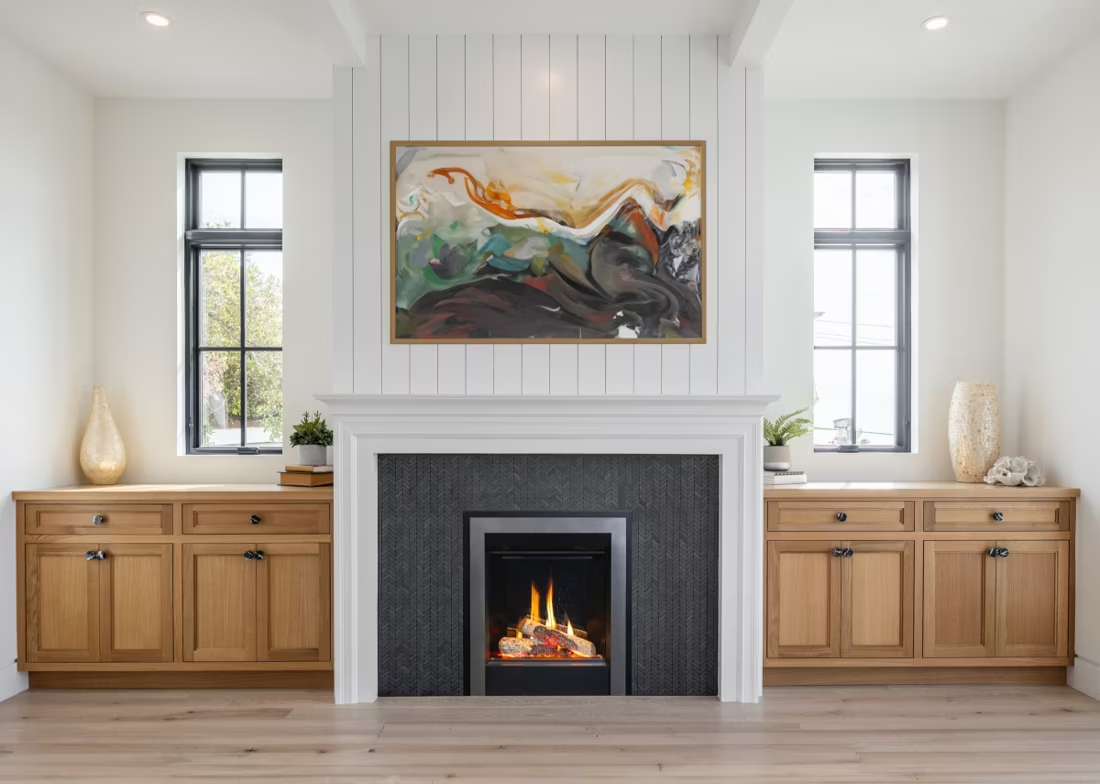
Yes—with an asterisk. Fireplaces are hot and TVs don't like heat. Either put a mantel between them to deflect rising warmth, or choose a fireplace with heat-management technology that creates a cool zone on the wall above—the wall stays around 125 degrees, barely warm, while the room still gets full heat. If you like clean lines and don't want a mantel, heat management is the answer.
Do electric fireplaces actually produce heat?
Yes—most put out around 4,800–5,000 BTUs from a standard outlet, which comfortably warms a bedroom, office, or den as a comfort-zone heater. What they won't do is carry a whole house the way wood, gas, or pellet can. Think of electric as ambiance-first with honest supplemental heat: flames on with no heat in July, flames plus warmth in January.
What is an in-home preview and do I need one?
It's a visit where a hearth professional measures your space, confirms the model you picked actually works in your home, and walks the specs—framing, gas line, venting, finish work—before anything is ordered. Some details you just can't know until you see the house. Never make a down payment without one; it's the single most-skipped step that burns buyers.
Can I install a fireplace myself?
If you're putting a fire in your house on purpose, it's best to work with an expert. Unless you're genuinely experienced in framing, gas line, vent pipe, and the national code on clearances to combustibles, have a professional do it—and ideally the same company that sells you the fireplace, so warranty, service, and liability all live under one roof.
Nearby Dealers
Hearth shops serving Hickam Housing and the surrounding area. Every listing shows whether it is a WhyFire partner, a dealer we have verified as authorized for the brands we recommend, or a local business carrying hearth products. No manufacturer pays for placement. How we verify dealers →
Island Pool And Supply
Electric Service in Hickam Housing
An electric fireplace's heater draws about 1,500 watts—pennies per hour at local rates.
Hawaiian Electric Co Inc
Find your electric fireplace in Hickam Housing.
Tell us a bit about your home and lease situation, and we'll match you with a trusted local dealer plus a free Project Guide & Parts List—the right unit, the right mounting approach, and no guesswork with base housing rules.
Find Your Fireplace →