
Ambiance first, heat optional—for Wheeler AFB homes.
With winter lows averaging 61°F and almost no need for winter heating, Wheeler AFB doesn't need supplemental heat. Electric fireplaces still earn their spot—for the look, not the BTUs.
Every Project Starts From One of These Five Situations
Central Oahu doesn't need heat. Electric fireplaces still work.
Wheeler AFB sits at about 800 feet elevation in central Oahu near Wahiawa, in a climate so mild it barely needs any winter heating at all and rarely dips below 60°F even in January. Wood species like eucalyptus, koa, and ohia grow all over the island, but none of them get burned for hearth heat here—wood stoves and pellet stoves are essentially nonexistent on base, not because they're banned but because there's simply no climate reason for them. Gas fireplaces show up occasionally in off-base and privately owned homes, but for on-post family housing, electric is the fuel that actually gets installed.
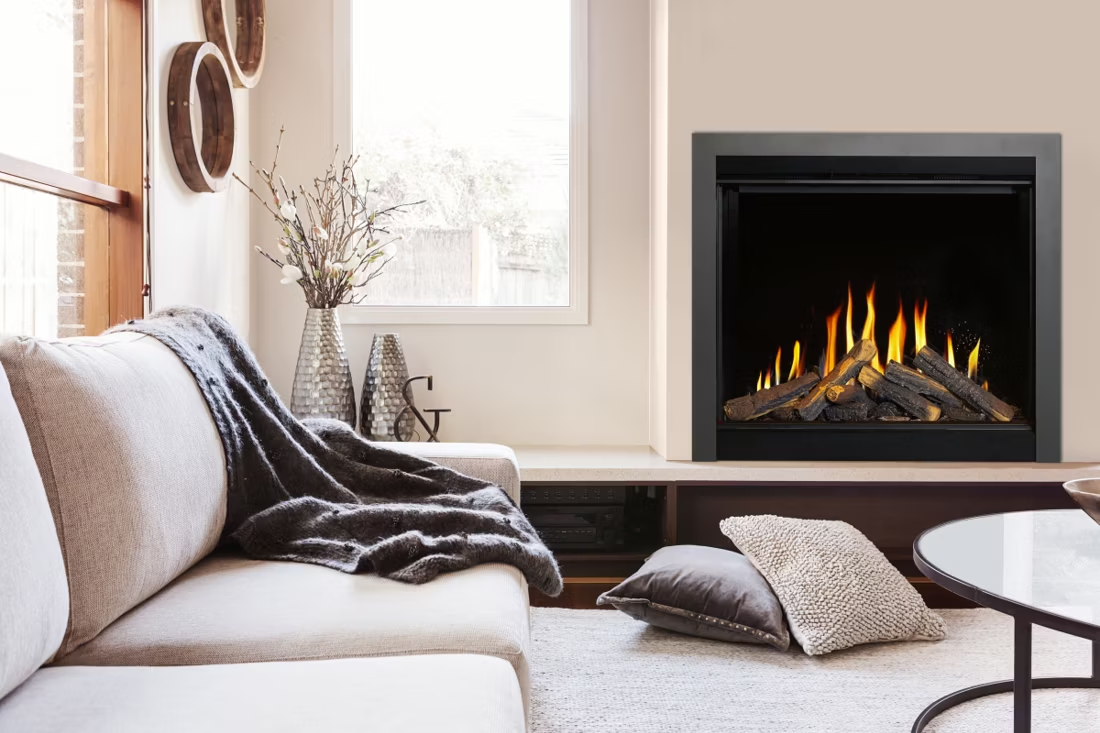
That's because an electric fireplace solves a different problem than heat: it adds a mantel, a media wall focal point, or a warm-looking feature in a rental unit where you can't cut into drywall for gas line or venting work. No chimney, no combustion byproducts, no Forest Service permit, no gas fitter—just a unit that plugs in or wires into an existing circuit. Hawaiian Electric's residential rate of roughly 42.9 cents per kWh is among the highest in the country, so most Wheeler AFB households run the flame effect on its own most evenings and only switch on the heater during the rare Kona low or trade-wind-stalled cold snap.
Three steps. No salesperson until you're ready.
Tell us about your project
Your zip code, your situation, and the fuel you're leaning toward—or let the answers point you to one.
See what's actually available
The brands dealers within 100 miles genuinely carry—real options, never a catalog mirage.
Get your dealer & Project Guide
A trusted local dealer, plus the free Project Guide & Parts List that names every component of the job.
Frequently Asked Questions
How much does an electric fireplace cost to install in Wheeler AFB?
A plug-in wall-mounted or freestanding electric fireplace typically runs $300 to $1,500 installed, since most just need a standard outlet and mounting hardware—no electrician required in many cases. A built-in or recessed unit set into a media wall or mantel surround, which may need a dedicated circuit or minor electrical work, usually runs $1,500 to $4,000 depending on the surround and any carpentry. Because Wheeler AFB is privatized family housing, always check with the housing office before any wall-cutting or hardwiring project—plug-in models sidestep that approval step entirely.
Do I actually need heat from a fireplace in Wheeler AFB?
Realistically, no. Wheeler AFB has an almost nonexistent need for winter heating and an average winter low around 61°F—that's not a heating climate by any measure. An electric fireplace here is almost always chosen for the visual warmth and architectural focal point rather than as a functional heat source. If you do want backup heat for an unusually cool night, most electric fireplace inserts include a built-in heater you can switch on independently of the flame effect.
Will running an electric fireplace raise my electric bill?
It can, more than you'd expect, because Hawaiian Electric's residential rate of about 42.9 cents per kWh is roughly three times the U.S. average. The flame-effect LED display alone draws very little power and costs pennies a night to run. The built-in heater is the expensive part—a typical 1,500-watt heater running for a few hours can add a few dollars to a single evening's usage at Oahu rates. Most owners here run the flame for ambiance and leave the heater off unless it's genuinely chilly.
Wall-mounted vs. built-in electric fireplace—which fits base housing better?
For privatized housing at Wheeler AFB, a wall-mounted plug-in unit or a freestanding electric fireplace on a mantel is almost always the easier path, since it doesn't require cutting into drywall, running new wiring, or getting sign-off from the housing management company. A built-in, flush-mounted unit looks more like a real fireplace but usually means a media wall build-out and possibly a dedicated circuit—worth doing in a home you own, harder to justify in a rental you'll leave at your next PCS.
Can I install an electric fireplace in on-base military housing at Wheeler AFB?
In most cases, yes, but check with your housing management office first if the installation involves any wall modification, new electrical circuit, or permanent mounting. Plug-in freestanding and simple wall-mount models generally don't require approval since they don't alter the structure. If you want a built-in unit with a custom surround, get it approved in writing before work starts—privatized housing agreements typically require move-out restoration if unapproved changes are made.
Should I consider gas or wood instead of electric?
Wood and pellet heat don't make sense in this climate—there's no cold season to justify cordwood storage, chimney venting, or a hopper full of pellets, and you won't find local firewood suppliers or cutting permit offices geared toward hearth heat on Oahu. Gas fireplaces do show up in some off-base and privately owned homes around Honolulu County, mostly for the look of a real flame, but they require gas line work and venting that most on-base housing situations simply can't accommodate. Electric remains the practical choice for the overwhelming majority of Wheeler AFB households.
Does Oahu's humidity and salt air affect electric fireplace units?
It can, especially with cheaper units that have exposed metal trim or unsealed electronics. Look for models rated for indoor residential use with sealed control boards, and avoid units marketed for outdoor or covered-patio installs unless the manufacturer specifically rates them for coastal humidity. A trusted local dealer can point you to models that hold up better in central Oahu's year-round humidity than whatever's cheapest at a big-box store.
Do electric fireplaces need venting or a clearance zone?
No venting is required—that's one of the main reasons electric works so well for Wheeler AFB housing. You do still need to follow the manufacturer's clearance specs from combustible materials like curtains or furniture, and any dedicated circuit work should be done by a licensed electrician if you're going beyond a standard plug-in unit. There's no chimney sweep, no Forest Service permit, and no annual gas inspection to schedule.
Electric fireplace vs. a space heater—which makes more sense here?
A space heater is cheaper and puts out more heat per dollar, but it has zero visual payoff—no flame, no mantel, nothing that makes a living room feel finished. An electric fireplace gives you that focal-point look plus an optional heater for the rare cool evening, without the ongoing cost of running a heater you don't need in a climate that barely needs any winter heating. Given Hawaiian Electric's high per-kWh rate, most Wheeler AFB households get more value running the fireplace for looks and reaching for a small space heater only on the handful of nights it actually gets chilly.
Does an electric fireplace need a vent or chimney?
No—that's its superpower. An electric fireplace needs a wall and an outlet, period. No vent pipe, no gas line, no clearances to design around, which is why it works in bedrooms, offices, apartments, and walls where venting a gas or wood unit would be impractical or impossible. Installation is typically the simplest and least expensive of any fireplace type.
Can I put a TV above my fireplace?
Yes—with an asterisk. Fireplaces are hot and TVs don't like heat. Either put a mantel between them to deflect rising warmth, or choose a fireplace with heat-management technology that creates a cool zone on the wall above—the wall stays around 125 degrees, barely warm, while the room still gets full heat. If you like clean lines and don't want a mantel, heat management is the answer.
Can I install a fireplace myself?
If you're putting a fire in your house on purpose, it's best to work with an expert. Unless you're genuinely experienced in framing, gas line, vent pipe, and the national code on clearances to combustibles, have a professional do it—and ideally the same company that sells you the fireplace, so warranty, service, and liability all live under one roof.
Can a fireplace actually lower my heating bill?
Yes—by creating a comfort zone. A furnace heats every square foot of the house just to warm the one room you're in; a gas fireplace on low burns roughly a sixth of the gas a typical furnace does. Set the furnace around 55–60 degrees as a baseline, then heat the rooms your family actually uses. Families who heat this way commonly save $20–$60 a month.
Nearby Dealers
Hearth shops serving Wheeler AFB and the surrounding area. Every listing shows whether it is a WhyFire partner, a dealer we have verified as authorized for the brands we recommend, or a local business carrying hearth products. No manufacturer pays for placement. How we verify dealers →
Island Pool And Supply
Electric Service in Wheeler AFB
An electric fireplace's heater draws about 1,500 watts—pennies per hour at local rates.
Hawaiian Electric Co Inc
Find your electric fireplace in Wheeler AFB.
Tell us a bit about your home—and whether you're working within base housing rules—and we'll send a free Project Guide & Parts List matched to your space, plus connect you with a trusted local dealer who installs it right.
Find Your Fireplace →