
The fireplace look for Oahu homes that never need the heat.
No chimney, no propane tank, no venting—just a trusted local Oahu dealer who can size the right electric fireplace or insert for your home and get it installed correctly.
Every Project Starts From One of These Five Situations
A fireplace for the look, not the heat load.
Schofield Barracks sits at just under 900 feet on Oahu's central plateau, in climate zone 1A—hot and humid nearly year-round, with winter lows averaging 61°F and virtually no heating needed all year long. For comparison, a place like Duluth, MN faces a winter heating load hundreds of times greater in a single season. There's no functional need for supplemental heat here, on post or off, which is exactly why wood stoves and pellet appliances never caught on in this part of Oahu—there's simply no cold to burn against.
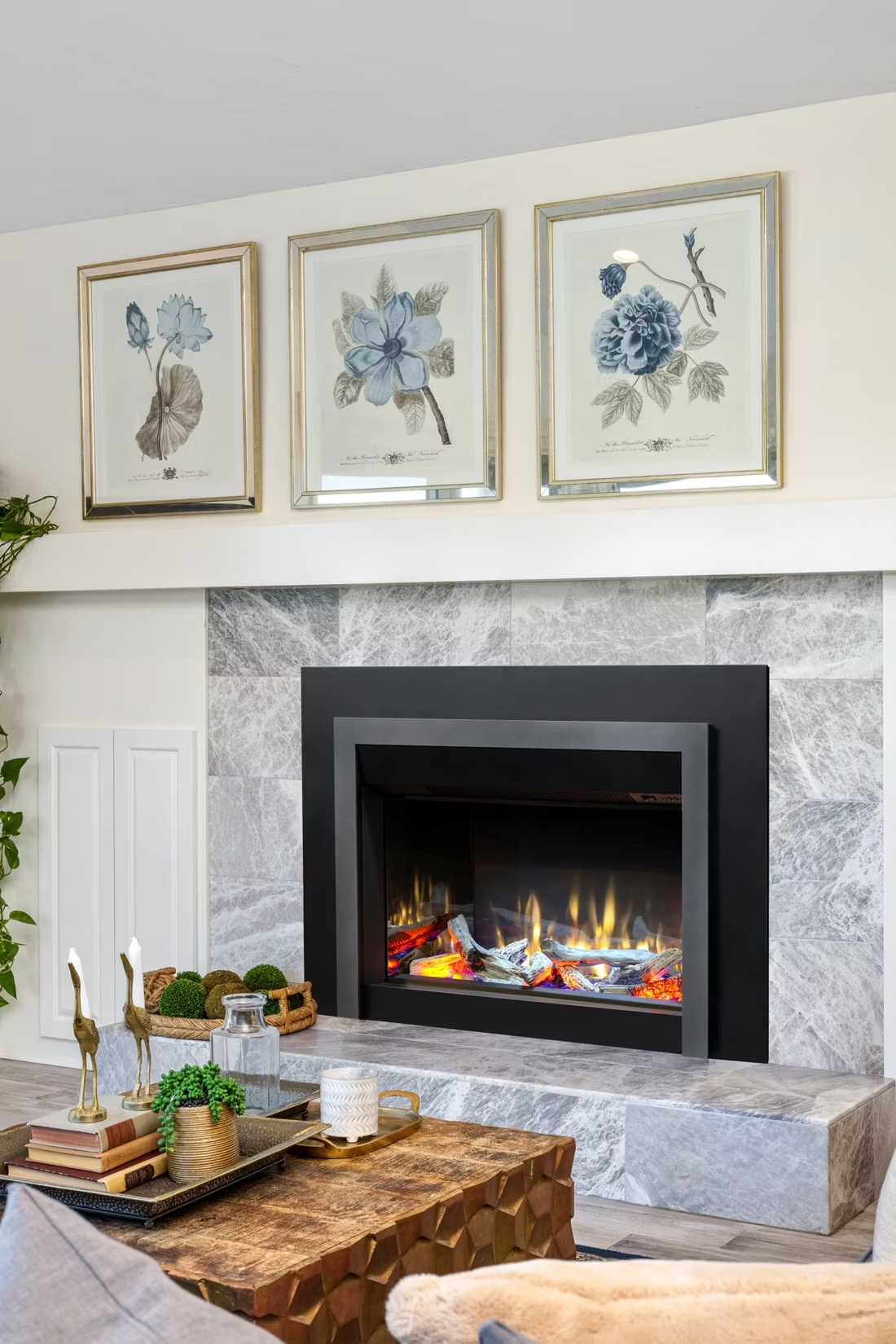
That's what makes electric the standard fireplace choice around Schofield and Wahiawā: it delivers the look and the flame without asking for a chimney, a gas line, or a fuel supply. It works the same way in a concrete-block Army Hawaii Family Housing unit as it does in an older Wahiawā rental, plugs into existing wiring in most cases, and produces zero combustion byproducts in a climate where indoor air quality already has enough humidity to manage. Hawaiian Electric's residential rate of roughly 42.87 cents per kWh is among the highest in the nation, but since almost nobody here runs the heater function, the electric fireplace itself barely moves the needle on a monthly bill.
Three steps. No salesperson until you're ready.
Tell us about your project
Your zip code, your situation, and the fuel you're leaning toward—or let the answers point you to one.
See what's actually available
The brands dealers within 100 miles genuinely carry—real options, never a catalog mirage.
Get your dealer & Project Guide
A trusted local dealer, plus the free Project Guide & Parts List that names every component of the job.
Frequently Asked Questions
How much does it cost to install an electric fireplace in Schofield Barracks?
Plug-in electric inserts and freestanding electric stoves are the most common route here, and installation is minimal because there's no venting or gas line to run—most units land between $300 and $1,500 installed, including surround or mantel work. Built-in, hardwired electric fireplaces drawing more than 1,500 watts need a dedicated circuit run by a licensed electrician, which adds $500 to $1,200 depending on distance from the panel—a real consideration in older Wahiawā-area homes and some Army Hawaii Family Housing units where panel capacity is already tight. A local dealer can tell you in minutes whether your chosen unit needs its own circuit.
Do I need a permit to install an electric fireplace at Schofield Barracks or in Wahiawā?
It depends on where you live. Off-post, in Wahiawā, Mililani, or elsewhere in the City and County of Honolulu, a plug-in unit needs no permit at all, and even a hardwired built-in typically only triggers an electrical permit through the Honolulu Building Department when new circuit wiring is involved. On post, Army Hawaii Family Housing (managed by Corvias) and any construction inside the Schofield Barracks garrison falls under the installation's Directorate of Public Works rather than county code—residents should clear any hardwired installation with DPW or their housing office before an electrician touches the panel.
Electricity here is expensive—how much does it actually cost to run an electric fireplace?
Hawaiian Electric's residential rate runs about 42.87 cents per kWh, among the highest in the country, so it's a fair question. The good news is that a decorative electric fireplace on flame-only mode draws almost nothing—often under 100 watts, a few cents an hour. Even running the heater element at full output (typically 1,500 watts) costs roughly 64 cents an hour. Because Schofield Barracks sees essentially no heating season—winter lows average 61°F and the area needs next to no extra heat all year, unlike a place like Bismarck, ND, which faces thousands of times more winter heating need—almost nobody here runs the heat function. Most owners use the flame effect purely for ambiance and leave the heater off, which keeps the impact on the electric bill negligible.
Wouldn't wood or gas make more sense than electric?
Not in this climate. Wood stoves are essentially absent on Oahu—there's no cutting season, no cold nights to justify a chimney, and the humidity makes stored firewood impractical, so we don't recommend it here. Gas is a legitimate option (propane, since there's no natural gas utility serving Schofield or Wahiawā), and some homeowners do install a gas log set or insert for a more authentic flame. But gas requires a propane tank, gas line work, and in most cases venting—real cost and complexity for a feature that, in a place with a 61°F average winter low, exists purely for looks. Electric delivers the same visual payoff without any of that infrastructure.
Does Hawaii's humidity cause problems for electric fireplace units?
Less than you'd think, since there's no combustion moisture to manage, but salt air and high humidity common to Oahu's leeward plateau can still corrode cheap internal components over a few years. We steer Schofield-area buyers toward units with sealed electronics and metal, not plastic, heating elements, and toward local dealers who stock models already proven in island installations rather than mainland-only lines that weren't built for this environment.
What styles of electric fireplace fit typical Schofield Barracks and Wahiawā homes?
Most homes here—whether Army Hawaii Family Housing units, off-post rentals, or the plantation-style houses common around Wahiawā—don't have an existing masonry fireplace to convert, so a wall-mounted or freestanding electric unit is the standard fit rather than an insert. Built-in linear units set into a framed wall are popular in newer construction and open-concept living rooms. For a local touch, several homeowners pair their unit with a mantel or surround built from koa or eucalyptus, both grown on Oahu, giving the installation a distinctly island character even though the flame itself is electric.
Will my electrical panel handle a built-in electric fireplace?
Most plug-in units run on a standard 120V outlet and won't stress your panel at all. Larger built-in units, especially ones rated above 1,500 watts, need their own dedicated circuit, and that's where panel capacity matters—some older sections of Army Hawaii Family Housing and pre-1980s Wahiawā homes have panels already close to capacity once you factor in A/C and other appliances typical of an island household. A licensed electrician can check available panel capacity in about fifteen minutes; if you're short, a subpanel addition typically adds a few hundred dollars to the project.
I'm renting on or off post—can I still install an electric fireplace?
Yes, and it's actually the easiest fuel type for renters. A plug-in freestanding or tabletop electric unit needs no wiring, no wall modification, and no landlord sign-off in most cases—you can take it with you at PCS time. If you want a wall-mounted or recessed built-in look, off-post landlords or the on-post housing office will generally need to approve any wall cuts or new circuits before work starts, since that becomes a permanent modification to the unit.
Electric vs. gas—which is the better fit for a Schofield Barracks home?
Gas gives you a more realistic flame and genuine, if modest, heat output, but it means a propane tank, a gas line, and likely venting—real infrastructure for a climate that essentially never needs supplemental heat. Electric skips all of that: no fuel storage, no combustion byproducts, and a flame effect realistic enough for most homeowners, at a fraction of the installation cost and complexity. For year-round ambiance in a house that averages a 61°F winter low, electric is what the large majority of local dealers around Schofield end up installing.
Can I put a TV above my fireplace?
Yes—with an asterisk. Fireplaces are hot and TVs don't like heat. Either put a mantel between them to deflect rising warmth, or choose a fireplace with heat-management technology that creates a cool zone on the wall above—the wall stays around 125 degrees, barely warm, while the room still gets full heat. If you like clean lines and don't want a mantel, heat management is the answer.
Does an electric fireplace need a vent or chimney?
No—that's its superpower. An electric fireplace needs a wall and an outlet, period. No vent pipe, no gas line, no clearances to design around, which is why it works in bedrooms, offices, apartments, and walls where venting a gas or wood unit would be impractical or impossible. Installation is typically the simplest and least expensive of any fireplace type.
Can I install a fireplace myself?
If you're putting a fire in your house on purpose, it's best to work with an expert. Unless you're genuinely experienced in framing, gas line, vent pipe, and the national code on clearances to combustibles, have a professional do it—and ideally the same company that sells you the fireplace, so warranty, service, and liability all live under one roof.
Does a fireplace add value to my home?
On average, a fireplace adds back to the home about the same amount you spent installing it. Add the monthly savings from heating the rooms you actually use instead of the whole house—often hundreds of dollars a year—and the value case is strong before you even count what a fire does for how your family uses the room.
Nearby Dealers
Hearth shops serving Schofield Barracks and the surrounding area. Every listing shows whether it is a WhyFire partner, a dealer we have verified as authorized for the brands we recommend, or a local business carrying hearth products. No manufacturer pays for placement. How we verify dealers →
Island Pool And Supply
Island Pool And Spa Supply
Electric Service in Schofield Barracks
An electric fireplace's heater draws about 1,500 watts—pennies per hour at local rates.
Hawaiian Electric Co Inc
Find your electric fireplace in Schofield Barracks.
Tell us about your home on post or off, and we'll match you with a trusted local dealer plus a free Project Guide & Parts List—the exact parts, any circuit work required, and your recommended local dealer for the job.
Find Your Fireplace →