
All the Ambiance, None of the Heat Load.
Haleiwa's North Shore climate rarely calls for real heat—but the fireplace look still sells homes and vacation rentals. Find the right electric unit and connect with a trusted local dealer.
Every Project Starts From One of These Five Situations
In a place with practically no winter chill to speak of, the fire is for the mood, not the furnace.
Haleiwa sits at 18 feet of elevation on Oahu's North Shore, where the average winter low hovers around 63°F and the town has essentially no winter heating need at all—for comparison, a place like Duluth, MN faces a long, brutal heating season. Wood stoves aren't a fit here, and gas fireplaces are rare, mostly because there's simply no heating load to justify combustion, venting, or a chimney. What Haleiwa homeowners actually want is the visual warmth of a fire: the glow in a plantation-style living room, the focal point in a vacation rental listing, the cozy touch on the occasional Kona-storm evening when it drops into the low 60s.
Electric fireplaces solve that cleanly. No combustion, no venting, no chimney to maintain in a beach town's humid, salt-air environment—just a unit that plugs in or wires into a circuit and runs on power from Hawaiian Electric. Because Oahu's residential electricity rate runs around $0.4287 per kWh, among the highest in the country, most Haleiwa buyers run these units with the LED flame effect on and the heater function off nearly year-round, saving the supplemental heat for the rare night it's actually useful. It's a fit that matches both the climate and the cost of power here.
Three steps. No salesperson until you're ready.
Tell us about your project
Your zip code, your situation, and the fuel you're leaning toward—or let the answers point you to one.
See what's actually available
The brands dealers within 100 miles genuinely carry—real options, never a catalog mirage.
Get your dealer & Project Guide
A trusted local dealer, plus the free Project Guide & Parts List that names every component of the job.
Frequently Asked Questions
How much does an electric fireplace installation cost in Haleiwa?
Plug-in electric inserts and freestanding units are the least expensive option, often landing between $300 and $1,200 installed, since there's no venting or gas line to run—just a nearby outlet. A hardwired built-in or wall-mounted linear unit set into a media wall or existing masonry opening typically runs $1,500 to $3,500 once a licensed electrician adds a dedicated circuit, and costs on Oahu tend to sit toward the higher end of mainland pricing because units and parts have to be shipped in. Local dealers can quote a firm number once they know whether you're doing a simple plug-in swap or a built-in remodel.
Does Haleiwa's climate actually need a heating fireplace?
Not really, and it's worth saying plainly. Haleiwa has essentially no winter heating need and a winter low near 63°F, which means there's essentially no whole-home heating demand—nothing like a mainland cold-climate town where a stove has to carry the house through a hard freeze. Most electric fireplaces here are chosen for the visual effect: the flame display, the mantel or wall feature, the cozy focal point in a living room or rental unit. The heater function exists mostly for the rare cooler evening, not daily use.
What does it cost to actually run an electric fireplace in Haleiwa?
Hawaiian Electric's residential rate runs around $0.4287 per kWh, roughly two to three times the national average, so running costs matter more here than in most markets. A typical 1,500-watt heater setting costs about 64 cents per hour to run, which adds up quickly if used daily for warmth. The good news is most Haleiwa households don't need the heater at all—running the LED flame effect alone draws a fraction of that, often under 50 watts, making it inexpensive to enjoy the ambiance nightly without the heating bill.
Do I need a permit to install an electric fireplace in Haleiwa?
A plug-in electric fireplace or insert that uses an existing outlet typically doesn't require a permit. A hardwired built-in unit—especially one requiring a new dedicated circuit or panel work—falls under the City and County of Honolulu Building Department's electrical permitting, and should be pulled by a licensed electrician. Most local hearth dealers either employ a licensed electrician or coordinate with one as part of the installation, so this is usually handled for you rather than something you have to navigate solo.
What type of electric fireplace works best for a Haleiwa plantation-style home or vacation rental?
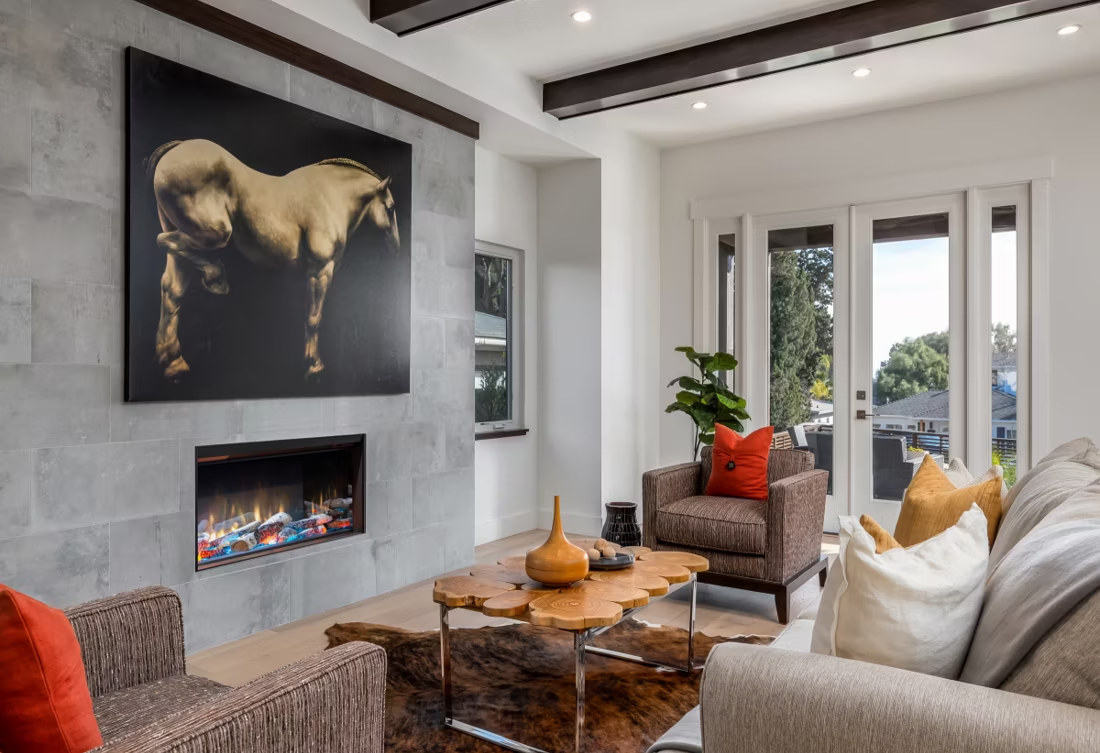
Wall-mounted linear units are popular in Haleiwa's smaller plantation-style cottages and condos because they mount flush against a wall without eating floor space and read well in listing photos for vacation rentals. Mantel package units work well in main living areas where a more traditional look is wanted. For older plantation homes with existing built-in shelving or a non-functional masonry opening, an insert-style unit sized to fit that opening is often the cleanest retrofit. A local dealer can measure the space and recommend a size.
Why not just install a gas fireplace instead?
Gas fireplaces are uncommon in Haleiwa, and for good reason—there's no natural gas utility infrastructure on this part of Oahu, so any gas unit would run on propane, requiring tank storage, delivery, and venting through a roof or wall in a humid, salt-air environment that's hard on metal components. For a climate with almost no heating need, that's a lot of infrastructure for an occasional-use feature. Electric units skip all of it: no tank, no venting, no combustion byproducts, and far simpler for vacation rental insurance and fire code compliance.
What about a real wood-burning fireplace?
Wood-burning fireplaces aren't really viable in Haleiwa—there's no cold-weather draw for the heat, and running a chimney through a coastal plantation-style roof adds cost and maintenance for a feature that would rarely get used. Local wood species like eucalyptus, ohia, and koa show up in Haleiwa mostly as furniture, flooring, and decorative accents rather than firewood. If you want the look of a wood fire, several electric inserts use realistic log-set displays that mimic it convincingly without the smoke or upkeep.
Are electric fireplaces a better fit for vacation rentals and older homes here?
Generally, yes. Haleiwa has a large short-term rental market, and property insurers and rental platforms increasingly favor electric units over open-flame appliances because there's no combustion, no gas leak risk, and no chimney fire potential—an easier box to check for coverage. In older plantation-style homes with original wood construction, electric also avoids adding new venting penetrations through a roof or wall that may already have moisture or termite considerations. It's a lower-risk, lower-maintenance choice on both fronts.
How much maintenance does an electric fireplace need?
Very little, which is part of the appeal in a humid coastal climate—there's no chimney to sweep and no annual combustion inspection required. Occasional dusting of the unit, an inspection of the power cord or wired connection, and replacing the LED flame bulb or light strip every several years (depending on the model) covers most of it. It's a meaningfully lower-upkeep option than the annual servicing a gas or wood appliance would require, if either were even practical here.
Do electric fireplaces actually produce heat?
Yes—most put out around 4,800–5,000 BTUs from a standard outlet, which comfortably warms a bedroom, office, or den as a comfort-zone heater. What they won't do is carry a whole house the way wood, gas, or pellet can. Think of electric as ambiance-first with honest supplemental heat: flames on with no heat in July, flames plus warmth in January.
Can I put a TV above my fireplace?
Yes—with an asterisk. Fireplaces are hot and TVs don't like heat. Either put a mantel between them to deflect rising warmth, or choose a fireplace with heat-management technology that creates a cool zone on the wall above—the wall stays around 125 degrees, barely warm, while the room still gets full heat. If you like clean lines and don't want a mantel, heat management is the answer.
How much should I budget for a fireplace?
For an average home—covering the fireplace, the vent pipe, and basic installation—a budget between $3,900 and $5,500 gives you a lot of options across wood, gas, and pellet. By the time you add finish work, gas line, and electrical, the average complete installation lands between $5,000 and $12,000 all-in. In a remodel or new build, a good rule is to put about 2.5% of the total project cost toward the fireplace.
Can I install a fireplace myself?
If you're putting a fire in your house on purpose, it's best to work with an expert. Unless you're genuinely experienced in framing, gas line, vent pipe, and the national code on clearances to combustibles, have a professional do it—and ideally the same company that sells you the fireplace, so warranty, service, and liability all live under one roof.
Nearby Dealers
Hearth shops serving Haleiwa and the surrounding area. Every listing shows whether it is a WhyFire partner, a dealer we have verified as authorized for the brands we recommend, or a local business carrying hearth products. No manufacturer pays for placement. How we verify dealers →
Island Pool And Supply
Island Pool And Spa Supply
Electric Service in Haleiwa
An electric fireplace's heater draws about 1,500 watts—pennies per hour at local rates.
Hawaiian Electric Co Inc
Find your electric fireplace in Haleiwa.
Tell us a bit about your space and we'll match you with the right electric fireplace or insert, plus a free Project Guide & Parts List, and connect you with a trusted local dealer.
Find Your Fireplace →