
Add fireplace ambiance to your Honolulu home—heat optional.
With practically no heating season and winter lows in the mid-60s, Honolulu doesn't need a heat source. A well-chosen electric fireplace still gives you the look and feel of one—with none of the venting, gas lines, or chimney work.
Every Project Starts From One of These Five Situations
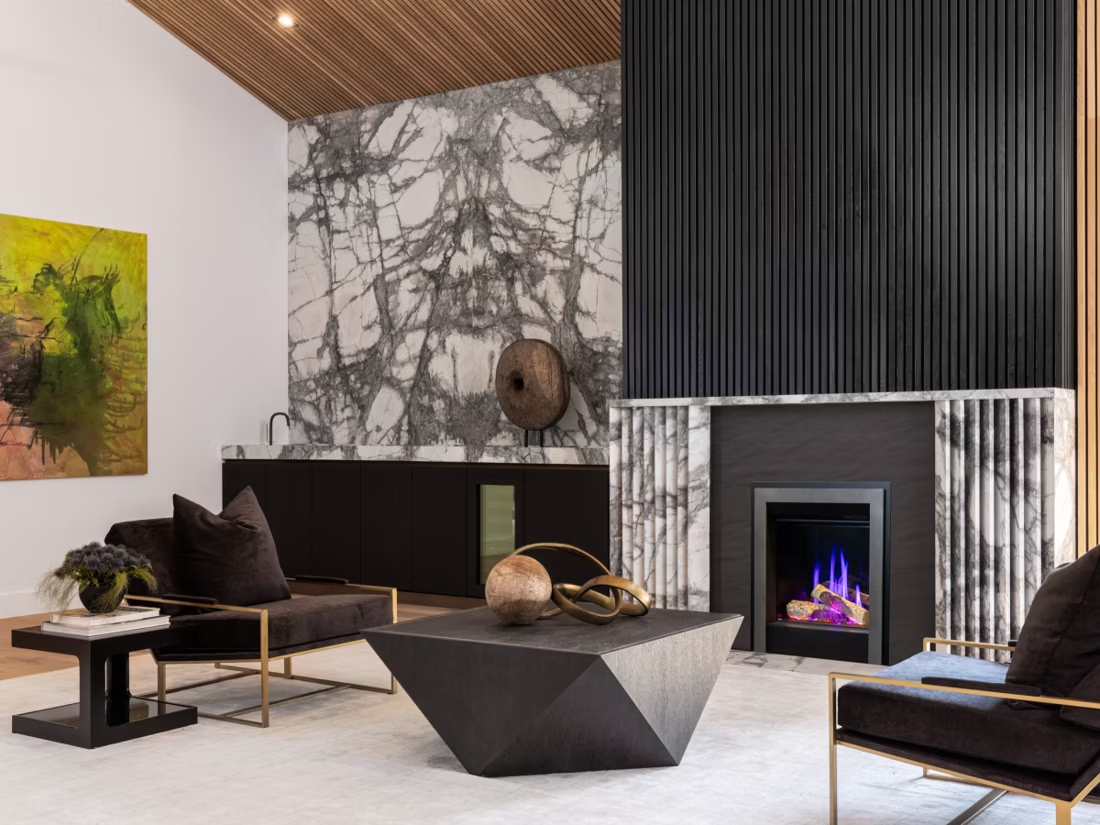
A fireplace for ambiance, not survival heat.
Honolulu sits in climate zone 1A at 249 feet elevation, with an average winter low of 66°F and practically no heating season at all. This is not a market where anyone is choosing a fireplace to survive a cold snap—the closest thing to a 'cold night' here is a Kona low pushing temperatures into the upper 50s a handful of nights a year. What Honolulu homeowners actually want from a fireplace is the visual and emotional anchor of a hearth: a focal point in a living room, a staging feature for a condo remodel, or a warm glow on the rare evening the trade winds die down.
That reality, combined with Oahu's housing stock, makes electric the dominant fireplace fuel here. Much of Honolulu—Kakaako, Ala Moana, Waikiki, downtown—is high-rise condo towers with no chimney, no flue, and HOA rules that make gas line work or masonry modifications a non-starter. An electric insert or wall unit needs only a standard outlet or a dedicated circuit, which is why it's the fireplace option that actually clears building management review. Hawaiian Electric serves the island at a residential rate of roughly $0.43/kWh—among the highest in the country—so the honest advice is to think of the heat function as an occasional-use feature, not a bill-driving habit, and let the flame effect (which draws only a few watts) do the daily work.
Three steps. No salesperson until you're ready.
Tell us about your project
Your zip code, your situation, and the fuel you're leaning toward—or let the answers point you to one.
See what's actually available
The brands dealers within 100 miles genuinely carry—real options, never a catalog mirage.
Get your dealer & Project Guide
A trusted local dealer, plus the free Project Guide & Parts List that names every component of the job.
Frequently Asked Questions
How much does an electric fireplace installation cost in Honolulu?
Plug-in electric fireplace inserts and mantel units run $300 to $1,000 installed and typically need nothing more than an existing outlet—a common choice in Waikiki and Kakaako condo units where no electrical work is needed at all. Built-in wall or linear units that require a dedicated circuit and a licensed electrician typically run $1,500 to $3,500 depending on wall framing and finish work. Because there's no venting, no gas line, and no masonry involved, electric is consistently the least expensive fireplace category to install in Honolulu—a local dealer can tell you within minutes which tier your space needs.
Do I need a permit to install an electric fireplace in Honolulu?
A plug-in electric fireplace that uses an existing outlet generally doesn't require a permit. If your unit needs a new dedicated circuit—common with larger built-in linear fireplaces—that electrical work falls under the Honolulu Department of Planning and Permitting (DPP) and must be pulled by a licensed electrician. Condo owners should also check with their association or building management before any wall modification, since many Oahu high-rises have their own review process for in-unit electrical changes even when the city doesn't require a separate permit.
Will an electric fireplace actually heat my home in Honolulu?
Not in any meaningful way, and it's worth being upfront about that. With practically no heating season and average winter lows around 66°F, Honolulu homes simply don't carry a heating load the way a mainland house does. Most electric fireplace owners here run the unit in flame-only mode—no heat, just the visual—and only occasionally switch on the heater function during a rare Kona low or in an over-air-conditioned room. If you're buying one expecting it to function as a real heat source the way it would in a place like Duluth or Bismarck, you'll be disappointed; if you're buying it for the look of a hearth, it does that job well.
What does it cost to run an electric fireplace on Oahu's electricity rates?
Hawaiian Electric's residential rate runs around $0.43/kWh, roughly three times the national average, so running costs are worth understanding before you buy. A typical electric fireplace heater element draws about 1,500 watts, which works out to roughly $0.64 per hour of heat mode. The flame-effect LED display alone, with the heater off, usually draws under 100 watts—closer to $0.02 to $0.04 per hour. In practice, that means most Honolulu owners can run the ambiance feature freely and should reserve the heat function for genuinely cool nights.
What kind of electric fireplace works best in a Honolulu high-rise condo?
Wall-mounted linear electric fireplaces are the most popular choice in Oahu's condo towers, since they mount flush or recessed into drywall with no venting, no gas line, and no structural changes to the building's exterior—a requirement in most Kakaako and Ala Moana high-rises where the building envelope can't be altered. Smaller mantel-style or freestanding electric units are a good fit for renters or leasehold owners who want something they can take with them. Either way, confirm your unit's amp draw against your condo's electrical panel capacity before buying—a local dealer will check this as part of sizing the unit to your space.
Why is electric so much more common than gas or wood fireplaces in Honolulu?
Natural gas service on Oahu is limited—Hawaii Gas supplies synthetic and propane-based gas rather than piped natural gas, and running a line to a fireplace typically means a tank installation and added cost that most condo buildings won't permit. Wood fireplaces are essentially nonexistent here; there's no cutting season, no cold-weather demand, and building codes plus the tropical climate make wood-burning appliances impractical. Electric sidesteps all of it—no fuel storage, no combustion byproducts, no venting through a shared building envelope—which is why it's the fireplace fuel that actually gets approved in Honolulu's condo-dominated housing stock.
Does Honolulu's humidity or salt air affect an electric fireplace?
It can, particularly for units installed near open lanais or in coastal buildings along Waikiki, Ala Moana, or Diamond Head-facing exposures where salt-laden air circulates indoors. Electric fireplaces have no combustion components to corrode, but the metal trim, internal wiring connections, and heater elements can see accelerated wear in consistently salty, humid air. Choosing a unit with a sealed or corrosion-resistant housing and keeping it away from direct exposure to open windows or lanai doors will meaningfully extend its life. A local dealer familiar with Oahu installs can point you to models that hold up better in coastal units.
Can renters or leasehold condo owners install an electric fireplace in Honolulu?
Yes—this is one of the biggest reasons electric dominates the local market. A significant share of Honolulu's housing is leasehold condos or rentals where structural changes, venting, or gas line work simply aren't allowed. A plug-in electric fireplace or a mantel unit requires no permanent modification and can be removed when you move, making it the only fireplace option that fits both the building rules and the practical reality of not owning the unit long-term. Built-in wall units are still an option for owners planning to stay, but they do require association sign-off in most towers.
How do I pick the right size electric fireplace for my Honolulu home?
Since heat output isn't the deciding factor here the way it would be in a cold climate, sizing an electric fireplace in Honolulu comes down to the room's proportions and how the unit reads visually—a 50-inch linear unit anchors a great room or open-concept living area in a Kakaako high-rise, while a 30- to 40-inch unit suits a bedroom or a smaller Waikiki studio. The main technical constraint is electrical: confirm the unit's amp draw against your outlet or panel capacity, especially in older buildings. A local dealer can walk your space and recommend a size that fits the wall and the room without over- or under-scaling the visual impact.
Can I put a TV above my fireplace?
Yes—with an asterisk. Fireplaces are hot and TVs don't like heat. Either put a mantel between them to deflect rising warmth, or choose a fireplace with heat-management technology that creates a cool zone on the wall above—the wall stays around 125 degrees, barely warm, while the room still gets full heat. If you like clean lines and don't want a mantel, heat management is the answer.
Does an electric fireplace need a vent or chimney?
No—that's its superpower. An electric fireplace needs a wall and an outlet, period. No vent pipe, no gas line, no clearances to design around, which is why it works in bedrooms, offices, apartments, and walls where venting a gas or wood unit would be impractical or impossible. Installation is typically the simplest and least expensive of any fireplace type.
What is an in-home preview and do I need one?
It's a visit where a hearth professional measures your space, confirms the model you picked actually works in your home, and walks the specs—framing, gas line, venting, finish work—before anything is ordered. Some details you just can't know until you see the house. Never make a down payment without one; it's the single most-skipped step that burns buyers.
Can a fireplace actually lower my heating bill?
Yes—by creating a comfort zone. A furnace heats every square foot of the house just to warm the one room you're in; a gas fireplace on low burns roughly a sixth of the gas a typical furnace does. Set the furnace around 55–60 degrees as a baseline, then heat the rooms your family actually uses. Families who heat this way commonly save $20–$60 a month.
Nearby Dealers
Hearth shops serving Honolulu and the surrounding area. Every listing shows whether it is a WhyFire partner, a dealer we have verified as authorized for the brands we recommend, or a local business carrying hearth products. No manufacturer pays for placement. How we verify dealers →
Island Pool And Supply
Electric Service in Honolulu
An electric fireplace's heater draws about 1,500 watts—pennies per hour at local rates.
Hawaiian Electric Co Inc
Find your electric fireplace in Honolulu.
Tell us about your home or condo and we'll match you with a trusted local Oahu dealer and send over a free Project Guide & Parts List—the right unit, the exact parts, and no venting guesswork.
Find Your Fireplace →