
Add fireplace ambiance without adding heat you don't need.
With winter lows hovering around 62°F on the Ewa Plain, West Loch Estate homeowners choose electric fireplaces for the glow, not the BTUs. Get matched with a local dealer who can size and place the right unit.
Every Project Starts From One of These Five Situations
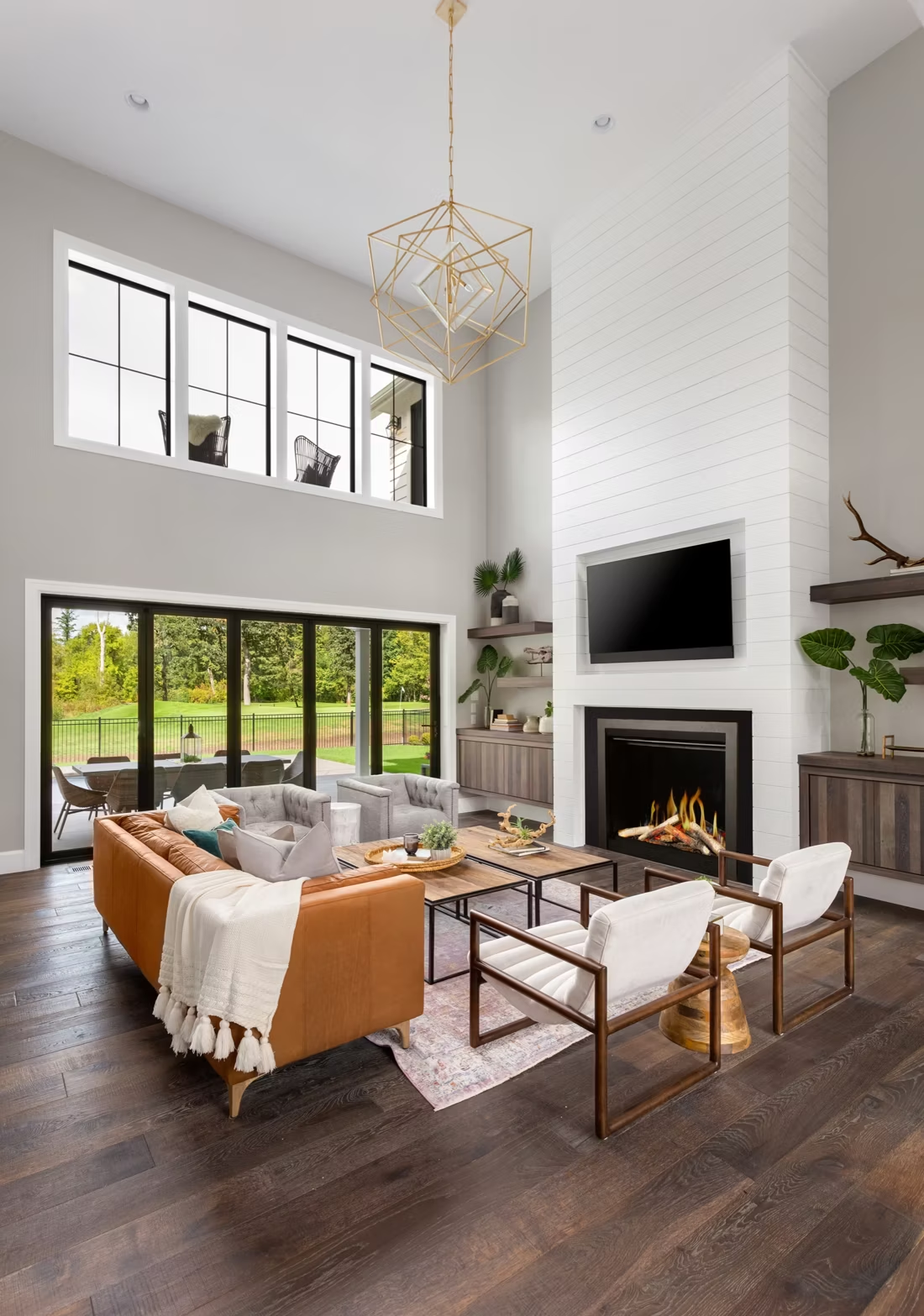
A fireplace for the look, not the warmth.
West Loch Estate sits at just 12 feet above sea level on Oahu's Ewa Plain, overlooking the west loch of Pearl Harbor. The climate here (zone 1A) almost never calls for any heating at all—compare that to a place like Duluth, MN, which endures a long, brutally cold winter that demands heat nearly every day for months—so there's essentially no functional need to heat a home here, ever. Wood stoves and pellet stoves, which depend on real cold-weather demand and available cordwood or pellet supply chains, simply don't have a role in a home like this, which is why those fuels are considered not applicable locally.
Electric fireplaces are different. They don't need combustion air, a chimney, or a permit in most cases, which makes them a clean fit for single-family homes and townhomes throughout the 96706 zip code. Most owners run them for the flame effect alone, with the heating element left off entirely—a smart move given that Hawaiian Electric's residential rate of roughly $0.4287 per kWh is among the highest in the country. A well-chosen unit adds real ambiance to a living room or primary bedroom without ever touching your electric bill in a meaningful way.
Three steps. No salesperson until you're ready.
Tell us about your project
Your zip code, your situation, and the fuel you're leaning toward—or let the answers point you to one.
See what's actually available
The brands dealers within 100 miles genuinely carry—real options, never a catalog mirage.
Get your dealer & Project Guide
A trusted local dealer, plus the free Project Guide & Parts List that names every component of the job.
Frequently Asked Questions
How much does an electric fireplace installation cost in West Loch Estate?
Most electric fireplace projects here fall into one of two categories. A plug-in insert or freestanding unit that simply plugs into an existing outlet typically runs $300 to $900 installed, since there's no wiring or venting involved. A built-in wall unit or a linear electric fireplace set into a custom surround, which usually needs a dedicated 120V or 240V circuit run by a licensed electrician, runs closer to $1,200 to $2,500 depending on the wall construction and finish work. Because there's no chimney, gas line, or combustion venting to account for, electric installs in West Loch Estate are consistently the least expensive fireplace option available.
Does it even make sense to have a fireplace in a climate this warm?
It's a fair question—with an average winter low around 62°F and almost no heating demand, a fireplace here isn't doing any real heating work. What it's doing is aesthetic: the visual warmth of a flame effect in a living room, a bedroom accent wall, or a media console insert. Electric units let West Loch Estate homeowners get that look and feel without the venting, combustion byproducts, or fire risk that come with wood or gas—which is exactly why electric is the standard, practical fuel choice in a climate zone like this one.
Will running an electric fireplace spike my Hawaiian Electric bill?
Not if you use it the way most local owners do. Nearly every electric fireplace lets you run the flame visual independently of the heating element, and at Hawaiian Electric's residential rate of about $0.4287 per kWh, running just the LED flame effect costs a fraction of a cent per hour—negligible on a monthly bill. Turning on the heater element is a different story: most units draw around 1,500 watts on high, which at local rates adds up quickly if left running for hours. In West Loch Estate, the practical move is to buy a unit and simply never engage the heat setting, since there's rarely a day cool enough to want it anyway.
Do I need a permit to install an electric fireplace in West Loch Estate?
A plug-in electric fireplace that uses an existing standard outlet generally doesn't require a permit. If you're installing a built-in unit that needs a new dedicated circuit, an electrical permit through the City and County of Honolulu Department of Planning and Permitting (DPP) is typically required, and the work needs to be done by a licensed electrician. Most local dealers who sell built-in electric fireplaces either handle this coordination directly or can refer you to an electrician who pulls the permit as part of the install.
What style of electric fireplace works best in a West Loch Estate home?
Linear wall-mounted units and recessed built-ins are popular choices in newer West Loch Estate construction, especially set into a media wall or accent wall in the main living space. For renters or homeowners who don't want to modify walls, a freestanding mantel-style electric fireplace offers the same flame effect with zero installation. Since there's no masonry fireplace tradition in most Oahu residential construction the way there is in mainland homes, there's typically no existing firebox to retrofit—it comes down to picking a wall-mount, insert-style, or freestanding unit that fits the room.
Should I consider gas instead of electric?
Gas is a viable option in West Loch Estate—propane is the standard fuel since piped natural gas isn't available this far from Hawaii Gas's synthetic gas network, and a propane gas fireplace can deliver a more realistic flame with real heat output if you ever want it. But gas installation involves a gas line, venting considerations, and a higher install cost, plus ongoing propane costs. For a climate with essentially zero heating need, most West Loch Estate homeowners find electric delivers the same visual payoff with a much simpler installation and no fuel deliveries to manage.
Does Oahu's coastal humidity and salt air affect electric fireplace units?
It can, particularly for homes closer to the water along West Loch itself. Salt air and high humidity can accelerate corrosion on lower-quality electrical components and metal trim over time. Local dealers can point you toward units with sealed electronics and corrosion-resistant hardware, which matters more here than it would in a drier inland climate. If your home is within a block or two of the shoreline, it's worth mentioning that to your installer so they can recommend a model built to hold up in that environment.
Why aren't wood or pellet stoves an option here?
Wood and pellet stoves are built around sustained cold-weather heating demand and a supply chain of cordwood or bagged pellets—neither of which exists in a practical way in West Loch Estate. With almost no need for heat all year and winter lows in the low 60s, there's no functional case for a stove that's designed to hold a house at 68°F through a freezing night. Local hardware stores don't stock cordwood the way a Pacific Northwest supplier would, and there's no cutting-permit infrastructure the way there is in mainland national forests. Electric and gas cover the aesthetic and occasional-warmth needs Oahu homeowners actually have.
Can I put an electric fireplace on my covered lanai?
Most electric fireplaces are built for indoor use and aren't rated for the humidity, temperature swings, and occasional wind-driven rain a covered lanai sees, even in a mostly dry climate like Ewa Plain. Running one there regularly risks corrosion and electrical faults well before its expected lifespan. If you want fire ambiance for an outdoor living space, ask your local dealer about units specifically rated for outdoor or semi-outdoor installation—otherwise, keep the electric fireplace in an interior living space and treat the lanai as a separate project.
Can I put a TV above my fireplace?
Yes—with an asterisk. Fireplaces are hot and TVs don't like heat. Either put a mantel between them to deflect rising warmth, or choose a fireplace with heat-management technology that creates a cool zone on the wall above—the wall stays around 125 degrees, barely warm, while the room still gets full heat. If you like clean lines and don't want a mantel, heat management is the answer.
Does an electric fireplace need a vent or chimney?
No—that's its superpower. An electric fireplace needs a wall and an outlet, period. No vent pipe, no gas line, no clearances to design around, which is why it works in bedrooms, offices, apartments, and walls where venting a gas or wood unit would be impractical or impossible. Installation is typically the simplest and least expensive of any fireplace type.
What is an in-home preview and do I need one?
It's a visit where a hearth professional measures your space, confirms the model you picked actually works in your home, and walks the specs—framing, gas line, venting, finish work—before anything is ordered. Some details you just can't know until you see the house. Never make a down payment without one; it's the single most-skipped step that burns buyers.
Does a fireplace add value to my home?
On average, a fireplace adds back to the home about the same amount you spent installing it. Add the monthly savings from heating the rooms you actually use instead of the whole house—often hundreds of dollars a year—and the value case is strong before you even count what a fire does for how your family uses the room.
Nearby Dealers
Hearth shops serving West Loch Estate and the surrounding area. Every listing shows whether it is a WhyFire partner, a dealer we have verified as authorized for the brands we recommend, or a local business carrying hearth products. No manufacturer pays for placement. How we verify dealers →
Island Pool And Supply
Electric Service in West Loch Estate
An electric fireplace's heater draws about 1,500 watts—pennies per hour at local rates.
Hawaiian Electric Co Inc
Find your electric fireplace in West Loch Estate.
Tell us about your space and we'll match you with a trusted local dealer and send over a free Project Guide & Parts List—the right unit, the exact parts, and a plan for your West Loch Estate installation.
Find Your Fireplace →