
The look of fire, built for Waimalu's year-round warmth.
With winter lows hovering around 62°F, nobody in Waimalu needs supplemental heat. An electric fireplace gives you the ambiance without the BTUs—and a local dealer who can size it right for your home.
Every Project Starts From One of These Five Situations
A climate where heat is optional, and style leads.
Waimalu sits at 223 feet on Oahu's south shore, just inland from Pearl Harbor, in a climate zone (1A) that stays warm virtually all year—for comparison, a place like Duluth, MN faces a long, brutal heating season. There's essentially no season here where a household needs a fireplace to stay warm. Wood stoves and pellet stoves are effectively absent from the local market for exactly that reason; the islands' own hardwoods, koa and ohia, are prized for furniture and canoes, not firewood, and eucalyptus is grown commercially rather than split for cordwood.
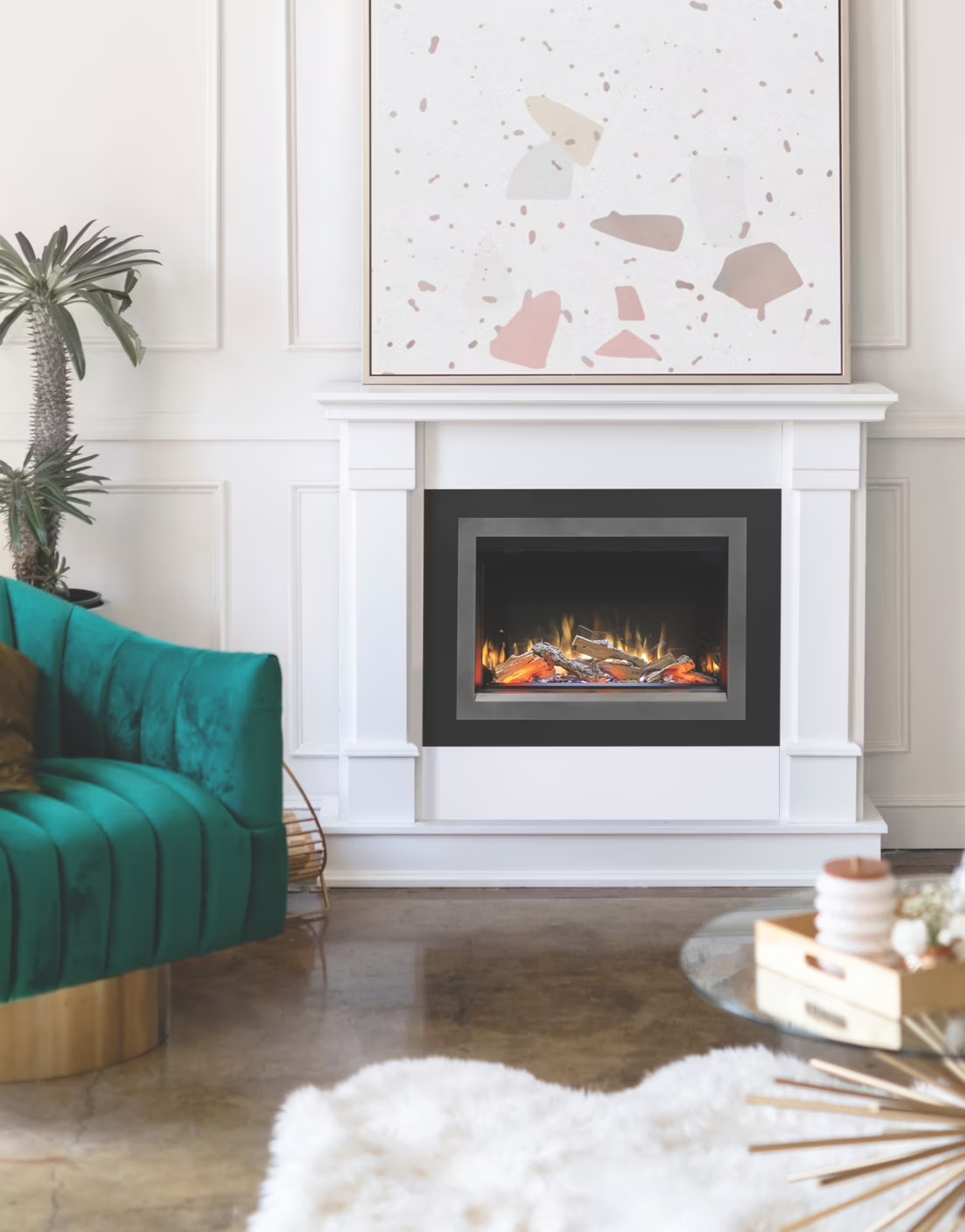
None of that stops people from wanting a fireplace. Electric units are the practical answer: no chimney, no gas line, no combustion byproducts, and no conflict with the trade-wind humidity and salt air that make venting a maintenance headache near the coast. Hawaiian Electric serves Waimalu at a residential rate around $0.4287 per kWh—among the highest in the country—so most local buyers choose units for the visual flame effect first and treat the heater coil as an occasional extra, not a reason to buy.
Three steps. No salesperson until you're ready.
Tell us about your project
Your zip code, your situation, and the fuel you're leaning toward—or let the answers point you to one.
See what's actually available
The brands dealers within 100 miles genuinely carry—real options, never a catalog mirage.
Get your dealer & Project Guide
A trusted local dealer, plus the free Project Guide & Parts List that names every component of the job.
Frequently Asked Questions
How much does an electric fireplace cost to install in Waimalu?
Electric is by far the least expensive fuel to install in Waimalu because there's no venting, no gas line, and often no structural work. A plug-in insert or freestanding unit can run $300 to $900 installed, while a built-in wall unit or mantel-style fireplace that requires a dedicated electrical circuit typically lands between $800 and $2,500 depending on the model and whether an electrician needs to run new wiring. Compare that to a gas fireplace install here, which usually needs a propane line from a Hawaii Gas account and runs several thousand dollars more—electric is the budget-friendly path for most Waimalu condos and single-family homes alike.
Do I need a permit to install an electric fireplace in Waimalu?
In most cases, no. Waimalu falls under the City and County of Honolulu Department of Planning and Permitting, and a simple plug-in electric fireplace on an existing outlet doesn't trigger a building or electrical permit. If your install requires a new dedicated 120V or 240V circuit—common for larger built-in units—an electrician will typically pull an electrical permit as part of the job. There's no venting or chimney inspection to worry about, which is one of the main reasons electric appeals to condo and townhome owners around Waimalu who can't modify exterior walls.
Will an electric fireplace actually heat my Waimalu home?
It can supplement a room, but almost nobody in Waimalu buys one for that reason. With winter lows averaging 62°F and virtually no need for home heating, most owners run their unit in flame-only mode—drawing 30 to 50 watts, basically the cost of a light bulb—and skip the heater element entirely except on the rare cool, rainy night. If you do want the heat function, know that most units are rated around 1,500 watts, which at Hawaiian Electric's residential rate of roughly $0.43/kWh costs about 60 to 65 cents an hour to run.
Why choose electric over gas in Waimalu?
Gas is a legitimate option here—Hawaii Gas supplies synthetic natural gas and propane across Oahu, and gas fireplaces are considered standard for the islands. But gas installs require a fuel line, exterior venting, and typically a bigger upfront cost. Electric skips all of that: no fuel account, no venting through a wall that has to withstand salt air and humidity, and no combustion byproducts to manage indoors. For Waimalu homeowners who want a fireplace purely for atmosphere rather than functional heat, electric is usually the simpler and cheaper route, and it's the only fuel option for most condo and apartment buildings that restrict exterior penetrations.
What's the difference between an electric insert, wall-mount, and mantel package?
An electric insert drops into an existing fireplace opening or a custom-built cabinet—a good fit if you have an old masonry hearth or want a built-in look. A wall-mount unit hangs flush like a flat-screen TV and needs only a nearby outlet or a dedicated circuit, which makes it popular in Waimalu's newer condos and townhomes where wall space is at a premium. A mantel package pairs a freestanding or insert unit with a surrounding cabinet or shelf, giving you a traditional fireplace look without any construction. A local dealer can walk your space and tell you which format fits your walls and outlets without any demolition.
Do I need a special unit for Waimalu's humidity and salt air?
It's worth asking about. Waimalu's proximity to Pearl Harbor means consistent trade-wind humidity and salt-laden air, which can accelerate corrosion on cheap internal components over time—particularly in units installed near lanais, garages, or other semi-exposed spaces. Look for units with sealed electronics and stainless or coated hardware, and have your dealer confirm the unit is rated for the humidity level of the room you're installing it in. For interior living rooms with normal air conditioning, this is less of a concern.
How long do electric fireplaces last, and what maintenance do they need?
Most quality electric fireplaces last 10 to 15 years with minimal upkeep—there's no chimney to sweep and no burner to service. Maintenance is limited to periodically dusting the heater vents, cleaning the glass, and replacing the LED flame bulbs or light strips every few years as they dim, which is usually a homeowner-level task. Since there's no combustion involved, there's also no carbon monoxide risk and no annual inspection requirement, unlike gas units on the island.
Can I install an electric fireplace in a Waimalu condo or apartment?
Yes, and it's one of the most common uses for electric fireplaces on this side of Oahu. Since there's no venting, chimney, or gas line required, a plug-in or wall-mounted unit works in nearly any condo or apartment without triggering HOA review for exterior modifications the way a gas or wood installation would. Just confirm your building's electrical panel can handle a dedicated circuit if you're going with a larger built-in model, and check your lease or HOA rules on wall-mounted fixtures before drilling.
Electric vs. gas—which is right for my Waimalu home?
If you want real, functional heat output for a chilly evening, gas fireplaces run hotter and are considered the standard choice for that purpose here, supplied through Hawaii Gas. If you're after the visual and emotional effect of a fire—the flicker, the glow, the focal point in a living room—without a fuel account, venting, or ongoing combustion, electric is simpler, cheaper to install, and safer for condos. Given that Waimalu's climate rarely calls for supplemental heat at all, most homeowners here choose electric for exactly that reason: it delivers the ambiance they actually want without paying for heat they don't need.
Do electric fireplaces actually produce heat?
Yes—most put out around 4,800–5,000 BTUs from a standard outlet, which comfortably warms a bedroom, office, or den as a comfort-zone heater. What they won't do is carry a whole house the way wood, gas, or pellet can. Think of electric as ambiance-first with honest supplemental heat: flames on with no heat in July, flames plus warmth in January.
Does an electric fireplace need a vent or chimney?
No—that's its superpower. An electric fireplace needs a wall and an outlet, period. No vent pipe, no gas line, no clearances to design around, which is why it works in bedrooms, offices, apartments, and walls where venting a gas or wood unit would be impractical or impossible. Installation is typically the simplest and least expensive of any fireplace type.
How much should I budget for a fireplace?
For an average home—covering the fireplace, the vent pipe, and basic installation—a budget between $3,900 and $5,500 gives you a lot of options across wood, gas, and pellet. By the time you add finish work, gas line, and electrical, the average complete installation lands between $5,000 and $12,000 all-in. In a remodel or new build, a good rule is to put about 2.5% of the total project cost toward the fireplace.
What is an in-home preview and do I need one?
It's a visit where a hearth professional measures your space, confirms the model you picked actually works in your home, and walks the specs—framing, gas line, venting, finish work—before anything is ordered. Some details you just can't know until you see the house. Never make a down payment without one; it's the single most-skipped step that burns buyers.
Nearby Dealers
Hearth shops serving Waimalu and the surrounding area. Every listing shows whether it is a WhyFire partner, a dealer we have verified as authorized for the brands we recommend, or a local business carrying hearth products. No manufacturer pays for placement. How we verify dealers →
Island Pool And Supply
Electric Service in Waimalu
An electric fireplace's heater draws about 1,500 watts—pennies per hour at local rates.
Hawaiian Electric Co Inc
Find your electric fireplace in Waimalu.
Tell us about your space and we'll send your free Project Guide & Parts List—matched to a trusted local Waimalu dealer who can size the right electric unit for your home.
Find Your Fireplace →