
Bring real fireplace ambiance to Iroquois Point—no heat required.
In a coastal Oahu climate where winter lows rarely dip below the low 60s, electric fireplaces deliver the look and glow of real fire without venting, gas lines, or wasted heat output. Find the right unit and connect with a trusted local dealer.
Every Project Starts From One of These Five Situations
A fireplace for ambiance, not survival heat.
Iroquois Point sits at just 6 feet of elevation on Oahu's south shore, part of the Ewa Beach community near Pearl Harbor and the Iroquois Point Navy housing area. With an average winter low of 62°F and practically no need for heating all year, this is about as far from a wood-stove climate as it gets—compare that to Duluth, MN, which logs a long, brutal heating season most winters. Nobody here needs supplemental heat to make it through a January night.
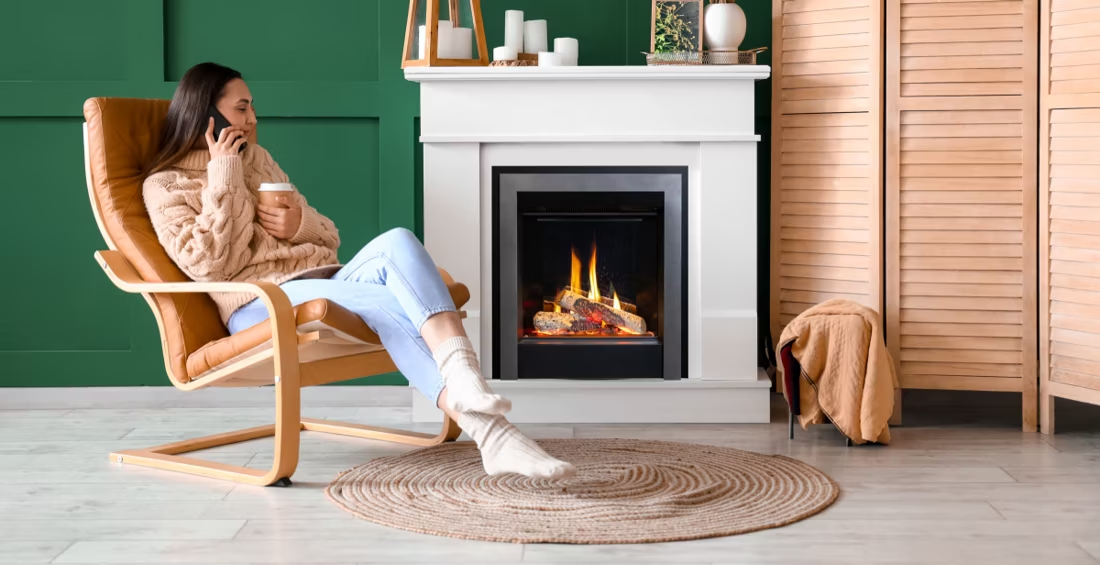
That's exactly why electric fireplaces are the standard choice in Iroquois Point—not because they compete with wood or gas on heat output, but because they deliver the visual warmth of a real fire with zero venting, no chimney, and no combustion byproducts to manage in a humid coastal home. Many Iroquois Point residences are Navy family housing or condos, where a wall-mounted or built-in electric unit installs cleanly without touching a gas line or roof. Hawaiian Electric's residential rate of roughly 43 cents per kWh, among the highest in the country, is worth keeping in mind: look for a unit that lets you run the flame effect on its own, heater off, since most Iroquois Point evenings don't call for extra warmth anyway.
Three steps. No salesperson until you're ready.
Tell us about your project
Your zip code, your situation, and the fuel you're leaning toward—or let the answers point you to one.
See what's actually available
The brands dealers within 100 miles genuinely carry—real options, never a catalog mirage.
Get your dealer & Project Guide
A trusted local dealer, plus the free Project Guide & Parts List that names every component of the job.
Frequently Asked Questions
How much does an electric fireplace installation cost in Iroquois Point?
Because there's no venting, chimney, or gas line to run, electric fireplace installs in Iroquois Point are usually the least expensive hearth project available—typically $400 to $1,500 depending on whether you choose a plug-in freestanding unit, a wall-mounted model needing a dedicated 120V outlet, or a built-in insert that requires an electrician to run new wiring. Plug-in units need no permit or professional install at all; built-in units with new circuits should go through a licensed electrician and a straightforward electrical permit with the Honolulu Department of Planning and Permitting.
Will an electric fireplace actually heat my home?
Not really—and that's fine. With Iroquois Point's average winter low sitting at 62°F and essentially no need for heating all year, most owners run their electric fireplace as a visual feature rather than a heat source. Most models include a small 1,500-watt heater rated for a single room, which is more than enough on the rare trade-wind-cooled evening in the upper 50s, but it isn't sized for or needed for anything resembling the space-heating demands of a mainland home.
Given Hawaiian Electric's rates, what does it actually cost to run?
Hawaiian Electric's residential rate runs about $0.43 per kWh, among the highest in the nation, so operating cost is worth planning for. Running the heater element on a typical 1,500-watt unit costs roughly $0.64 an hour. The flame-effect-only mode, available on most models independent of the heater, draws closer to 30-50 watts—a couple cents an hour. For Iroquois Point, where the heater is rarely needed, running flame-only for ambiance and saving the heater for the occasional cool evening is the most economical way to use the fireplace.
Do I need a permit to install an electric fireplace in Iroquois Point?
Freestanding, plug-in electric fireplaces don't require a permit—they plug into a standard outlet like any appliance. If you're installing a built-in or wall-mounted unit that requires new wiring or a dedicated circuit, that electrical work needs to be pulled through the Honolulu Department of Planning and Permitting (DPP) and should be done by a licensed electrician. Most local dealers can tell you upfront whether your chosen model needs new wiring or works off an existing outlet.
What about wood or gas fireplaces instead of electric?
Wood-burning and pellet stoves are essentially nonexistent in Iroquois Point—there's no cordwood supply culture on this part of Oahu, and native species like koa and ohia are far more valuable as lumber than firewood. Gas fireplaces are available, since Hawaii Gas supplies synthetic natural gas and propane across the island in place of a natural gas utility, and some homeowners choose gas for a real flame with more heat output. But for renters, Navy families, and anyone who wants a clean, code-simple install, electric remains the most common choice in this community.
What types of electric fireplaces are available?
Electric fireplaces come in a few formats: wall-mounted units that hang like a flat-screen TV and need only a nearby outlet, built-in inserts that recess into a wall or existing mantel surround for a more finished look, and freestanding mantel packages that pair a cabinet with a firebox in one furniture piece. For Iroquois Point's condos and Navy housing, wall-mounted units are especially popular because they require no structural changes and can move with a resident at the end of a lease.
Are electric fireplaces a good option for rentals and military housing?
Yes—this is one of the biggest reasons electric fireplaces are the standard choice in Iroquois Point's Navy family housing and condo units. There's no open flame, no combustion byproducts, and no chimney to maintain, and most plug-in models can be uninstalled and taken along at the end of a PCS move or lease without leaving a mark on the wall. It's a lower-commitment option than gas or wood for anyone who doesn't own the property long-term.
How much maintenance does an electric fireplace need?
Maintenance is minimal compared to wood or gas: dust the unit and vacuum the vent grille occasionally, and expect to replace the LED flame-effect bulbs every several years of regular use. There's no annual chimney sweep, no gas line inspection, and no combustion byproducts to manage—a meaningful difference from the wood-stove upkeep required in colder climates.
How do I choose the right size and style of electric fireplace for my Iroquois Point home?
Since heat output isn't really the deciding factor here, sizing an electric fireplace comes down to the space you want to fill and how it fits your wall or mantel—a 40- to 50-inch wall-mounted unit suits most great rooms and living areas in the community's single-family and townhome layouts, while a smaller 30-inch insert works well in a bedroom or condo living room. A local dealer can help match flame realism, frame style, and features like a heater override to the room and finish you're after.
Do electric fireplaces actually produce heat?
Yes—most put out around 4,800–5,000 BTUs from a standard outlet, which comfortably warms a bedroom, office, or den as a comfort-zone heater. What they won't do is carry a whole house the way wood, gas, or pellet can. Think of electric as ambiance-first with honest supplemental heat: flames on with no heat in July, flames plus warmth in January.
Can I put a TV above my fireplace?
Yes—with an asterisk. Fireplaces are hot and TVs don't like heat. Either put a mantel between them to deflect rising warmth, or choose a fireplace with heat-management technology that creates a cool zone on the wall above—the wall stays around 125 degrees, barely warm, while the room still gets full heat. If you like clean lines and don't want a mantel, heat management is the answer.
Does a fireplace add value to my home?
On average, a fireplace adds back to the home about the same amount you spent installing it. Add the monthly savings from heating the rooms you actually use instead of the whole house—often hundreds of dollars a year—and the value case is strong before you even count what a fire does for how your family uses the room.
Can a fireplace actually lower my heating bill?
Yes—by creating a comfort zone. A furnace heats every square foot of the house just to warm the one room you're in; a gas fireplace on low burns roughly a sixth of the gas a typical furnace does. Set the furnace around 55–60 degrees as a baseline, then heat the rooms your family actually uses. Families who heat this way commonly save $20–$60 a month.
Nearby Dealers
Hearth shops serving Iroquois Point and the surrounding area. Every listing shows whether it is a WhyFire partner, a dealer we have verified as authorized for the brands we recommend, or a local business carrying hearth products. No manufacturer pays for placement. How we verify dealers →
Island Pool And Supply
Electric Service in Iroquois Point
An electric fireplace's heater draws about 1,500 watts—pennies per hour at local rates.
Hawaiian Electric Co Inc
Find your electric fireplace in Iroquois Point.
Tell us a bit about your home and we'll match you with the right electric fireplace or insert—plus a free Project Guide & Parts List with the exact parts and your recommended local dealer.
Find Your Fireplace →