
Real ambiance, zero venting, for Fairfax County homes.
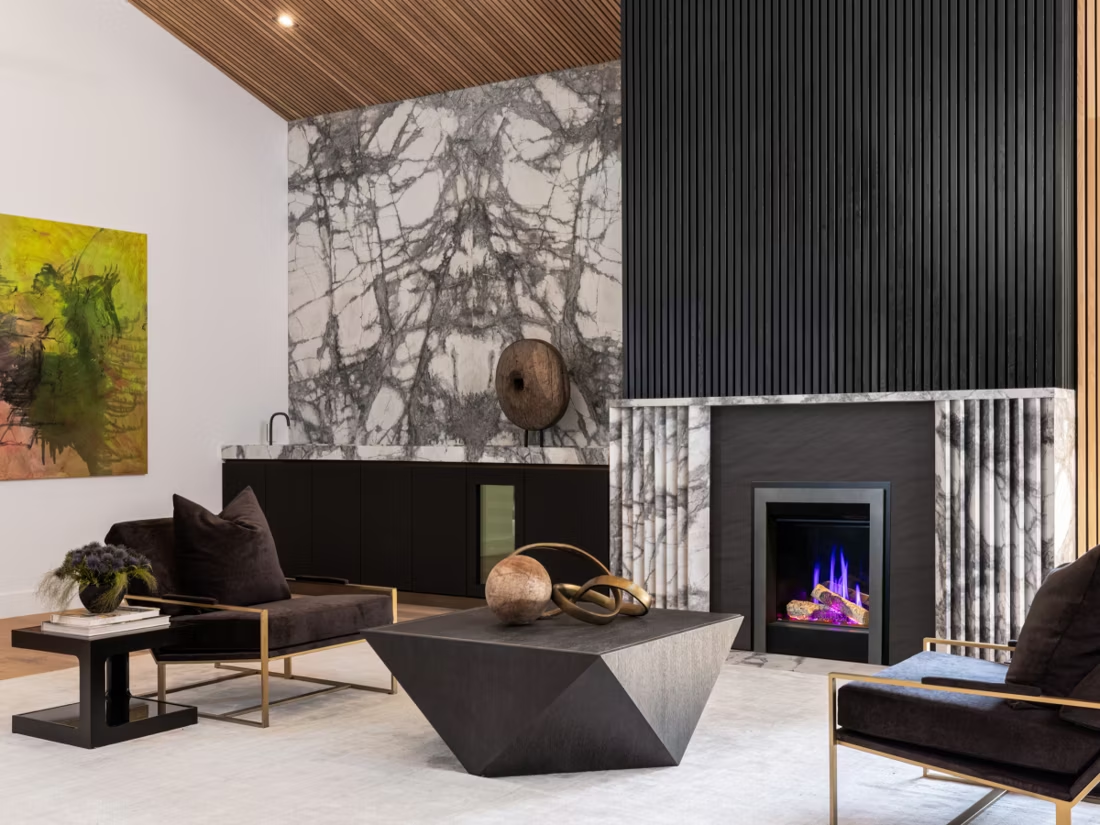
From high-rise condos in Tysons to townhomes in Fair Lakes and colonials in Great Falls, electric is the fireplace option that works almost anywhere in Fairfax County—no chimney, no gas line, no masonry required. Find the right unit and connect with a trusted local dealer.
Every Project Starts From One of These Five Situations
Dense living calls for straightforward heat.
Fairfax County is home to more than 1.16 million people living in everything from Tysons and Reston high-rises to garden-style condos in Annandale and Springfield, townhouse clusters in Fair Oaks and Centreville, and single-family homes in Vienna, McLean, and Great Falls. That housing mix matters for fireplace choice. In climate zone 4A, with an average winter low around 25°F and a moderate-length heating season, Fairfax winters are real but moderate—cold enough to want supplemental warmth in a family room, but nowhere near the sustained sub-zero stretches that push a household toward wood as primary heat. Most homes here already run on a central heat pump or gas furnace, with an electric fireplace layered in for zone heat and atmosphere rather than to carry the whole house.
Electric also solves a problem that's specific to Fairfax's density: a large share of the county's housing stock—condo towers, HOA-governed townhome communities, and many newer subdivisions—either prohibits wood-burning appliances outright or makes venting a gas unit through a shared wall or high-rise facade impractical. A plug-in or built-in electric fireplace sidesteps that entirely. It draws on standard household power (Dominion Energy serves most of the county), requires no combustion air, and satisfies HOA architectural committees that would reject a masonry chimney or direct-vent gas box. Oak, hickory, and maple firewood is still available regionally for the older homes in Vienna and Great Falls that have working masonry fireplaces, but new wood installs are rare across the county today—electric has become the practical default for renovations and new builds alike.
Three steps. No salesperson until you're ready.
Tell us about your project
Your zip code, your situation, and the fuel you're leaning toward—or let the answers point you to one.
See what's actually available
The brands dealers within 100 miles genuinely carry—real options, never a catalog mirage.
Get your dealer & Project Guide
A trusted local dealer, plus the free Project Guide & Parts List that names every component of the job.
Frequently Asked Questions
How much does an electric fireplace installation cost in Fairfax County?
Plug-in electric inserts and freestanding stoves start around $300–$800 installed, since most just need an existing standard outlet and no permit. Built-in linear electric fireplaces—the kind recessed into a wall with a custom surround, common in Tysons and Reston renovations—typically run $2,000–$5,000 including a dedicated 120V or 240V circuit run by a licensed electrician, drywall or millwork finishing, and the unit itself. Costs run higher in high-rise condos where an electrician has to route conduit through concrete or coordinate with building management, and lower in single-family homes with easy attic or basement access to the wall cavity.
Do I need a permit to install an electric fireplace in Fairfax County?
A simple plug-in unit that draws from an existing outlet generally doesn't require a permit. If you're installing a built-in electric fireplace that needs a new dedicated circuit, Fairfax County's Department of Land Development Services requires an electrical permit for that circuit work, pulled by a licensed electrician. There's no gas line, no venting, and no chimney inspection to coordinate—which is a large part of why electric projects move faster than gas or wood conversions in the county's permitting process.
Can I install an electric fireplace in my condo or townhouse if my HOA restricts fireplaces?
Usually yes, and it's often the only fireplace option HOAs in Fairfax County will approve. Most association bylaws in Tysons condo towers, Reston Town Center buildings, and townhome communities in Fair Lakes or Franklin Farm restrict or ban wood-burning units and exterior venting for gas fireplaces, since venting through a shared wall or facade affects neighboring units. An electric fireplace needs no exterior penetration and no venting, so it typically clears architectural review without issue. Always confirm with your specific HOA before purchase, but electric is the path of least resistance in nearly every multi-family situation in the county.
Can an electric fireplace actually heat a room in Fairfax County winters?
For supplemental heat, yes. A typical 1,500-watt electric fireplace puts out around 5,000 BTU, enough to noticeably warm a single family room or bedroom on a 25°F night—Fairfax County's average winter low. It's not designed to replace your central heat pump or furnace for the whole house, and given the county's moderate-length heating season, most residents use electric fireplaces the way they're intended: zone heat for the room you're actually sitting in, paired with central HVAC for the rest of the house. If you're hoping to heat an entire open-concept main level, talk to a local dealer about a larger insert or a secondary unit rather than expecting one fireplace to do it all.
Should I get an electric fireplace or a gas fireplace in Fairfax County?
Gas is a standard, widely available option in Fairfax County—natural gas service reaches most of the county through Washington Gas and Dominion Energy Gas territory, and a direct-vent gas fireplace gives you real flame and higher heat output. But gas requires venting to the exterior and a gas line, which is often not feasible or not permitted in condos, high-rises, and some HOA communities. Electric skips both requirements entirely. If you have gas service and an exterior wall to vent through, and you want stronger heat output, gas is worth considering. If you're in a condo, a mid-rise, or an HOA community with venting restrictions—or you simply want a lower-cost, lower-maintenance install—electric is the more practical fit.
What electrical work does a built-in electric fireplace need?
Most built-in electric fireplaces in the 1,500-watt range need a dedicated 120V, 20-amp circuit run from your panel—a straightforward job for a licensed electrician in most Fairfax County homes served by Dominion Energy. Larger or multi-function units (some with built-in blowers or oversized flame panels) may call for a 240V circuit instead. Older homes in parts of Falls Church-adjacent neighborhoods or Annandale with dated panels sometimes need a panel capacity check before adding a new circuit. Your local dealer or their electrician will confirm circuit requirements based on the specific model you choose.
Built-in vs. freestanding electric fireplace—which should I choose?
A built-in (recessed or wall-mounted linear) unit gets framed into a wall or media console and looks closest to a real fireplace—the choice most Tysons and Reston condo renovations lean toward. A freestanding electric stove or mantel-style unit needs no construction at all; you plug it in and place it against a wall, which suits renters, townhome owners who want to avoid drywall work, or anyone not ready for a permanent build-out. For a permanent primary living space upgrade, built-in is the more finished result. For flexibility or a lower upfront cost, freestanding is the easier lift.
What features should I look for in an electric fireplace for a Fairfax County home?
Look for a realistic flame technology—modern LED and mirror-reflection units from brands like Dimplex, Napoleon, and SimpliFire look far better than older units did, which matters if the fireplace is a focal point in a main living area. Check the heater's wattage and BTU rating against the room size, confirm whether the flame effect can run independently of the heater (useful in Fairfax's shoulder seasons when you want ambiance without added heat), and if you're in a condo or apartment, verify the unit's amp draw against your outlet or planned circuit before buying. A local dealer can walk you through model differences based on your specific room and electrical setup.
Is a wood-burning fireplace still an option in Fairfax County?
Technically yes, but it's genuinely uncommon for new installations across the county today. Older homes in Vienna, Great Falls, and parts of McLean often have existing masonry fireplaces that still burn oak, hickory, or maple firewood, and those owners keep them going. But new wood-burning installs are rare in Fairfax's dense, HOA-governed housing stock—many communities restrict them outright, and running a code-compliant chimney through a multi-story townhome or condo simply isn't practical. For nearly all new projects in the county, electric or gas are the realistic choices; wood tends to be a legacy feature rather than a new install.
Can I put a TV above my fireplace?
Yes—with an asterisk. Fireplaces are hot and TVs don't like heat. Either put a mantel between them to deflect rising warmth, or choose a fireplace with heat-management technology that creates a cool zone on the wall above—the wall stays around 125 degrees, barely warm, while the room still gets full heat. If you like clean lines and don't want a mantel, heat management is the answer.
Does an electric fireplace need a vent or chimney?
No—that's its superpower. An electric fireplace needs a wall and an outlet, period. No vent pipe, no gas line, no clearances to design around, which is why it works in bedrooms, offices, apartments, and walls where venting a gas or wood unit would be impractical or impossible. Installation is typically the simplest and least expensive of any fireplace type.
Does a fireplace add value to my home?
On average, a fireplace adds back to the home about the same amount you spent installing it. Add the monthly savings from heating the rooms you actually use instead of the whole house—often hundreds of dollars a year—and the value case is strong before you even count what a fire does for how your family uses the room.
Can a fireplace actually lower my heating bill?
Yes—by creating a comfort zone. A furnace heats every square foot of the house just to warm the one room you're in; a gas fireplace on low burns roughly a sixth of the gas a typical furnace does. Set the furnace around 55–60 degrees as a baseline, then heat the rooms your family actually uses. Families who heat this way commonly save $20–$60 a month.
Stove and Fireplace Dealers in Fairfax County
Listings include WhyFire partner dealers, dealers we have verified as authorized for the brands we recommend, and established local businesses that carry hearth products. Every listing shows which one it is. The ones marked Preferred run on WhyFire's software, so they can show you real pricing and book your appointment right here. No manufacturer pays for placement. How we verify dealers →
Aspen Green Gasworks
Cyprus Air, Indoor Comfort
Homeliving Fireplaces
Genesis Chimney Services
Nova Fireplace And Stove
Lawn & Leisure
Fireside Hearth & Home - Manassas
Deckscapes Of Virginia
Cyprus Air
Costello's Hearth & Spa - Rockville
Capitol Chimney Service
Chimney.com
Tri-County Hearth & Patio
The Fireplace Shop
Superior Fireplaces - La Plata
Find your electric fireplace in Fairfax County.
Tell us a bit about your home—condo, townhouse, or single-family—and we'll match you with a trusted local dealer and send over your free Project Guide & Parts List: the right electric fireplace for your space, the circuit and mounting details, and a dealer who can get it installed correctly.
Find Your Fireplace →