
Real Warmth, Zero Venting, Right Here in Difficult Run.
No chimney, no gas line, no exterior venting—just plug in or wire in and go. Find the right electric fireplace or insert for your Fairfax County home, and connect with a trusted local dealer.
Every Project Starts From One of These Five Situations
The practical choice for Fairfax County suburbs.
Difficult Run sits in the Vienna, Oakton, and Herndon corridor of Fairfax County—dense subdivisions, townhome communities, and finished basements where a masonry chimney or a new gas line often isn't practical, and where plenty of HOA covenants restrict exterior venting altogether. Winters here are moderate by national standards (average lows around 23°F, with a heating season similar in length to Richmond, VA), so most homes rely on central HVAC for primary heat and want something simpler for zone warmth in a family room, basement rec space, or bedroom.
That's exactly where electric fireplaces do their best work. There's no chimney to maintain, no cutting permits to chase (there's no national forest access anywhere near this part of Fairfax County, which is part of why wood-burning is genuinely rare here), and no gas line trenching. Virginia Electric & Power Co. (Dominion Energy) serves the area at a residential rate of about 14.09 cents per kWh—competitive enough that running an electric unit for ambiance or supplemental heat costs pennies to a couple of dollars an evening. A good electric insert or built-in unit drops into an existing fireplace opening, a finished basement wall, or new construction with minimal disruption.
Three steps. No salesperson until you're ready.
Tell us about your project
Your zip code, your situation, and the fuel you're leaning toward—or let the answers point you to one.
See what's actually available
The brands dealers within 100 miles genuinely carry—real options, never a catalog mirage.
Get your dealer & Project Guide
A trusted local dealer, plus the free Project Guide & Parts List that names every component of the job.
Frequently Asked Questions
How much does an electric fireplace installation cost in Difficult Run?
A plug-in electric insert or freestanding stove that fits an existing masonry firebox typically runs $400 to $1,200 installed—most of that is the unit itself, since no electrician is required if you're using an existing outlet. Built-in, wall-mounted, or linear electric fireplaces that need a dedicated 20-amp circuit run by a licensed electrician usually land between $1,500 and $3,500, depending on wall framing and how far the circuit has to travel from the panel. Local dealers in the Vienna and Herndon area can tell you which category your project falls into during an in-home or virtual consult.
Do I need a permit to install an electric fireplace in Fairfax County?
A simple plug-in unit that uses an existing outlet doesn't require a permit. If your installer needs to run a new dedicated circuit—common for larger built-in or wall-mounted units—that electrical work requires a permit through Fairfax County's Land Development Services, and it has to be pulled by a licensed electrician. Most hearth dealers who install electric fireplaces either hold an electrical license themselves or subcontract the circuit work and handle the permit as part of the job, so you're not left coordinating it yourself.
Can I put an electric insert into my existing wood-burning fireplace?
Yes, and it's one of the more common projects in older homes around Oakton and Vienna that still have an original masonry fireplace. The electric insert slides into the firebox opening, plugs into a nearby outlet (or a new circuit for larger units), and gives you flame effect and heat without ever needing to build a fire. Since the chimney is no longer being used for exhaust, it's worth having a cap installed to stop drafts and keep animals and weather out—your installer can point you to someone local who handles that.
Will an electric fireplace actually heat a room, or is it just for the look of it?
Most residential electric fireplaces put out 5,000 to 9,000 BTUs, which is enough to comfortably warm a single room up to roughly 300-400 square feet—a family room, a finished basement, or a bedroom. They're not designed to replace central heat for a whole house, and given the moderate winters here (lows typically in the low-to-mid 20s), they don't need to be. Most Difficult Run homeowners use them as targeted supplemental heat on top of existing HVAC, with the added benefit of running the flame effect with the heater switched off for ambiance-only use in shoulder seasons.
What does it cost to run an electric fireplace with Dominion Energy rates?
At Dominion's residential rate of about 14.09 cents per kWh, a typical 1,500-watt electric fireplace heater costs roughly 21 cents per hour to run at full heat—about $1.50 for a full evening of use. Running the unit in flame-only mode (heater off) draws only a small fraction of that, often just a few watts for the LED effect, so leaving it on for ambiance costs next to nothing. That predictable, low operating cost is one of the main reasons electric units are popular for secondary rooms in this area.
Why don't more homes in Difficult Run use wood-burning fireplaces?
It comes down to geography and lot layout more than air quality—there's no advisory or non-attainment issue in this part of Fairfax County. But Difficult Run's neighborhoods are mostly established subdivisions and townhome communities in the Vienna-Oakton-Herndon area, many with HOA rules that limit exterior chimney work or wood smoke, and there's no national forest nearby for the kind of low-cost cutting permits you'd find in more rural parts of Virginia. Firewood has to be purchased rather than cut, which raises the ongoing cost. Between the covenant restrictions and the lack of local firewood access, wood-burning installs are genuinely uncommon here—electric and gas cover the vast majority of hearth projects.
What's the difference between an electric insert, an electric stove, and a wall-mounted electric fireplace?
An electric insert is built to slide into an existing masonry fireplace opening, using the firebox you already have. An electric stove is a freestanding unit styled like a traditional wood stove, useful when there's no existing fireplace but you want that stove silhouette in a corner or against a wall. A wall-mounted or linear electric fireplace is a built-in unit, often recessed into drywall or set into a custom mantel surround, and is the go-to choice for new construction or a basement remodel where you're designing the wall around the fireplace rather than fitting into an existing opening. Fairfax County dealers carry all three; which one fits depends on whether you're retrofitting or building new.
How long do electric fireplaces last, and what maintenance do they need?
A quality electric fireplace typically lasts 10 to 20 years, with the heater element and blower motor being the parts most likely to need eventual replacement. Maintenance is minimal compared to wood or gas: no chimney sweep, no gas line inspection, no creosote to worry about. Occasionally dusting the vents and cleaning the glass front is about all that's required. That low-maintenance profile is a real point in electric's favor for homeowners who want a fireplace without an annual service call.
Electric vs. gas—which is right for my home in Difficult Run?
Gas fireplaces put out more heat and give you a more realistic flame, and natural gas service (through Washington Gas in much of this part of Fairfax County) is available in many Difficult Run-area neighborhoods, making a gas insert or built-in a strong option if you already have a gas line to the house. Electric wins on install simplicity and cost—no venting, no gas line, and no permit in most cases—which makes it the better fit for condos, townhomes, rental properties, or any room where running a gas line isn't practical. Many homeowners here choose electric specifically for a basement or secondary living space and reserve gas, if they install it at all, for the main living area.
Can I put a TV above my fireplace?
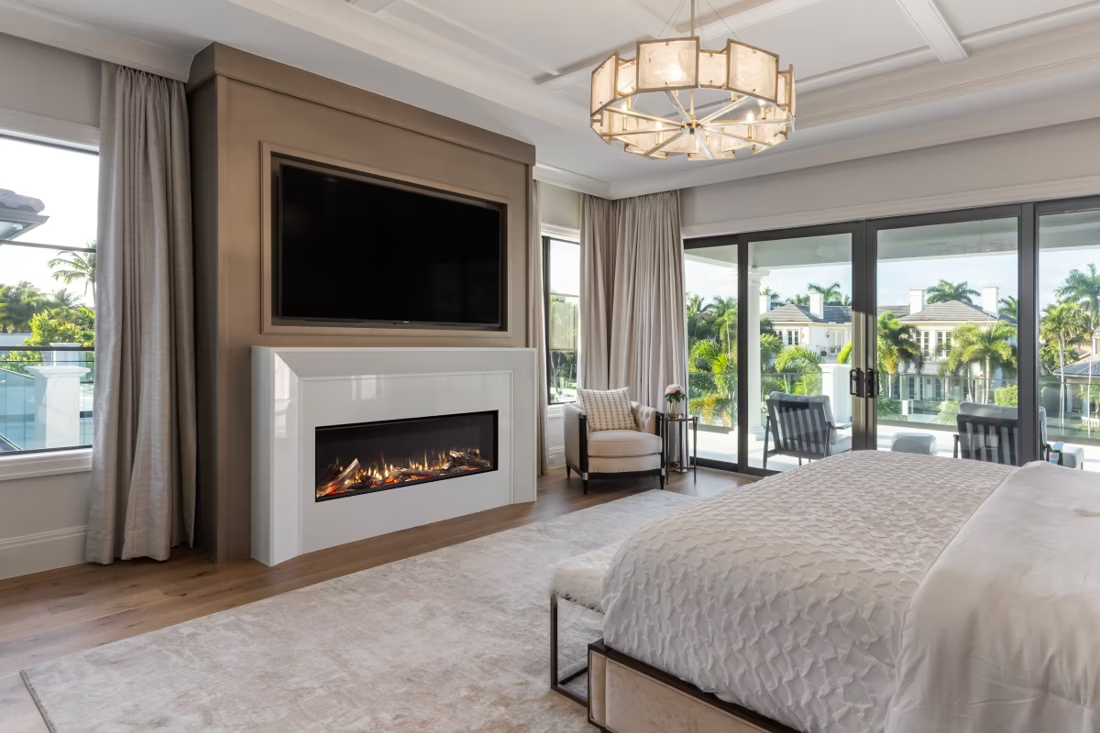
Yes—with an asterisk. Fireplaces are hot and TVs don't like heat. Either put a mantel between them to deflect rising warmth, or choose a fireplace with heat-management technology that creates a cool zone on the wall above—the wall stays around 125 degrees, barely warm, while the room still gets full heat. If you like clean lines and don't want a mantel, heat management is the answer.
Do electric fireplaces actually produce heat?
Yes—most put out around 4,800–5,000 BTUs from a standard outlet, which comfortably warms a bedroom, office, or den as a comfort-zone heater. What they won't do is carry a whole house the way wood, gas, or pellet can. Think of electric as ambiance-first with honest supplemental heat: flames on with no heat in July, flames plus warmth in January.
Can a fireplace actually lower my heating bill?
Yes—by creating a comfort zone. A furnace heats every square foot of the house just to warm the one room you're in; a gas fireplace on low burns roughly a sixth of the gas a typical furnace does. Set the furnace around 55–60 degrees as a baseline, then heat the rooms your family actually uses. Families who heat this way commonly save $20–$60 a month.
How much should I budget for a fireplace?
For an average home—covering the fireplace, the vent pipe, and basic installation—a budget between $3,900 and $5,500 gives you a lot of options across wood, gas, and pellet. By the time you add finish work, gas line, and electrical, the average complete installation lands between $5,000 and $12,000 all-in. In a remodel or new build, a good rule is to put about 2.5% of the total project cost toward the fireplace.
Nearby Dealers
Hearth shops serving Difficult Run and the surrounding area. Every listing shows whether it is a WhyFire partner, a dealer we have verified as authorized for the brands we recommend, or a local business carrying hearth products. No manufacturer pays for placement. How we verify dealers →
Aspen Green Gasworks
Homeliving Fireplaces
Genesis Chimney Services
Lawn & Leisure
Deckscapes Of Virginia
Fireside Hearth & Home - Manassas
Cyprus Air
Costello's Hearth & Spa - Rockville
Cyprus Air, Indoor Comfort
Nova Fireplace And Stove
The Fireplace Shop
Nova Fire Design
Chimney.com
Capitol Chimney Service
Holtzman Propane
Electric Service in Difficult Run
An electric fireplace's heater draws about 1,500 watts—pennies per hour at local rates.
Virginia Electric & Power Co
Find your electric fireplace in Difficult Run.
Tell us a bit about your room and your home's wiring, and we'll match you with a trusted local dealer and send over a free Project Guide & Parts List—the exact unit, mounting or insert specs, and a recommended installer for your Difficult Run project.
Find Your Fireplace →