
The Fireplace That Needs No Chimney At All.
Real ambiance and supplemental warmth for Great Falls homes—no gas line, no venting, no masonry required. Find the right unit and connect with a trusted local dealer.
Every Project Starts From One of These Five Situations
Ambiance and heat, without the venting headache.
Great Falls sits in Fairfax County at just 377 feet elevation, with average winter lows around 23°F and roughly 4,931 heating degree days a year. That's a meaningfully milder heating load than true cold-climate markets like Burlington, VT or Bismarck, ND—which means most Great Falls homes don't need a wood-burning primary heat source. They need something that adds warmth and atmosphere to a room without demanding a chimney, a gas line, or a permit fight.
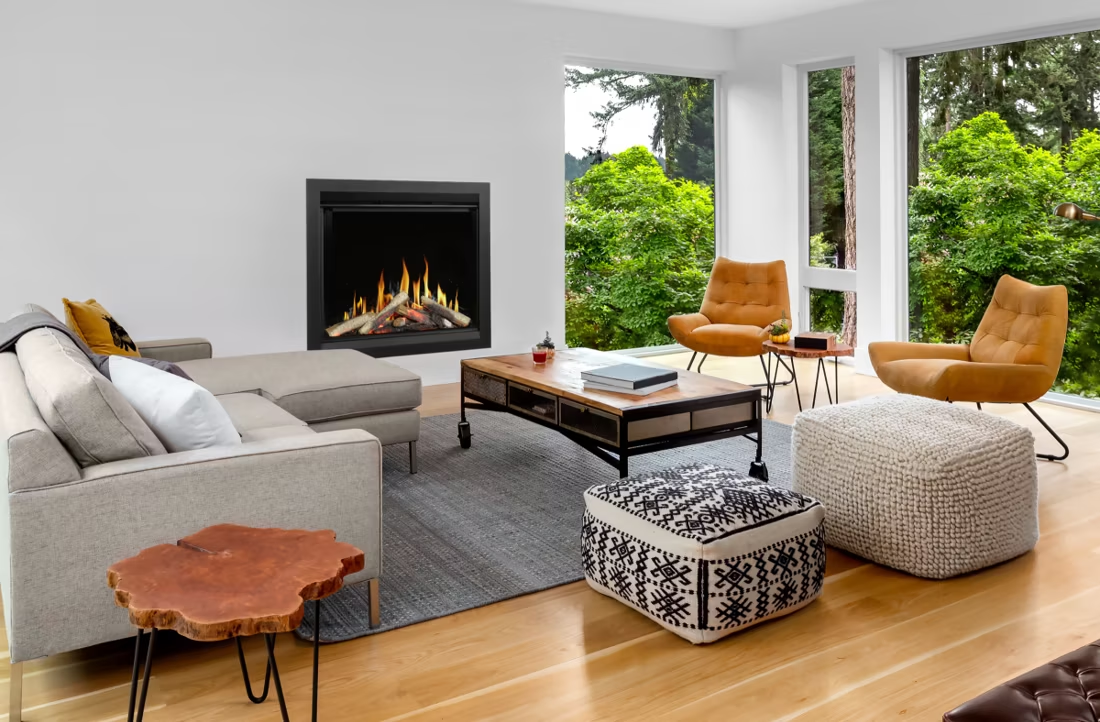
That's where electric fireplaces fit. Great Falls is full of finished basements, sunroom additions, primary suite remodels, and media walls in large estate-style homes on wooded lots—spaces where running a masonry chimney or extending a gas line isn't practical. An electric insert or wall unit plugs into a standard or dedicated circuit, delivers instant flame effect and supplemental heat, and installs in an afternoon. With Virginia Electric & Power Co. residential rates around 14.09 cents per kWh, running one on cool evenings adds only pennies to the bill.
Three steps. No salesperson until you're ready.
Tell us about your project
Your zip code, your situation, and the fuel you're leaning toward—or let the answers point you to one.
See what's actually available
The brands dealers within 100 miles genuinely carry—real options, never a catalog mirage.
Get your dealer & Project Guide
A trusted local dealer, plus the free Project Guide & Parts List that names every component of the job.
Frequently Asked Questions
How much does it cost to install an electric fireplace in Great Falls?
Costs vary a lot by unit type. A plug-in electric insert that drops into an existing fireplace opening or media cabinet typically runs $150 to $600 installed, since it uses an existing outlet and needs no electrical work. A built-in or wall-mounted linear electric fireplace—the kind commonly used in Great Falls basement remodels and primary suite additions—usually runs $1,500 to $3,000 once you include a licensed electrician running a dedicated 20-amp circuit and any surrounding millwork or tile. Larger recessed multi-sided units in new construction can run higher depending on framing and finish work.
Will an electric fireplace actually heat a room, or is it just for looks?
Most electric fireplaces include a built-in fan heater, typically 4,600 to 5,200 BTUs, enough to noticeably warm a single room of 300 to 400 square feet. Given Great Falls's relatively moderate heating load compared to colder regions, an electric unit works well as supplemental heat in a den, sunroom, or basement—taking the chill off on a 30-degree evening without running the central furnace harder. It's not sized to replace whole-home heating, but as a zone heater for the room you're actually sitting in, it does real work.
Do I need a permit to install an electric fireplace in Great Falls?
A plug-in electric insert that uses an existing wall outlet generally doesn't require a permit. A built-in wall unit that needs a new dedicated circuit does require electrical work pulled through Fairfax County's Land Development Services, and it should be done by a licensed electrician regardless of permit requirements—running a dedicated 20-amp circuit for a heater draw isn't a DIY breaker-box job. Local dealers who install built-in units typically coordinate the electrical permit as part of the project.
Electric vs. gas fireplace—which makes more sense for my Great Falls home?
Gas is the standard choice in this area for homes that want a primary or near-primary heat source with real flame and higher BTU output, and natural gas service reaches much of Great Falls. Electric makes more sense when you want flame ambiance and light supplemental warmth without adding a gas line or venting—common in finished basements, home offices, and additions where extending gas service is expensive or impractical. Many Great Falls homeowners end up with both: gas in the main living area, electric in a secondary space like a basement or bedroom.
Why don't more homes in Great Falls use wood-burning fireplaces?
Wood is genuinely uncommon here as a heating choice, even though oak, hickory, and maple are all readily available regionally. Great Falls's close-set wooded lots, HOA covenants in many neighborhoods, and the lack of any nearby public land cutting permits make wood-burning installs and firewood sourcing more friction than most homeowners want to deal with. Electric fills that gap well—it delivers the visual and emotional appeal of a fireplace without smoke, ash, chimney maintenance, or neighbor complaints about drift smoke on a quiet cul-de-sac.
What types of electric fireplaces are available?
There are four main formats: plug-in inserts that slide into an existing fireplace opening or cabinet, wall-mounted units that hang like a flat-screen TV, built-in linear units recessed into a framed wall for a seamless media-wall look, and freestanding electric stoves styled like a traditional wood stove. For Great Falls basement finishes and additions, built-in linear units are especially popular because they can be sized to match a specific wall and finished with tile or shiplap surrounds.
What will an electric fireplace add to my power bill?
At Virginia Electric & Power Co.'s residential rate of about 14.09 cents per kWh, a typical 1,500-watt electric fireplace running on full heat costs roughly 21 cents an hour. Used for a few hours most evenings through the cooler months, that adds up to somewhere around $10 to $20 a month—noticeably less than running a whole-house furnace harder, which is exactly why it works well as supplemental zone heat rather than a primary system.
What are the best electric fireplace brands to look for?
Dimplex, Napoleon, Touchstone, and SimpliFire are the brands most local dealers in the DC metro area carry and stand behind, with realistic flame effects and heaters rated for continuous use rather than occasional novelty units sold at big-box stores. A local dealer can also show you the difference in flame technology in person—LED ember bed and mirror-reflection units look dramatically better than older-generation electric flame effects, and that's hard to judge from a photo online.
Can an electric fireplace be my only heat source in a Great Falls addition or sunroom?
For most additions, no—Great Falls's winter lows averaging 23°F mean a sunroom or bump-out addition still needs a real heating plan, whether that's an extended HVAC run or a mini-split. An electric fireplace is a great complement to that heat source for ambiance and quick warmth on the coldest evenings, but at 4,600 to 5,200 BTUs it's not sized to carry a room through a full winter on its own the way a gas system or ducted heat would.
Can I put a TV above my fireplace?
Yes—with an asterisk. Fireplaces are hot and TVs don't like heat. Either put a mantel between them to deflect rising warmth, or choose a fireplace with heat-management technology that creates a cool zone on the wall above—the wall stays around 125 degrees, barely warm, while the room still gets full heat. If you like clean lines and don't want a mantel, heat management is the answer.
How much does an electric fireplace cost to run?
With the heater on, a typical unit draws about 1,500 watts—at average electric rates that's roughly 20 cents an hour. Run the flame effect alone and it costs pennies; the flames are LED-driven and use about as much power as a light bulb. There's no pilot light, no fuel delivery, and essentially no maintenance.
Does a fireplace add value to my home?
On average, a fireplace adds back to the home about the same amount you spent installing it. Add the monthly savings from heating the rooms you actually use instead of the whole house—often hundreds of dollars a year—and the value case is strong before you even count what a fire does for how your family uses the room.
Can a fireplace actually lower my heating bill?
Yes—by creating a comfort zone. A furnace heats every square foot of the house just to warm the one room you're in; a gas fireplace on low burns roughly a sixth of the gas a typical furnace does. Set the furnace around 55–60 degrees as a baseline, then heat the rooms your family actually uses. Families who heat this way commonly save $20–$60 a month.
Nearby Dealers
Hearth shops serving Great Falls and the surrounding area. Every listing shows whether it is a WhyFire partner, a dealer we have verified as authorized for the brands we recommend, or a local business carrying hearth products. No manufacturer pays for placement. How we verify dealers →
Aspen Green Gasworks
Genesis Chimney Services
Lawn & Leisure
Cyprus Air
Costello's Hearth & Spa - Rockville
Homeliving Fireplaces
The Fireplace Shop
Chimney.com
Deckscapes Of Virginia
Capitol Chimney Service
Chelsea's Chimney
Cyprus Air, Indoor Comfort
Fireside Hearth & Home - Manassas
Holtzman Propane
Bodmer's Stoves And Pottery
Electric Service in Great Falls
An electric fireplace's heater draws about 1,500 watts—pennies per hour at local rates.
Virginia Electric & Power Co
Find your electric fireplace in Great Falls.
Tell us a bit about your space and we'll put together a free Project Guide & Parts List for your electric fireplace project—the right unit, the exact parts, and a trusted local dealer near Great Falls to install it.
Find Your Fireplace →