
No Flue, No Fuss—Electric Heat for West Springfield Homes.
Real ambiance and zone heat for the townhomes, condos, and split-levels of West Springfield—no chimney, no gas line, no HOA fight. Find the right unit and connect with a trusted local dealer.
Every Project Starts From One of These Five Situations
Built for townhomes, condos, and HOA rules.
West Springfield sits inside Fairfax County between the Beltway and the Fairfax County Parkway, a community of 1960s-through-1980s split-levels, colonials, townhomes, and condo clusters. With winters averaging a 23°F low and about 4,931 heating degree days, this is a moderate mid-Atlantic climate—nowhere near the six-month burn season of a place like Burlington, VT, but cold enough that a lot of local families want real supplemental warmth in the family room or primary bedroom without opening up a wall for a chimney. That's a big part of why wood and pellet appliances rate as not-applicable for this area: most West Springfield properties are governed by HOAs that restrict exterior venting, chimney additions, and solid-fuel storage, and many condo and townhome units simply don't have a masonry chimney to begin with.
Electric fills that gap cleanly. A plug-in insert or a built-in wall unit delivers instant, adjustable heat and a realistic flame effect with zero emissions, zero venting, and none of the code hurdles that come with a gas line or a chimney sweep. Virginia Electric & Power Co (Dominion Energy) serves West Springfield at roughly 14.09 cents per kWh, which keeps the operating cost of zone-heating a single room with electric resistance heat reasonable for occasional use—this is a supplemental-heat and ambiance play here, not a whole-home replacement for a gas furnace.
Three steps. No salesperson until you're ready.
Tell us about your project
Your zip code, your situation, and the fuel you're leaning toward—or let the answers point you to one.
See what's actually available
The brands dealers within 100 miles genuinely carry—real options, never a catalog mirage.
Get your dealer & Project Guide
A trusted local dealer, plus the free Project Guide & Parts List that names every component of the job.
Frequently Asked Questions
How much does an electric fireplace installation cost in West Springfield?
A cord-and-plug electric insert or freestanding unit typically runs $300 to $1,500 installed, since it just needs an existing 120V outlet and no electrical or structural work. A built-in wall unit or a mantel package with a dedicated 20-amp circuit runs higher, usually $1,500 to $4,000, once you factor in an electrician to run a new circuit and any carpentry to frame the surround. Converting an existing masonry fireplace to an electric insert is usually on the lower end since the surround is already built—you're just fitting the unit and plugging it in or adding a nearby outlet.
Do I need a permit to install an electric fireplace in West Springfield?
In most cases, no. A plug-in electric insert or freestanding unit doesn't require a permit through Fairfax County Land Development Services because there's no gas line, no venting, and no structural change involved. If you're adding a dedicated electrical circuit for a built-in unit, that portion of the work needs to be done by a licensed electrician and may require an electrical permit, but the fireplace installation itself typically doesn't trigger county inspection the way a wood stove or gas fireplace would.
Electric vs. gas fireplace—which makes more sense for my West Springfield home?
Gas is the better choice if you want a fireplace that can meaningfully heat a room during a cold snap and you already have or can run a gas line—many West Springfield homes on natural gas service can support a direct-vent gas insert. Electric makes more sense if you're in a townhome or condo with HOA restrictions on venting, you want a fireplace in a room where running gas line or venting isn't practical (a bedroom, a basement rec room, an interior wall), or you simply want ambiance and modest supplemental heat without any combustion, carbon monoxide sensor, or annual gas service inspection to think about.
Will my electric fireplace still work if the power goes out?
No—electric fireplaces run entirely on household current, so an outage takes them offline along with everything else on the circuit. This matters in West Springfield during the ice storms and downed-tree outages that occasionally hit Fairfax County each winter. If backup heat during outages is a priority, electric shouldn't be your only heat source; a gas fireplace with a standing pilot or battery-backup ignition is the better hedge for storm season, with electric handling day-to-day ambiance and zone heat the rest of the time.
Can I put an electric fireplace in a West Springfield condo or townhome with HOA restrictions?
Yes, and it's one of the main reasons electric is popular here. Because plug-in and most built-in electric units don't require venting, a chimney, or exterior modifications, they generally sail through HOA architectural review where a wood stove or gas fireplace conversion would need approval for venting or flue penetrations. Always check your specific community's covenants before cutting into a wall for a built-in unit, but a freestanding or insert-style electric fireplace is almost always allowed outright.
How much does it cost to run an electric fireplace in West Springfield?
At Dominion Energy Virginia's residential rate of about 14.09 cents per kWh, a typical 1,500-watt electric fireplace running on high costs roughly 21 cents per hour. Most owners run the flame effect without heat much of the time (a few watts, essentially free) and use the heater setting only when they want to warm the room, which keeps monthly cost well below what the same square footage would cost to heat with a gas furnace running longer cycles.
What's the best type of electric fireplace for a moderate climate like West Springfield's?
Since winters here average a 23°F low rather than the sustained sub-zero stretches you'd see in a place like Fargo, ND, electric fireplaces work well as zone heaters rather than a home's primary heat source. A unit with a built-in thermostat and a fan-forced heater in the 1,500-watt range comfortably takes the chill off a family room or bedroom on a 30-degree evening. For homes that already run a gas or heat pump system as primary heat, an electric insert or built-in unit is best thought of as targeted comfort—heat the room you're in, let the setback thermostat handle the rest of the house.
Can I convert my existing wood-burning fireplace to electric?
Yes, and it's a straightforward project for the older homes in West Springfield built with a wood-burning masonry fireplace, often finished in oak, hickory, or maple trim original to the house. An electric insert slides into the existing firebox opening, and if there's no outlet already behind the fireplace, an electrician can add one. Unlike a wood-to-gas conversion, there's no chimney liner, gas line, or venting to worry about—the existing masonry opening just becomes the frame for the new unit.
Why doesn't Find My Fireplace list wood or pellet options for West Springfield?
Wood and pellet appliances rate as not applicable for most West Springfield properties because the housing stock here—townhomes, condos, and HOA-governed developments—generally restricts exterior venting and solid-fuel storage, and a meaningful share of units don't have a masonry chimney to begin with. A small number of older single-family homes with existing wood-burning fireplaces are exceptions, but for the broader West Springfield market, electric and gas are the realistic paths to a working fireplace, which is why this page focuses on electric.
Can I put a TV above my fireplace?
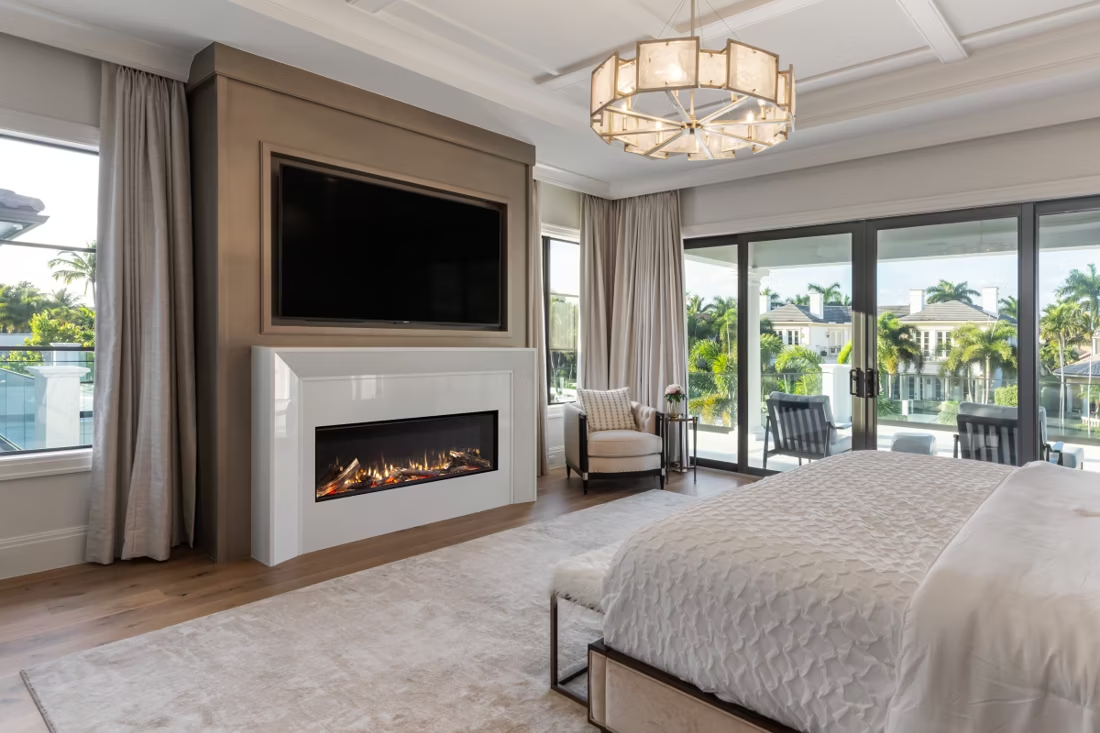
Yes—with an asterisk. Fireplaces are hot and TVs don't like heat. Either put a mantel between them to deflect rising warmth, or choose a fireplace with heat-management technology that creates a cool zone on the wall above—the wall stays around 125 degrees, barely warm, while the room still gets full heat. If you like clean lines and don't want a mantel, heat management is the answer.
Does an electric fireplace need a vent or chimney?
No—that's its superpower. An electric fireplace needs a wall and an outlet, period. No vent pipe, no gas line, no clearances to design around, which is why it works in bedrooms, offices, apartments, and walls where venting a gas or wood unit would be impractical or impossible. Installation is typically the simplest and least expensive of any fireplace type.
Can I install a fireplace myself?
If you're putting a fire in your house on purpose, it's best to work with an expert. Unless you're genuinely experienced in framing, gas line, vent pipe, and the national code on clearances to combustibles, have a professional do it—and ideally the same company that sells you the fireplace, so warranty, service, and liability all live under one roof.
Does a fireplace add value to my home?
On average, a fireplace adds back to the home about the same amount you spent installing it. Add the monthly savings from heating the rooms you actually use instead of the whole house—often hundreds of dollars a year—and the value case is strong before you even count what a fire does for how your family uses the room.
Nearby Dealers
Hearth shops serving West Springfield and the surrounding area.
Electric Service in West Springfield
An electric fireplace's heater draws about 1,500 watts—pennies per hour at local rates.
Virginia Electric & Power Co
Find your electric fireplace in West Springfield.
Tell us a bit about your home and HOA situation and we'll match you with the right electric fireplace or insert—plus a free Project Guide & Parts List and a trusted local dealer to install it.
Find Your Fireplace →