
Ambiance and Heat, No Chimney Required.
Electric fireplaces and inserts sized for Mount Vernon's condos, townhomes, and historic properties along the Potomac—installed in an afternoon, with no venting, gas line, or masonry work needed.
Every Project Starts From One of These Five Situations
The easiest heat source for Fairfax County's tightest lots.
Mount Vernon sits along the Potomac River just south of Alexandria, in a stretch of Fairfax County dense with townhomes, condos, and historic properties near the Washington estate itself. Winters here are moderate by national standards—an average low around 27°F and roughly 4,244 heating degree days, nowhere near the extremes of places like Duluth or Burlington, VT. That mild profile, combined with a housing stock full of HOA-governed communities and homes near the historic overlay district, is exactly why electric fireplaces have become the default choice for homeowners here rather than wood or pellet appliances.
A plug-in or built-in electric fireplace needs no chimney, no gas line, and in most cases no permit at all—which matters in a community where architectural review boards and historic district guidelines can complicate anything involving new venting or exterior chimney work. Running one is inexpensive too: at Dominion Energy Virginia's residential rate of about 14.09 cents per kWh, a typical 1,500-watt unit costs roughly 21 cents an hour to run, making it a practical way to add zone heat to a den or primary bedroom without touching the furnace.
Three steps. No salesperson until you're ready.
Tell us about your project
Your zip code, your situation, and the fuel you're leaning toward—or let the answers point you to one.
See what's actually available
The brands dealers within 100 miles genuinely carry—real options, never a catalog mirage.
Get your dealer & Project Guide
A trusted local dealer, plus the free Project Guide & Parts List that names every component of the job.
Frequently Asked Questions
How much does an electric fireplace installation cost in Mount Vernon?
Because electric units need no venting or gas line, cost is mostly the unit itself plus any surround or built-in framing. A basic plug-in insert or wall-mount unit typically runs $300 to $800 fully installed. A built-in linear fireplace with custom mantel and framing—common in Mount Vernon townhome renovations—usually lands between $1,500 and $4,000. If you need a dedicated 240V circuit for a larger unit, add a few hundred dollars for an electrician.
Do I need a permit to install an electric fireplace in Mount Vernon?
Most plug-in electric fireplaces need no permit since there's no gas line or venting involved. If you're adding a new 240V circuit for a larger built-in unit, that electrical work typically requires a permit through Fairfax County. Just as important locally: many Mount Vernon communities have HOA architectural review for anything visible from outside, including new mantels, and homes within the historic overlay near the Mount Vernon estate may have additional review requirements—check with your HOA or the county before starting a built-in installation.
Why aren't wood stoves more common in Mount Vernon?
Plenty of older Mount Vernon homes still have a wood-burning fireplace built decades ago, and some families use them occasionally with local oak or hickory. But new wood stove installations are genuinely rare here—Fairfax County's dense lots, HOA covenants in most newer communities, and the lack of nearby national forest land for cutting permits (unlike more rural parts of Virginia) all work against it. If real wood heat is a priority, most homeowners here either keep an existing masonry fireplace as-is or look at gas and electric alternatives that fit the housing stock better.
Are pellet stoves an option for a Mount Vernon home?
Not really, and it's worth being honest about that. Pellet stoves still require venting and a hopper that needs regular loading, plus a reliable local source of bulk pellets—infrastructure that's built around rural and semi-rural markets, not dense Fairfax County suburbs. Regional brands like Energex, Hamer, and Greene Team are sold through hearth retailers serving the wider DC metro if you're set on pellet, but for a typical Mount Vernon condo or townhome, an electric or gas unit is almost always the better fit for the space and the lifestyle.
What's the difference between an electric fireplace, insert, and stove?
An electric fireplace is usually a built-in unit set into a wall or custom surround—popular in Mount Vernon renovations where homeowners want a focal point without any venting work. An electric insert is sized to slide into an existing masonry fireplace opening, giving an old, rarely-used wood fireplace a heat source and flame effect without touching the chimney. An electric stove is a freestanding unit styled like a classic wood stove, good for a den or basement where you want portability. All three plug into a standard outlet or a dedicated circuit for larger models—none require venting.
Will an electric fireplace actually heat a room in Mount Vernon's winters?
For supplemental heat, yes. Most electric fireplaces put out around 4,600–5,000 BTU (roughly 1,500 watts), which comfortably heats a 400 to 1,000 square foot room—plenty for a den, primary bedroom, or open living area addition. With Mount Vernon's relatively mild winter profile (average lows around 27°F, well short of harsher climates like Minneapolis or Fargo), an electric unit paired with your existing central heat covers most homes well. It's not designed to replace a furnace as whole-home heat, but as zone heat for the room you actually live in, it performs reliably.
What will it cost to run an electric fireplace with Dominion Energy rates?
At Dominion Energy Virginia's residential rate of about 14.09 cents per kWh, a standard 1,500-watt electric fireplace costs roughly 21 cents per hour of heater use (the flame effect alone, with the heater off, uses only a few watts and costs almost nothing). Running the heater 4–5 hours an evening through a cold stretch adds up to roughly $25–$35 a month—far less than most homeowners expect, and a fraction of running central heat to warm a whole house for one occupied room.
Can I install an electric fireplace if I rent or live in an HOA community?
In most cases, yes. Freestanding and wall-mount plug-in electric fireplaces need no permanent modification, which makes them a practical option for renters and condo owners throughout Mount Vernon's many HOA-governed communities. If you want a built-in unit with custom framing or a new mantel, that's a different situation—check your HOA's architectural guidelines first, since most Mount Vernon associations require review for anything that changes a unit's visible interior or exterior features.
Electric vs. gas—which is right for my Mount Vernon home?
Gas fireplaces deliver more real heat output and the look of an actual flame, and they're a solid option for homes already set up with gas service. Electric fireplaces install faster, cost less upfront, require no venting or gas line, and work in nearly any room including condos and rentals where gas isn't practical. For a primary heat source in a main living area, gas is often worth the extra installation cost. For a bedroom, den, or a fireplace-like focal point in a townhome without existing gas infrastructure, electric is usually the simpler and more cost-effective choice.
Can I put a TV above my fireplace?
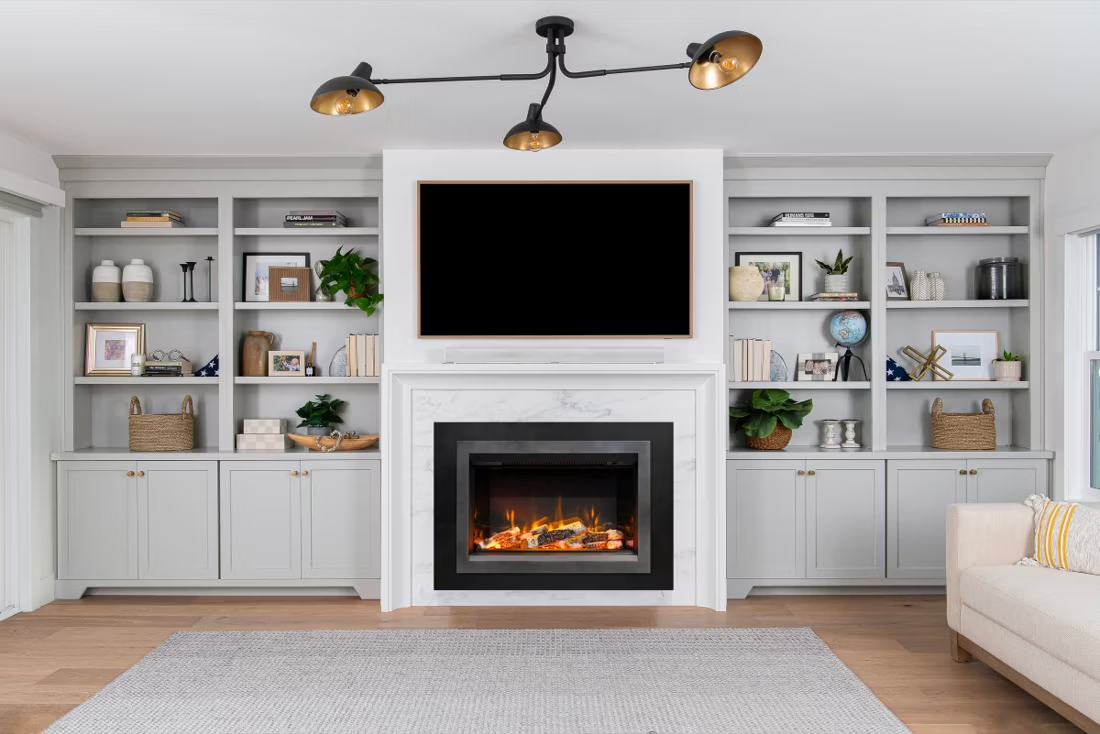
Yes—with an asterisk. Fireplaces are hot and TVs don't like heat. Either put a mantel between them to deflect rising warmth, or choose a fireplace with heat-management technology that creates a cool zone on the wall above—the wall stays around 125 degrees, barely warm, while the room still gets full heat. If you like clean lines and don't want a mantel, heat management is the answer.
Do electric fireplaces actually produce heat?
Yes—most put out around 4,800–5,000 BTUs from a standard outlet, which comfortably warms a bedroom, office, or den as a comfort-zone heater. What they won't do is carry a whole house the way wood, gas, or pellet can. Think of electric as ambiance-first with honest supplemental heat: flames on with no heat in July, flames plus warmth in January.
How much should I budget for a fireplace?
For an average home—covering the fireplace, the vent pipe, and basic installation—a budget between $3,900 and $5,500 gives you a lot of options across wood, gas, and pellet. By the time you add finish work, gas line, and electrical, the average complete installation lands between $5,000 and $12,000 all-in. In a remodel or new build, a good rule is to put about 2.5% of the total project cost toward the fireplace.
Does a fireplace add value to my home?
On average, a fireplace adds back to the home about the same amount you spent installing it. Add the monthly savings from heating the rooms you actually use instead of the whole house—often hundreds of dollars a year—and the value case is strong before you even count what a fire does for how your family uses the room.
Nearby Dealers
Hearth shops serving Mount Vernon and the surrounding area. Every listing shows whether it is a WhyFire partner, a dealer we have verified as authorized for the brands we recommend, or a local business carrying hearth products. No manufacturer pays for placement. How we verify dealers →
Cyprus Air, Indoor Comfort
Nova Fireplace And Stove
Tri-County Hearth & Patio
Superior Fireplaces - La Plata
Fireside Hearth & Home - Manassas
Homeliving Fireplaces
Aspen Green Gasworks
Genesis Chimney Services
Capitol Chimney Service
Belair Engineering & Service Co, Inc
Lawn & Leisure
Deckscapes Of Virginia
Electric Service in Mount Vernon
An electric fireplace's heater draws about 1,500 watts—pennies per hour at local rates.
Virginia Electric & Power Co
Find your electric fireplace in Mount Vernon.
Tell us a bit about your home and we'll put together a free Project Guide & Parts List for your Mount Vernon electric fireplace project—the right unit, the parts you need, and a trusted local dealer to install it.
Find Your Fireplace →