
Add fireplace warmth without a chimney or gas line.
For the condos, townhomes, and additions around the West Falls Church Metro corridor, electric is often the only realistic path to real fireplace ambiance. Find the right unit and connect with a trusted local dealer.
Every Project Starts From One of These Five Situations
Built for condos, townhomes, and modern additions.
West Falls Church sits in Fairfax County at 331 feet elevation, in climate zone 4A with average winter lows around 23°F and a moderate winter heating season overall. That's a real but moderate heating load—nothing like the much longer, colder winters up in Burlington, VT—which means most homes here already rely on central HVAC for whole-home heat and want a fireplace mainly for a specific room, a focal wall, or supplemental warmth on cold nights. A lot of the housing stock near the West Falls Church Metro station is townhomes and condos, where HOA and condo association rules commonly prohibit wood-burning appliances and where running new gas lines through shared walls or multi-unit buildings is often impractical or prohibitively expensive.
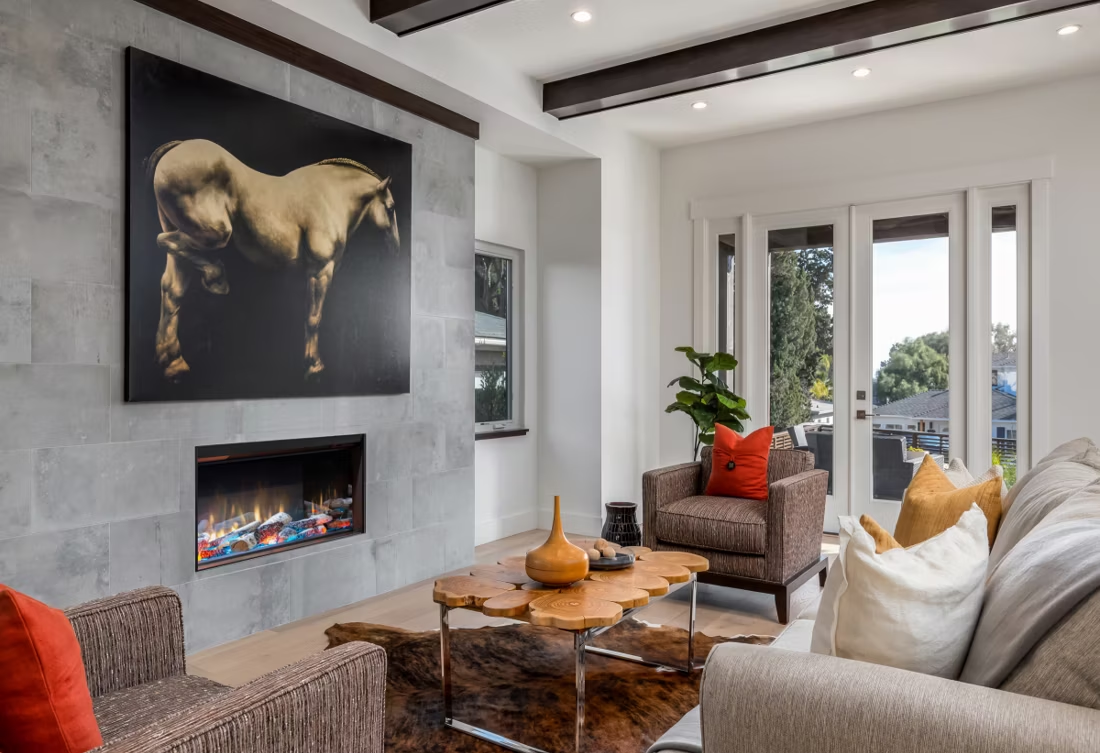
Electric fireplaces sidestep both problems. There's no chimney, no venting, and no combustion byproducts to manage, which simplifies both the install and the ongoing compliance conversation with a condo board. Power comes from Virginia Electric & Power Company (Dominion Energy) at a residential rate around 14.1 cents per kWh, so running one is inexpensive compared to gas line installation or wood delivery. For homeowners in West Falls Church who want real flame-effect ambiance and zone heat without altering the structure of a rental, condo, or newer energy-code-compliant home, electric is usually the most practical starting point—and a trusted local dealer can size the right unit for the room in question.
Three steps. No salesperson until you're ready.
Tell us about your project
Your zip code, your situation, and the fuel you're leaning toward—or let the answers point you to one.
See what's actually available
The brands dealers within 100 miles genuinely carry—real options, never a catalog mirage.
Get your dealer & Project Guide
A trusted local dealer, plus the free Project Guide & Parts List that names every component of the job.
Frequently Asked Questions
How much does an electric fireplace installation cost in West Falls Church?
Costs vary a lot depending on the format. A freestanding or plug-in electric insert that drops into an existing mantel opening runs roughly $150 to $600 for the unit itself, with no electrical work required since it plugs into a standard outlet. A built-in wall-mount linear electric fireplace with a dedicated 20-amp circuit, framing, and a finished surround typically runs $1,500 to $4,000 installed. Larger custom projects—a full media wall build-out with a mantel surround and trim carpentry—can reach $5,000 to $6,000. A local dealer can tell you which tier fits your room and your building's electrical panel capacity.
Will an electric fireplace actually heat a room in this climate?
Most electric fireplaces are built around a 1,500-watt heater rated around 4,600 to 5,200 BTU, which comfortably supplements a single room in the 300 to 500 square foot range—plenty for a living room or bedroom addition given West Falls Church's moderate winter heating needs and winter lows in the low 20s. They're not designed to replace whole-home heat, and nobody should expect one to carry a multi-room floor plan on the coldest nights. Think of it as targeted zone heat layered on top of your existing HVAC, not a furnace replacement.
Do I need a permit to install an electric fireplace here?
It depends on the install type. A plug-in freestanding unit that uses an existing outlet typically requires no permit at all. A built-in wall-mount unit that needs a new dedicated circuit does require an electrical permit through Fairfax County's Department of Land Development Services, and the wiring work should be pulled by a licensed electrician—which most hearth dealers coordinate as part of the installation. If you're renting or in a condo, check your lease or HOA bylaws first; many buildings around the West Falls Church Metro corridor have their own rules about wall penetrations and mounted appliances even when no county permit is triggered.
Is electric really the best option for a condo or townhome near the Metro?
For most of the multi-unit housing near West Falls Church, yes. Condo and HOA agreements in this area commonly restrict wood-burning appliances outright, and running a new gas line through shared walls or a concrete slab in a mid-rise building is often not feasible without major structural work. Electric units need nothing more than a standard outlet or a single dedicated circuit, produce no combustion byproducts, and don't require any venting through a shared roof or facade—which is usually the deciding factor for condo boards.
How much does it cost to run an electric fireplace with Dominion's rates?
At Virginia Electric & Power Company's residential rate of about 14.1 cents per kWh, a typical 1,500-watt electric fireplace running on full heat costs roughly 21 cents an hour, or about $1.05 for five hours of evening use. Running it most evenings through a cold snap adds up to somewhere around $25 to $35 a month on top of your normal electric bill. Many models let you run the flame effect alone without the heater engaged, which draws only 30 to 50 watts—essentially pennies a day—if you just want the visual without the added heat.
Should I get electric or gas instead?
Gas is also a standard option in Fairfax County, and homes with existing natural gas service (through Washington Gas in much of this area) can get a direct-vent gas insert with more radiant heat output. But gas requires a vented flue path to the exterior and, in many condos and townhomes near West Falls Church, a new gas line run that the building or association won't permit. Electric skips both issues entirely. If you already have gas service to the house and an existing fireplace to convert, it's worth comparing both with a local dealer—but for most condo and townhome buyers in this area, electric ends up being the simpler and faster path.
Can I convert an existing wood-burning fireplace to electric?
Yes, and it's a common project in the older single-family homes scattered through West Falls Church's neighborhoods. An electric insert slides into the existing firebox opening, plugs into a nearby outlet or a new dedicated circuit run behind the surround, and doesn't require any chimney work, liner, or sweep. It's usually the least expensive way to bring a dead or rarely-used wood fireplace back into daily use, particularly for owners who don't want the ongoing cost of chimney maintenance or the smoke and ash of burning wood.
How much maintenance does an electric fireplace need?
Very little. There's no chimney to sweep, no creosote to manage, and no annual inspection required the way there is with wood or gas units. Maintenance is mostly dusting the unit and occasionally replacing the LED light strip that produces the flame effect, which typically lasts many years before it needs attention. Some models have a replaceable heater fan filter that should be cleaned every season or two to keep airflow efficient—beyond that, there's essentially nothing to service.
What brands do local dealers in this area carry?
Hearth dealers serving Northern Virginia commonly carry Dimplex, Napoleon, and Touchstone for both built-in linear units and freestanding inserts, along with a handful of higher-end media console and mantel packages. Availability varies by dealer and by what fits your specific wall or opening dimensions, so it's worth getting matched with a local retailer who can show you what's actually in stock and installable for your room rather than shopping blind from a big-box display.
Can I put a TV above my fireplace?
Yes—with an asterisk. Fireplaces are hot and TVs don't like heat. Either put a mantel between them to deflect rising warmth, or choose a fireplace with heat-management technology that creates a cool zone on the wall above—the wall stays around 125 degrees, barely warm, while the room still gets full heat. If you like clean lines and don't want a mantel, heat management is the answer.
What fireplace styles should I know before shopping?
Four cover most of the market: screen-front traditional (mesh front, open feel, fits craftsman homes), traditional door set (the classic look you grew up with), modern linear (wide, low, the statement piece for entertaining), and clean face contemporary (no trim—your tile or stone runs right to the fire's edge). Walk in knowing those four terms and you're ahead of most buyers.
What is an in-home preview and do I need one?
It's a visit where a hearth professional measures your space, confirms the model you picked actually works in your home, and walks the specs—framing, gas line, venting, finish work—before anything is ordered. Some details you just can't know until you see the house. Never make a down payment without one; it's the single most-skipped step that burns buyers.
Can I install a fireplace myself?
If you're putting a fire in your house on purpose, it's best to work with an expert. Unless you're genuinely experienced in framing, gas line, vent pipe, and the national code on clearances to combustibles, have a professional do it—and ideally the same company that sells you the fireplace, so warranty, service, and liability all live under one roof.
Nearby Dealers
Hearth shops serving West Falls Church and the surrounding area.
Electric Service in West Falls Church
An electric fireplace's heater draws about 1,500 watts—pennies per hour at local rates.
Virginia Electric & Power Co
Find your electric fireplace in West Falls Church.
Tell us a bit about your home and we'll match you with a trusted local dealer and send over a free Project Guide & Parts List—sized to your room, with the right unit and mounting hardware spelled out.
Find Your Fireplace →