
Add real fireplace warmth to your Fort Hunt home—no chimney required.
For the townhomes, condos, and postwar colonials along the Potomac near Belle Haven and Hollin Hills, an electric fireplace delivers ambiance and zone heat without venting, masonry, or a burn permit.
Every Project Starts From One of These Five Situations
Mild winters, tight lots, and homes without a flue.
Fort Hunt sits at just 21 feet of elevation along the Potomac in Fairfax County, in climate zone 4A with a moderate winter heating season and winter lows averaging around 27°F. That's a mild heating load compared to a place like Burlington, VT or Madison, WI, where a wood or pellet appliance often carries real overnight heating duty. Here, most homeowners are looking for supplemental warmth on cold, damp evenings—not a stove that has to hold a fire until dawn.
A lot of Fort Hunt housing stock—condos, townhomes near the Beacon Hill and Belle View areas, and mid-century colonials without an existing masonry chimney—simply isn't set up for a wood-burning appliance, and many HOAs and insurers in the area steer homeowners away from open flame and flue maintenance anyway. Electric fireplaces sidestep all of that: no chimney, no venting, no ash, and no smoke to manage on a small lot. Dominion Energy (Virginia Electric & Power Co) serves the area at roughly $0.1409 per kWh, which keeps daily zone-heating costs modest for a unit that's on for a few hours most evenings.
Three steps. No salesperson until you're ready.
Tell us about your project
Your zip code, your situation, and the fuel you're leaning toward—or let the answers point you to one.
See what's actually available
The brands dealers within 100 miles genuinely carry—real options, never a catalog mirage.
Get your dealer & Project Guide
A trusted local dealer, plus the free Project Guide & Parts List that names every component of the job.
Frequently Asked Questions
How much does an electric fireplace installation cost in Fort Hunt?
It depends heavily on the type. A freestanding or tabletop electric unit that plugs into a standard 120V outlet typically runs $200–$600 including delivery and setup—no electrician needed. A built-in wall unit, mantel package, or insert that requires a dedicated circuit generally runs $1,500–$4,000 once you include the electrician's time to run new wiring. Larger linear built-ins with custom surrounds or cabinetry in a main living room can push past $5,000. A local dealer can walk your space and give a firm number, since wall construction and existing wiring in older Fort Hunt homes vary a lot from house to house.
Do I need a permit to install an electric fireplace in Fairfax County?
A plug-in electric fireplace that uses an existing outlet doesn't require a permit. If you're installing a built-in unit that needs a new dedicated circuit or any panel work, that electrical work needs to be pulled through Fairfax County's Land Development Services and performed by a licensed electrician. Most hearth dealers who sell built-in electric units either employ a licensed electrician or coordinate directly with one, so this is typically handled for you as part of the installation rather than something you manage yourself.
What's the best electric fireplace for a Fort Hunt condo or townhome without a chimney?
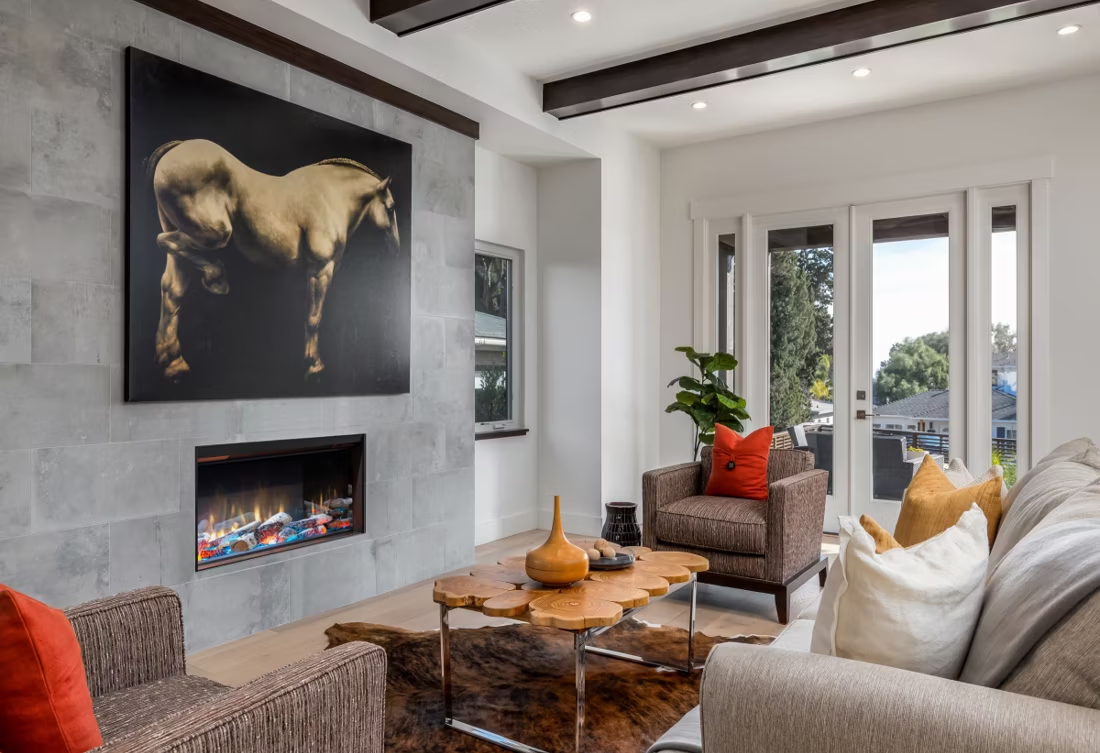
For units without an existing fireplace opening, a wall-mounted linear electric fireplace is usually the cleanest option—it hangs like a large flat panel, needs only power (and ideally a dedicated circuit), and adds real supplemental heat and flame visual without any structural work. For a townhome with an existing but unused masonry firebox, an electric insert that slides into the opening is often the better fit, since it hides the old firebox behind a realistic log or crystal display while giving you back usable heat in that room.
How much does it actually cost to run an electric fireplace here?
At Dominion Energy's residential rate of about $0.1409 per kWh, a typical 1,500-watt electric fireplace running on its heater setting for four hours an evening costs roughly $0.85 a day, or around $25–$26 a month for regular evening use. Running it on flame-only mode with the heater off costs a fraction of that—usually pennies a day—since the LED flame effect draws very little power. That makes electric one of the cheapest heating appliances to operate for supplemental, room-by-room use in a mild climate like Fort Hunt's.
Will an electric fireplace actually heat my room, or is it just for looks?
Most electric fireplaces sold for residential use are rated around 1,500 watts, which translates to roughly 5,000 BTUs—enough to noticeably warm a single room in the 300–600 square foot range, especially in a climate as mild as Fort Hunt's. They're not designed to heat an entire house the way a furnace or a wood stove in a colder region would. Think of it as zone heating: warm the family room or primary bedroom you're actually using, and let your central HVAC handle the rest of the house.
Electric vs. gas fireplace—which makes more sense for my Fort Hunt home?
Gas fireplaces (natural gas or propane) put out more real heat and a more convincing flame, and many Fort Hunt homes near Fort Hunt Road and the Mount Vernon corridor already have gas service that makes a gas insert or built-in a natural fit. Electric wins on installation simplicity and cost—no gas line, no venting, and often a same-day plug-in install—which matters in condos, rentals, or historic homes near Mount Vernon where altering the exterior or running gas line isn't practical or allowed. If you want a fast, low-disruption upgrade to a room, electric is usually the answer. If you want your primary living space's main heat source with a more authentic fire, gas is worth the extra install complexity.
I have an older home near Mount Vernon with historic district considerations—is electric a good option?
Yes, often the best option. Homes in and around the historic areas near Mount Vernon sometimes face restrictions on exterior alterations, including new chimneys or vent penetrations through a roof or wall. An electric insert placed into an existing, unused masonry firebox—or a electric fireplace, but electric requires none of that: no exterior venting, no roof penetration, and nothing visible from the street changes. It's a common workaround for homeowners who want fireplace ambiance back in a room without touching the building's exterior.
Can I convert my old wood-burning fireplace to electric?
Yes—this is one of the more common projects for older Fort Hunt homes with an existing but rarely-used masonry firebox. An electric insert slides into the existing opening and typically plugs into a nearby outlet, or gets hardwired to a dedicated circuit if you want higher heat output. You skip the chimney sweep, the ash cleanup, and any wood-smoke concerns entirely, while keeping the look of a working fireplace. It's a straightforward retrofit that a local hearth dealer can usually complete in a day.
Why don't more homes in Fort Hunt have wood-burning fireplaces?
Wood heat is uncommon here—not because oak, hickory, and maple aren't available regionally, but because Fort Hunt's dense residential lots, HOA rules in many neighborhoods, and a lack of nearby cutting-permit land make wood-burning impractical for most homeowners compared to rural parts of Virginia. Fairfax County's suburban character near D.C. also means most newer construction was never built with a masonry chimney. Electric (and, for those with gas service, gas) fill that gap well since neither requires venting infrastructure or a fuel supply chain most Fort Hunt residents don't have easy access to.
Can I put a TV above my fireplace?
Yes—with an asterisk. Fireplaces are hot and TVs don't like heat. Either put a mantel between them to deflect rising warmth, or choose a fireplace with heat-management technology that creates a cool zone on the wall above—the wall stays around 125 degrees, barely warm, while the room still gets full heat. If you like clean lines and don't want a mantel, heat management is the answer.
Do electric fireplaces actually produce heat?
Yes—most put out around 4,800–5,000 BTUs from a standard outlet, which comfortably warms a bedroom, office, or den as a comfort-zone heater. What they won't do is carry a whole house the way wood, gas, or pellet can. Think of electric as ambiance-first with honest supplemental heat: flames on with no heat in July, flames plus warmth in January.
Does a fireplace add value to my home?
On average, a fireplace adds back to the home about the same amount you spent installing it. Add the monthly savings from heating the rooms you actually use instead of the whole house—often hundreds of dollars a year—and the value case is strong before you even count what a fire does for how your family uses the room.
Can a fireplace actually lower my heating bill?
Yes—by creating a comfort zone. A furnace heats every square foot of the house just to warm the one room you're in; a gas fireplace on low burns roughly a sixth of the gas a typical furnace does. Set the furnace around 55–60 degrees as a baseline, then heat the rooms your family actually uses. Families who heat this way commonly save $20–$60 a month.
Nearby Dealers
Hearth shops serving Fort Hunt and the surrounding area. Every listing shows whether it is a WhyFire partner, a dealer we have verified as authorized for the brands we recommend, or a local business carrying hearth products. No manufacturer pays for placement. How we verify dealers →
Cyprus Air, Indoor Comfort
Tri-County Hearth & Patio
Nova Fireplace And Stove
Superior Fireplaces - La Plata
Belair Engineering & Service Co, Inc
Capitol Chimney Service
Aspen Green Gasworks
Homeliving Fireplaces
Fireside Hearth & Home - Manassas
Cyprus Air
Genesis Chimney Services
Masters Pellet Stoves
Chimney.com
Costello's Hearth & Spa - Rockville
Deckscapes Of Virginia
Electric Service in Fort Hunt
An electric fireplace's heater draws about 1,500 watts—pennies per hour at local rates.
Virginia Electric & Power Co
Find your electric fireplace in Fort Hunt.
Tell us a bit about your home and we'll match you with a trusted local dealer, plus a free Project Guide & Parts List with the right unit, mounting or insert specs, and circuit requirements for your space.
Find Your Fireplace →