
Add fireplace warmth to any room in Oakton—no venting required.
Real flame-look warmth for Fairfax County homes—no chimney, no gas line, no venting. Find the right unit and get matched with a trusted local dealer.
Every Project Starts From One of These Five Situations
The easiest way to add fireplace heat in Fairfax County.
Oakton sits at just under 400 feet in the Piedmont, inside Fairfax County's mixed-humid climate zone (4A), where winter lows average around 23°F and the season brings a moderate winter heating load—a fraction of what a place like Burlington, VT or Minneapolis, MN sees, but still enough to want supplemental heat in bedrooms, sunrooms, and finished basements from December through February. Many of Oakton's neighborhoods—from the colonials near Blake Lane to the newer townhome clusters off Hunter Mill Road—were built without masonry fireplaces at all, or with wood-burning fireboxes homeowners no longer want to feed and clean.
That's where electric fireplaces do their best work. There's no chimney to build, no gas line to run, and—unlike wood, which is genuinely impractical for most Oakton lots and HOA covenants—no cordwood to store or ash to haul. Virginia Electric & Power Co. (Dominion Energy) serves the area at a residential rate of about 14.09 cents per kWh, so even a unit running in full heat mode costs pennies an hour, and ambiance-only mode (LED flame, no heat) barely registers on the bill. Most installs—a plug-in stove, a wall-mounted unit, or an insert into an existing fireplace opening—don't require a building permit at all; only built-in units needing new electrical circuits typically need a permit through Fairfax County Land Development Services.
Three steps. No salesperson until you're ready.
Tell us about your project
Your zip code, your situation, and the fuel you're leaning toward—or let the answers point you to one.
See what's actually available
The brands dealers within 100 miles genuinely carry—real options, never a catalog mirage.
Get your dealer & Project Guide
A trusted local dealer, plus the free Project Guide & Parts List that names every component of the job.
Frequently Asked Questions
How much does an electric fireplace installation cost in Oakton?
Costs vary more with electric than any other fuel because the category spans plug-in units to fully built-in wall fireplaces. A freestanding electric stove or a basic insert that drops into an existing masonry firebox typically runs $400 to $1,500 installed, including a certified electrician confirming the circuit can handle the draw. A linear wall-mounted unit set into new framing, with a dedicated 20-amp circuit run and drywall finishing, usually lands between $1,500 and $4,000. Custom built-ins with surrounding cabinetry or stone can go higher. A local dealer can give you a firm number once they see your wall and electrical panel.
Will an electric fireplace actually heat a room, or is it just for looks?
Most residential units are rated for 1,500 watts on high, which works out to roughly 5,000 BTUs—enough to comfortably heat a 300 to 400 square foot room as supplemental heat, not a whole-home solution. For a bonus room, sunroom, or finished basement in an Oakton townhome, that's often exactly the right amount of heat for a chilly evening without running the central system harder. If you want flame appearance without any heat output (common for spring and fall use), nearly every model has a heat-off, ambiance-only setting.
Can I convert my existing wood-burning fireplace to electric?
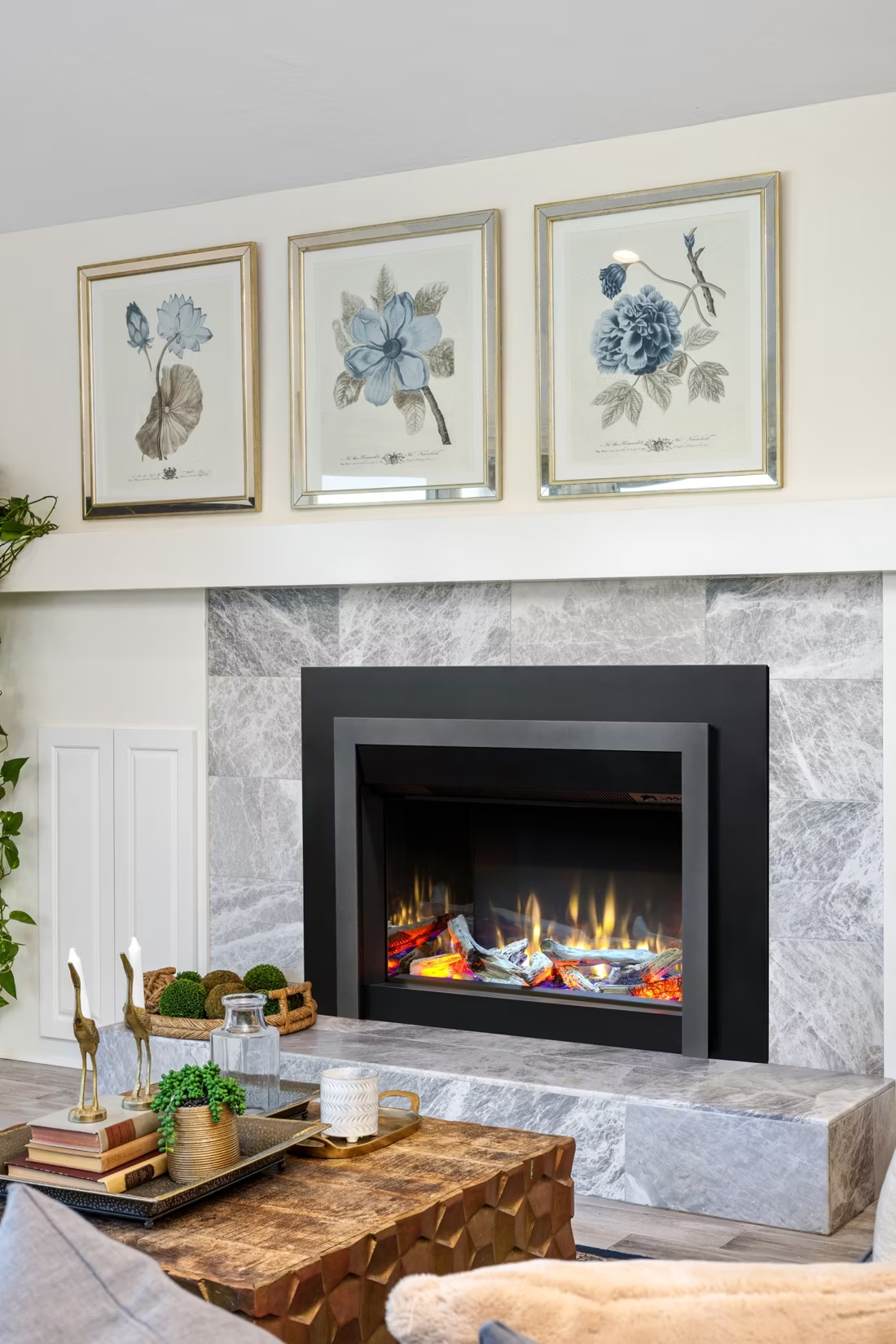
Yes, and it's one of the more common projects in Oakton's older colonials that still have a masonry firebox from the original build. An electric insert slides into the existing opening, plugs into a nearby outlet or a new dedicated circuit if the unit draws more power, and gives you flame-look ambiance and heat without ever cleaning ash or hiring a chimney sweep. Because there's no venting involved, the chimney itself can stay capped and sealed, which also stops cold outside air from pouring down an unused flue in January.
What does it cost to run an electric fireplace in Oakton?
At Dominion Energy's residential rate of roughly 14.09 cents per kWh, a 1,500-watt unit running on full heat costs about 21 cents an hour. Most owners don't run it at full heat continuously—it's typically flipped on for a few hours in the evening in one room, which adds up to a few dollars a month even with regular use. Ambiance-only mode, which powers just the LED flame effect and not the heating element, draws closer to 30-50 watts and costs a fraction of a cent per hour.
Do I need a permit to install an electric fireplace in Oakton?
In most cases, no. A plug-in electric stove or an insert that uses an existing outlet doesn't trigger a permit. If your project involves a new dedicated circuit, a wall unit built into new framing, or any panel work, an electrical permit through Fairfax County Land Development Services is required, and it's work that should go through a licensed electrician regardless of the permit question. Local dealers who install built-in units generally coordinate this permitting as part of the job.
Electric vs. gas fireplace—which makes more sense for my Oakton home?
Gas delivers real, higher-output heat and works during a power outage if it has a battery-backup ignition—a genuine advantage in a Fairfax County ice storm. Electric skips the gas line and venting entirely, installs almost anywhere with an outlet, and is dramatically cheaper to buy and install. For homes already on natural gas with a spot that makes sense for direct venting, gas is often worth the extra cost. For a bedroom, basement, or condo where running gas line isn't practical or allowed, electric is usually the only realistic option—and for many Oakton homeowners, that's the deciding factor rather than pure preference.
What about a wood-burning fireplace instead?
Wood heat is uncommon as a primary choice in Oakton today. Many homes here sit on smaller suburban lots or in HOA-governed communities where cordwood storage and smoke aren't practical, and even homes with existing masonry fireboxes—built for local oak, hickory, or maple firewood—tend to see them used a handful of times a year rather than as real heat sources. If you already have a wood-burning fireplace and want to keep the wood-fire look without the upkeep, that's precisely the situation an electric insert is designed for.
What's the best type of electric fireplace for Oakton homes?
For an existing masonry opening, a realistic flame insert from a brand like Dimplex or Napoleon gives you the closest look to an actual fire along with usable heat output. For a room without a fireplace at all, a linear wall-mounted unit—recessed or surface-mounted—fits well in the newer townhomes and condos common around the 22124 and 22031 corridors, where wall space is often the constraint rather than floor space. A local dealer can walk you through the flame-effect quality and heat output differences in person, which matters more with electric units than with gas or wood.
How long do electric fireplaces last, and what maintenance do they need?
Most quality units last 10 to 15 years with minimal maintenance—there's no chimney to sweep and no burner to service. The main components that eventually need attention are the LED flame bulbs (increasingly LED arrays that rarely burn out) and the heating element blower, which can accumulate dust. An occasional vacuum of the intake vents and a wipe-down of the glass front is typically all that's needed. Because there's no combustion involved, there's also no carbon monoxide risk and no annual inspection requirement like gas or wood units carry.
Do electric fireplaces actually produce heat?
Yes—most put out around 4,800–5,000 BTUs from a standard outlet, which comfortably warms a bedroom, office, or den as a comfort-zone heater. What they won't do is carry a whole house the way wood, gas, or pellet can. Think of electric as ambiance-first with honest supplemental heat: flames on with no heat in July, flames plus warmth in January.
Does an electric fireplace need a vent or chimney?
No—that's its superpower. An electric fireplace needs a wall and an outlet, period. No vent pipe, no gas line, no clearances to design around, which is why it works in bedrooms, offices, apartments, and walls where venting a gas or wood unit would be impractical or impossible. Installation is typically the simplest and least expensive of any fireplace type.
Can I install a fireplace myself?
If you're putting a fire in your house on purpose, it's best to work with an expert. Unless you're genuinely experienced in framing, gas line, vent pipe, and the national code on clearances to combustibles, have a professional do it—and ideally the same company that sells you the fireplace, so warranty, service, and liability all live under one roof.
What is an in-home preview and do I need one?
It's a visit where a hearth professional measures your space, confirms the model you picked actually works in your home, and walks the specs—framing, gas line, venting, finish work—before anything is ordered. Some details you just can't know until you see the house. Never make a down payment without one; it's the single most-skipped step that burns buyers.
Nearby Dealers
Hearth shops serving Oakton and the surrounding area.
Electric Service in Oakton
An electric fireplace's heater draws about 1,500 watts—pennies per hour at local rates.
Virginia Electric & Power Co
Find your electric fireplace in Oakton.
Tell us about your room and we'll match you with a trusted local dealer and send over your free Project Guide & Parts List—the exact unit, mounting or insert specs, and electrical requirements for your Oakton home.
Find Your Fireplace →