
Real heat, zero smoke, no chimney required.
An HOA-friendly way to add warmth and ambiance to a Franklin Farm townhome or condo—no venting, no gas line, no masonry work. Find the right unit and connect with a trusted local dealer.
Every Project Starts From One of These Five Situations
Built for Franklin Farm's townhomes and HOA communities.
Franklin Farm is a planned Fairfax County community of townhomes, condos, and single-family homes just off the Dulles corridor, and a lot of that housing stock—especially the attached units—was never built with a masonry chimney or a path for one. Winters here are moderate by national standards: about 4,604 heating degree days and an average winter low around 25°F, nothing close to what a Duluth, MN or Burlington, VT household deals with. That means most Franklin Farm homes don't need a whole-house wood or pellet solution—they need supplemental zone heat and ambiance in a package their HOA declaration and building layout can actually accommodate.
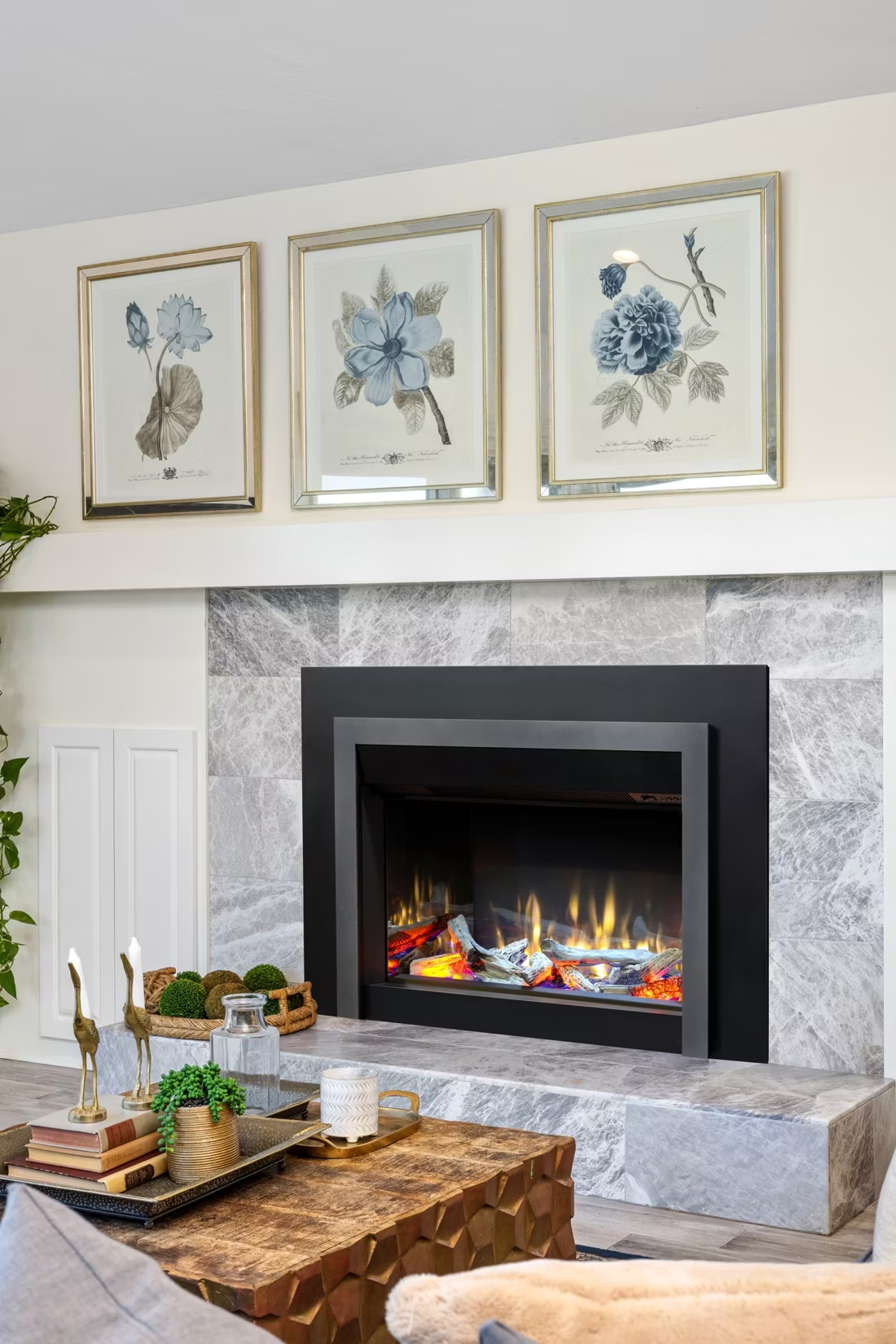
That's where electric fireplaces do their best work. A plug-in insert or built-in unit runs off a standard 120V outlet or a dedicated 240V circuit, produces zero smoke or emissions (a non-issue anyway, since Fairfax County has no air quality restrictions on the fuel), and can go into a townhome living room, condo unit, or finished basement with no venting, no gas line, and no chimney. Power comes from Virginia Electric & Power Co (Dominion Energy) at roughly $0.1409 per kWh, so running a 1,500-watt unit on the heat setting costs about 21 cents an hour—cheap enough to run daily for ambiance without worrying about the bill.
Three steps. No salesperson until you're ready.
Tell us about your project
Your zip code, your situation, and the fuel you're leaning toward—or let the answers point you to one.
See what's actually available
The brands dealers within 100 miles genuinely carry—real options, never a catalog mirage.
Get your dealer & Project Guide
A trusted local dealer, plus the free Project Guide & Parts List that names every component of the job.
Frequently Asked Questions
How much does an electric fireplace installation cost in Franklin Farm?
A plug-in electric insert or freestanding unit that drops into an existing fireplace opening or media console typically runs $300 to $1,500 installed, since there's no venting or gas work involved—most of that cost is the unit itself plus any surround or trim kit. A built-in wall-mounted unit with a custom mantel or a linear electric fireplace set into new framing runs higher, typically $2,000 to $5,000, largely driven by carpentry and finish work rather than the appliance. If the unit needs a dedicated 240V circuit rather than a standard outlet, add an electrician's time for that run.
Do I need a permit to install an electric fireplace in Franklin Farm?
Usually not for the fireplace itself—most plug-in electric inserts and freestanding units don't trigger a building permit through Fairfax County Land Development Services because there's no venting, gas line, or structural chimney work involved. Where a permit does come into play is the electrical side: if your unit requires a new dedicated 240V circuit, a licensed electrician will typically pull an electrical permit for that work. If you're in a townhome or condo section of Franklin Farm, it's also worth checking your HOA's architectural guidelines before any built-in installation that changes the wall or mantel.
Can I put an electric fireplace in a townhome or condo with no existing chimney?
Yes—this is exactly the situation electric fireplaces solve, and it's common across Franklin Farm's attached housing. Because there's no combustion and no need to vent exhaust gases outside, an electric unit can be installed against any interior wall, inside a media console, or recessed into framing without touching the building's structure. This sidesteps both the physical limitation of no chimney and the HOA restrictions many condo and townhome associations place on wood-burning or exterior venting modifications.
How much does it cost to run an electric fireplace in Franklin Farm?
At Dominion Energy's residential rate of about $0.1409 per kWh, a typical 1,500-watt electric fireplace on its heat setting costs roughly 21 cents per hour to run, or a little over $2 for a 10-hour evening. Running it on flame-only mode with the heater off draws far less—often under 100 watts—so most homeowners leave the visual flame on for ambiance and only switch on the heater when they want supplemental warmth in a specific room.
Will an electric fireplace heat my whole home?
No—electric fireplaces are zone heaters, not whole-home heating systems. Most units are rated to comfortably heat 400 to 1,000 square feet, which works well for a Franklin Farm living room, finished basement, or primary bedroom, but they're not sized to replace a central HVAC system. Given the area's moderate winters—average lows around 25°F rather than the deep-freeze conditions of the upper Midwest—an electric unit is typically installed to take the edge off a specific room or supplement central heat during shoulder-season cold snaps, not to carry the full heating load.
What's the difference between an electric insert, a built-in, and a freestanding electric stove?
An electric insert is sized to slot into an existing fireplace firebox opening, making it a straightforward upgrade for Franklin Farm homes built with a traditional wood-burning fireplace that owners want to convert to something cleaner and simpler. A built-in electric fireplace is designed to be recessed into a wall or custom cabinetry during a remodel, often paired with a linear glass-front design. A freestanding electric stove looks like a traditional stove body and just needs floor space and an outlet—a good option for a basement or bonus room with no fireplace opening at all. All three plug into standard household power.
I have an old wood-burning fireplace—can I convert it to electric?
Yes, and it's one of the more common projects among Franklin Farm's original 1980s and 90s construction, much of which included a traditional wood-burning firebox. An electric insert sized to your firebox opening slides in, plugs into a nearby outlet (or a new dedicated circuit if the unit calls for it), and gives you flame effect and supplemental heat without cutting, splitting, or storing cordwood—oak, hickory, and maple that used to fuel these fireplaces aren't needed at all. It also closes off the old flue, which stops the cold-air draft that unused masonry chimneys are notorious for pulling into a living room in winter.
Electric vs. gas fireplace—which is right for my Franklin Farm home?
Gas fireplaces produce more real heat output and a more authentic flame, but they require a gas line, venting in most cases, and a higher installation cost—often several thousand dollars once gas line work and venting are factored in. Electric fireplaces cost less to install, need no gas line or venting at all, and are the more practical fit for townhomes, condos, and any Franklin Farm unit where an HOA restricts exterior venting or where running a gas line simply isn't feasible. If your home already has gas service and you want a stronger primary heat source with a real flame, gas is worth a look. If you want simple installation, low upfront cost, and flexible placement, electric is usually the better match here.
Are wood-burning stoves a realistic option in Franklin Farm?
Not really, and it's worth being upfront about that. Between the prevalence of attached townhomes and condos without chimneys, HOA covenants that commonly restrict wood smoke and exterior venting, and a moderate mid-Atlantic climate that doesn't demand a wood-fired backup heat source, wood stoves see very little uptake in this community. A handful of single-family homes on larger Franklin Farm lots with existing masonry chimneys could technically install one, but for the vast majority of homeowners here, an electric insert or a gas unit is the far more practical route to a working fireplace.
Does an electric fireplace need a vent or chimney?
No—that's its superpower. An electric fireplace needs a wall and an outlet, period. No vent pipe, no gas line, no clearances to design around, which is why it works in bedrooms, offices, apartments, and walls where venting a gas or wood unit would be impractical or impossible. Installation is typically the simplest and least expensive of any fireplace type.
Can I put a TV above my fireplace?
Yes—with an asterisk. Fireplaces are hot and TVs don't like heat. Either put a mantel between them to deflect rising warmth, or choose a fireplace with heat-management technology that creates a cool zone on the wall above—the wall stays around 125 degrees, barely warm, while the room still gets full heat. If you like clean lines and don't want a mantel, heat management is the answer.
How much should I budget for a fireplace?
For an average home—covering the fireplace, the vent pipe, and basic installation—a budget between $3,900 and $5,500 gives you a lot of options across wood, gas, and pellet. By the time you add finish work, gas line, and electrical, the average complete installation lands between $5,000 and $12,000 all-in. In a remodel or new build, a good rule is to put about 2.5% of the total project cost toward the fireplace.
What is an in-home preview and do I need one?
It's a visit where a hearth professional measures your space, confirms the model you picked actually works in your home, and walks the specs—framing, gas line, venting, finish work—before anything is ordered. Some details you just can't know until you see the house. Never make a down payment without one; it's the single most-skipped step that burns buyers.
Nearby Dealers
Hearth shops serving Franklin Farm and the surrounding area. Every listing shows whether it is a WhyFire partner, a dealer we have verified as authorized for the brands we recommend, or a local business carrying hearth products. No manufacturer pays for placement. How we verify dealers →
Homeliving Fireplaces
Aspen Green Gasworks
Genesis Chimney Services
Lawn & Leisure
Deckscapes Of Virginia
Fireside Hearth & Home - Manassas
Cyprus Air
Costello's Hearth & Spa - Rockville
Nova Fire Design
Nova Fireplace And Stove
Cyprus Air, Indoor Comfort
The Fireplace Shop
Holtzman Propane
Chimney.com
Capitol Chimney Service
Electric Service in Franklin Farm
An electric fireplace's heater draws about 1,500 watts—pennies per hour at local rates.
Virginia Electric & Power Co
Find your electric fireplace in Franklin Farm.
Tell us a bit about your home and HOA situation, and we'll match you with the right electric fireplace or insert—plus a Project Guide & Parts List from a trusted local dealer.
Find Your Fireplace →