
The Fastest, Cleanest Way to Add a Fireplace in Burke.
No chimney, no gas line, no exterior venting—just plug it in or wire it in. Find the right electric fireplace for your Burke home and get matched with a trusted local dealer.
Every Project Starts From One of These Five Situations
No chimney. No gas line. No problem.
Burke sits inside Fairfax County's dense commuter belt, roughly 15 miles southwest of D.C., in climate zone 4A with a winter heating season comparable to the D.C. area's typical cold stretch—winters here dip into the low 20s but nothing like the sustained cold of a place like Madison, Wisconsin, which sees nearly double the heating load. That milder profile, combined with Burke's mix of townhomes, split-levels, and colonials in communities like Burke Centre and Cherry Run, is exactly why electric fireplaces have become such a common upgrade here.
Wood burning is a tough fit in Burke—most homes sit on small suburban lots governed by HOA covenants that restrict exterior venting or chimney modifications, and Fairfax County has no nearby public forest land for cutting permits, so self-supplied firewood isn't realistic the way it is in more rural parts of Virginia. Natural gas is readily available through Washington Gas across most of the county, which makes gas a strong option too. But for condos, finished basements, rentals, and any room without existing venting, electric is often the simplest answer: no permits for the unit itself in most cases, no combustion byproducts, and installation that a licensed electrician can usually knock out in a single visit.
Three steps. No salesperson until you're ready.
Tell us about your project
Your zip code, your situation, and the fuel you're leaning toward—or let the answers point you to one.
See what's actually available
The brands dealers within 100 miles genuinely carry—real options, never a catalog mirage.
Get your dealer & Project Guide
A trusted local dealer, plus the free Project Guide & Parts List that names every component of the job.
Frequently Asked Questions
How much does an electric fireplace installation cost in Burke?
Costs vary widely by unit type. A plug-in freestanding or wall-mount electric fireplace can run $250 to $1,200 for the unit with no installation labor beyond plugging it into an existing outlet. A built-in electric insert or a mantel package with a dedicated 120V or 240V circuit typically runs $1,500 to $3,500 installed, including an electrician's time to run new wiring—common in Burke Centre and Cherry Run townhomes where the fireplace goes into an existing mantel surround. There's no chimney, liner, or venting cost to factor in, which is the main reason electric installs land well below wood or gas projects.
Do I need a permit to install an electric fireplace in Burke?
Most plug-in electric fireplaces need no permit at all—they're treated like any other appliance. If your installer runs a new dedicated circuit or does any panel work, that electrical work typically requires a permit through Fairfax County's building permit process, which your electrician or hearth dealer will usually pull on your behalf. There's no venting inspection to worry about, which is one of the bigger time-savers compared to a wood or gas install in the same house.
Can I install an electric fireplace in a townhome or condo with HOA restrictions?
Yes—this is one of the biggest reasons electric fireplaces are popular in Burke. Many HOAs in communities like Burke Centre and South Run restrict or prohibit exterior venting, chimney alterations, and wood smoke, which rules out wood stoves and can complicate gas venting in attached townhomes. Electric units require none of that: no exterior penetration, no chimney, and nothing visible from outside the unit. If you rent or live under an active HOA in Burke, electric is usually the path of least resistance.
What does it cost to run an electric fireplace in Burke?
At Dominion Energy's (Virginia Electric and Power Company) residential rate of about $0.1409 per kWh, a typical 1,500-watt electric fireplace on high heat costs roughly 21 cents per hour to run. Used for supplemental heat a few hours an evening—say 3 to 4 hours a night through a Burke winter—that's about $15 to $20 a month. Most units let you run the flame effect alone with the heater off, which draws only a few watts and costs pennies, so you can keep the ambiance going without the heating cost.
What's the difference between an electric fireplace, insert, and stove?
An electric fireplace is usually a built-in or wall-mount unit designed to sit inside a mantel surround or be mounted flush against a wall—a common choice for Burke great rooms and basement remodels. An electric insert is sized to slide into an existing masonry or factory-built fireplace opening, letting you retire a rarely-used wood fireplace without any structural changes. An electric stove is a freestanding cabinet-style unit that mimics a wood stove's look and can go virtually anywhere there's an outlet. All three heat the same way—with a built-in fan-forced or infrared heater—so the choice mostly comes down to your existing fireplace opening and room layout.
Why isn't wood burning more common in Burke?
It's mostly a matter of lot size, HOA rules, and access. Burke's neighborhoods are built at suburban Fairfax County density, and many are governed by HOAs that restrict wood smoke and exterior chimney work. There's also no nearby national forest or public cutting land inside the county—the closest Forest Service permit office is out toward the George Washington National Forest, well over an hour away—so self-cut firewood from local oak, hickory, or maple isn't the convenient option it is in more rural parts of Virginia. A handful of Burke homeowners with existing masonry fireplaces and detached lots still burn wood occasionally, but it's the exception rather than the rule here.
Will an electric fireplace still work during a power outage?
No—because it runs entirely on electricity, an electric fireplace goes dark the moment the power does, unlike a wood stove or a gas unit with battery-backed ignition. If backup heat during Dominion Energy outages is a priority for your Burke home, it's worth asking a local dealer about a battery backup power station for a smaller unit, or considering a gas fireplace instead—Washington Gas service covers most of the county and a gas unit with standing pilot can run without grid power at all.
What are the best electric fireplace brands for a Burke home?
Dimplex, Napoleon, and Real Flame are widely available through Northern Virginia hearth dealers and cover most of what Burke homeowners are looking for—realistic flame technology, multiple heat settings, and finish options that match a mantel surround or built-in wall unit. The right brand and model depends on your room size, whether you want supplemental heat or just ambiance, and whether the unit needs to fit an existing opening. A local dealer can walk you through options in person rather than guessing from a big-box showroom floor.
Electric vs. gas—which is right for my Burke home?
Gas fireplaces, fed by Washington Gas service available across most of Fairfax County, deliver more real heat output and can run during a power outage with the right ignition system—a genuine advantage in a region that sees occasional ice storms and downed lines. Electric fireplaces cost far less to install, need no gas line or venting, and are the only realistic option in HOA communities that restrict exterior venting or in condos without gas service. For a primary heat source in a larger Burke home, gas often wins; for ambiance, a finished basement, or a rental unit, electric is usually the simpler and cheaper path.
Can I put a TV above my fireplace?
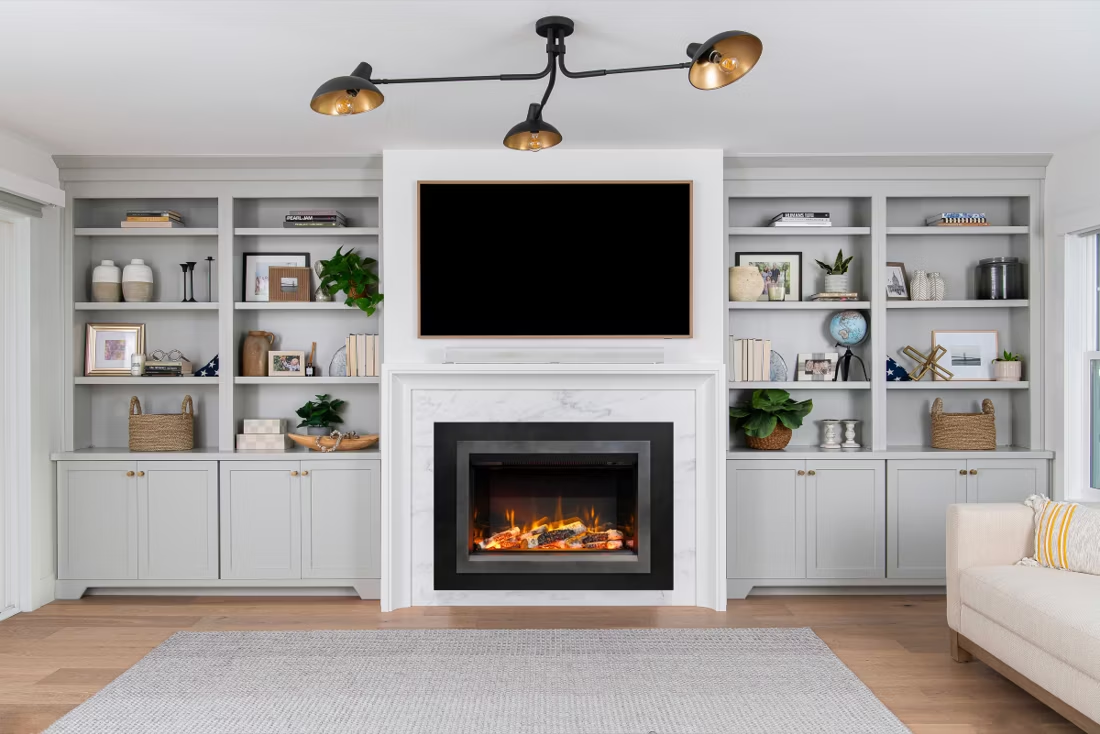
Yes—with an asterisk. Fireplaces are hot and TVs don't like heat. Either put a mantel between them to deflect rising warmth, or choose a fireplace with heat-management technology that creates a cool zone on the wall above—the wall stays around 125 degrees, barely warm, while the room still gets full heat. If you like clean lines and don't want a mantel, heat management is the answer.
Do electric fireplaces actually produce heat?
Yes—most put out around 4,800–5,000 BTUs from a standard outlet, which comfortably warms a bedroom, office, or den as a comfort-zone heater. What they won't do is carry a whole house the way wood, gas, or pellet can. Think of electric as ambiance-first with honest supplemental heat: flames on with no heat in July, flames plus warmth in January.
Does a fireplace add value to my home?
On average, a fireplace adds back to the home about the same amount you spent installing it. Add the monthly savings from heating the rooms you actually use instead of the whole house—often hundreds of dollars a year—and the value case is strong before you even count what a fire does for how your family uses the room.
Can a fireplace actually lower my heating bill?
Yes—by creating a comfort zone. A furnace heats every square foot of the house just to warm the one room you're in; a gas fireplace on low burns roughly a sixth of the gas a typical furnace does. Set the furnace around 55–60 degrees as a baseline, then heat the rooms your family actually uses. Families who heat this way commonly save $20–$60 a month.
Nearby Dealers
Hearth shops serving Burke and the surrounding area.
Electric Service in Burke
An electric fireplace's heater draws about 1,500 watts—pennies per hour at local rates.
Virginia Electric & Power Co
Find your electric fireplace in Burke.
Tell us about your home and we'll match you with a trusted local dealer and send over a free Project Guide & Parts List—the exact unit, mounting, and wiring plan for your Burke installation.
Find Your Fireplace →