
The right electric fireplace for Herndon's townhomes and condos.
No chimney, no gas line, no venting—just plug in or wire to a dedicated circuit. Find the right unit for your space and connect with a trusted local dealer.
Every Project Starts From One of These Five Situations
Zone heat without the venting hassle.
Herndon's housing stock leans heavily toward townhomes and condos—communities like Fox Mill Estates, Franklin Farm, and the corridor along the W&OD Trail near the Dulles Toll Road are dense, HOA-governed, and often built without masonry chimneys. That makes wood and pellet appliances impractical for most residents here, and it's a big part of why electric fireplaces have become the default choice for adding a fire feature to a condo, a rental, or a townhome with no existing flue. There's no exterior venting to approve, no combustion air to manage, and no HOA review of chimney work—a plug-in unit or a wall-mounted linear fireplace can go in without touching the building envelope.
Herndon sits in climate zone 4A with a moderate winter heating season and an average winter low near 25°F—a real but moderate heating season, nowhere near the deep cold of places like Burlington, VT or Duluth, MN where homeowners lean on wood stoves for overnight burns. That mild-winter profile is exactly where electric fireplaces do their best work: supplemental zone heat in a bedroom or basement, ambiance in a living room, or backup warmth on the coldest nights, all running on Dominion Energy (Virginia Electric & Power Co) service at a residential rate around $0.1409 per kWh.
Three steps. No salesperson until you're ready.
Tell us about your project
Your zip code, your situation, and the fuel you're leaning toward—or let the answers point you to one.
See what's actually available
The brands dealers within 100 miles genuinely carry—real options, never a catalog mirage.
Get your dealer & Project Guide
A trusted local dealer, plus the free Project Guide & Parts List that names every component of the job.
Frequently Asked Questions
How much does an electric fireplace installation cost in Herndon?
A plug-in electric insert or a freestanding electric stove typically runs $300 to $1,200 installed, since most just need an existing 120V outlet and a few minutes of setup. A built-in wall-mounted or linear electric fireplace with a custom surround runs higher—usually $1,800 to $4,500—because it often calls for carpentry, a recessed or flush mount, and sometimes a dedicated 240V circuit run by a licensed electrician. Homes in Herndon's older townhome sections built before updated panel capacity sometimes need panel work as part of the job, which adds to the electrician's portion of the bill.
Can I install an electric fireplace in a Herndon condo, townhome, or rental?
Yes—this is one of the main reasons electric fireplaces are common here. Because there's no chimney, no gas line, and no penetration through an exterior wall, most HOAs in communities like Franklin Farm or Fox Mill don't classify an electric fireplace as an exterior modification requiring architectural review. Renters can typically use a plug-in unit without any landlord approval at all, since nothing about the unit or the wall is altered. Built-in units mounted into drywall or a custom surround are a bigger step and worth checking with your HOA or property manager first, even though the electrical work itself is straightforward.
How much does it cost to run an electric fireplace in Herndon?
At Dominion's residential rate of roughly $0.1409 per kWh, a typical 1,500-watt electric fireplace running on its heat setting costs about $0.21 per hour to operate. Used for a few hours in the evening as supplemental heat in one room, that's roughly $0.60 to $1.00 a day, or $15 to $30 a month during Herndon's coldest stretch. Running the flame effect alone, with the heater off, costs only a few cents an hour—most homeowners here use that mode for ambiance outside heating season.
What's the difference between an electric insert, wall-mounted fireplace, and electric stove?
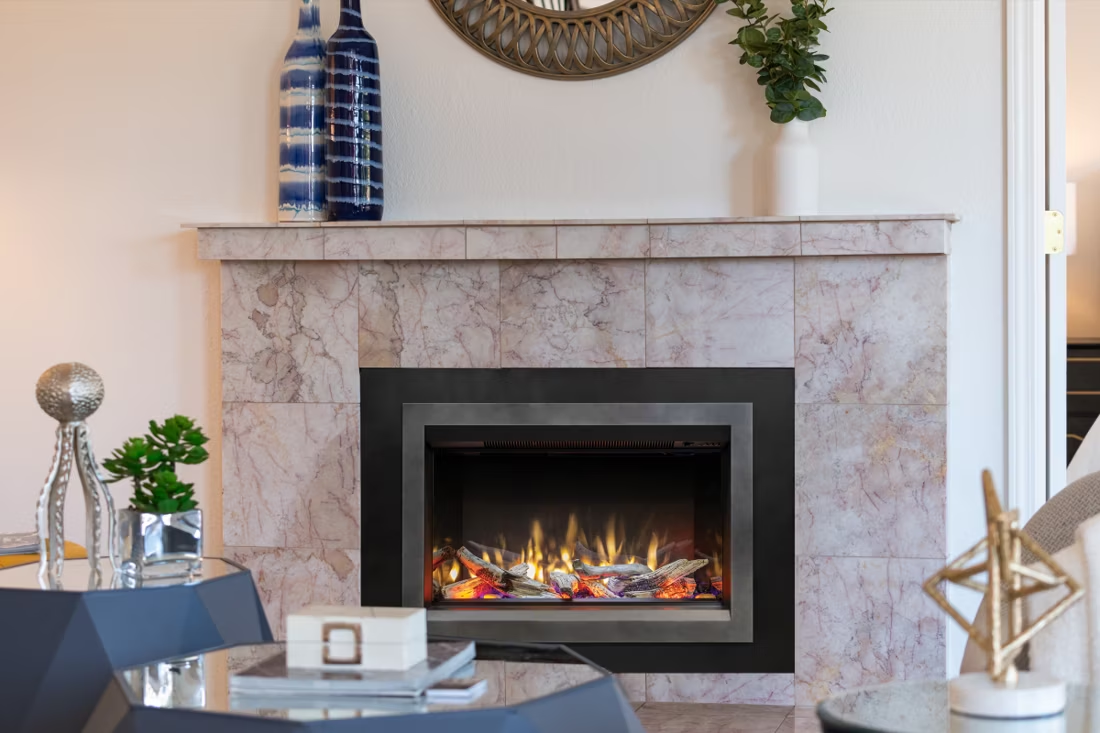
An electric insert is built to slide into an existing fireplace opening—useful in Herndon's older homes that have a masonry firebox but no working chimney liner, letting you keep the mantel and surround while retiring the actual burning of wood. A wall-mounted or linear electric fireplace is a flatter, wider unit designed to be recessed into or mounted on a wall, common in newer townhome great rooms. An electric stove is a freestanding cabinet-style unit that mimics a wood stove's look and works well in a corner or basement rec room without any built-in framing at all.
Do I need a permit to install an electric fireplace in Herndon?
A plug-in unit that uses an existing outlet doesn't require a permit. If your installation calls for a new dedicated circuit—common for larger built-in linear units—the electrical work itself needs to be pulled through Fairfax County's Land Development Services, and it should be done by a licensed electrician regardless of permit status. Most local dealers coordinate with an electrician as part of the installation, so you're not left tracking down the paperwork yourself.
Is an electric fireplace enough heat for a Herndon winter?
For most homes here, yes, as supplemental or zone heat—Herndon's moderate winter heating season and average winter low near 25°F are a moderate heating load compared to colder-climate cities like Bismarck, ND or Madison, WI where whole-home wood or gas heat is the norm. An electric fireplace works well to take the chill off a bedroom, home office, or basement without running central HVAC harder, and it's a reasonable primary heat source for a small, well-insulated condo. It's not designed to be your only heat source through a full Fairfax County winter in a larger home—pair it with your existing furnace or heat pump for the coldest nights.
Electric vs. gas fireplace—which is right for my Herndon home?
Gas fireplaces put out more consistent heat and work during a power outage if equipped with battery-backup ignition, and natural gas service is available through much of Herndon for homes already plumbed for it. Electric fireplaces cost far less to install, need no venting or gas line, and are the only realistic option for condos, rentals, or HOA communities where exterior modifications aren't allowed. If you own a single-family home with existing gas service and want real heat output for a main living area, gas is usually the better fit. If you're in a townhome, condo, or rental—or just want ambiance and light supplemental warmth without construction—electric is the practical choice.
How much maintenance does an electric fireplace need?
Very little compared to any combustion appliance. There's no chimney to sweep and no annual gas inspection required. Maintenance is mostly dusting the vents and screen, occasionally wiping the glass front, and replacing LED flame-effect bulbs every several years if the unit doesn't use newer LED arrays rated for tens of thousands of hours. Units with a built-in fan or heater benefit from an occasional check to make sure the intake isn't clogged with dust, especially in carpeted townhome bedrooms.
Are electric fireplaces safe for homes with kids or pets?
Generally yes, and it's another reason they're popular in Herndon's family-heavy townhome neighborhoods. There's no real flame, no exposed hot glass on most models (many use cool-touch glass fronts), and no ash, embers, or gas lines to worry about. Because there's no combustion, there's also no carbon monoxide risk to manage. The main safety step is the same as any space heater—don't block the vent with furniture or curtains, and unplug or power down units that aren't supervised for extended periods.
Can I put a TV above my fireplace?
Yes—with an asterisk. Fireplaces are hot and TVs don't like heat. Either put a mantel between them to deflect rising warmth, or choose a fireplace with heat-management technology that creates a cool zone on the wall above—the wall stays around 125 degrees, barely warm, while the room still gets full heat. If you like clean lines and don't want a mantel, heat management is the answer.
Does an electric fireplace need a vent or chimney?
No—that's its superpower. An electric fireplace needs a wall and an outlet, period. No vent pipe, no gas line, no clearances to design around, which is why it works in bedrooms, offices, apartments, and walls where venting a gas or wood unit would be impractical or impossible. Installation is typically the simplest and least expensive of any fireplace type.
What is an in-home preview and do I need one?
It's a visit where a hearth professional measures your space, confirms the model you picked actually works in your home, and walks the specs—framing, gas line, venting, finish work—before anything is ordered. Some details you just can't know until you see the house. Never make a down payment without one; it's the single most-skipped step that burns buyers.
Can a fireplace actually lower my heating bill?
Yes—by creating a comfort zone. A furnace heats every square foot of the house just to warm the one room you're in; a gas fireplace on low burns roughly a sixth of the gas a typical furnace does. Set the furnace around 55–60 degrees as a baseline, then heat the rooms your family actually uses. Families who heat this way commonly save $20–$60 a month.
Nearby Dealers
Hearth shops serving Herndon and the surrounding area.
Electric Service in Herndon
An electric fireplace's heater draws about 1,500 watts—pennies per hour at local rates.
Virginia Electric & Power Co
Find your electric fireplace in Herndon.
Tell us a bit about your home—condo, townhome, or single-family—and we'll match you with the right electric fireplace or insert, plus a free Project Guide & Parts List with the exact parts and your recommended local dealer.
Find Your Fireplace →