
Keep Your Family Warm and Safe—No Matter What
With Tucson averaging just 1,332 heating degree days and winter lows rarely dropping below 41°F, most Pima County homes need little supplemental heat at all—but for high-elevation cabins on Mount Lemmon and homeowners who simply want a real wood fire, I'll match you with a trusted local dealer who understands the county's no-burn advisory rules.
Every Project Starts From One of These Five Situations
Sonoran desert winters rarely call for a wood stove.
Pima County stretches from the Tucson basin at roughly 2,400 feet up through the Santa Catalina Mountains to Mount Lemmon's 9,000-foot summit. Down in the valley, where the vast majority of the county's 1.3 million residents live, heating degree days total just 1,332 a year and winter lows average 41°F—a climate closer to coastal Southern California than to any traditional wood-heat market. Most Tucson-area homes are built around electric heat pumps or gas furnaces sized for a handful of cool nights each January, not a full heating season. Mesquite, pinyon, and juniper grow throughout the county's foothills and forests, but locally these species are better known for mesquite-smoked barbecue than for stoking a wood stove through a Sonoran winter.
Even where the county has real elevation-driven cold—Summerhaven and the Catalina Highway corridor above 7,000 feet regularly see snow and hard freezes—wood burning is complicated by the Tucson basin's air quality status. Pima County is a designated non-attainment area for particulate matter, and winter inversions trap smoke low over the valley on the calmest, coldest nights of the year. The Pima County Department of Environmental Quality can call mandatory no-burn advisories on high-pollution days, during which wood fireplaces and stoves are required to stay cold. Combined with wildfire smoke drifting down from the Catalinas and Rincons each spring, that's a big part of why wood remains a secondary, occasional-use choice rather than a primary heating strategy across most of the county.
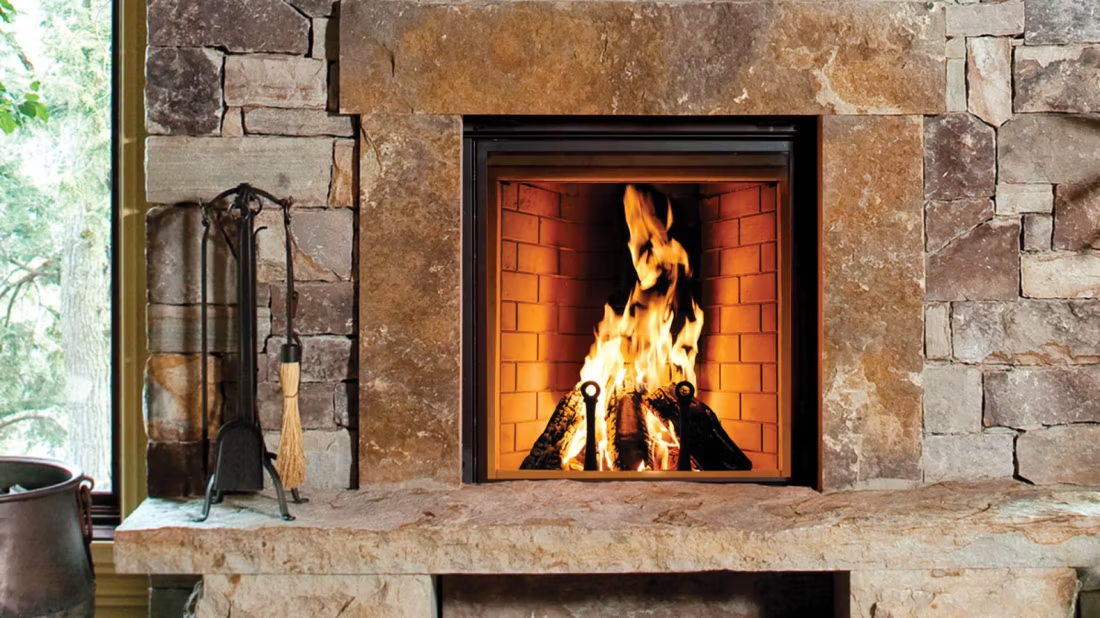
Firewood Cutting Permits Near Pima County
Three steps. No salesperson until you're ready.
Tell us about your project
Your zip code, your situation, and the fuel you're leaning toward—or let the answers point you to one.
See what's actually available
The brands dealers within 100 miles genuinely carry—real options, never a catalog mirage.
Get your dealer & Project Guide
A trusted local dealer, plus the free Project Guide & Parts List that names every component of the job.
Frequently Asked Questions
Does it even make sense to install a wood-burning fireplace in Pima County?
For most of the county, no—not as a primary heat source. With only 1,332 heating degree days a year, Pima County's heating needs are a fraction of a genuine cold-climate market like Duluth, MN, which sees over 8,000. Down in the Tucson basin, a wood stove would sit unused for all but a handful of nights each winter. Where it does make sense is at elevation: cabins around Summerhaven and the Catalina Highway corridor above 7,000 feet see real snow and sustained freezes, and a wood stove there functions as genuine supplemental heat rather than an occasional-use luxury.
Are there restrictions on burning wood in Pima County?
Yes. Pima County is a designated non-attainment area for particulate matter, and the Pima County Department of Environmental Quality issues mandatory no-burn advisories during winter inversions, when smoke and pollutants get trapped close to the ground across the Tucson basin. On advisory days, wood-burning fireplaces and stoves are required to stay unlit countywide. Anyone installing a wood appliance here should plan around these advisories rather than around the calendar.
Can I still legally install a new wood stove or fireplace in Pima County?
Yes, but any new unit needs to meet EPA 2020 NSPS emissions standards, and a local dealer will typically steer you toward a catalytic or non-catalytic EPA-certified stove rather than an open masonry fireplace, since certified units burn cleaner and hold up better under the county's no-burn advisory rules. Building permits for the installation run through Pima County Development Services if you're outside Tucson city limits, or the City of Tucson's permitting office if you're inside them.
What wood species are locally available if I want to burn wood?
Mesquite, pinyon, and juniper are the species you'll find most often, both from private tree services and through Coronado National Forest's personal-use cutting permits, roughly $5 to $20 per cord, with the permit season running May through October. Mesquite in particular is prized locally for smoking and grilling more than for heating—it burns hot and dense, closer to a charcoal substitute than a long, steady overnight heat source, which is part of why it shows up in backyard smokers more often than living-room stoves.
If Pima County's winters are so mild, why do people still want a wood fireplace?
Mostly for ambiance, and for the handful of homes where it genuinely gets cold. A stone or masonry wood fireplace often reads as a design feature in Tucson-area remodels, used on the occasional 30-degree January night rather than daily. At elevation it's a different story: Summerhaven cabins on Mount Lemmon deal with real snow load and sustained freezes, and homeowners there often want a wood stove as a legitimate backup heat source, especially since power lines along the Catalina Highway corridor can be exposed to winter storm outages.
What does a wood stove or fireplace installation typically cost in Pima County?
Costs vary more here than in a cold-climate market, since local dealers install far fewer wood systems and each job tends to be custom—a masonry fireplace insert, a freestanding stove with new Class A venting, or a retrofit into an existing chimney all price out differently. Because demand is low relative to gas and electric fireplaces, get a firm, in-home quote from a local dealer rather than relying on a national average; your elevation, existing chimney condition, and whether you're inside Tucson city limits will all factor into venting requirements and permit costs.
Do I need a permit to install a wood-burning appliance?
Yes. You'll need a building permit through Pima County Development Services, or the City of Tucson if your property sits inside city limits, and the stove or insert itself needs to meet current EPA 2020 NSPS emissions standards. Because wood installations are uncommon here, it's worth confirming with your dealer that they've pulled permits for wood appliances specifically and understand how the county's air quality rules interact with the building code.
Is gas or electric a better fit than wood for most Pima County homes?
For the large majority of the county—anywhere in or near the Tucson basin—yes. Gas and electric fireplaces deliver instant, thermostat-controlled ambiance without the no-burn advisory restrictions, the cutting and hauling of firewood, or the venting work a wood system requires, and both are considered standard, well-supported options by local dealers here. Wood remains the right call mainly for higher-elevation properties like those near Summerhaven, or for homeowners who specifically want the experience of a real wood fire and are prepared to work around occasional advisory days.
How does wildfire smoke affect wood-burning decisions in Pima County?
Wildfire smoke is a recurring air quality concern in the county, particularly in late spring and early summer when fires burn in the Santa Catalina and Rincon mountains and smoke settles into the Tucson basin. It's a separate issue from winter inversion no-burn advisories, but it adds to the same overall picture: air quality in Pima County is monitored closely, and the Department of Environmental Quality's non-attainment status means every added smoke source, including residential wood burning, is treated as a real factor rather than a minor nuisance.
Why is a fireplace insert so efficient?
An insert does two things: it seals the chimney completely, so you stop losing air you already paid to heat, and it radiates warmth into the room through the firebox and glass. Most add a heat-exchange fan that pulls cool room air underneath, wraps it around the hot firebox, and pushes it back out warm. Your home is more efficient before you've even lit the first fire.
What's the difference between an insert and a zero-clearance fireplace?
An insert is a fireplace that slides into a pre-existing wood-burning fireplace—if you don't have one, there's nothing to insert it into. A zero-clearance fireplace is built into a framed wall, which makes it the answer for remodels and new construction. Simple test: existing masonry fireplace means insert; blank or framed wall means zero-clearance.
How much should I budget for a fireplace?
For an average home—covering the fireplace, the vent pipe, and basic installation—a budget between $3,900 and $5,500 gives you a lot of options across wood, gas, and pellet. By the time you add finish work, gas line, and electrical, the average complete installation lands between $5,000 and $12,000 all-in. In a remodel or new build, a good rule is to put about 2.5% of the total project cost toward the fireplace.
Does a fireplace add value to my home?
On average, a fireplace adds back to the home about the same amount you spent installing it. Add the monthly savings from heating the rooms you actually use instead of the whole house—often hundreds of dollars a year—and the value case is strong before you even count what a fire does for how your family uses the room.
Stove and Fireplace Dealers in Pima County
Listings include WhyFire partner dealers, dealers we have verified as authorized for the brands we recommend, and established local businesses that carry hearth products. Every listing shows which one it is. The ones marked Preferred run on WhyFire's software, so they can show you real pricing and book your appointment right here. No manufacturer pays for placement. How we verify dealers →
Earth Energy's Hearth & Patio
Get your free Project Guide & Parts List for a wood fireplace in Pima County.
Whether you're planning a stove for a Mount Lemmon cabin or a wood-burning fireplace for a Tucson remodel, tell me about your home and elevation and I'll match you with a trusted local dealer who understands Pima County's no-burn advisory rules—plus a free Project Guide & Parts List with the exact equipment and vent kit for your project.
Find Your Fireplace →