
Keep Your Family Warm and Safe—No Matter What
With winter lows averaging 36°F, almost no Sahuarita home needs wood heat to get through January. But for backyard ambiance, ranch-property backup, or a taste of mesquite-fed fire, a wood-burning setup still has a niche here. Let's figure out if it's yours.
Every Project Starts From One of These Five Situations
Sahuarita's desert climate rarely calls for wood heat.
Sahuarita sits at 2,743 feet in the Santa Cruz Valley south of Tucson, with an average winter low of 36°F and a very light, short heating season. Compare that to a place like Fargo, ND, which has a long, brutal winter—Sahuarita's homes see roughly a sixth of the heating demand. The handful of genuinely cold nights each winter are usually handled fine by the electric heat pumps and central gas furnaces already built into most local homes, which is why wood stoves and wood-burning fireplaces never became a standard feature here the way they are in higher-elevation, colder parts of the Southwest.
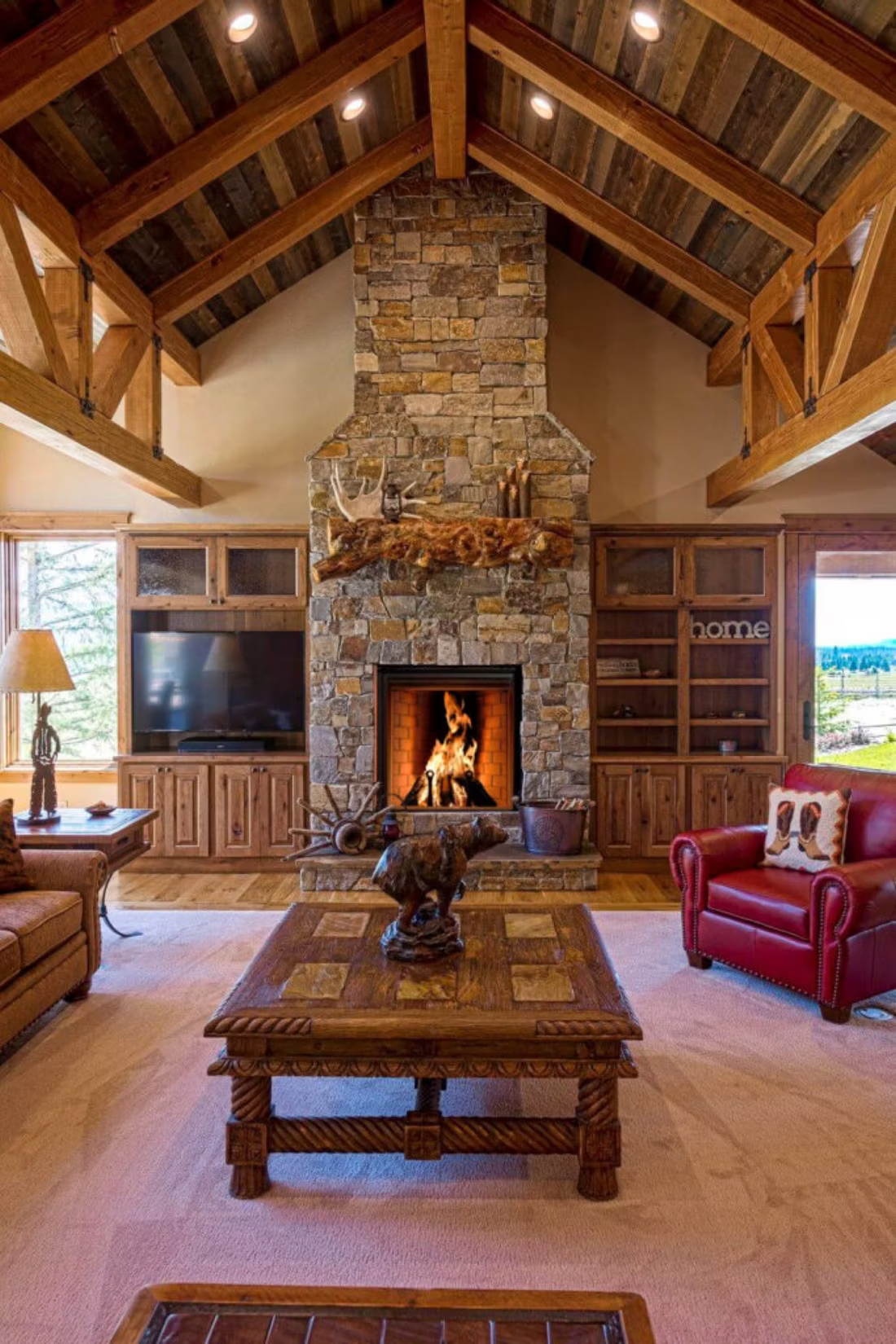
That said, wood isn't entirely absent from Sahuarita life. Mesquite is prized locally for its dense heat and distinctive smoke, and many residents pull cutting permits through the Coronado National Forest (May through October, $5 to $20 per cord)—though most of that wood ends up in a smoker or a backyard fire pit rather than a home heating appliance. A small number of custom and ranch-style homes do install a wood-burning fireplace or stove, usually for ambiance, for backup heat on properties served by smaller utilities like Ajo Improvement Co. or the Tohono O'odham Utility Authority, or simply because the owner wants a real fire. Pima County's non-attainment status and periodic winter inversions also mean wood burning here comes with more air-quality scrutiny than in cold-climate markets, so it's worth going in with eyes open.
Firewood Cutting Permits Near Sahuarita
Three steps. No salesperson until you're ready.
Tell us about your project
Your zip code, your situation, and the fuel you're leaning toward—or let the answers point you to one.
See what's actually available
The brands dealers within 100 miles genuinely carry—real options, never a catalog mirage.
Get your dealer & Project Guide
A trusted local dealer, plus the free Project Guide & Parts List that names every component of the job.
Frequently Asked Questions
Are wood stoves or wood-burning fireplaces common in Sahuarita?
Not really, and it's not close. With an average winter low of 36°F and only a very light, short heating season, Sahuarita simply doesn't have the sustained cold that makes wood heat a practical primary or secondary heat source. Most homes here are built and equipped for electric or gas heating that runs occasionally, not a wood stove that needs to be fed daily through a real winter. When we do see wood installs in Sahuarita, they're almost always custom or ranch-style homes where the owner specifically wants the look and feel of a real fire, or wants backup heat independent of the grid.
How much does it cost to install a wood-burning fireplace or stove in Sahuarita?
Because wood heat is a niche choice here rather than a routine one, pricing is less standardized than in cold-climate markets where every hearth shop stocks wood inventory year-round. Expect the bulk of the cost to be chimney or Class A venting work—since most Sahuarita homes weren't built with a masonry flue—plus the unit itself. Because so few local dealers keep wood units on the floor, your best move is getting a quote from a dealer who can tell you honestly whether it's a good fit for your specific house before you commit to sourcing one.
What wood species are actually available around Sahuarita?
Mesquite, pinyon, and juniper are the species people cut and burn locally, and mesquite in particular has a strong regional following—its dense grain and distinctive smoke flavor make it the wood of choice for grilling and smoking as much as for fireplace use. If you do install a wood-burning unit, mesquite burns hot and long, though it can be harder to split and season than pinyon or juniper. Most of what gets harvested locally ends up in a smoker or chiminea rather than an indoor stove, which tells you something about how wood is actually used here.
Can I get a permit to cut my own firewood near Sahuarita?
Yes—the Coronado National Forest issues personal-use cutting permits, typically running $5 to $20 per cord, with a cutting season from May through October. In practice, most people pulling these permits around Sahuarita are after mesquite for grilling and smoking rather than stocking up for a heating season, since there isn't much of a heating season to stock up for. If you do install a wood stove for backup or ambiance, a Coronado permit is a legitimate, inexpensive way to source fuel yourself.
Are there air quality restrictions on wood burning in Pima County?
Yes, and they're worth knowing before you install anything. Pima County is a non-attainment area, and the Tucson basin experiences winter temperature inversions that can trap smoke close to the ground, plus periodic wildfire smoke in summer and fall. Pima County's Department of Environmental Quality issues air quality advisories during these periods, and voluntary or mandatory burn restrictions can apply. If wood heat matters to you here, plan on checking local air quality advisories before lighting up, the same way Klamath Basin or Salt Lake Valley residents do during their own inversion events.
If wood isn't a great fit, what should I actually heat my Sahuarita home with?
For the vast majority of Sahuarita homes, gas and electric are the standard, sensible choices—both are rated standard fuel relevance for this climate, versus wood and pellet, which are essentially not applicable here. Tucson Electric Power serves most of the area, with Ajo Improvement Co. and the Tohono O'odham Utility Authority covering some outlying zones. A gas fireplace or insert gives you instant, clean heat on the rare cold evening without any of the sourcing, storage, or air-quality considerations that come with wood. If ambiance and a real flame matter to you, gas gets you most of the experience with none of the mesquite-hauling.
Does a wood stove make sense as backup heat for power outages in Sahuarita?
It's one of the more reasonable arguments for wood heat here. Sahuarita's mild winters mean a power outage during cold weather is rarely life-threatening, but rural properties served by smaller utilities can see longer outage windows than those on Tucson Electric Power's core grid. A wood stove that doesn't depend on electricity to run is genuinely useful in that scenario—it just needs to be sized and vented properly, which on a home without an existing chimney means real construction work, not a simple drop-in.
Can I install a wood-burning fireplace in a new build in Sahuarita?
You can, though it's uncommon enough that not every local builder or hearth dealer will have wood units readily on hand—most inventory and expertise locally skews toward gas and electric given the climate. Custom home builds and larger ranch properties are where we see it most, usually as a design choice rather than a heating necessity. If this is the route you want, working with a dealer experienced in wood-burning installs (rather than one who mainly does gas conversions) matters more here than it would in a cold-climate market where every installer does wood as a matter of course.
Wood vs. gas fireplace—which actually makes sense for my Sahuarita home?
Given the climate, gas wins for most homeowners here. It lights instantly, needs no fuel storage or splitting, avoids the air-quality advisories that come with Pima County's non-attainment status, and matches a climate where such a light, short heating season barely justifies a furnace running, let alone a wood stove. Wood makes sense only in specific cases: you want the authentic mesquite-fire experience, you're on a rural property where grid reliability is a real concern, or you're building a custom home where a wood-burning fireplace is part of the design vision. For nearly everyone else, gas delivers the ambiance without the tradeoffs.
Why is a fireplace insert so efficient?
An insert does two things: it seals the chimney completely, so you stop losing air you already paid to heat, and it radiates warmth into the room through the firebox and glass. Most add a heat-exchange fan that pulls cool room air underneath, wraps it around the hot firebox, and pushes it back out warm. Your home is more efficient before you've even lit the first fire.
What's the difference between an insert and a zero-clearance fireplace?
An insert is a fireplace that slides into a pre-existing wood-burning fireplace—if you don't have one, there's nothing to insert it into. A zero-clearance fireplace is built into a framed wall, which makes it the answer for remodels and new construction. Simple test: existing masonry fireplace means insert; blank or framed wall means zero-clearance.
How much should I budget for a fireplace?
For an average home—covering the fireplace, the vent pipe, and basic installation—a budget between $3,900 and $5,500 gives you a lot of options across wood, gas, and pellet. By the time you add finish work, gas line, and electrical, the average complete installation lands between $5,000 and $12,000 all-in. In a remodel or new build, a good rule is to put about 2.5% of the total project cost toward the fireplace.
Can I install a fireplace myself?
If you're putting a fire in your house on purpose, it's best to work with an expert. Unless you're genuinely experienced in framing, gas line, vent pipe, and the national code on clearances to combustibles, have a professional do it—and ideally the same company that sells you the fireplace, so warranty, service, and liability all live under one roof.
Nearby Dealers
Hearth shops serving Sahuarita and the surrounding area. Every listing shows whether it is a WhyFire partner, a dealer we have verified as authorized for the brands we recommend, or a local business carrying hearth products. No manufacturer pays for placement. How we verify dealers →
Earth Energy's Hearth & Patio
See if a wood fireplace fits your Sahuarita home.
Wood heat isn't the default choice in Sahuarita, but it isn't off the table either. Tell us about your home and how you'd use it, and we'll match you with a local dealer experienced in wood-burning installs—plus a free Project Guide & Parts List laying out exactly what your project needs, including the venting.
Find Your Fireplace →