
Keep Your Family Warm and Safe—No Matter What
With winter lows averaging 36°F and only a short, mild heating season each year, most Green Valley homes don't need wood heat. But for the handful who still want it, here's how to do it right—and who can help.
Every Project Starts From One of These Five Situations
Green Valley's mild winters make wood heat the exception, not the rule.
Green Valley sits at just under 3,000 feet in the Sonoran Desert foothills of Pima County, about 25 miles south of Tucson. Winter lows here average a mild 36°F, and the area sees a short, gentle heating season overall—compare that to a cold-climate city like Bozeman, Montana, which can face a heating season several times longer and harsher in a single winter. For the vast majority of Green Valley homes, a standard furnace or heat pump handles the handful of genuinely cold nights from December through February, and full-time wood heat isn't something most residents need or install.
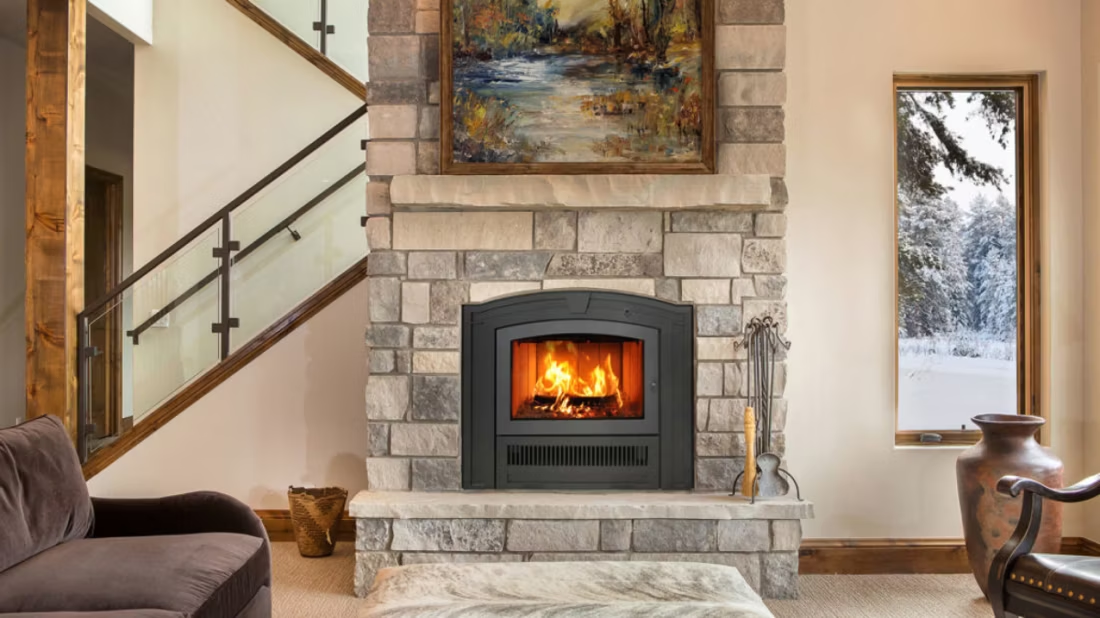
That said, a small number of Green Valley homeowners still put in a wood-burning fireplace or stove—for the ambiance of a real fire on the occasional cold desert evening, for a second home at higher elevation near Madera Canyon or the Santa Rita foothills where nights run noticeably colder, or as backup heat that doesn't depend on the grid. If that's you, it's worth knowing Pima County is classified as a non-attainment area for particulate matter and does see winter inversions, so any installation should use a current EPA-certified unit, and it's worth checking local burn advisories before lighting up during inversion events.
Firewood Cutting Permits Near Green Valley
Three steps. No salesperson until you're ready.
Tell us about your project
Your zip code, your situation, and the fuel you're leaning toward—or let the answers point you to one.
See what's actually available
The brands dealers within 100 miles genuinely carry—real options, never a catalog mirage.
Get your dealer & Project Guide
A trusted local dealer, plus the free Project Guide & Parts List that names every component of the job.
Frequently Asked Questions
Does a wood stove make sense for a home in Green Valley?
For most homes here, no—not as a primary heat source. With winter lows averaging 36°F and only a short, mild heating season each year, Green Valley's winters are brief and gentle compared to places like Duluth, Minnesota or Burlington, Vermont, where wood stoves are a genuine necessity. A gas fireplace or an efficient heat pump typically covers the occasional cold snap here more practically. Where a wood stove still makes sense is for homeowners who want the look and feel of a real fire, or who have a second property at higher elevation where nights run noticeably colder.
If I still want a wood-burning fireplace, what should I look for?
Choose a newer, EPA-certified wood stove or insert rather than an older uncertified unit—Pima County's periodic winter inversions and its non-attainment status for particulate matter make cleaner-burning equipment worth the investment even for occasional use. Because full installations are uncommon locally, plan on working with a dealer who serves the greater Tucson area rather than someone based in Green Valley itself; they can confirm venting requirements and local code before you buy.
What does a wood stove installation typically cost?
Local installers don't see enough wood stove requests in Green Valley to quote a hyper-local range, but nationally, a wood stove or insert installation—including venting, hearth pad, and labor—typically runs $4,500 to $9,000. Costs move toward the top of that range if you don't have an existing masonry chimney and need a full Class A chimney system built from scratch, which is common in Green Valley's newer stucco homes.
What kind of firewood is available near Green Valley?
Mesquite, pinyon, and juniper are the wood species most commonly available in the region, and all three burn well in a properly sized stove—mesquite in particular burns hot and dense, which suits occasional-use fires. If you want to cut your own, the Coronado National Forest issues cutting permits from May through October, running $5 to $20 per cord.
Are there restrictions on wood burning in Green Valley?
Pima County is designated a non-attainment area for particulate matter, and the region experiences winter temperature inversions that can trap wood smoke close to the ground, along with periodic wildfire smoke in summer and fall. None of this bans wood burning outright, but it's worth checking local air quality advisories before burning on inversion-prone days, and it's another reason to choose an EPA-certified stove over an older, higher-emission unit.
Wood vs. gas—which is the better fit for a Green Valley home?
Gas is the more practical choice for most homes here. Green Valley's mild winters mean gas fireplaces provide plenty of supplemental warmth without the upkeep of firewood, and gas is a standard, well-supported option with local dealers who install it regularly. Wood remains an option if you specifically want the ambiance and experience of a real wood fire, or you have a property at higher elevation, but expect to work with a dealer who covers the broader Tucson market rather than one focused solely on Green Valley.
Where can I get a firewood cutting permit near Green Valley?
The Coronado National Forest, which covers much of the higher terrain surrounding Green Valley including the nearby Santa Rita Mountains, issues personal-use firewood permits from May through October. Cost runs $5 to $20 per cord depending on the district and time of year—contact the local Coronado National Forest office for current permit availability and cutting areas.
I have a vacation property at higher elevation near Green Valley—does wood heat make more sense there?
Possibly. Elevation changes the equation quickly in this region—a cabin up toward Madera Canyon or higher in the Santa Rita foothills sees meaningfully colder nights and a longer, more demanding heating season than Green Valley itself. If you're heating a higher-elevation second home through the winter, a wood stove is a much more reasonable primary or backup heat source than it is down in the valley. Talk to a dealer about your specific elevation and exposure before choosing equipment.
Wood vs. electric—which handles Green Valley's occasional cold nights better?
For most residents, electric is simpler. Green Valley is served by Trico Electric Cooperative, along with Ajo Improvement Co. and Tohono O'odham Utility Authority in parts of the surrounding area, with residential rates generally in the 12.5 to 14.2 cents per kWh range—inexpensive enough that a portable electric heater or electric fireplace insert comfortably covers the handful of cold nights each winter. Wood only pulls ahead if you want a real fire experience or need heat that doesn't depend on grid power, which matters more for backup-heat planning than everyday comfort here.
Why won't my new wood stove get going like my old one?
New wood stoves are 70%+ efficient, so far less heat goes up the flue—which also means less draft to get a fire established. The rule: build a genuinely hot fire for about 45 minutes before you choke it down. Skip that and you get smoke in the room, creosote in the chimney, and a fire that never takes off. Most performance complaints trace straight back to this.
Why is a fireplace insert so efficient?
An insert does two things: it seals the chimney completely, so you stop losing air you already paid to heat, and it radiates warmth into the room through the firebox and glass. Most add a heat-exchange fan that pulls cool room air underneath, wraps it around the hot firebox, and pushes it back out warm. Your home is more efficient before you've even lit the first fire.
Can a fireplace actually lower my heating bill?
Yes—by creating a comfort zone. A furnace heats every square foot of the house just to warm the one room you're in; a gas fireplace on low burns roughly a sixth of the gas a typical furnace does. Set the furnace around 55–60 degrees as a baseline, then heat the rooms your family actually uses. Families who heat this way commonly save $20–$60 a month.
How much should I budget for a fireplace?
For an average home—covering the fireplace, the vent pipe, and basic installation—a budget between $3,900 and $5,500 gives you a lot of options across wood, gas, and pellet. By the time you add finish work, gas line, and electrical, the average complete installation lands between $5,000 and $12,000 all-in. In a remodel or new build, a good rule is to put about 2.5% of the total project cost toward the fireplace.
Nearby Dealers
Hearth shops serving Green Valley and the surrounding area. Every listing shows whether it is a WhyFire partner, a dealer we have verified as authorized for the brands we recommend, or a local business carrying hearth products. No manufacturer pays for placement. How we verify dealers →
Earth Energy's Hearth & Patio
Find your wood fireplace option in Green Valley.
Even though wood heat is uncommon in Green Valley, we can still match you with a trusted local dealer and send over a free Project Guide & Parts List—a plan built around your specific home, elevation, and property, with the exact parts (including the vent kit) and a dealer who can install it correctly.
Find Your Fireplace →