
Keep Your Family Warm and Safe—No Matter What
With winter lows averaging 31°F and a winter heating season that's light by any measure, Oro Valley rarely needs wood heat to survive winter—but a wood stove or insert still has a place for the right home. We'll help you find out if it's yours.
Every Project Starts From One of These Five Situations
In Oro Valley, wood is the exception, not the rule.
Oro Valley sits at 2,747 feet in the foothills of the Santa Catalina Mountains, where winters are short and mild by any national standard—average lows hover around 31°F and the area has a very light winter heating load, only a small fraction of what colder regions need. Compare that to a place like Duluth, Minnesota, which has a heating season nearly four and a half times as demanding, and it's clear why wood-burning appliances aren't a standard fixture here the way gas and electric heat are. Most homes in Oro Valley simply don't need a dedicated wood-heat source to get through winter.
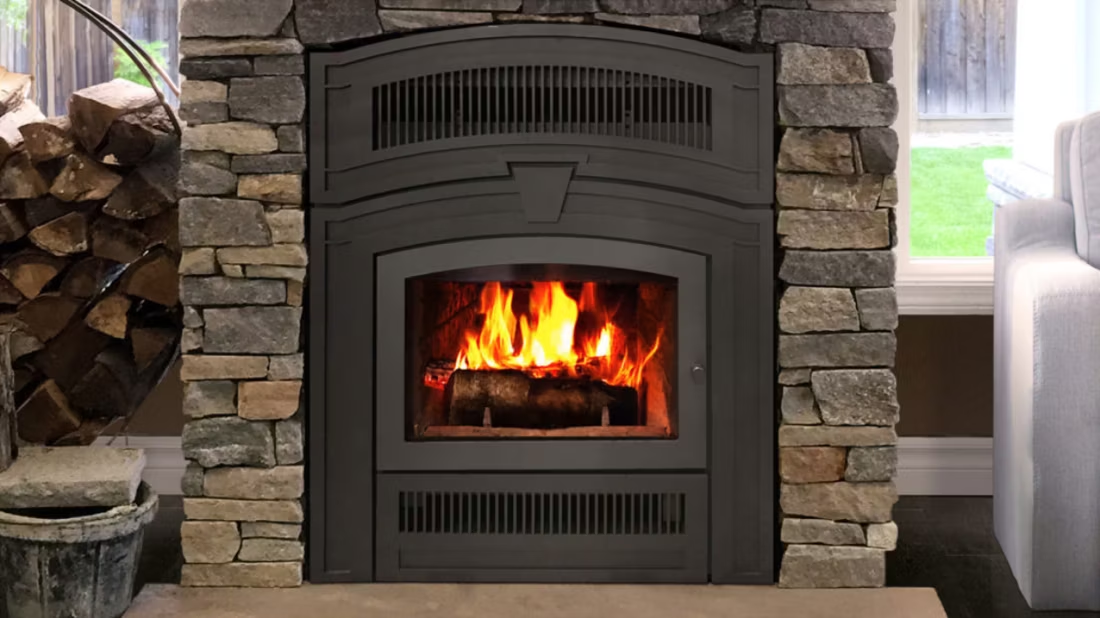
That said, wood stoves and inserts aren't unheard of. Some homeowners in the higher foothill neighborhoods, or those with second properties up toward Mount Lemmon and the Coronado National Forest, install a wood stove for genuine cold-weather use during the occasional freeze, or simply for the ambiance of a real fire on a January evening. Pima County is also a designated non-attainment area for particulate matter, and winter inversions can trap smoke over the Tucson basin, so any wood-burning unit installed here needs to be EPA 2020 NSPS-certified and used with an eye on local air quality advisories. If you cut your own firewood, the Coronado National Forest issues permits (typically $5 to $20 per cord) during the May-to-October season for mesquite, pinyon, and juniper—all common regional species.
Firewood Cutting Permits Near Oro Valley
Three steps. No salesperson until you're ready.
Tell us about your project
Your zip code, your situation, and the fuel you're leaning toward—or let the answers point you to one.
See what's actually available
The brands dealers within 100 miles genuinely carry—real options, never a catalog mirage.
Get your dealer & Project Guide
A trusted local dealer, plus the free Project Guide & Parts List that names every component of the job.
Frequently Asked Questions
Are wood stoves actually common in Oro Valley?
Not really—and it's worth saying plainly. With winter lows averaging around 31°F and a winter heating load that's quite light overall, most Oro Valley homes rely on gas or electric heat, and wood-burning appliances are a minority choice. Where they do show up, it's usually in higher-elevation foothill properties near the Santa Catalina Mountains, second homes with a cabin feel, or homeowners who simply want a real wood fire for a handful of cool evenings each winter rather than as a primary heat source.
What does a wood stove installation cost in Oro Valley?
Because wood stoves are installed far less frequently here than in colder markets, pricing varies more by project than by a standard local range. Costs depend heavily on whether you're venting through an existing masonry chimney, running new Class A pipe through a roof, and whether you choose a freestanding stove or a zero-clearance fireplace. A trusted local dealer will walk your specific home and give you a firm number—but expect the estimate process itself to take a bit more legwork here, since fewer installers in the Tucson metro specialize in wood-burning work compared to gas.
Can I legally burn wood in Oro Valley given the air quality rules?
Yes, but with conditions. Pima County—including Oro Valley—is a designated non-attainment area for particulate matter, and winter temperature inversions can trap smoke over the Tucson basin. Any new wood-burning stove or insert needs to meet EPA 2020 NSPS emissions standards, and Pima County Department of Environmental Quality occasionally issues no-burn advisories during inversion events. Older, uncertified stoves are the ones most likely to run into trouble on high-pollution days, so a modern EPA-certified unit is the safer long-term choice if you go this route.
Where can I get firewood or cut my own near Oro Valley?
The Coronado National Forest, which wraps around the Santa Catalina Mountains just north and east of town, issues personal-use cutting permits typically priced between $5 and $20 per cord, valid during the May-through-October season. Mesquite, pinyon, and juniper are the most common species available locally—mesquite in particular burns hot and long and is popular for both stoves and outdoor cooking. Retail firewood delivery is less established here than in wood-heavy climates, so a lot of local wood-stove owners end up sourcing seasoned mesquite through smaller regional sellers or cutting their own with a Forest Service permit.
Does it make more sense to install a wood stove at a higher-elevation property?
Generally, yes. A cabin or second home up toward Mount Lemmon or elsewhere in the Catalina foothills sees meaningfully colder, longer winters than the Oro Valley valley floor, and a wood stove can function as genuine supplemental or even primary heat in that setting. Down in town, where winter lows average around 31°F and cold snaps are brief, a wood stove is more often installed for ambiance and occasional use than for load-bearing heat—which affects both the size of the unit you need and how much you'll actually burn each season.
Is a wood-burning fireplace insert worth it for a Oro Valley home?
It depends on what you want from it. If you're after the crackle and radiant feel of a real wood fire a few nights a winter, a wood insert into an existing masonry fireplace can deliver that well. But if you're weighing resale value or everyday convenience, gas conversions tend to be more popular locally—Tucson-area buyers are generally more familiar with gas fireplaces, and gas sidesteps the air-quality advisory issue entirely. A local dealer can walk you through both options against your existing fireplace opening.
What size wood stove do I need in Oro Valley?
Smaller than you'd need in a genuinely cold climate. Because Oro Valley's heating load is light—again, only a small fraction of the heating load in places like Bozeman, Montana—most local installations are compact stoves sized for a single room or as supplemental heat rather than whole-home units. Oversizing is a real risk here: a stove sized for a Northern winter will run too hot and get used too rarely in Oro Valley's mild climate, leading to glazed glass and creosote buildup from smoldering, low-temperature burns.
How often should a wood stove be inspected if I don't use it much?
Annually, regardless of how lightly it's used—arguably more important here, not less. Stoves that see only occasional use during Oro Valley's short cool season are actually more prone to creosote glazing from low, infrequent burns than a stove run hard all winter in a cold climate. A CSIA-standard sweep and inspection before the cool season starts (typically November through February locally) catches that buildup before it becomes a chimney fire risk.
Wood vs. gas—which makes more sense for a home in Oro Valley?
For nearly all Oro Valley homes, gas is the more practical choice. Tucson Electric Power serves the area's electric needs, and gas or propane fireplaces offer instant, clean heat without the air-quality advisories that can affect wood burning during winter inversions. Wood still has a place for homeowners who want the specific experience of a real fire, have a higher-elevation property, or simply prefer it—but if you're choosing purely for reliable, low-maintenance heat in this climate, gas is what most local dealers will steer you toward first.
Why won't my new wood stove get going like my old one?
New wood stoves are 70%+ efficient, so far less heat goes up the flue—which also means less draft to get a fire established. The rule: build a genuinely hot fire for about 45 minutes before you choke it down. Skip that and you get smoke in the room, creosote in the chimney, and a fire that never takes off. Most performance complaints trace straight back to this.
Do I have to leave the stove door cracked open to start a fire?
On many stoves, yes—a new fire needs extra air, and cracking the door a couple inches is how most stoves get it. But some modern stoves offer an automatic startup air system: engage it when you light, and timed air jets feed the fire for the first 20 minutes with the door fully shut, then close automatically. It's mechanical—like an egg timer, no electricity—and it means you can load it, light it, and walk away.
What is an in-home preview and do I need one?
It's a visit where a hearth professional measures your space, confirms the model you picked actually works in your home, and walks the specs—framing, gas line, venting, finish work—before anything is ordered. Some details you just can't know until you see the house. Never make a down payment without one; it's the single most-skipped step that burns buyers.
Can I install a fireplace myself?
If you're putting a fire in your house on purpose, it's best to work with an expert. Unless you're genuinely experienced in framing, gas line, vent pipe, and the national code on clearances to combustibles, have a professional do it—and ideally the same company that sells you the fireplace, so warranty, service, and liability all live under one roof.
Nearby Dealers
Hearth shops serving Oro Valley and the surrounding area. Every listing shows whether it is a WhyFire partner, a dealer we have verified as authorized for the brands we recommend, or a local business carrying hearth products. No manufacturer pays for placement. How we verify dealers →
Earth Energy's Hearth & Patio
Find your wood fireplace in Oro Valley.
Wood stoves are less common here, which makes it even more important to work with someone who actually knows the local terrain. Tell us about your home and we'll put together a free Project Guide & Parts List—the right unit, the vent kit it needs, and a trusted local dealer who can install it correctly.
Find Your Fireplace →