
Keep Your Family Warm and Safe—No Matter What
Real mesquite-fed heat for the cool evenings in the foothills of the Rincon Mountains. Find the right stove or insert, and connect with a trusted local dealer.
Every Project Starts From One of These Five Situations
Wood heat rooted in mesquite and monsoon country.
Tanque Verde sits in the foothills of the Rincon Mountains east of Tucson, at roughly 2,665 feet in the Sonoran Desert. Winters here are mild by any national standard—average lows hover around 41°F and the region logs fewer than 1,400 heating degree days a year, nowhere close to a place like Bozeman, Montana or Duluth, Minnesota. But the foothills run noticeably cooler than downtown Tucson after sunset, and clear desert nights in December and January can dip into the 20s. For a lot of homes out here, a wood stove or fireplace isn't the only source of heat, but it's the one that gets used the most on those nights.
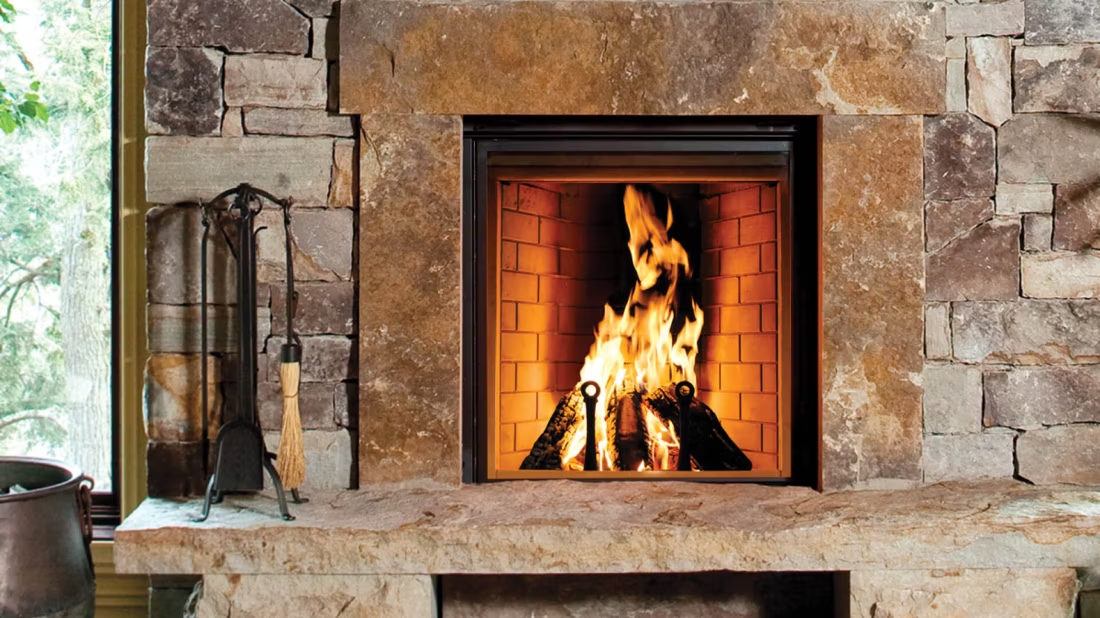
Mesquite, pinyon, and juniper—the same woods used for grilling across the Southwest—are the standard firewood here, cut under permit from the nearby Coronado National Forest. Many Tanque Verde homes still have the traditional adobe-style corner 'kiva' fireplace common throughout the Tucson basin; converting one to a modern EPA-certified insert dramatically improves both heat output and air quality. That matters locally: Pima County is a federal non-attainment area for particulate matter, and winter inversions can trap wood smoke close to the ground. A cleaner-burning, certified unit is generally the difference between burning normally and getting caught by a No-Burn advisory.
Firewood Cutting Permits Near Tanque Verde
Three steps. No salesperson until you're ready.
Tell us about your project
Your zip code, your situation, and the fuel you're leaning toward—or let the answers point you to one.
See what's actually available
The brands dealers within 100 miles genuinely carry—real options, never a catalog mirage.
Get your dealer & Project Guide
A trusted local dealer, plus the free Project Guide & Parts List that names every component of the job.
Frequently Asked Questions
How much does it cost to install a wood stove or insert in Tanque Verde?
Across the eastern Tucson foothills, a typical wood stove or insert installation runs about $3,500 to $8,000, depending on the unit, whether you're converting an existing adobe kiva fireplace, and how much chimney or venting work is involved. Converting an existing masonry fireplace to a modern insert is usually on the lower end since the chimney already exists; installing a freestanding stove with new Class A pipe through a tile or flat roof costs more. Pima County building permits and any needed inspection are typically handled by your installer as part of the job.
What size wood stove do I need for a Tanque Verde home?
Because Tanque Verde only logs about 1,400 heating degree days a year, most homes need a stove sized for supplemental heat rather than a whole-home primary system—something in the small-to-medium range (up to about 1,500 sq ft of coverage) is plenty for most floor plans, even with the high ceilings common in Southwest architecture. Oversizing is the more common mistake locally: a stove built to handle a Minnesota winter will smolder and glaze over with creosote if it's only ever asked to take the edge off a 38°F desert night. A local dealer can size the room correctly during a walkthrough.
How do I find a certified wood stove installer near Tanque Verde?
Look for NFI-certified (National Fireplace Institute) or CSIA-certified installers—both credentials indicate real training in clearances, venting, and code compliance, not just sales experience. Around Tucson and the eastern foothills, most hearth retailers employ their own certified install crews rather than subcontracting to general handymen, which matters both for warranty coverage and for getting the Pima County permit signed off cleanly.
Should I install a freestanding stove or convert my existing fireplace to an insert?
If your home has one of the traditional adobe-style corner fireplaces common throughout the Tucson basin—often called a kiva fireplace—an insert is usually the better move. It reuses the existing chimney, keeps the look of the original hearth, and turns a fireplace that loses most of its heat up the flue into something that actually warms the room. Homes without an existing fireplace, or newer construction on a slab, are generally better candidates for a freestanding stove with its own venting run through the roof.
Do I need a permit to install a wood stove in Tanque Verde?
Yes. Tanque Verde is unincorporated, so building permits for a new wood-burning appliance go through Pima County Development Services rather than a city office, and the stove itself needs to meet current EPA emissions standards. Separately, because Pima County is a federal non-attainment area for particulate matter, keep an eye on Pima County Department of Environmental Quality burn advisories during winter inversions—older, uncertified fireplaces are the ones most likely to be restricted on a No-Burn day, which is one more reason to upgrade an old open hearth to a certified insert.
What's the best wood stove for Tanque Verde's climate?
Because winters here are short and mild compared to almost anywhere else that burns wood seriously, you generally don't need a 20+ hour catalytic unit built for sub-zero nights in Bozeman or Fargo. A mid-size non-catalytic stove from a brand like Lopi or Pacific Energy—sized for occasional use and quick, responsive heat—tends to fit Tanque Verde homes better than an oversized catalytic unit built to hold a fire all night in a much colder climate.
How often should my chimney be inspected in Tanque Verde?
Even with light seasonal use, plan on an annual inspection—ideally in early fall before the first cool nights. Local sweeps see less creosote buildup here than in high-HDD climates simply because the burn season is shorter, but Sonoran Desert flues bring their own issue: pack rats, bats, and birds regularly nest in unused chimney caps over the summer. An annual Level 1 inspection catches a blocked flue before you light the season's first fire.
Where can I get firewood or a cutting permit near Tanque Verde?
The Coronado National Forest, right in the surrounding foothills, issues personal-use cutting permits for $5 to $20 per cord during the May-through-October season. Mesquite is the local favorite—dense, long-burning, and the same wood used for grilling across the Southwest—along with pinyon and juniper. Several Tucson-area firewood suppliers also deliver seasoned mesquite by the cord if you'd rather not cut your own.
Wood stove or pellet stove—which makes more sense in Tanque Verde?
Wood stoves burn locally abundant mesquite, pinyon, and juniper, work without electricity, and suit the relatively light, occasional-use heating pattern typical here. Pellet stoves, using bagged pellets from brands like Forest Energy or Lignetics, burn cleaner and are easier to load-and-forget, which matters on the occasional No-Burn advisory day tied to Pima County's non-attainment status—pellet stoves are generally exempt from those restrictions. If you want a fire you can see and don't mind the wood-handling, go wood; if you want hands-off convenience and cleaner-burning certainty during air quality advisories, pellet is worth a look from a local dealer.
Why won't my new wood stove get going like my old one?
New wood stoves are 70%+ efficient, so far less heat goes up the flue—which also means less draft to get a fire established. The rule: build a genuinely hot fire for about 45 minutes before you choke it down. Skip that and you get smoke in the room, creosote in the chimney, and a fire that never takes off. Most performance complaints trace straight back to this.
Why is my open fireplace making my house colder?
Open fireplaces suck—literally. As the fire burns, it consumes air your furnace already paid to heat and pulls it out through the chimney, so the house is actually colder after the fire goes out than before you lit it. An insert fixes this: it seals the chimney, puts fixed glass across the front, and turns that hole in your house into a real heat source.
Does a fireplace add value to my home?
On average, a fireplace adds back to the home about the same amount you spent installing it. Add the monthly savings from heating the rooms you actually use instead of the whole house—often hundreds of dollars a year—and the value case is strong before you even count what a fire does for how your family uses the room.
Can a fireplace actually lower my heating bill?
Yes—by creating a comfort zone. A furnace heats every square foot of the house just to warm the one room you're in; a gas fireplace on low burns roughly a sixth of the gas a typical furnace does. Set the furnace around 55–60 degrees as a baseline, then heat the rooms your family actually uses. Families who heat this way commonly save $20–$60 a month.
Nearby Dealers
Hearth shops serving Tanque Verde and the surrounding area. Every listing shows whether it is a WhyFire partner, a dealer we have verified as authorized for the brands we recommend, or a local business carrying hearth products. No manufacturer pays for placement. How we verify dealers →
Earth Energy's Hearth & Patio
Find your wood fireplace in Tanque Verde.
Tell us about your home and we'll match you with a trusted local dealer and send over your free Project Guide & Parts List—a plan for your wood stove or insert project in Tanque Verde, with the exact parts, including the vent kit, it'll take to get it installed right.
Find Your Fireplace →