
Find the Right Fireplace for Tucson's Warm Desert Winters.
Fireplace resources for every city in Pima County—from Tucson and Oro Valley to the Santa Catalina foothills. Stoves are genuinely uncommon in this climate; we'll tell you where they still make sense and where they don't.
Every Project Starts From One of These Five Situations
Mild desert winters shape hearth choices across Pima County, Arizona.
Pima County spans nearly 9,200 square miles in southern Arizona, from the Tucson basin at roughly 2,400 feet up into the Santa Catalina and Rincon mountain 'sky islands' that top out above 9,000 feet at Mount Lemmon. Down in Tucson, Oro Valley, and Marana, winters are short and mild—the county sees a light winter heating load overall and a winter low near 41°F, nothing close to what Buffalo NY or Duluth MN see in a single January week. That climate is exactly why wood and pellet stoves never became a mainstream heating fuel here: full-time wood heat isn't the local heritage the way it is in the Sierra or the Rockies. What is local: mesquite, pinyon, and juniper firewood cut under Coronado National Forest permits, burned mostly for weekend ambiance and patio fires rather than as a primary heat source.
What you'll find on this hub: hearth retailers, gas and electric service technicians, and fuel suppliers serving every community in the county—Tucson, Oro Valley, Marana, Sahuarita, South Tucson, and the unincorporated foothill and sky-island communities like Summerhaven on Mount Lemmon, where actual snow and cold make wood heat far more practical than it is on the desert floor. Pick a fuel below to see local dealers, installation costs, and the right unit for a Tucson-basin home or a cabin near Mount Lemmon.
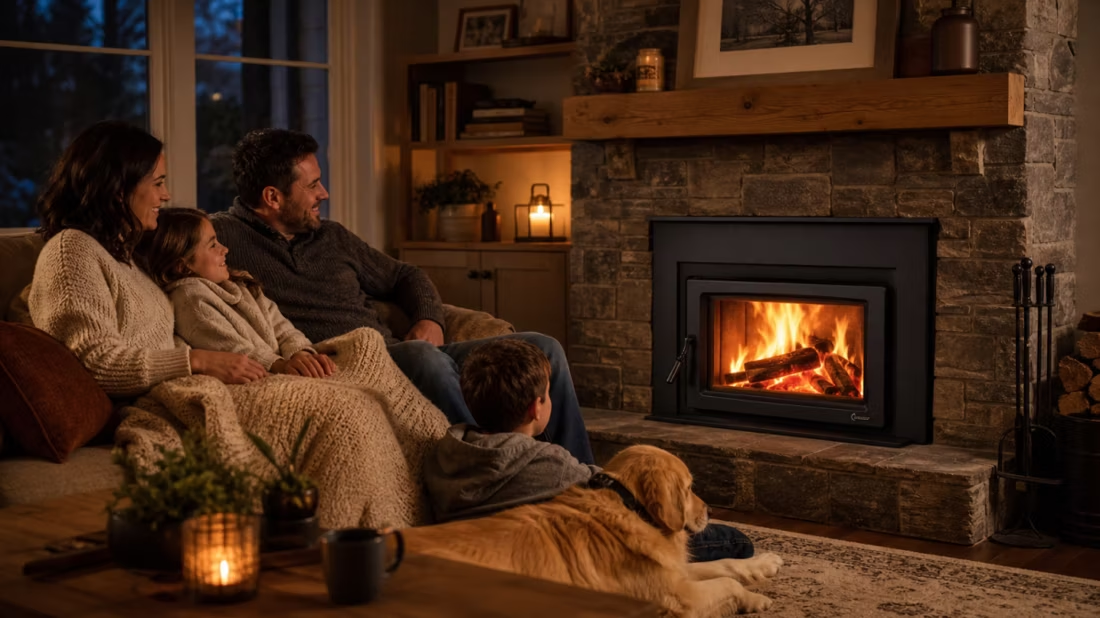
Four fuels. One honest answer for Pima County.
Three steps. No salesperson until you're ready.
Tell us about your project
Your zip code, your situation, and the fuel you're leaning toward—or let the answers point you to one.
See what's actually available
The brands dealers within 100 miles genuinely carry—real options, never a catalog mirage.
Get your dealer & Project Guide
A trusted local dealer, plus the free Project Guide & Parts List that names every component of the job.
Frequently Asked Questions
Which fuel works best in Pima County?
For most Pima County homes, gas is the practical choice—a Southwest Gas or propane fireplace gives instant ambiance and takes the edge off the handful of nights each winter that dip into the 30s, without asking anyone to manage a fire. Electric fireplaces are a strong secondary option in Tucson, Oro Valley, and Marana subdivisions—plug-in or built-in units add visual warmth in a bedroom or living room without any venting at all, which suits a climate that rarely needs supplemental heat past a space heater's worth. Wood and pellet stoves are genuinely rare here—Pima County's light winter heating load and its status as an EPA non-attainment area for particulate pollution mean full-time wood heat never took hold outside a handful of higher-elevation cabins near Mount Lemmon and Summerhaven, where real winter cold and occasional snow make a wood stove make more sense. If you're on the desert floor, expect gas or electric to be the answer; if you're up in the Catalinas, wood re-enters the conversation.
Do I need a permit to install a fireplace in Pima County?
Usually, yes. Gas fireplace, insert, and stove installations require a building permit plus a separate gas line permit and licensed gas-fitter for the connection work—inside Tucson city limits, permits go through Tucson Development Services; in unincorporated Pima County (including Oro Valley, Marana subdivisions outside city boundaries, and the foothill communities), permits are issued through Pima County Development Services. Electric fireplaces are usually permit-free for plug-in units, but built-in electric fireplaces that require new circuits or hardwiring do need an electrical permit. Wood stove installations, while uncommon, still require a building permit and must meet current EPA emissions standards. Most local hearth retailers pull the permit as part of the installation quote, so you typically don't have to file it yourself.
Are there air quality restrictions on wood burning in Pima County?
Yes, and this is a real factor in why wood heat stayed niche here. Pima County is a designated non-attainment area for particulate matter, and Pima County's air quality program issues winter advisories—sometimes tied to temperature inversions that trap smoke over the Tucson basin, sometimes tied to regional wildfire smoke drifting in from Arizona and New Mexico forests. On advisory days, residents are asked to avoid open wood burning. This is one more reason gas and electric dominate the county's fireplace market: neither one triggers air-quality concerns on the days when open wood burning is discouraged. If you do burn wood—say, at a Mount Lemmon cabin—an EPA-certified stove burning seasoned mesquite or juniper is markedly cleaner than an open fireplace and draws far less scrutiny during inversion events.
Can one local hearth retailer handle both gas and electric fireplaces?
Yes—nearly every hearth retailer serving Tucson, Oro Valley, and Marana carries both gas and electric lines, since those are the two fuels that actually move in this market. Most showrooms display working gas fireplace models alongside electric inserts and wall-mounts, which makes it easy to compare a real flame against an electric alternative in the same visit. A smaller number of dealers also stock a limited selection of wood stoves for the Mount Lemmon and Summerhaven customer base—worth asking about directly if you're outfitting a sky-island cabin rather than a basin home, since not every showroom keeps wood units in inventory.
How does service work for higher-elevation communities like Summerhaven and the Mount Lemmon area?
Most gas and electric service technicians are based in the Tucson metro and drive up the Catalina Highway to reach Summerhaven, Mount Lemmon, and other sky-island communities—expect a travel fee for the trip, and winter closures on that road (it does close for snow and ice) can push a service call back a day or more in December and January. Because those elevations actually see real winter weather unlike the desert floor, some cabin owners keep a wood stove as backup heat for outages or highway closures, sourcing mesquite, pinyon, or juniper firewood under Coronado National Forest permits. If you're at elevation, scheduling annual gas or electric service before the first snow, typically in October, avoids the highway-closure scramble.
What's the typical cost range for fireplace installation across fuel types in Pima County?
Gas fireplace, insert, or stove: roughly $4,000–$10,000 depending on whether it's a direct-vent retrofit or new gas line work through Southwest Gas. Electric fireplace: $200–$2,500 for the unit itself, plus $300–$1,000 in labor for anything beyond a plug-in install—built-ins with new wiring run toward the higher end. Wood stove installation, for the small number of Pima County homes (mostly at elevation near Mount Lemmon) that install one: $4,500–$8,500 for a typical setup with Class A chimney venting. Pellet stoves are rare enough in this county that most retailers don't stock them regularly; expect to special-order through a dealer if you want one. For unit-specific pricing, see the county + fuel pages above.
Does a fireplace add value to my home?
On average, a fireplace adds back to the home about the same amount you spent installing it. Add the monthly savings from heating the rooms you actually use instead of the whole house—often hundreds of dollars a year—and the value case is strong before you even count what a fire does for how your family uses the room.
What is an in-home preview and do I need one?
It's a visit where a hearth professional measures your space, confirms the model you picked actually works in your home, and walks the specs—framing, gas line, venting, finish work—before anything is ordered. Some details you just can't know until you see the house. Never make a down payment without one; it's the single most-skipped step that burns buyers.
Can a fireplace actually lower my heating bill?
Yes—by creating a comfort zone. A furnace heats every square foot of the house just to warm the one room you're in; a gas fireplace on low burns roughly a sixth of the gas a typical furnace does. Set the furnace around 55–60 degrees as a baseline, then heat the rooms your family actually uses. Families who heat this way commonly save $20–$60 a month.
Should the dealer who sells my fireplace also install it?
Ideally, yes. A fireplace project involves vent pipe, gas line, electrical, and often tile or stone. Hire three or four separate trades and you own the liability and the game of telephone between them. One company selling and installing means one accountable party, start to finish—ask about factory training, on-time completion records, and what happens if an inspection fails.
Stove and Fireplace Dealers in Pima County
Listings include WhyFire partner dealers, dealers we have verified as authorized for the brands we recommend, and established local businesses that carry hearth products. Every listing shows which one it is. The ones marked Preferred run on WhyFire's software, so they can show you real pricing and book your appointment right here. No manufacturer pays for placement. How we verify dealers →
Earth Energy's Hearth & Patio
Find your fireplace in Pima County.
Tell us about your Tucson-area home and we'll match you with a trusted local dealer and send a free Project Guide & Parts List—the exact parts, including the vent kit, and the recommended dealer for your project.
Find Your Fireplace →