
Keep Your Family Warm and Safe—No Matter What
With winter lows averaging 41°F and only a short, mild winter season, Valencia West rarely needs wood heat—but a wood-burning fireplace still has a place for ambiance, patio evenings, and the occasional cold snap. We'll connect you with a local dealer who'll tell you honestly what fits.
Every Project Starts From One of These Five Situations
A low-desert climate that doesn't ask much of a fireplace.
Valencia West sits at roughly 2,484 feet in the Tucson basin, where winter lows average 41°F and the entire heating season is short and mild—a fraction of what a wood-heavy market like Duluth, MN or Bozeman, MT logs in a single hard month. For most of the year, a home here needs no supplemental heat at all, let alone a cord-burning appliance built to carry a house through a Rocky Mountain winter. That reality shapes what's actually available locally: wood stoves and fireplaces are a niche product in Valencia West, not something dealers stock in volume.
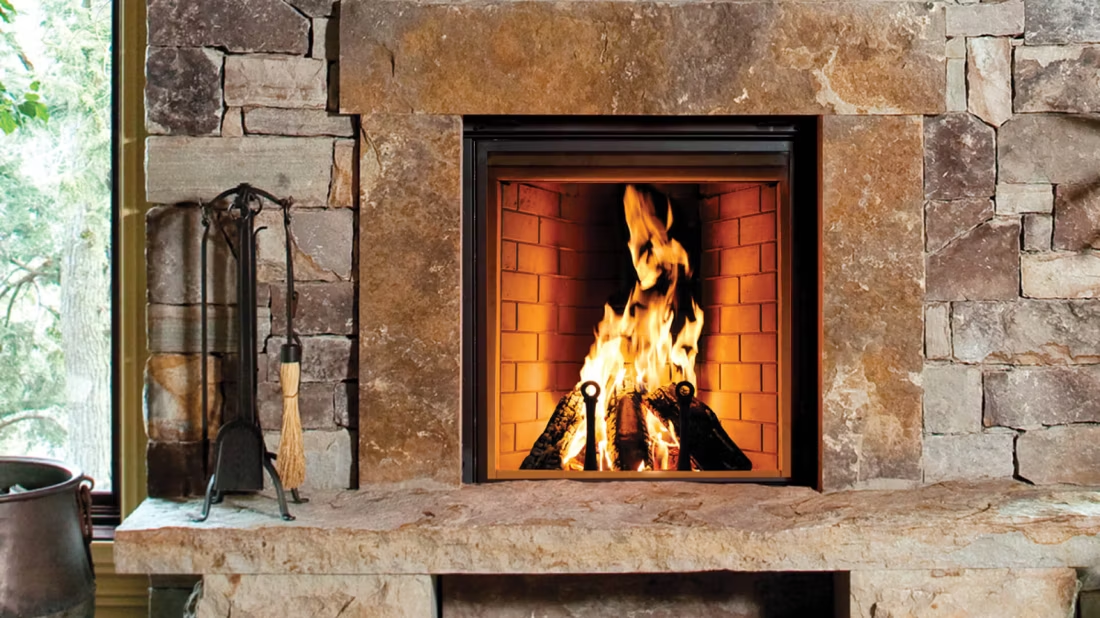
Still, a handful of Valencia West homeowners want a wood-burning fireplace or stove—for the ambiance of a real fire on a rare 30-degree January night, for a rustic look in a custom-built home, or because a cabin near the Santa Ritas or up toward Mount Lemmon is part of the same household. If that's you, Coronado National Forest issues personal-use cutting permits (typically $5 to $20 per cord, May through October) for species that grow in the surrounding high desert, including mesquite, pinyon, and juniper. Just know going in that most homes here are better matched to a gas fireplace for everyday supplemental warmth—wood is the specialty option, not the default.
Firewood Cutting Permits Near Valencia West
Three steps. No salesperson until you're ready.
Tell us about your project
Your zip code, your situation, and the fuel you're leaning toward—or let the answers point you to one.
See what's actually available
The brands dealers within 100 miles genuinely carry—real options, never a catalog mirage.
Get your dealer & Project Guide
A trusted local dealer, plus the free Project Guide & Parts List that names every component of the job.
Frequently Asked Questions
Does a wood-burning stove actually make sense in Valencia West?
For most households, no—not as a primary or even regular supplemental heat source. Valencia West has a short, mild winter season, and the average winter low sits around 41°F, which is mild enough that most homes get by on a heat pump or standard HVAC for the handful of genuinely cold nights each winter. Where a wood stove or fireplace does make sense here is ambiance: a real fire on the coldest nights, a focal point in a custom desert home, or a unit installed mainly for the experience rather than the BTUs. If heat performance is your priority, gas is the more practical fuel for this climate.
What does it cost to install a wood-burning fireplace in Valencia West?
Because wood installations are uncommon here, there isn't the depth of local pricing data you'd find in a wood-heavy market. Nationally, a basic wood stove installation with venting typically runs $4,000 to $9,000, and a masonry or zero-clearance wood fireplace can run higher depending on chimney work. In Valencia West, expect estimates to land toward the upper end of that range—installers who don't do this work often have to bring in specialty venting components and Class A chimney pipe that aren't standard local-market stock. A local dealer can give you a firm number once they know your home and whether you're retrofitting or building new.
What kind of firewood is available near Valencia West?
The surrounding high desert supports mesquite, pinyon, and juniper, all of which are commonly cut under Coronado National Forest personal-use permits. Mesquite is dense and burns hot with long-lasting coals, which makes it popular for both fireplaces and outdoor cooking, though it can pop and spark more than pine species. Pinyon and juniper burn cleaner and are prized for their aromatic smoke, but they produce a bit less heat per cord than mesquite. Any of the three works fine in a properly sized stove or insert.
Do I need a permit to cut my own firewood near Valencia West?
Yes, if you're cutting on national forest land. Coronado National Forest issues personal-use firewood permits for $5 to $20 per cord, with cutting allowed from May through October. You'll need to check current unit-specific rules on where cutting is allowed, since some areas near Tucson are closed to protect habitat or recovering burn areas. Given how little firewood most Valencia West households actually burn, a single permit often covers a full season's worth of occasional fires.
Are there air quality restrictions on wood burning around Valencia West?
Pima County sits in a non-attainment area for particulate matter, and the Tucson basin is prone to winter temperature inversions that trap smoke close to the ground, along with periodic wildfire smoke impacts. Pima County Department of Environmental Quality issues air quality alerts during high-pollution stretches, and voluntary or mandatory burn advisories can apply on the worst inversion days. Because wood burning is already infrequent here, this rarely affects day-to-day life, but it's worth checking current advisories before lighting up during a stagnant winter air pattern.
Would a wood fireplace actually keep my home warm here?
Probably not as your main heat source, and that's fine—it's not really what the climate calls for. With winter lows averaging 41°F, most Valencia West homes stay comfortable on standard HVAC, and a wood-burning unit ends up used more like an occasional-use amenity than a workhorse heater. If you want a unit that meaningfully offsets your heating bill during the handful of genuinely cold weeks, a gas fireplace or insert is usually the more efficient, lower-maintenance choice for this climate.
Should I install a wood stove or a gas fireplace instead?
For Valencia West's mild winters, gas is generally the more practical choice: it lights instantly, needs no fuel storage or hauling, and doesn't depend on infrequent trips to cut or buy firewood. Wood still has a place if you specifically want the experience of a real fire, plan to use it heavily at a mountain cabin as well as at home, or are drawn to the aesthetic of a wood-burning hearth in a custom build. Many homeowners in low-desert markets like this one end up choosing gas for convenience and reserve wood-burning appliances for vacation or high-elevation properties where the climate actually calls for them.
Can I find someone local who installs wood stoves near Valencia West?
It takes a bit more searching than it would in a wood-heavy market, since most hearth retailers serving greater Tucson focus their inventory on gas products given local demand. That said, dealers who carry wood-burning lines do exist in the metro area and can source and install a stove or insert on request—it's just a smaller and more specialized part of their business. Find My Fireplace can match you with a trusted local dealer who handles wood installs rather than one who'd be improvising on a product they rarely sell.
Can I include a wood-burning fireplace in new construction here?
Yes—some custom homes in the Valencia West area include a site-built masonry fireplace or a zero-clearance wood-burning unit purely for aesthetic and Southwest-style architectural reasons. Any new fireplace requires a building permit through Pima County Development Services, the permitting authority for unincorporated areas like Valencia West, and the unit itself needs to meet current EPA emissions standards if it's a factory-built appliance. Because these installs are less common locally, plan for a slightly longer lead time on parts and a builder or dealer experienced specifically with wood-burning units, not just gas.
Why is my open fireplace making my house colder?
Open fireplaces suck—literally. As the fire burns, it consumes air your furnace already paid to heat and pulls it out through the chimney, so the house is actually colder after the fire goes out than before you lit it. An insert fixes this: it seals the chimney, puts fixed glass across the front, and turns that hole in your house into a real heat source.
What's the difference between an insert and a zero-clearance fireplace?
An insert is a fireplace that slides into a pre-existing wood-burning fireplace—if you don't have one, there's nothing to insert it into. A zero-clearance fireplace is built into a framed wall, which makes it the answer for remodels and new construction. Simple test: existing masonry fireplace means insert; blank or framed wall means zero-clearance.
Can I install a fireplace myself?
If you're putting a fire in your house on purpose, it's best to work with an expert. Unless you're genuinely experienced in framing, gas line, vent pipe, and the national code on clearances to combustibles, have a professional do it—and ideally the same company that sells you the fireplace, so warranty, service, and liability all live under one roof.
How much should I budget for a fireplace?
For an average home—covering the fireplace, the vent pipe, and basic installation—a budget between $3,900 and $5,500 gives you a lot of options across wood, gas, and pellet. By the time you add finish work, gas line, and electrical, the average complete installation lands between $5,000 and $12,000 all-in. In a remodel or new build, a good rule is to put about 2.5% of the total project cost toward the fireplace.
Nearby Dealers
Hearth shops serving Valencia West and the surrounding area. Every listing shows whether it is a WhyFire partner, a dealer we have verified as authorized for the brands we recommend, or a local business carrying hearth products. No manufacturer pays for placement. How we verify dealers →
Earth Energy's Hearth & Patio
Find out if wood fits your Valencia West home.
Tell us about your home and what you have in mind, and we'll match you with a local dealer who'll be straight with you about what's realistic here—plus a free Project Guide & Parts List with the exact parts, including the vent kit, for your project.
Find Your Fireplace →