
Real flame look, zero smoke, made for Tucson's desert winters.
With winter lows averaging 41°F and just a handful of genuinely cold nights each year, Pima County doesn't need a furnace substitute—it needs clean, no-venting ambiance heat. Find the right electric fireplace or insert and get matched with a trusted local dealer.
Every Project Starts From One of These Five Situations
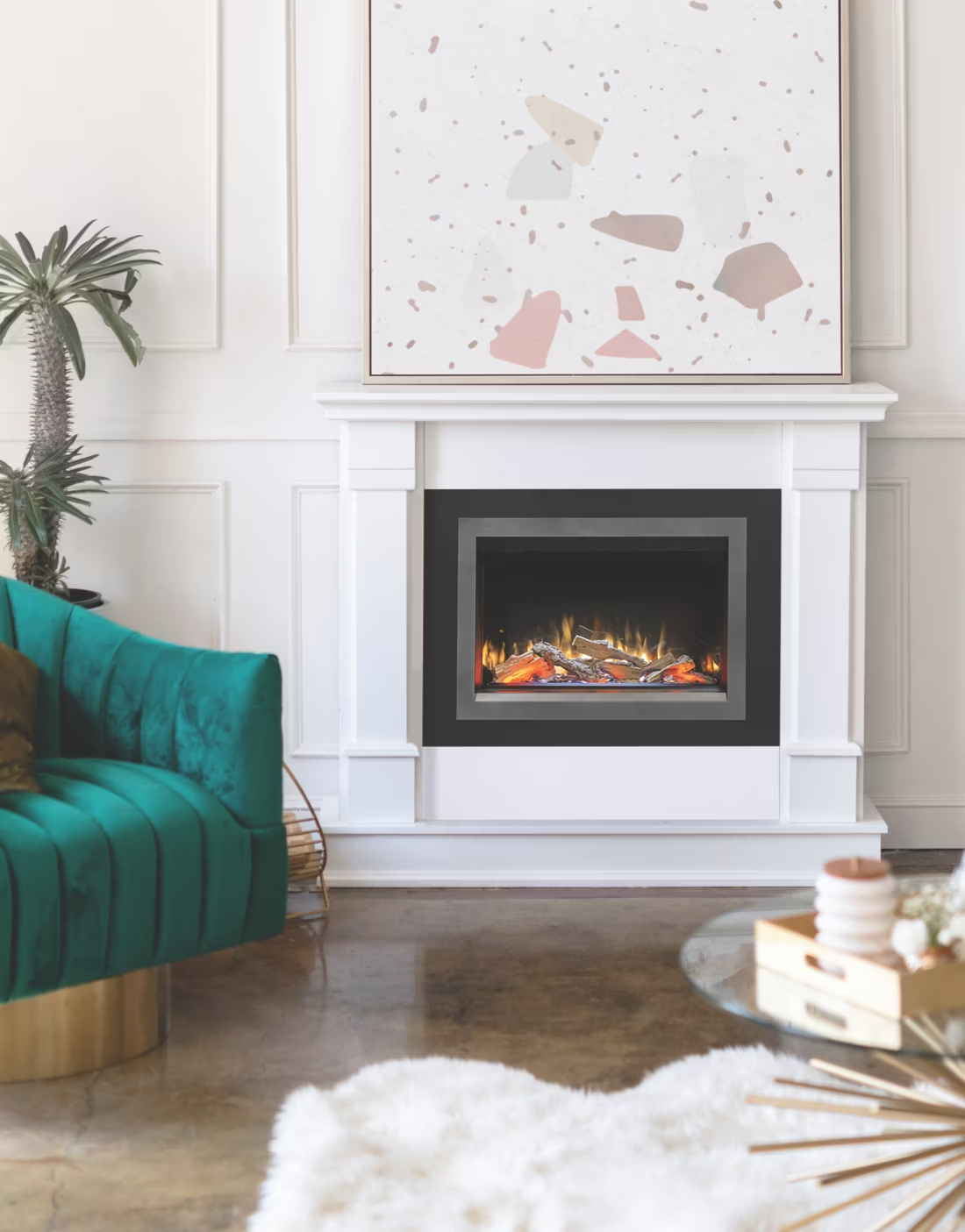
Where the heating load is this light, electric heat makes sense.
Pima County sits in Sonoran Desert climate zone 2B, and its heating math looks nothing like a cold-climate county. With only a light dusting of chilly nights each year—a fraction of what a place like Bozeman, Montana or Fargo, North Dakota racks up—most homes in Tucson, Oro Valley, Marana, Green Valley, and Sahuarita need heat for maybe a few dozen cold desert nights, not a full winter season. That's exactly the scenario where an electric fireplace shines: instant heat when the temperature actually drops, and zero energy draw the rest of the year.
It also matters that Pima County is a designated non-attainment area with winter inversion and wildfire smoke concerns already stressing local air quality. Wood heat is essentially not a factor here—mesquite, pinyon, and juniper cut under a Coronado National Forest permit ($5-$20 per cord, May-October season) are almost exclusively grill and campfire wood, not home heating fuel, and pellet stoves see similarly little demand in this climate. Electric fireplaces add no combustion byproducts to an already sensitive airshed, need no chimney or flue, and retrofit easily into older adobe and block-construction homes in the historic barrios, as well as HOA-restricted communities across the county where venting a gas or wood unit isn't an option. Tucson Electric Power and Trico Electric Cooperative both serve the county reliably, which is really all an electric fireplace needs.
Three steps. No salesperson until you're ready.
Tell us about your project
Your zip code, your situation, and the fuel you're leaning toward—or let the answers point you to one.
See what's actually available
The brands dealers within 100 miles genuinely carry—real options, never a catalog mirage.
Get your dealer & Project Guide
A trusted local dealer, plus the free Project Guide & Parts List that names every component of the job.
Frequently Asked Questions
How much does an electric fireplace installation cost in Pima County?
Costs vary widely by unit type. A plug-in freestanding or wall-mounted electric fireplace can run $150 to $800 installed with no electrical work at all—it plugs into a standard outlet. A built-in electric insert or a linear wall unit that requires a dedicated 240V circuit typically runs $1,200 to $4,000 once a licensed electrician is involved, with the higher end reflecting custom surrounds or mantels. Because there's no venting, no chimney, and no gas line, electric installs in Pima County are consistently the fastest and least expensive of any fuel type local retailers offer.
What size electric fireplace do I need for my Tucson-area home?
Most electric fireplaces are sized for a single room, not whole-home heating—which fits Pima County's climate well, since even primary living spaces rarely need sustained heat given the mild winters. A compact 1,500-watt unit comfortably takes the chill off a bedroom or home office; a larger linear insert or mantel unit can supplement a great room or open living area. If you're trying to heat an entire home in Sahuarita or Green Valley, electric isn't the right primary tool—but as a zone heater for the handful of genuinely cold nights each winter, sizing errors are rare and low-stakes compared to combustion appliances.
Do I need a licensed electrician to install an electric fireplace?
A simple plug-in unit needs no electrician at all. But any built-in insert or linear unit wired to a dedicated 240V circuit should be installed by a licensed electrician, and larger installs may require an electrical permit through Pima County Development Services or the City of Tucson, depending on where the home sits. The local dealers who sell these units typically coordinate the electrician directly, which avoids the mismatched-circuit problems that come with a DIY install or a big-box unit installed by a general handyman.
What's the difference between an electric insert, a built-in unit, and a freestanding electric fireplace?
An electric insert is designed to slot into an existing masonry fireplace opening—useful for older Tucson homes with a fireplace that was never really used for heat and now just sits cold. A built-in electric fireplace is framed into a wall during construction or remodel, often with a linear, modern look. A freestanding or mantel unit stands on its own and plugs in, requiring no construction work at all. For most Pima County homeowners without an existing masonry fireplace, a freestanding or wall-mounted unit is the simplest path; homes with an unused existing fireplace opening are good insert candidates.
Do I need a permit to install an electric fireplace in Pima County?
A plug-in electric fireplace needs no permit—it's treated like any other appliance. If the unit requires new wiring or a dedicated circuit, the electrical work itself may need a permit through Pima County Development Services (for unincorporated areas) or the relevant city building department (Tucson, Marana, Oro Valley, and Sahuarita each handle their own). Unlike wood or gas installs, there's no combustion appliance inspection, no venting approval, and no air-quality curtailment to worry about—electric is by far the lowest-friction permitting path of any fuel option in the county.
Is an electric fireplace actually worth it in a climate this mild?
For most Pima County homes, yes—but as ambiance and supplemental heat, not a primary heating system. With winter lows averaging 41°F and only a handful of genuinely cold nights each year, a central HVAC system already handles the bulk of what little heating is needed. An electric fireplace fills the gap for the genuinely cold desert nights and early mornings from December through February, adds real flame-look ambiance year-round with the heat element switched off, and works well in casitas, guest houses, and HOA communities in Oro Valley or Green Valley where venting a combustion unit isn't practical.
How much maintenance does an electric fireplace need?
Very little. There's no chimney to sweep, no gas line to inspect, and no ash to clean. Maintenance is limited to occasionally dusting the heating element and vents, replacing an LED light strip or flame-effect bulb every several years, and keeping the unit's air intake clear of dust—which matters in Pima County's dry, dusty desert environment more than in most climates. Local dealers can also service the blower motor if it starts making noise after years of use.
What does it cost to run an electric fireplace in Pima County?
A typical 1,500-watt electric fireplace heater costs roughly 15 to 25 cents per hour to run at full heat output, based on current Tucson Electric Power residential rates—meaning a few hours of use on a cold desert evening adds well under a dollar to your bill. Most owners run the flame effect without the heater for ambiance most of the year, which draws only a few watts. Compared to running central HVAC to heat an entire house for a mild chill, a zone electric fireplace is typically the cheaper option for taking the edge off one room.
Electric vs. gas fireplace—which is right for my Pima County home?
Gas fireplaces deliver more real heat output and work during power outages if equipped with battery-backup ignition—useful during the monsoon season storms that occasionally knock out power in parts of the county. Electric fireplaces cost far less to install, need no gas line or venting, add zero combustion byproducts to an already non-attainment airshed, and can go anywhere there's an outlet. For a primary living space where you want genuine supplemental heat, gas is often the better fit. For a bedroom, casita, condo, or HOA-restricted home in Oro Valley or Sahuarita where ambiance and simplicity matter more than serious heat output, electric usually wins. Local retailers carry both and can walk through the tradeoffs for your specific home.
Does an electric fireplace need a vent or chimney?
No—that's its superpower. An electric fireplace needs a wall and an outlet, period. No vent pipe, no gas line, no clearances to design around, which is why it works in bedrooms, offices, apartments, and walls where venting a gas or wood unit would be impractical or impossible. Installation is typically the simplest and least expensive of any fireplace type.
Can I put a TV above my fireplace?
Yes—with an asterisk. Fireplaces are hot and TVs don't like heat. Either put a mantel between them to deflect rising warmth, or choose a fireplace with heat-management technology that creates a cool zone on the wall above—the wall stays around 125 degrees, barely warm, while the room still gets full heat. If you like clean lines and don't want a mantel, heat management is the answer.
Can a fireplace actually lower my heating bill?
Yes—by creating a comfort zone. A furnace heats every square foot of the house just to warm the one room you're in; a gas fireplace on low burns roughly a sixth of the gas a typical furnace does. Set the furnace around 55–60 degrees as a baseline, then heat the rooms your family actually uses. Families who heat this way commonly save $20–$60 a month.
How much should I budget for a fireplace?
For an average home—covering the fireplace, the vent pipe, and basic installation—a budget between $3,900 and $5,500 gives you a lot of options across wood, gas, and pellet. By the time you add finish work, gas line, and electrical, the average complete installation lands between $5,000 and $12,000 all-in. In a remodel or new build, a good rule is to put about 2.5% of the total project cost toward the fireplace.
Stove and Fireplace Dealers in Pima County
Listings include WhyFire partner dealers, dealers we have verified as authorized for the brands we recommend, and established local businesses that carry hearth products. Every listing shows which one it is. The ones marked Preferred run on WhyFire's software, so they can show you real pricing and book your appointment right here. No manufacturer pays for placement. How we verify dealers →
Earth Energy's Hearth & Patio
Find your electric fireplace in Pima County.
Tell us a bit about your home and we'll match you with the right electric fireplace or insert, plus a free Project Guide & Parts List and a trusted local dealer to install it.
Find Your Fireplace →