
Keep Your Family Warm and Safe—No Matter What
With winter lows averaging 41°F, most Tucson Estates homes don't need wood heat to get through the season. If you still want the real thing—for ambiance, a great room, or a second property at elevation—we'll connect you with a dealer who can actually get it installed right.
Every Project Starts From One of These Five Situations
Desert winters rarely call for a wood stove.
Tucson Estates sits at about 2,500 feet in the Sonoran Desert basin southwest of Tucson, in unincorporated Pima County. The area has a very light winter heating load—for comparison, a place like Fargo, ND carries more than six times the heating load of Tucson Estates over a year. Winter lows average 41°F, and most nights never approach freezing at all. Homes here are built around cooling load, not heating, so the handful of cold nights each winter are usually handled by an existing heat pump, mini-split, or gas system rather than a dedicated wood-burning appliance.
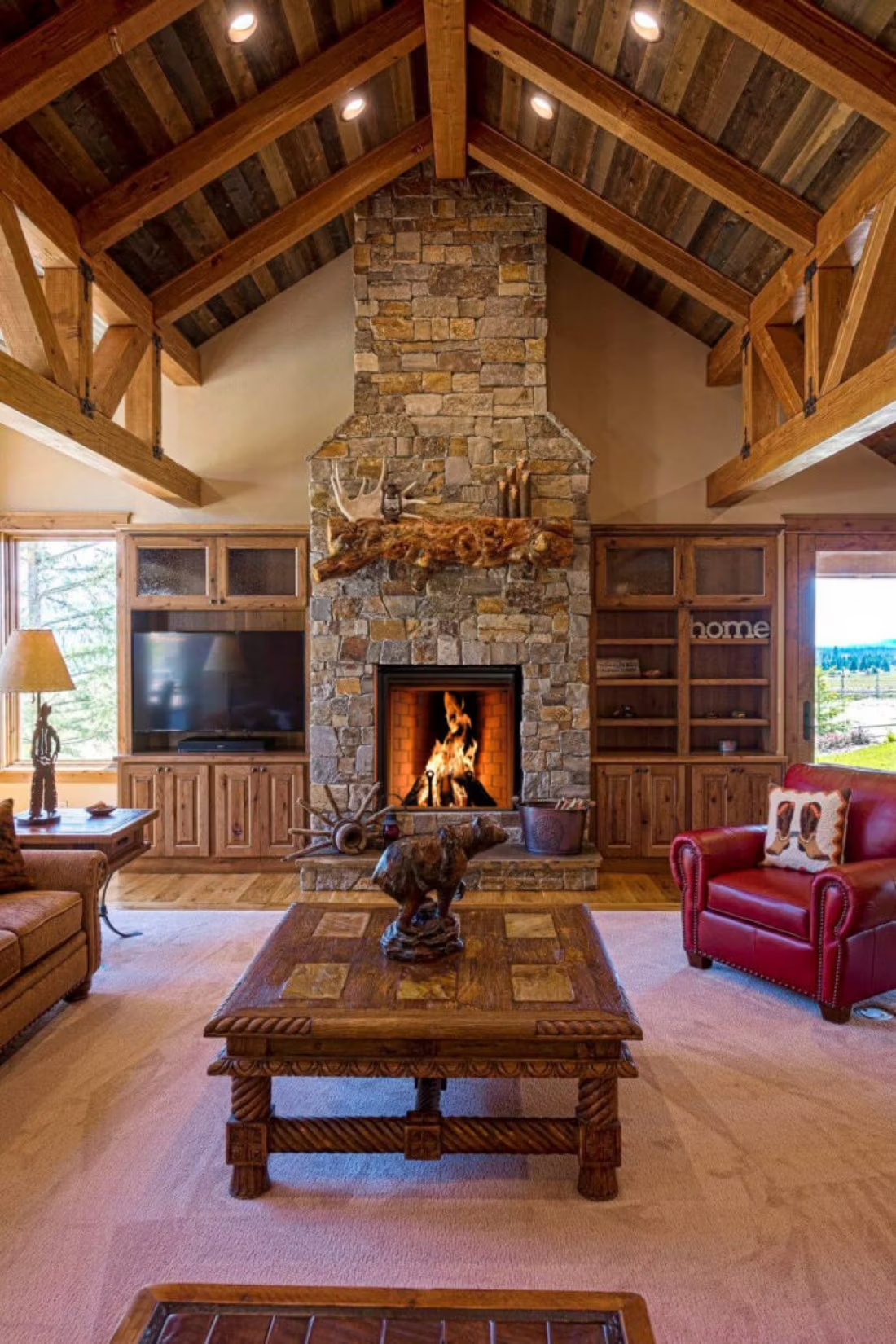
That said, a small number of Tucson Estates homeowners still install wood stoves or inserts—for the ambiance of a real fire in a great room, for the smell of mesquite on a winter evening, or because they split time with a cabin at higher elevation in the Catalinas or northern Arizona where wood heat genuinely earns its keep. Mesquite, pinyon, and juniper are the regional species, available through Coronado National Forest cutting permits ($5-$20 per cord, May through October). Because Pima County is a non-attainment area for particulate matter and prone to winter inversions, wood burning here also comes with more regulatory attention than in a colder market, and the local dealer network is thinner than what you'd find in a place where wood is the primary heat source.
Firewood Cutting Permits Near Tucson Estates
Three steps. No salesperson until you're ready.
Tell us about your project
Your zip code, your situation, and the fuel you're leaning toward—or let the answers point you to one.
See what's actually available
The brands dealers within 100 miles genuinely carry—real options, never a catalog mirage.
Get your dealer & Project Guide
A trusted local dealer, plus the free Project Guide & Parts List that names every component of the job.
Frequently Asked Questions
Does a wood stove actually make sense in Tucson Estates?
For most homes, no—not as a primary heat source. With winter lows averaging 41°F and a very light winter heating load overall, the heating load here is a fraction of what a cold-climate home carries. Most Tucson Estates households handle winter with an existing heat pump, mini-split, or gas system. Where a wood stove or insert still makes sense is for ambiance in a living room, for the handful of genuinely cold nights each winter, or for households that also maintain a second property at higher elevation—say, in the Catalinas or up toward Flagstaff—where wood heat does real work.
What does a wood stove installation cost in Tucson Estates?
Because wood systems are uncommon locally, there isn't the kind of predictable, high-volume pricing you'd see in a market like Duluth or Bozeman. Based on typical Southwest installation costs, expect roughly $3,500 to $7,500 for a freestanding stove with a hearth pad and Class A chimney run through the roof, or more if you're converting an existing masonry fireplace to a wood-burning insert with a stainless liner. Because so few local dealers stock wood units, getting an accurate quote usually means working with a dealer out of greater Tucson who can special-order the model you want.
Are there burn restrictions on wood-burning fireplaces in Tucson Estates?
Yes. Pima County is designated a non-attainment area for particulate matter, and the region is subject to winter temperature inversions that trap smoke close to the ground. Pima County Department of Environmental Quality issues periodic no-burn advisories during these inversion periods, and wildfire smoke from surrounding forest land can add to air quality concerns in late spring and early summer. If you install a wood stove here, plan to check local air quality advisories before lighting a fire on cold, still winter nights.
Do I need a permit to install a wood stove in Tucson Estates?
Yes—since Tucson Estates is unincorporated, building permits for a new wood stove or insert are pulled through the Pima County Development Services Department rather than a city office. The stove itself needs to meet current EPA emissions standards, and the permit process covers clearances, hearth pad requirements, and chimney venting. Most dealers who install wood appliances in this area will handle the permit paperwork as part of the job, which matters more here than in a busier wood-heat market since fewer contractors are used to the process.
What wood species are available locally if I do install a stove?
Mesquite, pinyon, and juniper are the common regional species. Mesquite burns hot and dense with a long coal bed, which makes it excellent fuel for an enclosed stove—but it throws sparks and pops more than pine or fir, so it's better suited to a stove with a solid door than an open masonry fireplace. Pinyon and juniper are more aromatic and burn a bit faster, and both are common as mixed firewood sold by Tucson-area suppliers. All three are available through Coronado National Forest cutting permits for anyone willing to harvest their own.
Where can I cut my own firewood near Tucson Estates?
Coronado National Forest issues personal-use cutting permits covering the mountain ranges around Tucson, including areas within reach of Tucson Estates. Permits run $5 to $20 per cord, and the cutting season runs May through October. Given the light heating demand in this climate, most permit holders here are gathering wood for occasional fires or grilling rather than a winter's worth of heating fuel—a different rhythm than a Forest Service permit in a place like Bozeman, MT, where households are stocking multiple cords for a full heating season.
Why is it hard to find a wood stove dealer near Tucson Estates?
Because so few local households heat primarily with wood, hearth retailers in the Tucson area tend to stock gas fireplaces and inserts far more heavily than wood-burning units. That doesn't mean wood stoves aren't available—it means you'll likely be working with a dealer who special-orders the model you want rather than one with a showroom full of them. This is exactly the kind of situation where matching with the right dealer matters: an installer used to gas work but unfamiliar with wood-stove clearances and venting can get code details wrong.
Should I consider gas or electric instead of wood in Tucson Estates?
For most homes here, yes—gas and electric fuel relevance are both rated standard for this climate, meaning they're the more practical fit for the handful of cold nights Tucson Estates sees each winter. A direct-vent gas fireplace or a ductless electric heater gives you instant heat without the venting work, air-quality considerations, or thin dealer support that come with wood. Wood still wins for households that specifically want the ritual of a real fire, the smell of mesquite, or a wood-burning setup that mirrors a second home at higher elevation.
Can I convert an existing masonry fireplace into a wood-burning insert?
Technically yes, but it's worth thinking through first. Given the mild heating load and the air-quality advisories that come with being in a non-attainment area, many Tucson Estates homeowners with an existing masonry fireplace choose a gas insert instead—it keeps the look of the hearth without the burn-day restrictions. If a wood-burning insert is still what you want, for ambiance or occasional use, a certified installer will need to fit a stainless liner sized to your existing flue and confirm the fireplace can meet current clearance and venting code under a Pima County permit.
Why is my open fireplace making my house colder?
Open fireplaces suck—literally. As the fire burns, it consumes air your furnace already paid to heat and pulls it out through the chimney, so the house is actually colder after the fire goes out than before you lit it. An insert fixes this: it seals the chimney, puts fixed glass across the front, and turns that hole in your house into a real heat source.
Why won't my new wood stove get going like my old one?
New wood stoves are 70%+ efficient, so far less heat goes up the flue—which also means less draft to get a fire established. The rule: build a genuinely hot fire for about 45 minutes before you choke it down. Skip that and you get smoke in the room, creosote in the chimney, and a fire that never takes off. Most performance complaints trace straight back to this.
Can I install a fireplace myself?
If you're putting a fire in your house on purpose, it's best to work with an expert. Unless you're genuinely experienced in framing, gas line, vent pipe, and the national code on clearances to combustibles, have a professional do it—and ideally the same company that sells you the fireplace, so warranty, service, and liability all live under one roof.
Can a fireplace actually lower my heating bill?
Yes—by creating a comfort zone. A furnace heats every square foot of the house just to warm the one room you're in; a gas fireplace on low burns roughly a sixth of the gas a typical furnace does. Set the furnace around 55–60 degrees as a baseline, then heat the rooms your family actually uses. Families who heat this way commonly save $20–$60 a month.
Nearby Dealers
Hearth shops serving Tucson Estates and the surrounding area. Every listing shows whether it is a WhyFire partner, a dealer we have verified as authorized for the brands we recommend, or a local business carrying hearth products. No manufacturer pays for placement. How we verify dealers →
Earth Energy's Hearth & Patio
Find your wood fireplace in Tucson Estates.
Tell us a bit about your home and how you plan to use it, and we'll put together a free Project Guide & Parts List—the exact parts, including the vent kit, and a trusted local dealer who can actually source and install a wood stove or insert in Tucson Estates.
Find Your Fireplace →