
Real flame look, zero venting hassle in Montgomery County.
From Norristown rowhomes to Skippack farmhouses and King of Prussia condos, electric fireplaces add instant ambiance and supplemental warmth without a chimney, gas line, or masonry work. Find the right unit and connect with a trusted local dealer.
Every Project Starts From One of These Five Situations
The easiest fireplace to add to almost any home.
Montgomery County is home to more than 410,000 people spread across dense boroughs like Norristown, Lansdale, and Pottstown, suburban townhome and condo developments around King of Prussia and Plymouth Meeting, and pre-Revolutionary stone farmhouses tucked into Skippack, Worcester, and Whitpain Township. That housing variety is exactly where electric fireplaces earn their keep. A condo in Blue Bell with no chimney, an HOA community that won't allow exterior venting, or a 1780s fieldstone farmhouse where the historical commission won't let you touch the masonry—electric is often the only realistic option, and it installs in an afternoon rather than a multi-week renovation.
With climate zone 4A and roughly 4,869 heating degree days, Montgomery County sees real winter—average lows around 23°F—but nothing close to what a place like Minneapolis or Duluth deals with. That matters for how you should think about electric heat here: most local electric fireplaces are sized to supplement PECO-powered central heating or a heat pump, not replace it, since running a resistance heater as your only source through a Pennsylvania winter gets expensive fast. Where wood heat still makes sense for county homeowners with oak, hickory, maple, and cherry on their property, electric fills a different role entirely—zero emissions, zero maintenance, and a real fire look you can run in a rental, a finished basement, or a room where a wood or gas unit simply isn't allowed.
Three steps. No salesperson until you're ready.
Tell us about your project
Your zip code, your situation, and the fuel you're leaning toward—or let the answers point you to one.
See what's actually available
The brands dealers within 100 miles genuinely carry—real options, never a catalog mirage.
Get your dealer & Project Guide
A trusted local dealer, plus the free Project Guide & Parts List that names every component of the job.
Frequently Asked Questions
How much does an electric fireplace installation cost in Montgomery County?
Plug-in electric fireplaces and mantel packages are the cheapest option—often $150 to $1,200 for the unit itself, with no installation cost beyond plugging into an existing outlet. Built-in electric inserts or wall-mounted linear units that require a dedicated 120V or 240V circuit typically run $1,500 to $4,000 installed once you factor in an electrician for the circuit and a carpenter or hearth dealer for surround work. Homes needing a new outlet run behind existing drywall or masonry—common in Montgomery County's older stone and brick housing stock—land toward the higher end. A local dealer can give you a firm number after seeing the room and the existing electrical panel capacity.
Do I need a permit for an electric fireplace in Montgomery County?
A simple plug-in electric fireplace that uses an existing outlet doesn't require a permit anywhere in Montgomery County. If your installation needs a new dedicated circuit—common with larger built-in inserts and linear wall units—your township building department (Abington, Cheltenham, Lower Merion, Upper Merion, and the rest each handle their own) will typically require an electrical permit for that circuit work, pulled by your electrician. There's no chimney, no venting, and no gas line involved, which is a big part of why electric permitting in this county is far simpler than a wood or gas install.
Can an electric fireplace actually heat a room, or is it just for looks?
Most electric fireplaces include a real heater—typically a 1,500-watt element rated around 5,000 BTU—and it will genuinely warm a single room, especially a finished basement, a den, or a bedroom in an older Montgomery County home with drafty windows. What it won't do is replace your furnace or heat pump through a full Pennsylvania winter; at 4,869 heating degree days, running electric resistance heat as a primary source gets expensive quickly on a PECO bill. Think of it as zone heat for the room you're actually sitting in, paired with your existing central system, not a standalone replacement for it.
Are electric fireplaces a good fit for condos and HOA communities?
Yes—this is one of the most common reasons county homeowners choose electric. Communities around King of Prussia, Plymouth Meeting, and Blue Bell often have HOA rules that prohibit exterior venting or any modification to the building envelope, which rules out wood and most gas installations outright. An electric fireplace needs nothing more than an outlet or a standard circuit, so it clears HOA review in a way a vented unit typically can't. It's also the default choice for apartment and rental situations where any structural change is off the table.
I have a historic stone farmhouse in Skippack or Worcester Township—can I still add an electric fireplace?
Yes, and it's often the cleanest option for exactly these homes. Historic overlay districts and township historical commissions in areas like Skippack, Worcester, and parts of Whitpain frequently restrict changes to exterior masonry, chimneys, and rooflines—which makes new wood or gas venting difficult or impossible to approve. An electric insert set into an existing (possibly non-functional) fireplace opening solves this: no new venting, no exterior alteration, and the original stonework stays untouched. Several local dealers specifically handle this type of retrofit for older county homes.
Electric vs. gas vs. wood—which fireplace makes sense for my Montgomery County home?
Wood offers real heat output and works during a power outage, and with oak, hickory, maple, and cherry all common on county properties, fuel is easy to source—but it needs a chimney and regular sweeping. Gas delivers strong, consistent heat with the flip of a switch, but requires a gas line or propane tank and proper venting in most cases. Electric needs neither—just an outlet or a circuit—but it's supplemental heat only and won't run without power. For Montgomery County's mix of dense boroughs, HOA-governed communities, and historic homes with restricted masonry, electric is frequently the only fuel that clears every constraint at once, even where wood or gas would otherwise be the stronger heat source.
What's the difference between an electric insert, a wall-mount unit, and a mantel package?
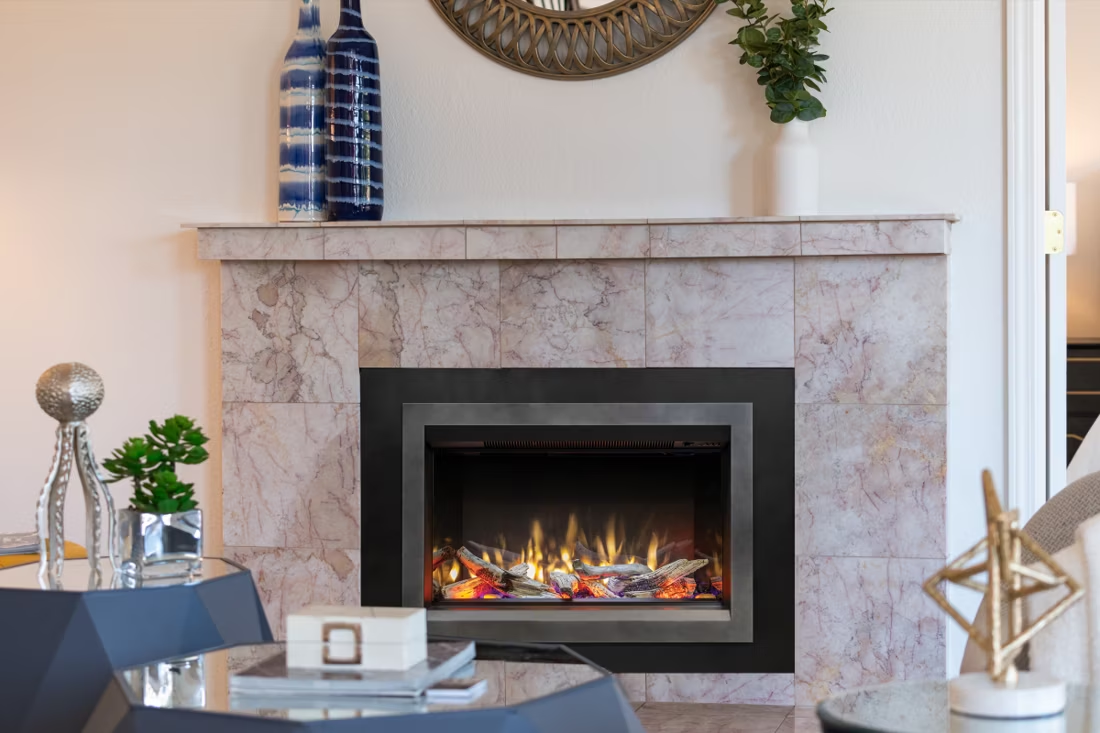
An electric insert is built to slide into an existing fireplace opening, replacing a dormant or drafty firebox with a heat source and flame effect while keeping the original mantel and surround. A wall-mounted linear unit hangs flush on a wall like a flat-screen TV, popular in newer construction and finished basements around the county that don't have an existing fireplace at all. A mantel package is a freestanding, furniture-style unit with the fireplace and surround built together—no installation beyond finding an outlet, which makes it the easiest option for renters or anyone who wants to avoid electrical work entirely.
What should I look for in an electric fireplace's flame quality?
Flame realism varies a lot between price tiers. Entry-level units use simple LED strips behind a diffuser; better units use layered LED arrays, reflective mirrors, and sometimes water-vapor or ember-bed effects that read as far more convincing, especially at night. If the fireplace will be a focal point in a main living room rather than a basement or guest room, it's worth seeing the flame effect in person before buying—photos and online videos consistently oversell the cheaper models. A local dealer can show you several side by side, which is hard to judge from a listing alone.
How much maintenance does an electric fireplace need?
Very little. There's no chimney to sweep, no creosote, no gas lines to inspect, and no combustion byproducts to worry about—a real advantage over wood or gas upkeep. Occasional dusting of the heater vents, an LED bulb replacement after several years of heavy use on older models, and keeping the unit clear of household dust are about the extent of it. This low-maintenance profile is part of why electric is popular in Montgomery County rental units and second-story bedrooms where nobody wants to schedule an annual inspection.
Can I put a TV above my fireplace?
Yes—with an asterisk. Fireplaces are hot and TVs don't like heat. Either put a mantel between them to deflect rising warmth, or choose a fireplace with heat-management technology that creates a cool zone on the wall above—the wall stays around 125 degrees, barely warm, while the room still gets full heat. If you like clean lines and don't want a mantel, heat management is the answer.
Do electric fireplaces actually produce heat?
Yes—most put out around 4,800–5,000 BTUs from a standard outlet, which comfortably warms a bedroom, office, or den as a comfort-zone heater. What they won't do is carry a whole house the way wood, gas, or pellet can. Think of electric as ambiance-first with honest supplemental heat: flames on with no heat in July, flames plus warmth in January.
Can a fireplace actually lower my heating bill?
Yes—by creating a comfort zone. A furnace heats every square foot of the house just to warm the one room you're in; a gas fireplace on low burns roughly a sixth of the gas a typical furnace does. Set the furnace around 55–60 degrees as a baseline, then heat the rooms your family actually uses. Families who heat this way commonly save $20–$60 a month.
Can I install a fireplace myself?
If you're putting a fire in your house on purpose, it's best to work with an expert. Unless you're genuinely experienced in framing, gas line, vent pipe, and the national code on clearances to combustibles, have a professional do it—and ideally the same company that sells you the fireplace, so warranty, service, and liability all live under one roof.
Stove and Fireplace Dealers in Montgomery County
Listings include WhyFire partner dealers, dealers we have verified as authorized for the brands we recommend, and established local businesses that carry hearth products. Every listing shows which one it is. The ones marked Preferred run on WhyFire's software, so they can show you real pricing and book your appointment right here. No manufacturer pays for placement. How we verify dealers →
Norristown Chimney
Ambler Fireplace And Patio
Maple Glen Mechanical
Ambler Fireplace & Patio - Chalfont
Sequoia Supply Hatfield Showroom
Estates Chimney Sweep
Kester Fireplace
Independence Propane
Halligan's Hearth And Home
Tor Chimney & Fireplace
Hearth & Stove LLC
Halco Grills And Fireplaces
Estates Chimney & Fireplace
Pennsburg Ace Hardware
Find your electric fireplace in Montgomery County.
Tell us a bit about your home and we'll match you with a trusted local dealer and send over a free Project Guide & Parts List—the exact components for your electric fireplace project in Montgomery County, plus the installer we recommend.
Find Your Fireplace →