
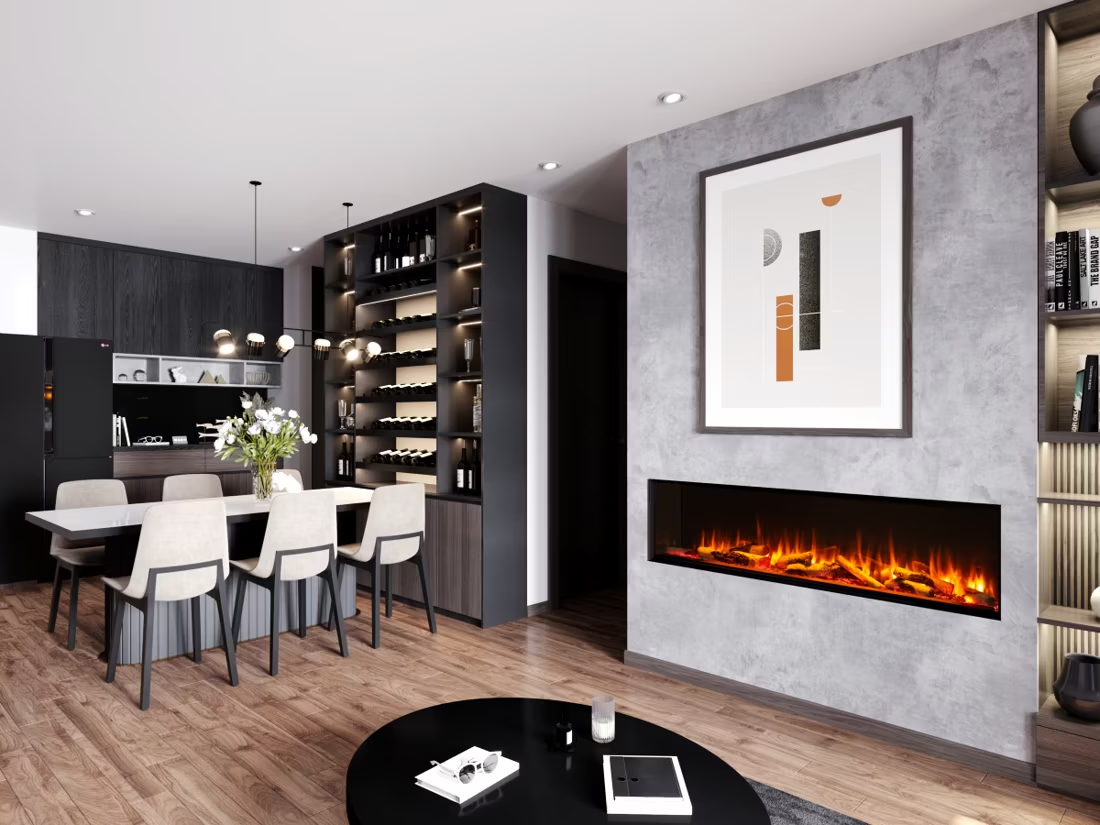
Real flame look, zero venting required.
No chimney, no gas line, no masonry work—just plug in and go. Find the right electric unit for your Fort Washington home and connect with a trusted local dealer.
Every Project Starts From One of These Five Situations
The simplest way to add fire to any room.
Fort Washington sits at under 200 feet in Montgomery County, with winter lows averaging in the mid-20s and roughly 5,000 heating degree days a year—cold enough to want supplemental warmth in a den or sunroom, but nowhere near the sustained deep freeze of a place like Burlington, VT. Much of the housing stock here is older stone colonials and mid-century additions where running a new gas line or venting a wood chimney means tearing into plaster and framing that's decades old. Electric fireplaces sidestep all of that.
PECO Energy serves electric service throughout Fort Washington and greater Montgomery County, with residential rates currently running about $0.1474 per kWh—cheap enough that even daily use of a 1,500-watt unit adds only a modest amount to a monthly bill. For homeowners who want the ambiance of a fire in a home office, bedroom, or finished basement without the venting requirements of wood or gas, electric is often the fastest and least invasive path from empty wall to finished fireplace.
Three steps. No salesperson until you're ready.
Tell us about your project
Your zip code, your situation, and the fuel you're leaning toward—or let the answers point you to one.
See what's actually available
The brands dealers within 100 miles genuinely carry—real options, never a catalog mirage.
Get your dealer & Project Guide
A trusted local dealer, plus the free Project Guide & Parts List that names every component of the job.
Frequently Asked Questions
How much does an electric fireplace installation cost in Fort Washington?
A plug-in insert or wall-mounted electric fireplace typically runs $400 to $1,500 installed, since most units need nothing more than an existing outlet and a mounting bracket. A built-in electric fireplace with custom framing, a mantel surround, and a dedicated 120V or 240V circuit run by an electrician climbs to $2,000-$5,000, depending on the cabinetry work involved. Either way, you're looking at a fraction of what a wood or gas install costs in an older Montgomery County stone colonial, since there's no chimney, liner, or gas line to deal with.
How much heat will an electric fireplace actually put out?
Most electric fireplaces draw 1,500 watts on high heat—the maximum allowed on a standard 120V household circuit—which realistically heats a single room in the 250 to 400 square foot range, not the 1,000+ square feet some packaging claims. For a Fort Washington den, home office, or finished basement room, that's plenty for supplemental warmth on a 24-degree January night. If you're trying to heat a larger open floor plan, you'll want to think of the unit as ambiance-plus-supplemental rather than a whole-room heat source, and pair it with your existing HVAC.
Do I need an electrician to install an electric fireplace?
For a plug-in insert or wall-mount unit, no—it plugs into any standard outlet like a space heater. For a built-in model that requires a dedicated circuit, in-wall wiring, or a 240V hookup for a larger unit, yes, you'll want a licensed electrician. That's also the point where Upper Dublin Township's building and zoning office may require an electrical permit, depending on the scope of the wiring work. A local hearth or electrical retailer who handles these installs regularly will know exactly what triggers a permit and what doesn't.
What's the difference between an electric insert, a wall-mount unit, and a built-in fireplace?
An electric insert is sized to slot into an existing masonry or wood-burning fireplace opening, letting you reuse the surround you already have while retiring the chimney. A wall-mount unit hangs flat against drywall like a large TV and needs only a nearby outlet. A built-in electric fireplace is designed to be framed into new construction or a remodel, often with a custom mantel or media wall built around it. For Fort Washington's older stone-front colonials with existing fireplace openings, an insert is usually the cleanest retrofit; for newer additions or basements, a wall-mount or built-in gives you more placement flexibility.
Do I need a permit for an electric fireplace in Fort Washington?
A standard plug-in electric fireplace that uses an existing outlet doesn't require a permit. If your project involves new wiring, a dedicated circuit, or in-wall electrical work—common with built-in installations—Upper Dublin Township's building and zoning department typically requires an electrical permit pulled by a licensed electrician. There's no combustion, no venting, and no chimney inspection involved either way, which is part of why electric projects move faster than wood or gas installs in this area.
What's the best electric fireplace for a Fort Washington home?
For realistic flame appearance, look at LED-based models from Dimplex or Napoleon, which use layered light and mist or optical illusion technology to mimic real flame movement rather than the flickering-orange-strip look of older units. Touchstone's models are a popular mid-range option for wall-mount installs in finished basements and home offices. Since none of these units are limited by venting or gas line placement, the more important decision is usually mantel style and size to match your room—a local dealer can walk you through options in person rather than guessing from online photos.
How much does it cost to run an electric fireplace day to day?
At PECO Energy's residential rate of about $0.1474 per kWh, a typical 1,500-watt electric fireplace running on high heat costs roughly 22 cents per hour to operate. Running it for 4 hours a night through a Fort Washington winter adds up to around $27 a month—noticeably less than most space heaters of comparable output, and with no fuel deliveries or ash cleanup involved. Most units also let you run the flame effect alone, without heat, for pennies an hour if you just want the visual.
Where can I buy an electric fireplace in Fort Washington?
Big-box stores sell electric fireplaces, but they generally can't tell you which unit fits your specific mantel opening, wiring situation, or room size—and returns on a heavy, boxed unit are a hassle. Working with a trusted local hearth dealer means someone who's actually installed these units in Montgomery County homes with similar layouts to yours, and who can size the unit and mantel surround correctly the first time. Find My Fireplace matches you with that kind of local dealer rather than pointing you at a warehouse aisle.
Electric vs. wood or gas—which is right for my home?
Wood offers real radiant heat and the classic experience of burning oak, hickory, maple, or cherry—species that are all common firewood in this part of Pennsylvania—but it means chimney maintenance, ash cleanup, and combustion venting. Gas offers instant real flame and strong heat output but requires a gas line and venting work in most installations. Electric skips both: no venting, no fuel storage, and a plug-in or simple-circuit install, in exchange for lower maximum heat output and a flame that's simulated rather than real. For a Fort Washington homeowner who wants ambiance in a room without a chimney or gas access—a basement, office, or bedroom—electric is usually the fastest and least disruptive answer.
Can I put a TV above my fireplace?
Yes—with an asterisk. Fireplaces are hot and TVs don't like heat. Either put a mantel between them to deflect rising warmth, or choose a fireplace with heat-management technology that creates a cool zone on the wall above—the wall stays around 125 degrees, barely warm, while the room still gets full heat. If you like clean lines and don't want a mantel, heat management is the answer.
Do electric fireplaces actually produce heat?
Yes—most put out around 4,800–5,000 BTUs from a standard outlet, which comfortably warms a bedroom, office, or den as a comfort-zone heater. What they won't do is carry a whole house the way wood, gas, or pellet can. Think of electric as ambiance-first with honest supplemental heat: flames on with no heat in July, flames plus warmth in January.
Can a fireplace actually lower my heating bill?
Yes—by creating a comfort zone. A furnace heats every square foot of the house just to warm the one room you're in; a gas fireplace on low burns roughly a sixth of the gas a typical furnace does. Set the furnace around 55–60 degrees as a baseline, then heat the rooms your family actually uses. Families who heat this way commonly save $20–$60 a month.
What is an in-home preview and do I need one?
It's a visit where a hearth professional measures your space, confirms the model you picked actually works in your home, and walks the specs—framing, gas line, venting, finish work—before anything is ordered. Some details you just can't know until you see the house. Never make a down payment without one; it's the single most-skipped step that burns buyers.
Nearby Dealers
Hearth shops serving Fort Washington and the surrounding area. Every listing shows whether it is a WhyFire partner, a dealer we have verified as authorized for the brands we recommend, or a local business carrying hearth products. No manufacturer pays for placement. How we verify dealers →
Ambler Fireplace And Patio
Maple Glen Mechanical
Kester Fireplace
Norristown Chimney
Estates Chimney Sweep
Ambler Fireplace & Patio - Chalfont
Estates Chimney & Fireplace
Hearth & Stove LLC
Sequoia Supply Hatfield Showroom
Plumbarama Co. Inc.
Tor Chimney & Fireplace
E & E Stoves & Fireplaces
Tri County Hearth & Awning
Electric Service in Fort Washington
An electric fireplace's heater draws about 1,500 watts—pennies per hour at local rates.
Peco Energy Co
Find your electric fireplace in Fort Washington.
Tell us about your room and we'll match you with the right electric fireplace, insert, or built-in unit—plus a free Project Guide & Parts List and a trusted local dealer to install it.
Find Your Fireplace →